
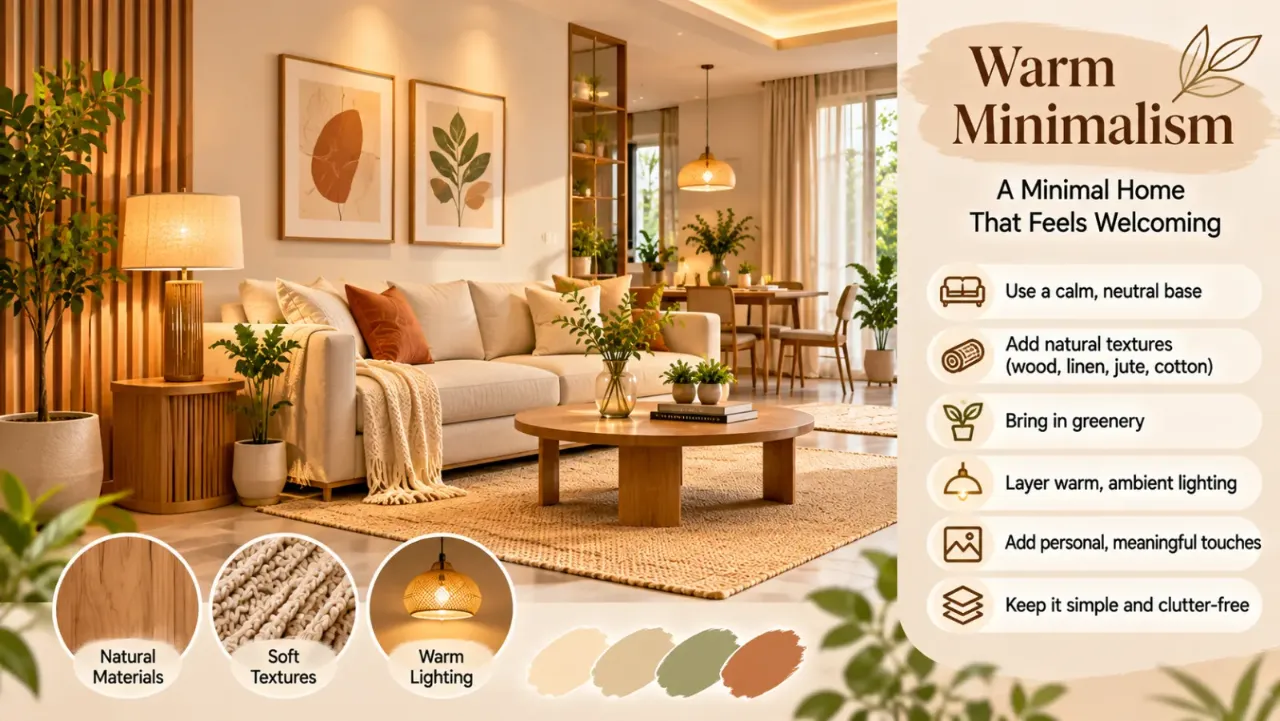
Warm Minimalism: How to Make a Minimal Home Feel Welcoming
Minimalist interiors are often associated with clean lines, open spaces, neutral colours and very little decoration. While this approach can make a home look organised and spacious, it can sometimes feel too plain, cold or unfinished.
Warm minimalism offers a more comfortable interpretation of the same design philosophy. It retains the simplicity of minimalism but introduces natural materials, soft textures, warmer colours, comfortable furniture and carefully selected personal details.
The aim is not to fill every empty corner or add more decoration. It is to make thoughtful choices so that each element contributes to the overall comfort and character of the home.
For Indian homes, this approach can be particularly useful because it allows homeowners to maintain practical storage, accommodate everyday activities and create a calm interior without making the space feel like an empty showroom.
1. What Is Warm Minimalism?
Warm minimalism is an interior design approach that combines the simplicity of minimalism with the comfort of natural materials, inviting colours and tactile finishes.
Traditional minimalism often focuses on reducing visual elements and keeping surfaces uncluttered. Warm minimalism follows the same principle but pays greater attention to how a room feels when people actually use it.
It does not mean removing everything from a room or choosing only beige furniture. Instead, it involves balancing simplicity with comfort.
Some defining characteristics include:
- Warm neutral colour palettes.
- Natural wood and stone finishes.
- Comfortable, well-proportioned furniture.
- Soft fabrics and layered textures.
- Functional, concealed or organised storage.
- Gentle, layered lighting.
- A limited number of meaningful decorative objects.
A warm minimalist home should feel intentional, not empty. Each piece has a purpose, whether practical, visual or personal.
2. Choose a Warm and Balanced Colour Palette
Colour is one of the easiest ways to make a minimalist interior feel more welcoming. Instead of relying entirely on stark white, introduce warmer neutrals and subtle earthy shades.
Colours That Work Well
- Ivory and off-white: Create a light background without the stark appearance of pure white.
- Beige and sand: Add softness and warmth to walls, upholstery and rugs.
- Greige: Combines grey and beige, making it useful for contemporary interiors.
- Muted sage: Introduces a subtle natural colour without overwhelming the room.
- Soft taupe: Adds depth to neutral spaces.
- Muted terracotta: Works well as a restrained accent in cushions, ceramics and artwork.
You do not need to use all these colours together. Select one main neutral, one supporting shade and one accent colour.
For example, an ivory living room with light oak furniture and muted sage cushions can feel warm without appearing overly decorated.
Avoid Making Every Surface the Same Colour
Using one shade throughout the room can make the interior look flat. Introduce small tonal differences through upholstery, curtains, flooring, wall finishes and accessories.
The aim is to create variation without introducing too many competing colours.
3. Use Natural Materials to Add Character
Natural materials are an important part of warm minimalism because they introduce visual interest without requiring excessive decoration.
Wood
Light oak, natural ash and walnut can all work well in warm minimalist interiors.
Use wood for:
- Dining tables and chairs.
- Bed frames and bedside tables.
- TV consoles and storage units.
- Open shelves.
- Wardrobe shutters and selected wall panels.
Light wood creates a softer, airier appearance, while walnut adds contrast and depth. Choose a dominant wood tone and repeat it across a few elements for consistency.
Stone
Stone-look finishes, marble, granite and other suitable natural stones can introduce subtle variation through their texture and pattern.
They can be used for:
- Kitchen countertops.
- Coffee tables.
- Bathroom vanities.
- Flooring.
- Selected feature surfaces.
Consider maintenance, staining, water exposure and suitability for the intended use before selecting a stone finish.
Cane, Rattan and Woven Materials
Cane, rattan and woven textures can make a simple room feel less formal. They work particularly well in accent chairs, cabinet details, baskets and selected light fittings.
Use them selectively. Too many woven elements can make the room feel themed rather than balanced.
Linen and Cotton
Linen and cotton introduce softness without making the room visually heavy. Consider them for curtains, cushions, bedding and upholstery.
Natural-looking textures can add depth even when the colours remain within a neutral palette.
4. Select Furniture That Is Simple but Comfortable
Minimalist furniture should not be chosen only because it has a simple shape. Comfort, proportion and everyday use matter just as much.
Look for:
- Sofas with comfortable seat depth and supportive cushions.
- Dining chairs that are suitable for everyday use.
- Beds with practical access and adequate circulation space.
- Coffee tables that are proportionate to the seating arrangement.
- Storage furniture that keeps frequently used items accessible.
Rounded edges, gently curved silhouettes and soft upholstery can make a room feel less rigid.
For compact Indian apartments, multifunctional furniture can also help. Storage beds, nesting tables, compact dining arrangements and well-designed built-in storage can reduce clutter without sacrificing useful space.
Avoid buying furniture simply to fill an empty area. Leave enough room for movement and everyday activities.
5. Layer Textures Instead of Adding More Decoration
One of the biggest differences between a cold minimalist interior and a welcoming one is texture.
When the colour palette is restrained, different surface qualities become more noticeable. A smooth wall, woven rug, linen curtain and wooden table can create a layered appearance without introducing additional colours.
Try combining:
- Smooth painted walls with textured upholstery.
- Linen curtains with a woven rug.
- Matte cabinetry with natural wood details.
- Soft cushions with a structured sofa.
- Stone surfaces with ceramic accessories.
The important point is to introduce contrast through texture rather than adding many decorative objects.
A room with three or four well-chosen material textures can feel more complete than a room filled with accessories.
6. Use Lighting to Create a Comfortable Atmosphere
Lighting has a major influence on how warm or cold a minimalist interior feels. A room that relies only on bright overhead lighting may appear flat, even when the furniture and materials are carefully selected.
A more comfortable approach combines different lighting layers.
Ambient Lighting
This provides general illumination. Ceiling lights, recessed fixtures and suitable indirect lighting can serve this purpose.
Task Lighting
Task lighting supports specific activities such as reading, cooking, working or dressing.
- Bedside reading lights.
- Kitchen counter lighting.
- Study lamps.
- Wardrobe and mirror lighting.
Accent Lighting
Accent lighting highlights selected architectural or decorative elements.
Consider:
- Wall lights.
- Shelf lighting.
- Picture lights.
- Soft lighting around selected display niches.
Table lamps and floor lamps can also make living rooms and bedrooms feel more relaxed.
Choose lighting based on the activity and the finish of the room. Avoid relying on decorative lights alone where practical illumination is required.
7. Keep Storage Practical and Visually Organised
A welcoming minimalist home still needs to accommodate everyday belongings. The objective is not to hide everything but to give frequently used items a suitable place.
Consider:
- Floor-to-ceiling wardrobes.
- Closed storage below TV units.
- Drawers inside kitchen cabinets.
- Shoe storage near the entrance.
- Storage beds for extra bedding.
- Built-in study storage.
- Baskets for frequently used everyday items.
Open shelves can display books, artwork and a few personal objects, but avoid filling every shelf.
For Indian homes, plan storage around actual household routines. Consider space for footwear, cleaning supplies, appliances, utensils, bedding and other items used regularly.
Good storage makes minimalism easier to maintain because the room does not depend on constant tidying to look organised.
8. Add Personal Details Without Creating Clutter
A home should reflect the people who live in it. Warm minimalism does not require removing family photographs, artwork, travel memories or meaningful objects.
Instead, display them with intention.
Some ideas include:
- One or two framed artworks instead of a crowded gallery.
- A ceramic vase on a console.
- A small collection of books on a coffee table.
- A meaningful object displayed on an open shelf.
- A plant placed where it receives suitable light.
- A textile or handcrafted accessory that adds character.
Try grouping smaller objects rather than spreading them across every available surface.
Personal details should make the home feel lived-in, not visually crowded.
9. How to Apply Warm Minimalism in Different Rooms
Living Room
Start with comfortable seating, a practical coffee table and a restrained colour palette. Add warmth through a textured rug, linen cushions, natural wood and soft lighting.
Keep the main circulation areas open. Use the TV unit and sideboard for organised storage instead of filling the room with multiple small cabinets.
Bedroom
Use a simple bed, comfortable bedding, natural wood furniture and soft curtains. A textured headboard or muted accent wall can add depth without making the room visually busy.
Keep bedside surfaces functional and avoid overcrowding them with decorative pieces.
Kitchen
Warm minimalism in the kitchen is largely about organised storage, practical surfaces and a coordinated material palette.
Consider matte neutral cabinetry, light wood accents, a simple backsplash and a durable countertop. Keep frequently used appliances accessible while planning storage for less frequently used items.
The kitchen should remain easy to clean and comfortable for everyday cooking.
Dining Area
A wooden dining table, comfortable chairs and a simple pendant light can establish the look. Add a small centrepiece or ceramic vase rather than covering the table with decorative accessories.
In compact apartments, consider a round table, bench seating or a wall-adjacent dining arrangement where appropriate.
Bathroom
Use simple finishes, practical storage and a limited colour palette. Beige or light stone surfaces, a wooden vanity and understated fittings can create a calm appearance.
Choose bathroom materials based on moisture exposure, slip resistance and maintenance requirements, not appearance alone.
10. Common Mistakes to Avoid
- Using too much white: Large areas of stark white can make a room feel cold. Introduce warmer neutrals and natural materials.
- Choosing uncomfortable furniture: A visually simple sofa or chair is not useful if it does not support everyday comfort.
- Removing too much personality: A home without meaningful objects can feel like a display apartment rather than a lived-in space.
- Using only overhead lighting: A single lighting source may create harsh shadows and an uninviting atmosphere.
- Ignoring practical storage: Without enough storage, everyday items can quickly create visual clutter.
- Mixing too many finishes: Too many wood tones, metals and surface patterns can weaken the simplicity of the overall design.
- Following the look without considering maintenance: Materials and finishes should suit the household's daily routines and cleaning requirements.
11. A Practical Warm Minimalism Checklist
- Choose a warm neutral base colour.
- Select one or two supporting accent shades.
- Decide on a dominant wood finish.
- Introduce natural materials and varied textures.
- Select comfortable furniture suited to the room dimensions.
- Plan concealed and accessible storage.
- Include ambient, task and accent lighting where needed.
- Keep decorative objects limited but meaningful.
- Leave sufficient space for movement.
- Check material durability and maintenance requirements.
- Review the complete room under natural and artificial lighting.
Conclusion
Warm minimalism is not about making a home look empty or removing everything that does not serve a practical purpose. It is about creating a thoughtful balance between simplicity, comfort and personality.
Warm neutrals, natural wood, soft fabrics, layered lighting and well-planned storage can make even a simple interior feel welcoming. The most important step is to choose elements that suit the way the household lives rather than copying a finished room from a photograph.
A successful warm minimalist home should feel calm when you enter it, comfortable when you use it and personal enough to feel like your own.
Frequently Asked Questions
1. What is the difference between minimalism and warm minimalism?
Minimalism focuses on simplicity, functionality and reducing unnecessary elements. Warm minimalism follows the same principles but introduces natural materials, warmer colours, soft textures and comfortable lighting to make the space feel more inviting.
2. Which colours are best for warm minimalist interiors?
Ivory, beige, sand, greige, taupe and muted earthy shades work well. Sage green and muted terracotta can be introduced as restrained accents.
3. Can warm minimalism work in small Indian homes?
Yes. It can work particularly well in compact apartments because it encourages organised storage, functional furniture, open circulation and a limited colour palette. The key is to plan around actual household needs.
4. Which materials are commonly used in warm minimalism?
Natural wood, stone, linen, cotton, cane, rattan, textured fabrics and matte finishes are commonly used. Select materials according to their durability, maintenance and suitability for each room.
5. How can I make a minimalist living room feel less empty?
Introduce a comfortable sofa, textured rug, curtains, a wooden coffee table, layered lighting and a few meaningful decorative objects. You do not need to fill every empty surface.
6. Does warm minimalism require expensive furniture?
No. The style depends more on proportion, material coordination, comfort and thoughtful selection than on price. Simple furniture, practical storage and a consistent palette can create the look within different budgets.
7. How do I maintain a warm minimalist home?
Give everyday belongings designated storage, avoid unnecessary purchases, keep surfaces organised and choose materials that are easy to maintain. Review decorative objects occasionally so the room remains functional and uncluttered.
Plan Your Home Interior With Walls to Wonder
Creating a comfortable home begins with choosing the right colours, materials and layouts. Explore Walls to Wonder's AI tools to visualise your ideas, discover your preferred style and plan your interior project.
- Whole Home Visualizer – Explore coordinated design ideas across your home.
- Design My Room – Experiment with room layouts, colours and interior styles.
- Interior Design Cost Estimate – Get an initial estimate for your interior project.
- Interior Quotation Checker – Review and understand interior design quotations.
- Rate My Room Design – Get feedback on your room design.
- Interior Style Finder – Explore interior styles that match your preferences.
Discover more at Walls to Wonder.
Turn this idea into a plan for your home
Visualise your space, understand the likely budget, or find a professional who can bring the idea to life.