
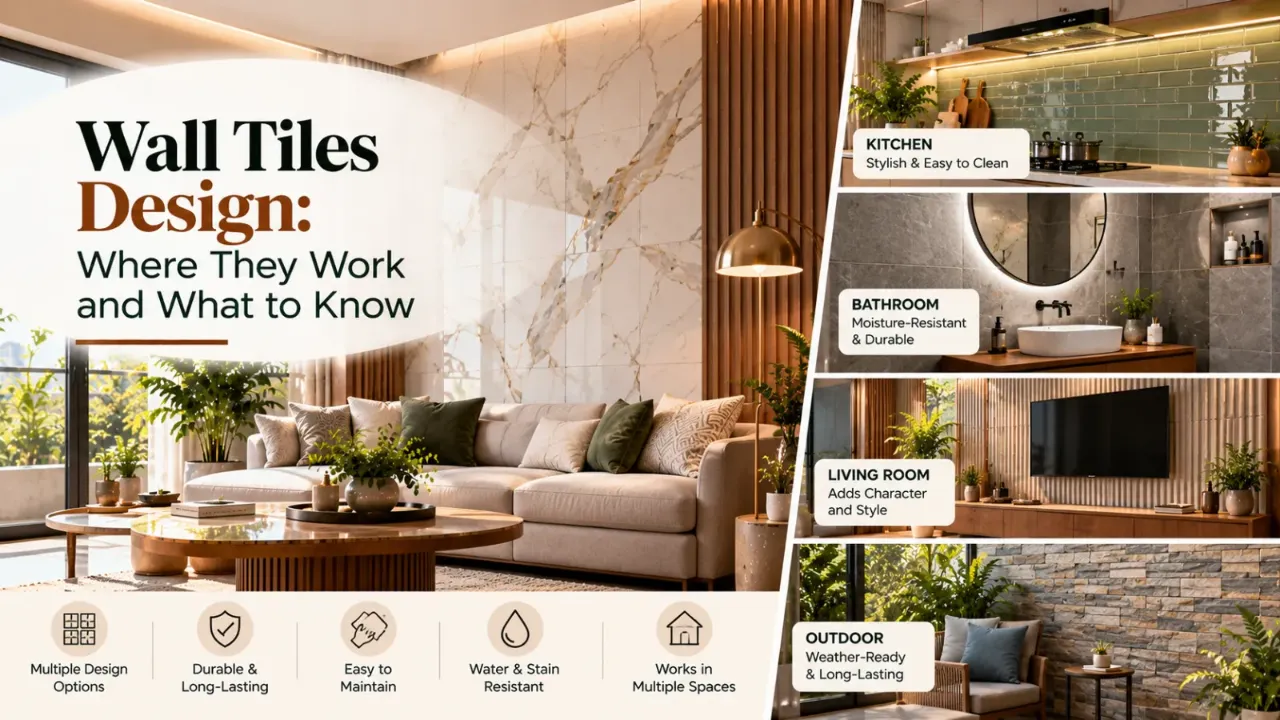
Wall Tiles Design: Where They Work and What to Know
Wall tiles are more than a decorative finish. They can protect surfaces from everyday splashes, simplify cleaning and introduce colour, pattern or texture into a room. From kitchen backsplashes to bathroom walls and selected feature areas, they offer practical advantages—but they are not automatically the right choice for every wall.
The best option depends on where the tiles will be installed, how much moisture or wear the surface experiences, the look you want and the maintenance you are willing to undertake.
Quick answer: Wall tiles are especially useful in kitchens, bathrooms, utility areas and selected decorative zones. They are durable and relatively easy to clean when correctly selected and installed, but they can involve higher initial costs, grout maintenance, cutting waste and repairs if the substrate or installation is poor.
1. Where Wall Tiles Work Best
Different areas of a home place different demands on wall finishes.
Kitchen backsplashes: Tiles protect the wall behind counters and sinks from splashes and food stains. Choose a finish that can be wiped clean and consider the grout joints around cooking and preparation areas.
Bathroom walls: Tiles are widely used around showers, baths and washbasins because the finished surface can be easy to clean. Correct waterproofing behind the tile is still essential in wet zones; tiles and grout alone do not create a waterproof system.
Utility and wash areas: These spaces often benefit from a wall finish that tolerates regular cleaning and moisture exposure. Select products and installation materials suitable for the specific conditions.
Living room feature walls: Decorative tiles can add texture, depth or a focal point behind a console or in a selected feature area. Consider weight, fixing requirements and whether the pattern will compete with furniture or artwork.
Entryways and selected accent walls: Tile panels can create a durable, distinctive finish in areas that experience frequent contact. Use them selectively to maintain a balanced interior.
2. Understand the Different Types of Wall Tiles
The tile material and finish affect its appearance, weight, maintenance and suitability.
- Ceramic wall tiles: Available in many colours, patterns and sizes. Many are relatively lightweight and suitable for wall applications, but confirm the product's intended use.
- Porcelain tiles: Often have low water absorption and can be used for many wall applications. Larger or heavier formats may require suitable adhesives and installation expertise.
- Glass tiles: Reflect light and can add colour or visual depth, particularly in backsplashes and decorative details. Their installation may require compatible adhesives and careful handling.
- Natural stone: Marble, slate and other stones offer natural variation and texture. Some require sealing and specialised cleaning, and their weight and fixing needs must be considered.
- Decorative and patterned tiles: Useful for introducing a focal point or a particular design style. Plan the pattern carefully so cuts, edges and adjoining finishes look intentional.
Do not assume that every floor tile is suitable for a wall or that every wall tile is suitable for every wet area. Check the manufacturer's recommendations for the exact product.
3. The Main Benefits of Wall Tiles
Wall tiles offer several advantages when chosen for the right application.
Easy surface cleaning: Many glazed and suitable finished tiles can be wiped clean, making them practical around sinks, counters and other splash-prone areas.
Resistance to everyday stains: A suitable tile surface can resist many common household stains better than some painted or porous finishes. Spills should still be cleaned promptly, and grout may need additional attention.
Design flexibility: Tiles are available in plain colours, stone-look finishes, geometric patterns, mosaics and textured designs. They can complement modern, traditional or transitional interiors.
Durable finish: Properly selected tiles can remain attractive for years. Longevity depends on product quality, substrate preparation, fixing materials, movement joints and maintenance.
Defined feature zones: A tile panel can distinguish a backsplash, shower area or accent wall without requiring a separate decorative structure.
For help exploring a style direction, the Walls to Wonder Interior Style Finder can help you consider colours, materials and overall design preferences.
4. The Limitations You Should Consider
Wall tiles also have trade-offs that should be considered before installation.
- Initial cost: The total expense includes more than the tile itself. Adhesive, grout, surface preparation, waterproofing where required, cutting and labour all contribute to the final price.
- Grout maintenance: Grout joints can collect dirt or discolour over time. The amount of upkeep depends on the grout type, installation quality, exposure and cleaning routine.
- Hard, reflective appearance: Glossy or highly patterned tiles can create glare or make a small wall feel visually busy. Large tiled areas may also feel less warm than some painted or textured finishes.
- Repairs can be difficult: Replacing a cracked tile without damaging adjacent tiles can take care and skill. Matching an old tile's shade, pattern or production batch may be difficult.
- Installation requirements: Uneven walls, poor adhesive coverage, inadequate movement accommodation or moisture problems can cause tiles to crack, loosen or fail.
- Limited flexibility after installation: Changing a tiled finish often requires removal and additional repair work. It is worth considering whether you will want to update the design in a few years.
5. Choose the Right Finish, Colour and Pattern
The wall's purpose should guide the finish. Glossy tiles can reflect light and make a backsplash feel bright, while matte finishes offer a softer appearance. Textured tiles can add interest, but deep textures may be harder to clean in grease-prone or splash-heavy areas.
Light neutrals, muted greens, soft greys and natural stone looks can work across many interiors. Strong colours and patterned tiles are often most effective when used in a defined zone rather than across every wall.
Before finalising the design, look at a physical sample alongside your cabinetry, countertop, flooring and lighting. Check how the shade changes in daylight and artificial light. Also consider the pattern repeat and how it will align around sockets, corners, taps and shelves.
6. Plan Installation Before Buying
Good installation begins with a suitable wall surface. The substrate should be sound, appropriately prepared and suitable for the tile and adhesive system. In bathrooms and other wet zones, the waterproofing system must be designed and installed correctly before tiling.
Confirm the following before work starts:
- The tile layout, starting point and position of cut pieces.
- The adhesive and grout recommended for the tile and substrate.
- The planned joint width and any required movement joints.
- Waterproofing and drainage details in wet areas.
- The finished edges, corners, niches and openings around fittings.
- The quantity required, including a suitable allowance for cutting and future repairs.
For large-format or heavy tiles, ensure the wall and fixing system can support the product. A qualified installer should confirm site-specific requirements rather than relying on the appearance of a sample alone.
7. Maintain Wall Tiles Properly
Routine care helps preserve the finish and grout.
- Wipe splashes and grease promptly, particularly around kitchen counters and cooking zones.
- Use a cleaner compatible with the tile surface and grout.
- Avoid abrasive pads or harsh chemicals unless the manufacturer confirms they are suitable.
- Clean grout joints regularly and investigate persistent staining or deterioration.
- Inspect wet areas for cracked grout, loose tiles or signs of moisture problems.
- Follow the care guidance for natural stone, which may require different products or sealing.
If a tile becomes loose, cracks repeatedly or shows signs of moisture behind the surface, identify the underlying cause before replacing it. Cosmetic repairs alone may not address a substrate or waterproofing problem.
8. Visualise the Finish and Plan the Budget
A wall tile that looks attractive in a showroom may appear different once it is combined with your room's lighting, furniture and surrounding finishes. You can upload a room photo to Walls to Wonder's Design My Room tool to explore possible colours and wall finishes. For a coordinated design across several rooms, the Whole Home Visualizer can help you explore an overall concept from your floor plan. Treat these as visual planning tools and confirm the real dimensions and technical details before installation.
When estimating cost, include the tile, adhesive, grout, surface preparation, waterproofing where required, edge trims, labour and waste. Natural stone, intricate patterns and large-format tiles may need additional handling or finishing.
The Walls to Wonder Interior Design Cost Estimate can help you explore an indicative overall interior budget. Ask your installer for a separate itemised quotation for the actual tiled area and site conditions.
A Final Thought
Wall tiles can protect selected surfaces, simplify cleaning and add a strong design feature, but their success depends on more than colour or pattern. The tile must suit the location, the wall must be properly prepared, and the installation must address moisture and movement where relevant.
Compare the benefits with the cost, grout care and difficulty of future changes. With a suitable product and careful planning, wall tiles can be a practical and attractive part of your home's design.
Planning a Wall Tile Upgrade?
Explore different tile colours and finishes in the context of your room before making a final choice. Balance the look you want with cleaning needs, installation requirements and your budget.
Frequently Asked Questions
1. Where should wall tiles be used in a home?
Common applications include kitchen backsplashes, bathroom walls, utility areas, shower zones and selected feature walls. Choose the tile according to the exposure, substrate and manufacturer's recommendations.
2. What are the main benefits of wall tiles?
They can provide an easy-to-clean surface, resist many everyday stains, offer a wide range of design options and create durable finishes when correctly installed and maintained.
3. What are the disadvantages of wall tiles?
Potential drawbacks include initial installation costs, grout maintenance, difficult repairs, a hard or reflective appearance and the effort involved in changing the finish later.
4. Are wall tiles suitable for bathrooms?
Yes, when the product and installation system are appropriate for the bathroom. Waterproofing behind the tile is essential in wet zones because tiles and grout alone do not provide a complete waterproof barrier.
5. Are ceramic or porcelain tiles better for walls?
Neither is automatically better for every application. Compare the product's intended use, weight, finish, water absorption, fixing requirements and maintenance guidance.
6. How do you maintain wall tiles?
Clean them regularly with a compatible product, wipe splashes promptly, maintain the grout and follow the manufacturer's care instructions. Natural stone may require specialised products or sealing.
7. Can wall tiles be installed over existing tiles?
It may be possible in some situations, but the existing tiles must be firmly bonded and the wall must be able to support the additional weight. A qualified installer should assess the substrate, moisture conditions, surface preparation and compatible fixing system before deciding.
Turn this idea into a plan for your home
Visualise your space, understand the likely budget, or find a professional who can bring the idea to life.