
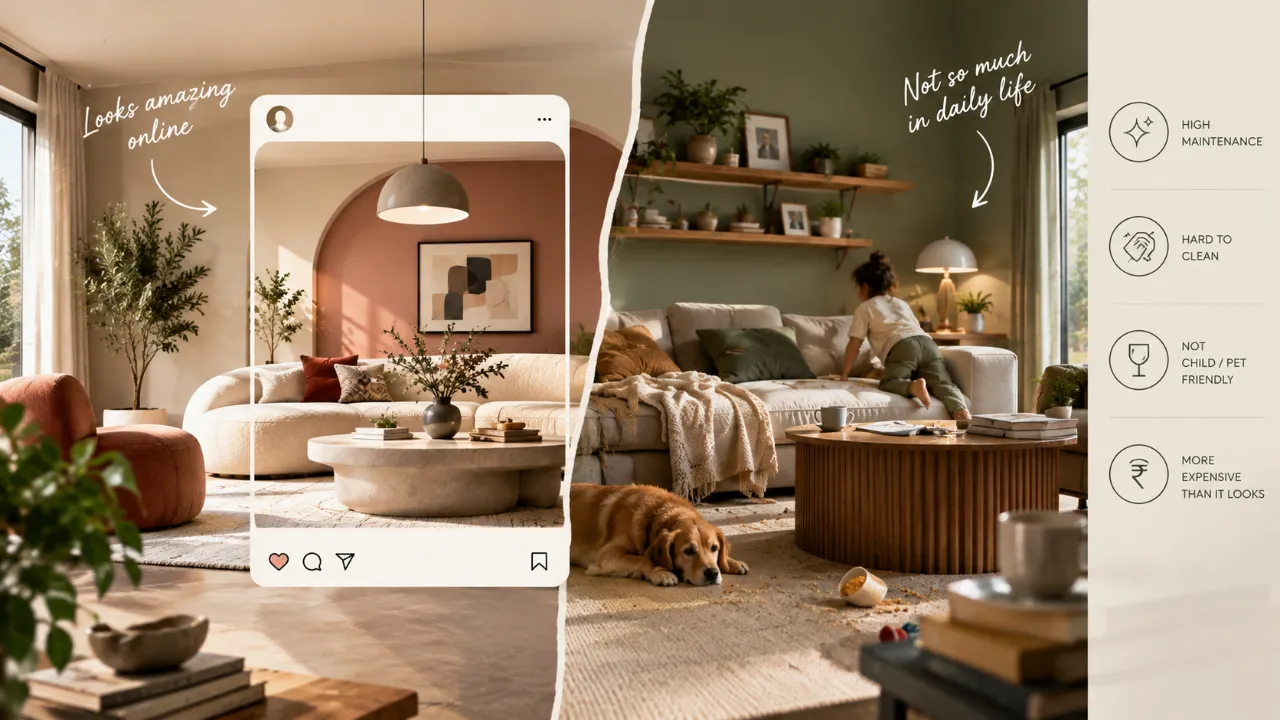
Trends That Look Great on Instagram but Fail in Daily Use
A room can look finished in a photo and still be a pain to live in. Instagram doesn't reward comfort, it rewards a single well-lit angle, and a surprising number of trending interior choices are optimised for exactly that: one frame, good light, no people actually using the space.
Here's where the gap between "photographs beautifully" and "works every day" tends to show up, trend by trend, and what to choose instead if you actually live in the room.
- All-white everything
- Open shelving in the kitchen
- Oversized statement furniture
- Low-slung, backless seating
- Glossy, high-shine surfaces
- Exposed bulb & statement pendant lighting
- Fully glass, unzoned bathrooms
- Where the gap actually comes from
- A simple test before you copy a trend
- Questions to ask your designer
- Frequently asked questions
All-White Everything
White kitchens, white bedrooms, white bathrooms photograph cleanly because there's no visual noise competing with the light. Lived in daily, white surfaces show every splash, fingerprint, and scuff within weeks, and the maintenance required to keep them "Instagram white" isn't mentioned in the caption.
Open Shelving in the Kitchen
Open shelves look effortless in photos, a few curated plates, a plant, nothing crowded. In daily use, open shelving means everything on it collects kitchen grease and dust, and it has to look curated every single day, not just for the photo.
Oversized Statement Furniture
A large sculptural sofa or an oversized bed frame fills a photo frame well and reads as luxurious. In an average Indian apartment room, the same piece often leaves no real walking space, making the room harder to move through every day than it looks in a wide-angle shot.
Low-Slung, Backless Seating
Floor-level and backless seating photographs beautifully; it reads as relaxed and minimal. Used daily, especially for meals or long sitting, it's genuinely uncomfortable for most adults, and getting up and down repeatedly is its own daily cost.
Glossy, High-Shine Surfaces
Glossy tiles, lacquered cabinets and mirror finishes reflect light beautifully for a photo. In daily use, they show every fingerprint, water spot and scratch far more visibly than a matte or textured finish, and cleaning them well enough to photograph again takes real, repeated effort.
Exposed Bulb & Statement Pendant Lighting
A single dramatic pendant or a cluster of exposed bulbs makes for a strong photo composition. As the only light source in a room, it's usually far too dim and too harsh in one direction for actual daily tasks like reading, cooking or getting dressed.
Fully Glass, Unzoned Bathrooms
An all-glass shower enclosure with no visual separation photographs as spa-like and seamless. Used daily, without proper wet-dry zoning behind it, that seamless look often means water travels further into the room than a photo ever shows.
Where the Gap Actually Comes From
| Trend | Why it photographs well | Where it fails daily |
|---|---|---|
| All-white surfaces | Clean, bright, no visual noise | Shows every mark; high maintenance |
| Open shelving | Curated, effortless look | Collects grease/dust; must stay tidy daily |
| Oversized furniture | Fills frame, reads as luxurious | Blocks walking space in real rooms |
| Backless low seating | Relaxed, minimal composition | Uncomfortable for extended daily use |
| High-gloss finishes | Reflects light, looks polished | Shows fingerprints and scratches fast |
| Statement pendant lighting | Strong visual focal point | Poor functional light for daily tasks |
| Fully glass bathrooms | Seamless, spa-like in photos | Needs real zoning, not just glass |
A Simple Test Before You Copy a Trend
Ask one question about any trend before adopting it: what does this look like on a Tuesday evening, unstaged, with actual daily use visible? If the honest answer involves constant tidying, discomfort, or extra cleaning just to keep it presentable, it's a photo trend, not a living one.
Want to See How a Trend Would Actually Look in Your Room?
Upload a photo of your space and try a look before committing to it in real materials.
Visualise Your RoomQuestions to Ask Your Designer
- How will this finish or layout look after three months of daily use, not on day one?
- Is this the room's primary function, or a photo-friendly accent I should limit?
- What's the realistic maintenance this choice needs to stay looking the way it does now?
- Does this trend need a functional layer, better lighting, proper zoning, behind the visual one?
The Professional Judgement: A Photo Is One Frame; a Home Is Every Day
Nothing wrong with liking a trend for how it looks, the issue is applying it wholesale, as the primary choice for a room you actually live in, without asking what it costs you daily. Most of these trends aren't bad ideas, they're incomplete ones, missing the maintenance, comfort or function layer that a single photograph never has to account for.
Use AI Before You Meet an Interior Designer
AI tools can help you organise your ideas before meetings. They are not a replacement for professional design judgement.
Visualise Your Room
Upload a room photograph and test a trend before committing to it in real materials.
Design My Room →Estimate Your Budget
Create an initial interior budget based on your requirements, including any trend-driven choices.
Estimate Interior Cost →Want a Room That Photographs Well and Actually Works?
Take your ideas, and the trends you're tempted by, to designers serving your area, and get a layout that holds up daily, not just for one photo.
Find Interior Designers Visualise Your Room Estimate Interior CostFrequently Asked Questions
Are Instagram interior trends always a bad idea?
No, most aren't bad ideas outright, they're just incomplete for daily use unless paired with proper function, lighting, zoning or maintenance planning behind the visual choice.
How do I know if a trend will work for my daily routine, not just photos?
Ask what it looks like after three months of ordinary use, not day one. If the honest answer involves constant tidying or real discomfort, treat it as an accent rather than the primary choice.
Which trend causes the most daily frustration in Indian homes specifically?
All-white surfaces and fully open shelving tend to cause the most ongoing maintenance frustration, since dust, cooking oil and humidity show up faster on both than in most other climates.
Can I still use a trend I love, just more carefully?
Yes. Most of these work well as accents, one statement pendant with proper task lighting alongside it, one open shelf instead of a full wall, rather than as the room's only choice.
Final Checklist Before Copying a Trend
- Have you pictured this choice after three months of ordinary daily use?
- Is it the primary feature of the room, or would it work better as an accent?
- Does it need a functional layer behind it, lighting, zoning, maintenance, that the photo doesn't show?
- Have you measured actual walking and usage space, not just visual impact?
A trend can be a good starting point without being the whole plan. Use WallsToWonder to find interior designers, visualise your room and estimate your interior cost before turning any trend into something permanent.
Turn this idea into a plan for your home
Visualise your space, understand the likely budget, or find a professional who can bring the idea to life.