
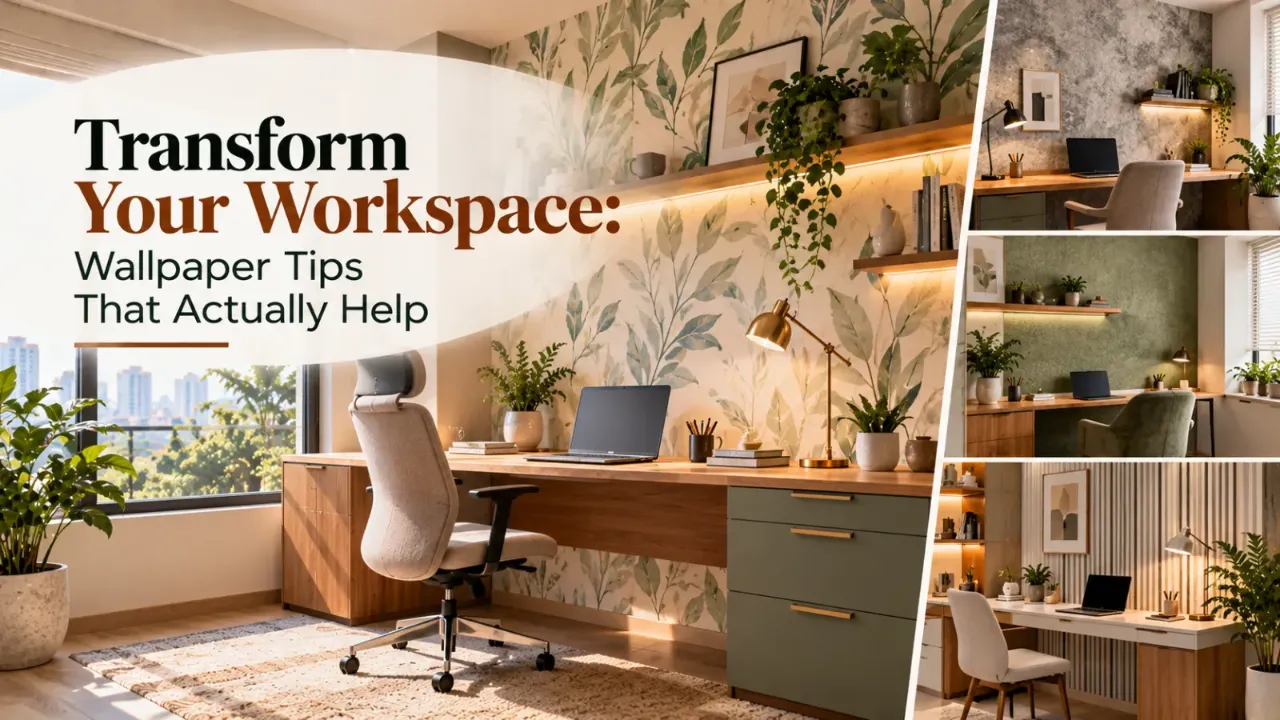
Transform Your Workspace: Wallpaper Tips That Actually Help
Office wallpaper can change the character of a workspace without requiring a complete renovation. A carefully chosen pattern can add personality to a reception area, create a focal wall in a meeting room or make a home office feel more intentional. But the result depends as much on preparation and installation as it does on the wallpaper itself.
Uneven walls, incorrect measurements, poorly aligned patterns and unsuitable adhesives can affect the finish and shorten the life of the wall covering. Planning these details before installation helps you avoid unnecessary waste, delays and repair costs.
Whether you are updating a corporate office or designing a workspace at home, here is how to choose, install and maintain office wallpaper more confidently.
1. Choose Wallpaper That Suits the Work Environment
Start by identifying the room's purpose. A reception area may benefit from a distinctive feature wall, while a private office may call for a quieter pattern that does not compete with screens, documents or video calls.
Consider the atmosphere you want to create. Subtle textures and restrained geometric designs can suit focused work areas. A bolder pattern may be more appropriate for a reception wall or creative studio, provided it works with the furniture and lighting.
- Room function: Is it a meeting room, reception, cabin, collaborative workspace or home office?
- Visual impact: Will the wallpaper be a backdrop or the main decorative feature?
- Lighting: Will daylight and artificial light change how its colour appears?
- Furniture: Will shelves, desks, cabinets or screens cover much of the wall?
- Maintenance: Will the surface need frequent cleaning or withstand regular contact?
Request a sample whenever possible. Look at it against the actual wall and under the lighting used in the office. A design that looks subtle online may appear much stronger across a full wall.
If you are still deciding on the overall look, the Walls to Wonder Interior Style Finder can help you explore a design direction that suits your workspace and budget.
2. Select the Right Wallpaper Material
Wallpaper materials differ in appearance, installation method, durability and cleaning requirements. Choose according to the conditions of the space rather than appearance alone.
- Non-woven wallpaper: Often selected for convenient installation and removal characteristics, depending on the product and adhesive system.
- Vinyl wallpaper: Certain finishes are suitable for spaces that need more frequent cleaning. Check the product's specific cleaning guidance.
- Paper-based wallpaper: Can offer detailed patterns and decorative finishes, but some products are more delicate and less tolerant of moisture or scrubbing.
- Textured wallpaper: Adds visual depth and can create a sophisticated backdrop. Check how the texture will collect dust.
- Peel-and-stick wallpaper: May suit selected temporary or small-scale applications. Performance depends on surface smoothness, cleanliness, humidity and manufacturer guidance.
For commercial offices, confirm the product's suitability for the expected traffic, cleaning routine and building requirements. Do not assume every wallpaper is washable, moisture-resistant or suitable for every wall.
3. Prepare the Wall Before Installation
Wall preparation is one of the most important stages of wallpaper installation. Even a high-quality product may look uneven if applied over a damaged, dusty or unsuitable surface.
Before installation, inspect the wall for cracks, peeling paint, loose plaster, damp patches and uneven areas. Repair defects and allow any filler, primer or paint to dry fully before proceeding.
- Remove dust, grease and loose material.
- Repair cracks, holes and damaged areas.
- Smooth uneven surfaces where necessary.
- Check that the wall is dry and free from active moisture problems.
- Apply a compatible primer or sealer if required by the wallpaper system.
- Confirm that the prepared surface is suitable for the selected adhesive.
Do not cover active dampness or mould with wallpaper. Address the underlying moisture problem first. Otherwise, the wall covering may peel, stain or conceal damage that continues to develop.
If you are also updating furniture, colours or other finishes, you can explore a room concept using Design My Room on Walls to Wonder before committing to the final look.
4. Measure Carefully and Order Enough Wallpaper
Incorrect measurements can lead to shortages, excessive offcuts or mismatched replacement rolls. Measure the wall height and width, and account for doors, windows, recesses and other features.
Do not simply subtract every opening and order the exact calculated area. Pattern repeats, trimming, matching and installation waste can require additional material.
- Confirm the roll's usable dimensions and coverage.
- Check whether the design has a straight, offset or other pattern repeat.
- Confirm the batch or dye-lot information for all rolls.
- Ask the supplier about the recommended allowance for waste.
- Consider keeping extra material for future repairs.
For patterned wallpaper, the installer may need extra length to align the design between adjacent strips. Ask the supplier or installer to calculate the required quantity using the actual wall measurements and pattern repeat.
Ordering rolls from the same batch can also help reduce visible colour differences between sections.
5. Check Pattern Alignment Before Applying Adhesive
Pattern alignment is especially important with geometric prints, stripes, murals and repeating motifs. Even a small mismatch can become noticeable across a large office wall.
Before applying adhesive, identify the pattern repeat and check how neighbouring strips will meet. Establish a straight vertical reference line using suitable measuring tools rather than assuming the corner or ceiling is perfectly square.
Dry-plan the first few strips where practical. This helps the installer understand how the pattern will fall around corners, openings and the most visible part of the wall.
Avoid starting in a prominent location without considering the pattern's overall placement. A central motif that is cut awkwardly or a strong stripe that appears crooked can distract from the entire finish.
Follow the product instructions for the correct sequence, adhesive application and positioning. Different wallpaper systems require different installation methods.
6. Use the Correct Adhesive and Installation Method
Not all wallpapers use the same adhesive or application technique. Some products require paste on the wall, others require paste on the wallpaper, and some use a self-adhesive backing.
Using the wrong adhesive can contribute to poor bonding, bubbling, staining or edge lifting. Excess adhesive may also mark the surface if it is not handled according to the product guidance.
- Match the adhesive to the wallpaper material and wall surface.
- Follow the manufacturer's mixing and application instructions.
- Observe the recommended soaking or booking time, where applicable.
- Use suitable tools to smooth the paper without stretching it.
- Remove adhesive residue promptly using the method recommended for the finish.
For large walls, murals or expensive patterned wallpaper, professional installation can help manage alignment, seams and waste. This is especially useful when the office must remain presentable during the work.
7. Avoid Bubbles, Wrinkles and Visible Seams
Air pockets and uneven seams are common problems when wallpaper is not positioned or smoothed correctly. Rushing the installation can make these defects more difficult to correct.
Position each strip carefully, then smooth it using the appropriate tool and technique. Work according to the manufacturer's instructions rather than pulling the material aggressively, which may distort the pattern or stretch the wallpaper.
Pay attention to the edges and joints between strips. Seams should meet neatly without excessive overlap or visible gaps, unless the product specifies a different method.
If a bubble appears, do not automatically puncture or cut it. The correct repair depends on the wallpaper type, adhesive and whether the material has already set. Follow the manufacturer's repair guidance or ask the installer to assess it.
Inspect each strip as work progresses. Correcting an issue immediately is usually easier than repairing a full wall after the adhesive has dried.
8. Plan Around Switches, Sockets, Corners and Fixtures
Office walls often include electrical sockets, switches, cable outlets, skirting boards, window frames and built-in furniture. These details require careful cutting and alignment.
Mark the position of fixtures before cutting the wallpaper, and avoid estimating their location after the strip has been applied. Neat trimming helps the finished wall look intentional rather than patched together.
Around internal and external corners, follow the wallpaper manufacturer's recommended technique. Walls are not always perfectly square, so wrapping a strip around a corner without planning may cause the next strip to drift out of alignment.
For electrical outlets, follow appropriate electrical safety procedures. Power should be isolated before work around fittings, and electrical components should not be disturbed by someone who is not qualified to do so.
If a wall has complicated shapes, multiple fixtures or a large mural, allow extra time for accurate cutting and positioning.
9. Avoid Choosing a Pattern That Fights the Room
A wallpaper design may look attractive in a sample but feel overwhelming when repeated across a large surface. Strong contrast, oversized motifs and busy patterns can compete with office furniture, signage, displays and screens.
Consider the wall's size and viewing distance. A small, detailed pattern may appear visually busy up close, while an oversized design may need sufficient wall area to read properly.
For a restrained office interior, a textured neutral, subtle linear pattern or low-contrast geometric print may be a good starting point. A bold design can still work when it is limited to a deliberate feature wall and balanced with simpler surrounding finishes.
Before choosing, compare the wallpaper sample with the floor, desk finish, seating, curtains and lighting. A cohesive combination usually looks more considered than selecting each element independently.
10. Allow Proper Drying Time and Maintain the Finish
After installation, follow the product's drying and curing instructions. Avoid washing the wallpaper, placing furniture tightly against it or exposing it to unusual humidity until the manufacturer says it is ready.
Keep the room adequately ventilated as recommended for the product and adhesive. Do not accelerate drying with excessive heat or strong direct airflow unless the instructions specifically allow it.
For ongoing care, use only the cleaning method specified for the wallpaper. Some surfaces can tolerate gentle wiping, while others may be damaged by water, abrasive cloths or household cleaning chemicals.
Check the wall periodically for lifting edges, stains, scratches or signs of moisture. Early attention can prevent a small defect from spreading.
11. Review the Installation Quote Before Work Begins
Before approving an installation proposal, confirm what the quote includes. The wallpaper material, quantity, surface preparation, primer, adhesive, labour, pattern matching, waste allowance and cleanup should be clearly explained.
For broader interior budgeting, the Walls to Wonder Interior Design Cost Estimate can help you explore an indicative budget for your project. Confirm wallpaper-specific costs with your supplier or installer.
If you are comparing installation proposals, the Walls to Wonder Interior Quotation Checker can help you review scope, material details, pricing clarity and items that may be missing from an interior quotation. Confirm the installer's actual wallpaper specifications and workmanship terms before approving the work.
Plan Your Office Makeover With Confidence
Explore visual concepts, compare interior styles and review your budget before committing to wallpaper and installation.
A Final Thought
Successful office wallpaper installation starts well before the first strip reaches the wall. Choosing a suitable material, preparing the surface, measuring accurately and planning the pattern can prevent many of the mistakes that affect the final appearance.
Take time to review samples, confirm product instructions and agree on the scope with the installer. A well-executed wallpaper finish should complement the workspace, remain practical for everyday use and look intentional long after the installation is complete.
Frequently Asked Questions
1. Which wallpaper is best for an office?
The best option depends on the office's use, cleaning needs, lighting and design. Vinyl, non-woven, paper-based and textured wallpapers all have different characteristics, so check the product specifications before choosing.
2. Can wallpaper be installed over painted walls?
Often, yes, provided the paint is sound, the surface is clean and dry, and the wallpaper system is compatible with the wall. Peeling paint, dust, grease or moisture problems should be addressed first.
3. Why does office wallpaper develop bubbles?
Bubbles can result from trapped air, unsuitable adhesive, poor surface preparation or incorrect installation. The appropriate repair depends on the product and whether the adhesive has set.
4. How much extra wallpaper should I order?
The amount depends on wall dimensions, roll coverage, pattern repeat and installation waste. Ask the supplier or installer to calculate the quantity rather than ordering only the exact wall area.
5. Can I install office wallpaper myself?
Simple, small areas may be manageable for someone with the right tools and product instructions. Large walls, repeating patterns, murals and complex corners may benefit from professional installation.
6. How do I prevent wallpaper seams from becoming visible?
Prepare the wall properly, establish a straight reference line, match patterns carefully and follow the correct adhesive and seam instructions. Avoid stretching the wallpaper during installation.
7. How should office wallpaper be cleaned?
Follow the manufacturer's care instructions. Some wallpapers allow gentle wiping, while others require dry cleaning methods or more delicate handling. Test any approved cleaning method in an inconspicuous area first.
Turn this idea into a plan for your home
Visualise your space, understand the likely budget, or find a professional who can bring the idea to life.