
Top 7 Tips for Sustainable and Eco-Friendly Interiors
Sustainable interior design is becoming an important choice for modern Indian homes. Today, homeowners want interiors that are not only beautiful, but also healthy, durable, energy-efficient, and responsible towards the environment.
Whether you are designing a new apartment, renovating an old home, planning a modular kitchen, or upgrading your living room, small eco-friendly choices can make a big difference. Sustainable interiors focus on reducing waste, choosing long-lasting materials, improving indoor air quality, saving energy, and designing spaces that stay useful for years.
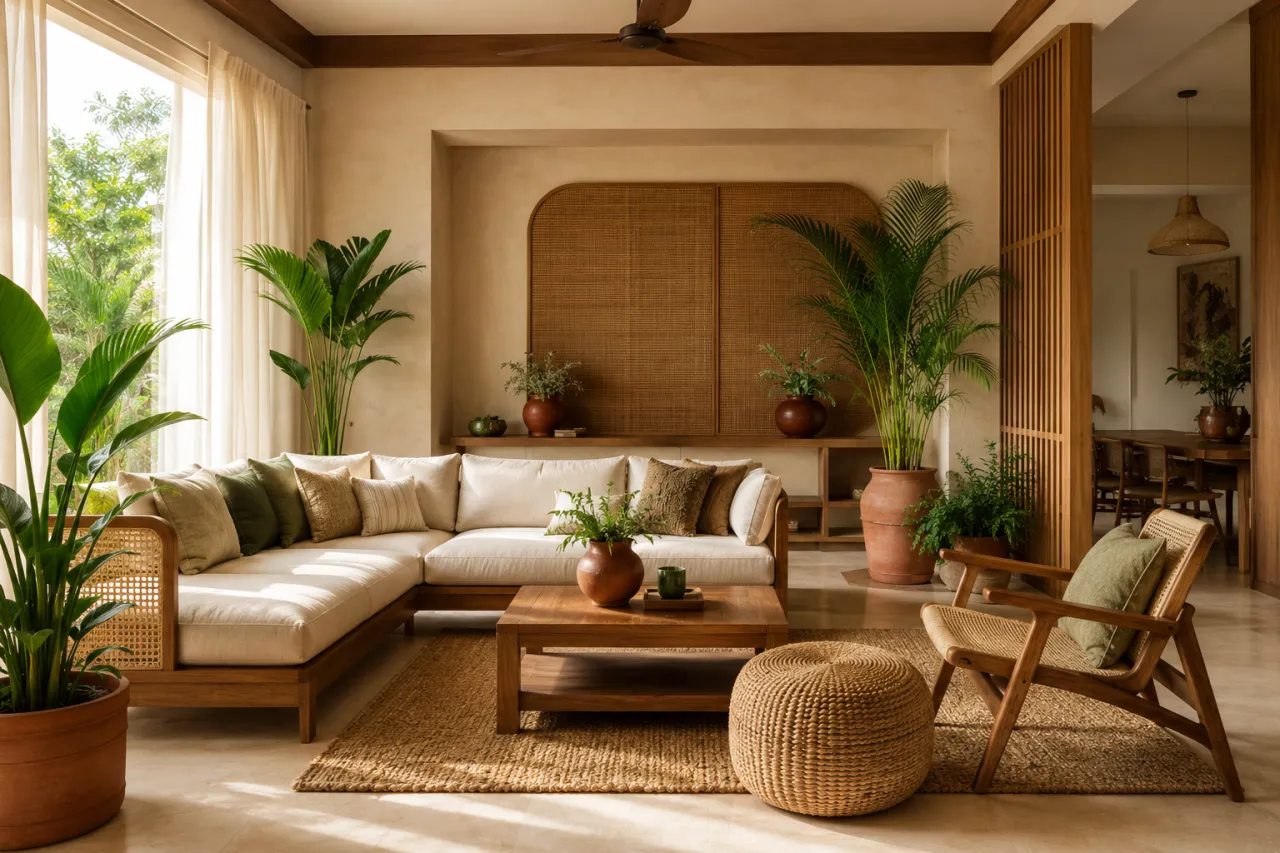
The good part is that eco-friendly interiors do not need to look basic or boring. With the right material selection, natural textures, warm colors, indoor plants, and smart planning, your home can look premium while still being practical and environment-friendly.
1. Choose Durable Materials That Last Longer
The most sustainable interior is one that does not need frequent replacement. Instead of choosing materials only because they are low-cost or trendy, select materials that are strong, repairable, and suitable for daily Indian home usage.
Indian homes often deal with dust, humidity, heat, frequent cleaning, cooking stains, children’s usage, and daily wear and tear. A durable material may cost slightly more in the beginning, but it can reduce future repairs, replacements, and waste.
| Interior Area | Better Sustainable Choice | Why It Helps |
|---|---|---|
| Modular Kitchen | BWP plywood, good hardware, quartz countertop | Longer life and lower replacement need |
| Wardrobes | Quality plywood or HDHMR with durable laminate | Better resistance to moisture and daily use |
| Flooring | Vitrified tiles, natural stone, reclaimed wood | Durable and easier to maintain |
| Furniture | Solid wood, cane, rattan, trusted engineered wood | Repairable and longer-lasting |
Before finalizing materials, compare strength, finish, warranty, maintenance, moisture resistance, and long-term usability. A sustainable home is not about selecting the cheapest option. It is about selecting the option that performs better over time.
2. Use Low-VOC Paints and Safer Finishes
Paints, polishes, adhesives, and surface finishes can affect indoor air quality. Many regular paints and finishes release strong smells and chemicals after application. These are known as VOCs, or volatile organic compounds.
For a healthier home, especially if you have children, elderly family members, pets, or anyone with allergies, choose low-VOC or no-VOC paints wherever possible. You can also ask your designer or contractor about safer adhesives, water-based polish, and better-quality surface finishes.
- Choose low-VOC wall paints for bedrooms and living rooms.
- Use water-based polish instead of strong solvent-based finishes where suitable.
- Ask about safer adhesives for furniture, wall panels, and laminates.
- Keep rooms well-ventilated during and after painting or polishing work.
Eco-friendly interiors are not only about protecting nature. They are also about creating a safer and healthier indoor space for your family.
3. Maximize Natural Light and Ventilation
One of the simplest sustainable interior design choices is to use natural light smartly. A well-lit home needs less artificial lighting during the day and feels more open, fresh, and positive.
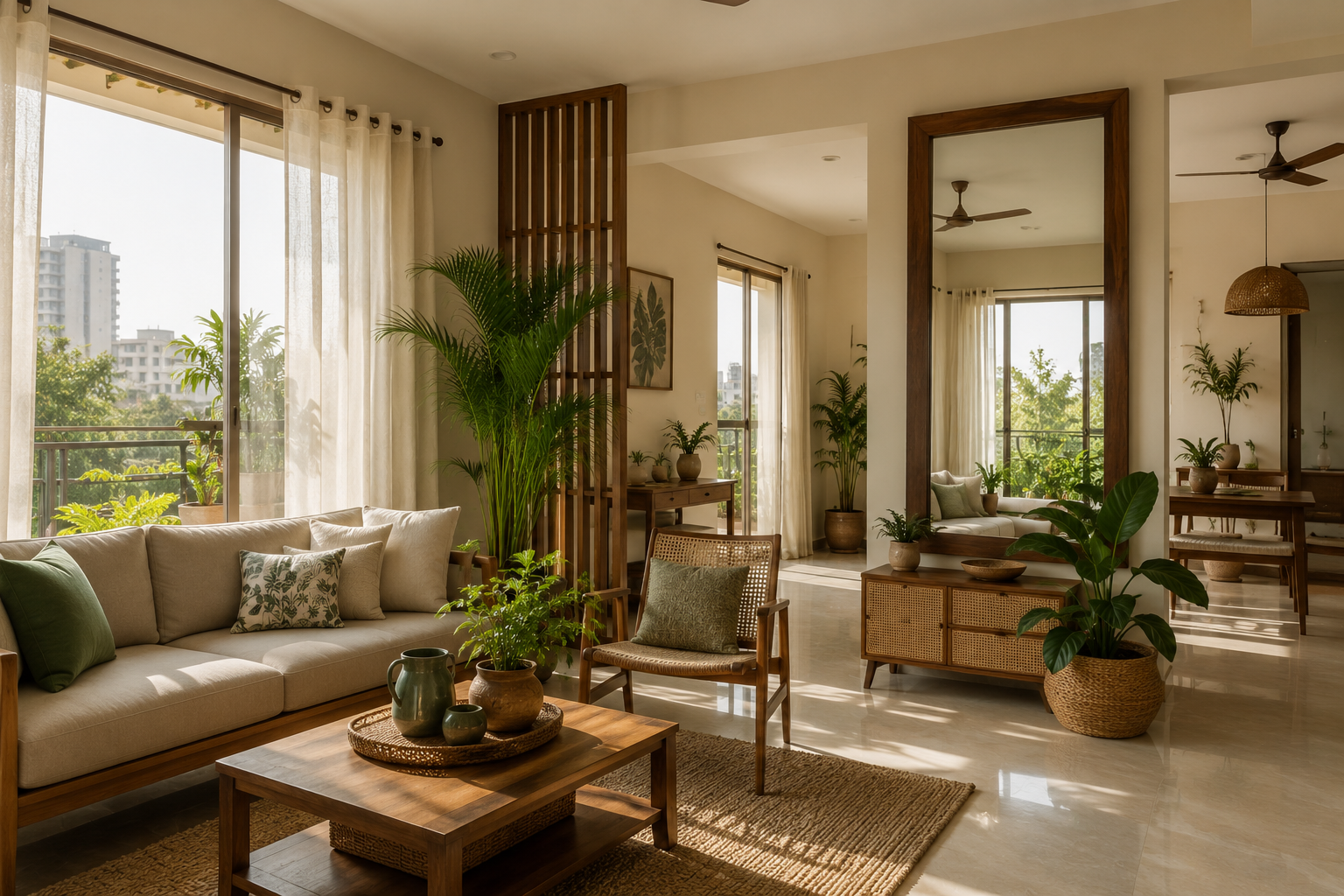
When planning your home interiors, avoid blocking windows with heavy furniture, bulky storage, or full-height partitions. Use sheer curtains, light wall colors, mirrors, glass elements, and open layouts to spread daylight across the home.
Design Tip: In compact apartments, place mirrors opposite or near windows to reflect natural light and make the room feel larger.
Good ventilation also helps reduce indoor heat, cooking smells, moisture, and the need for excessive air conditioning. In Indian homes, cross-ventilation is especially useful in kitchens, balconies, bathrooms, and living spaces.
4. Invest in Energy-Efficient Lighting and Appliances
Lighting plays a major role in interior design, but it also affects your monthly electricity bill. Sustainable interiors use lighting that is both beautiful and energy-efficient.
Use LED lights instead of traditional lighting. LEDs consume less energy, last longer, and are available in warm, neutral, and cool tones depending on the mood you want to create.
| Area | Eco-Friendly Lighting Idea |
|---|---|
| Living Room | Warm LED ceiling lights with task lighting |
| Kitchen | Under-cabinet LED strip lighting for work areas |
| Bedroom | Soft warm LED lamps and dimmable lights |
| Wardrobe | Sensor-based LED lighting |
For appliances, look for energy-efficient ratings, especially for air conditioners, refrigerators, chimneys, washing machines, geysers, and kitchen appliances. These choices support sustainable living and reduce long-term running costs.
5. Reuse, Repurpose, and Upcycle Existing Furniture
Before replacing everything in your home, check what can be reused or upgraded. Many old furniture pieces can be polished, painted, reupholstered, or redesigned to match a modern interior theme.
A solid wood dining table, an old armchair, a family storage cabinet, or a vintage chest can become a beautiful design feature when treated creatively. This reduces waste and adds character to your home.
- Convert an old trunk into a coffee table.
- Reupholster an old sofa instead of buying a new one.
- Use leftover tiles for balcony or utility decor.
- Turn old wooden doors into wall panels or tabletops.
- Refinish existing wardrobes with new laminate, handles, or paint.
Upcycling also helps create interiors that feel personal instead of looking like a copied showroom design.
6. Add Indoor Plants and Natural Elements
Indoor plants are one of the easiest ways to make your home feel fresh, calming, and close to nature. They improve the visual warmth of a room and soften modern interiors filled with hard surfaces like tiles, glass, metal, and laminates.
For Indian homes, choose plants that are easy to maintain and suitable for indoor conditions. You can place them near windows, in balcony corners, beside TV units, on shelves, or in living room corners.
| Plant | Best For | Maintenance |
|---|---|---|
| Snake Plant | Bedrooms, living rooms | Low |
| Money Plant | Kitchen, balcony, shelves | Low |
| Areca Palm | Living room corners | Medium |
| Peace Lily | Bedrooms, study areas | Medium |
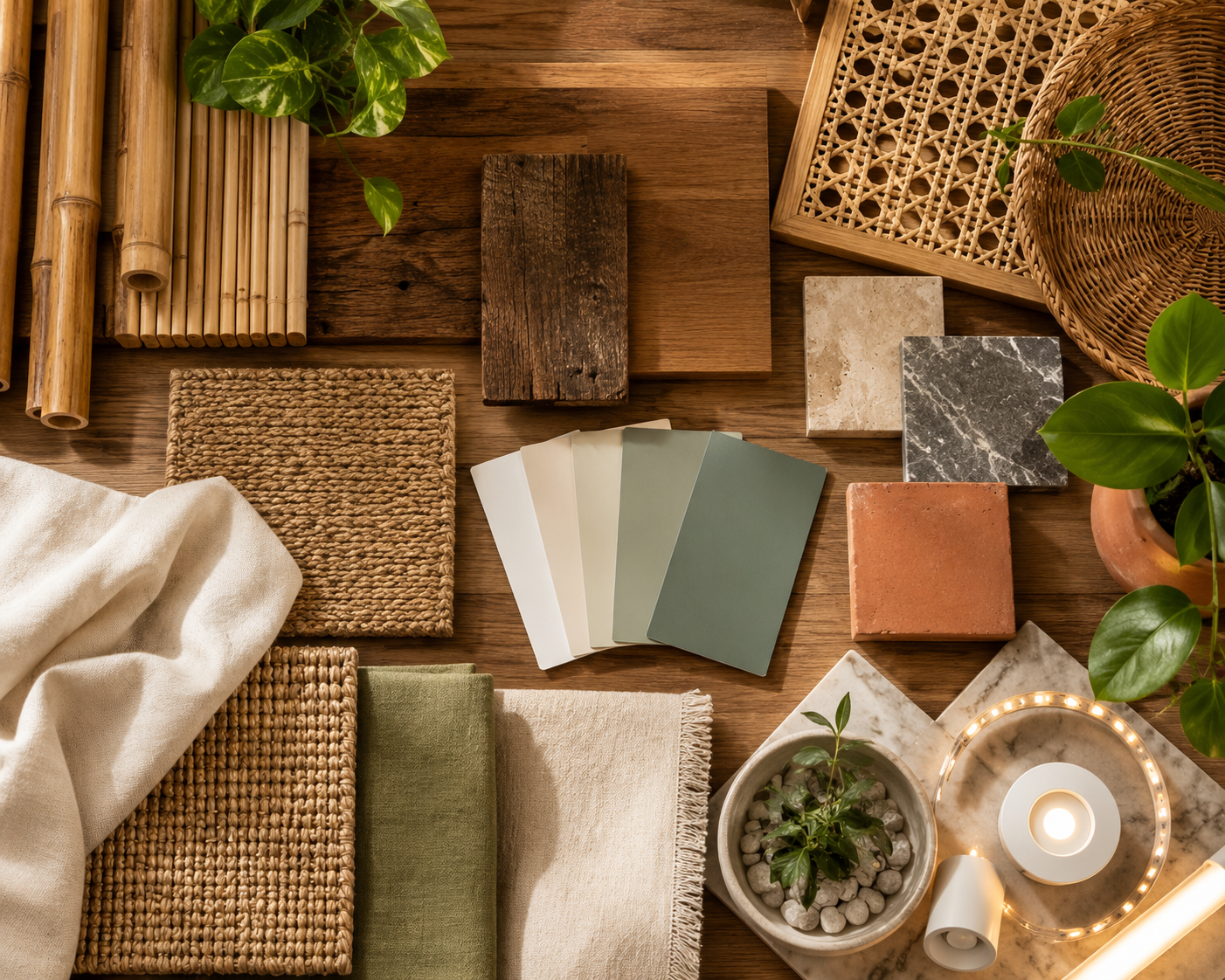
Apart from plants, you can also use natural textures such as cane, bamboo, jute, cotton, linen, terracotta, stone, and wood. These materials make interiors feel warm, earthy, and timeless.
7. Design for Flexibility and Future Needs
A sustainable home should adapt to your lifestyle over time. Instead of designing rooms only for today’s needs, think about how your family may use the space in the future.
For example, a guest bedroom can also work as a study room. A child’s room can be designed with flexible storage that can change as the child grows. A living room can include movable furniture instead of fixed heavy partitions.
- Use modular furniture wherever possible.
- Avoid overly trendy designs that may feel outdated quickly.
- Choose neutral base colors and add style through decor.
- Plan extra electrical points for future appliances and smart devices.
- Keep storage flexible instead of permanently fixed everywhere.
Flexible design reduces future renovation work, saves money, and helps your interiors stay useful for many years.
Sustainable Interior Materials to Consider
Eco-friendly interiors do not mean your home has to look plain or unfinished. You can create a premium interior while still making responsible material choices.
| Material | Where to Use | Benefit |
|---|---|---|
| Bamboo | Furniture, decor, partitions | Renewable and lightweight |
| Cane and Rattan | Chairs, shutters, decor | Natural and breathable look |
| Reclaimed Wood | Tables, shelves, wall panels | Reduces new material usage |
| Jute and Cotton | Rugs, curtains, cushions | Natural and comfortable |
| Terracotta | Decor, planters, feature elements | Earthy and traditional |
| Natural Stone | Flooring, counters, decor accents | Durable and timeless |
Eco-Friendly Interior Design Mistakes to Avoid
- Choosing cheap materials that need replacement within a few years.
- Using too many fixed furniture elements without future flexibility.
- Blocking natural light with heavy partitions or oversized furniture.
- Ignoring ventilation in kitchens, bathrooms, and utility areas.
- Buying trendy decor in excess instead of timeless pieces.
- Using poor-quality hardware that fails quickly.
- Not checking paint, polish, adhesive, and finish quality.
Sustainable design is not about spending more everywhere. It is about spending wisely on things that improve comfort, durability, health, and long-term value.
How WallsToWonder Helps You Plan Better Interiors
Plan Your Home Interiors Smarter
WallsToWonder helps homeowners explore interior design ideas, estimate interior costs, compare designers, and plan rooms with AI-powered tools.
Before starting your home interiors, use WallsToWonder to understand your design style, budget, room requirements, and material options.
Final Thoughts
Sustainable and eco-friendly interiors are about making thoughtful decisions. You do not need to change everything at once. Start with better materials, natural light, energy-efficient lighting, indoor plants, safer paints, and furniture that lasts longer.
A well-planned eco-friendly home looks beautiful, feels healthier, saves money over time, and supports a more responsible lifestyle. Whether you are designing a compact apartment, a 2 BHK, a villa, or a renovated family home, sustainable choices can make your interiors more meaningful and future-ready.
FAQs
1. What is sustainable interior design?
Sustainable interior design focuses on using durable, eco-friendly, energy-efficient, and healthier materials and design choices. It reduces waste, improves indoor comfort, and supports long-term usability.
2. Are eco-friendly interiors expensive?
Not always. Some sustainable choices may cost more initially, but they often save money in the long run because they last longer and need less maintenance or replacement.
3. Which materials are best for eco-friendly interiors?
Bamboo, cane, rattan, reclaimed wood, jute, cotton, terracotta, natural stone, low-VOC paints, and durable engineered materials from trusted brands are good options for eco-friendly interiors.
4. How can I make my existing home more sustainable?
You can start by switching to LED lights, adding indoor plants, reusing existing furniture, improving ventilation, choosing natural fabrics, and avoiding unnecessary renovation waste.
5. Do sustainable interiors look modern?
Yes. Sustainable interiors can look modern, premium, minimal, traditional, or luxury depending on the materials, colors, lighting, and furniture selected.
Turn this idea into a plan for your home
Visualise your space, understand the likely budget, or find a professional who can bring the idea to life.