
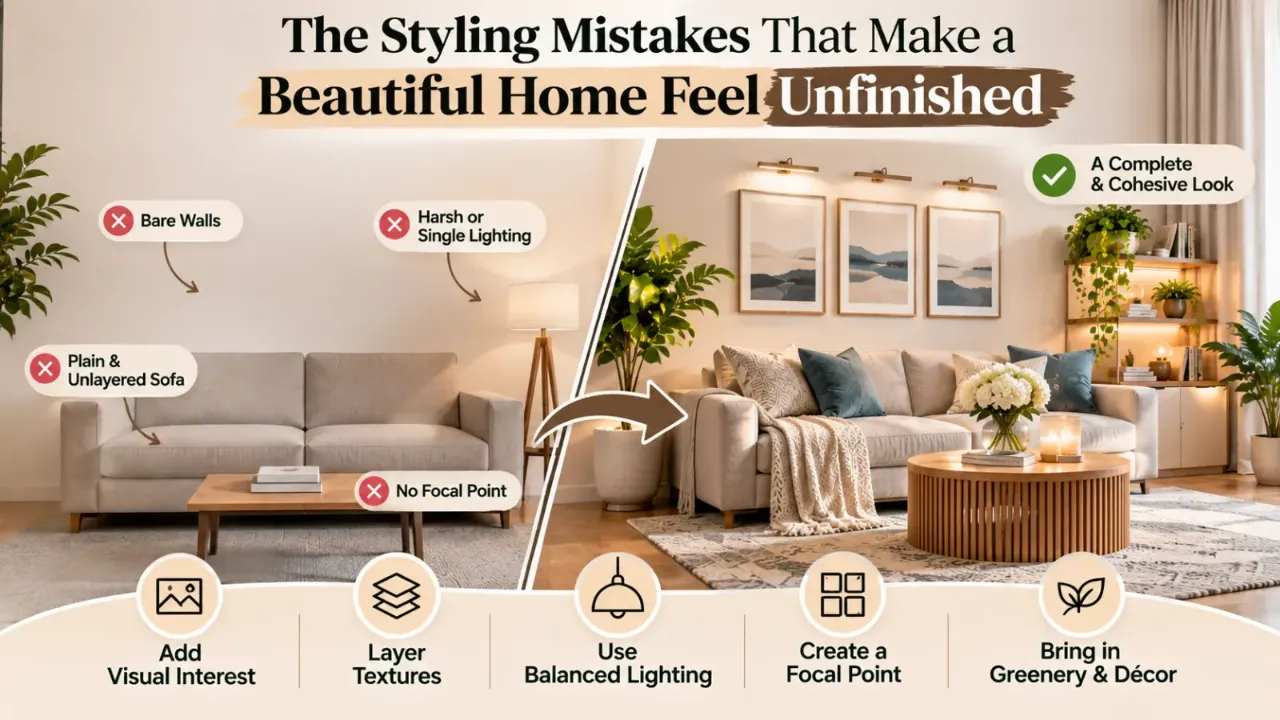
The Styling Mistakes That Make a Beautiful Home Feel Unfinished
A home can contain attractive furniture, carefully selected colours and beautiful decorative pieces yet still feel visually disconnected. Sometimes the problem is not what has been chosen, but how the different elements have been combined. A sofa that is too large, lighting that feels harsh or accessories placed without a clear arrangement can affect the overall result.
Good home decoration interior design is not simply about adding attractive objects to a room. It is about creating a relationship between furniture, colours, materials, lighting and the way people use the space. Understanding common styling mistakes can help you make better decisions before spending money on changes that may not improve the home.
1. Choosing Furniture Before Understanding the Layout
One of the most common mistakes is buying furniture based on appearance or showroom display rather than the dimensions of the actual room. A large sofa may look impressive in a store, but it can overwhelm a compact living room. Similarly, a dining table that leaves no room to pull out chairs can make everyday use uncomfortable.
Before purchasing furniture, measure the room and consider the available circulation space. Note door openings, windows, access to storage and the distance between major furniture pieces.
How to avoid it:
- Measure the room and furniture before purchasing.
- Consider both the furniture footprint and the space needed to use it.
- Keep frequently used pathways clear.
- Choose proportions that suit the room rather than copying a showroom arrangement.
A well-proportioned layout often makes a stronger impression than adding more furniture.
2. Using Too Many Colours Without a Clear Palette
Combining colours can give a home personality, but using too many unrelated shades may make the interiors feel fragmented. This often happens when furniture, wall colours, curtains, rugs and decorative accessories are selected separately without considering how they will look together.
A home does not need to use the same colour everywhere. It does, however, benefit from a considered relationship between its dominant shades and accents.
How to avoid it:
- Begin with a small group of colours that work well together.
- Select a dominant base colour for larger surfaces.
- Introduce stronger shades through selected furniture or accessories.
- Repeat a few colours across connected rooms to create continuity.
- Check how the palette looks in both natural and artificial light.
The aim is not to make every room identical, but to help the home feel connected.
3. Pushing Every Piece of Furniture Against the Wall
Placing all furniture against the walls may seem like a way to create more floor space. In some rooms, however, this arrangement can leave an awkward empty centre and make conversation or movement less comfortable.
Furniture placement should support the way the room is used. In a living room, for example, the seating arrangement should encourage interaction and relate to the focal point, whether that is a television, window or feature wall.
How to avoid it:
- Arrange seating around a useful focal point.
- Consider whether a sofa can sit slightly away from the wall.
- Use a rug to visually connect the seating arrangement.
- Maintain comfortable routes between furniture and doorways.
- Avoid leaving isolated pieces that do not relate to the rest of the room.
Not every room needs a floating furniture arrangement, but the layout should look intentional rather than automatic.
4. Treating Lighting as an Afterthought
A beautifully decorated room can feel uncomfortable if the lighting is poorly planned. Depending on a single ceiling fixture may create harsh illumination in some areas while leaving other corners too dark.
Lighting should support different activities. A living room may need general illumination, focused light for reading and softer lighting for relaxing. A kitchen needs practical task lighting, while a bedroom benefits from comfortable bedside illumination.
How to avoid it:
- Plan general, task and accent lighting according to the room's use.
- Position task lights near work surfaces and reading areas.
- Avoid glare on television screens and reflective surfaces.
- Choose suitable colour temperatures for the intended atmosphere.
- Plan electrical points before furniture and ceiling work are finalised.
Lighting is not merely a finishing touch; it influences how colours, textures and proportions are perceived.
5. Adding Too Many Decorative Accessories
Decorative objects can make a room feel personal, but too many accessories can compete for attention. Shelves crowded with small objects, multiple cushions in unrelated patterns or several decorative pieces on every surface can make a room feel busy.
The solution is not to remove all personality. It is to give selected objects enough space to be noticed.
How to avoid it:
- Group a few objects rather than scattering many individual pieces.
- Vary height and shape while maintaining a visual connection.
- Leave some shelf and tabletop space empty.
- Display items that have personal meaning or complement the room.
- Rotate seasonal accessories instead of displaying everything together.
A carefully edited arrangement can feel more expressive than a crowded display.
6. Mixing Materials and Textures Without Balance
Wood, metal, glass, stone, fabric and decorative finishes each bring a different quality to an interior. The problem arises when too many competing textures and finishes are introduced without a clear relationship.
For example, several strong wood tones, glossy surfaces, patterned upholstery and metallic accents may make a room feel visually unsettled when none of them has a supporting role.
How to avoid it:
- Choose a few primary materials for the main furniture and surfaces.
- Introduce contrasting textures through smaller elements.
- Repeat selected finishes to create consistency.
- Consider the existing flooring, wall finish and natural light.
- Request material samples and view them together before finalising.
Contrast adds depth, but repetition helps the overall design feel cohesive.
7. Ignoring Curtains, Rugs and Other Soft Furnishings
Soft furnishings influence the comfort, scale and visual balance of a room. Curtains that are too short, a rug that is too small or cushions that do not relate to the furniture can make an otherwise well-planned interior feel unfinished.
These details should be selected according to the room's dimensions and practical requirements.
How to avoid it:
- Measure windows before choosing curtain lengths and widths.
- Select rug dimensions that relate to the furniture arrangement.
- Consider fabric texture, cleaning needs and light control.
- Coordinate patterns with the room's existing colours.
- Avoid using too many competing prints in one space.
Soft furnishings should connect the room's elements, not become unrelated decorative additions.
8. Following Trends Without Considering Your Home
A popular interior style may look appealing in photographs, but it may not suit every home's layout, natural light, climate or maintenance requirements. Copying a trend without adapting it can lead to choices that become inconvenient once everyday use begins.
For example, a finish that looks striking in a photograph may require frequent cleaning. A decorative partition may look elegant but reduce useful light or movement.
How to avoid it:
- Understand what attracts you to a particular trend.
- Adapt selected details instead of copying the entire look.
- Consider the home's size, orientation and daily routines.
- Check material durability and maintenance needs.
- Prioritise long-term comfort over short-lived visual appeal.
A home should reflect the people living in it, not just the latest interior photographs.
9. Overlooking Wall Proportions and Artwork Placement
Wall decoration can bring character to a room, but artwork and wall features need to relate to the furniture and available wall area. A tiny frame placed alone above a large sofa may appear disconnected, while an oversized artwork can overwhelm a narrow wall.
How to avoid it:
- Consider the width of the furniture below the artwork.
- Plan gallery walls as one visual arrangement.
- Keep artwork at a comfortable viewing height.
- Avoid placing decorative elements where doors or furniture interrupt them.
- Use wall panelling and mouldings in proportion to the room.
The wall should complement the room's arrangement rather than compete with it.
10. Neglecting Practical Storage While Styling
A room may look neat immediately after decoration but become difficult to maintain if everyday belongings have no designated storage. Bags, chargers, paperwork, cleaning supplies and other frequently used items can quickly occupy visible surfaces.
Storage should be integrated into the design rather than treated as a separate problem after the styling is complete.
How to avoid it:
- Identify what needs to be stored in each room.
- Use closed storage for items that create visual clutter.
- Keep frequently used belongings easy to access.
- Consider furniture with practical built-in storage.
- Avoid adding cabinets that obstruct movement or overwhelm the room.
A well-designed interior should remain functional after the photographs have been taken.
11. Forgetting the Importance of Negative Space
An empty area is not necessarily wasted space. When every wall, shelf and corner is filled, the room can lose visual breathing room. Negative space helps important furniture and decorative features stand out.
How to avoid it:
- Leave selected wall areas uncluttered.
- Avoid filling every corner with a chair, plant or cabinet.
- Give statement furniture enough surrounding space.
- Edit decorative arrangements when they begin to feel crowded.
- Consider the overall view from the entrance and main seating area.
A balanced room includes both decorated areas and quieter spaces.
12. Making Decisions Without Seeing the Elements Together
Choosing furniture, paint, tiles, curtains and lighting separately can create unexpected results when everything is installed. A colour may look different beside the actual flooring, and a furniture finish may not complement the selected wall treatment.
How to avoid it:
- Prepare a mood board with the main colours and materials.
- Collect physical samples where possible.
- Review furniture dimensions on a measured floor plan.
- Check finishes under the room's actual lighting conditions.
- Visualise the complete arrangement before committing to major purchases.
This approach can reduce avoidable changes and help you make decisions with greater confidence.
Explore Your Home Design With Walls to Wonder
Before finalising furniture, colours and finishes, explore different possibilities for your space. Use Design My Room to experiment with room designs, furniture and finishes, or try the Whole Home Visualizer to explore a coordinated look across your home.
For preliminary budget planning, explore the Interior Design Cost Estimate. If you have received an interior quotation, the Interior Quotation Checker can help you review its scope, materials, charges and exclusions.
These tools support interior planning and visualisation; they do not replace site measurements, technical checks or professional advice where required.
Final Thought
Good home decoration is not about following a fixed set of styling rules or filling every room with beautiful objects. It is about understanding how each element contributes to the overall space.
When furniture proportions, colour, lighting, materials and accessories work together, the result feels more intentional and comfortable. Avoiding common styling mistakes does not require a complete makeover; often, a few thoughtful corrections can make a home feel considerably more cohesive.
The best interiors are not simply attractive at first glance. They continue to work well in everyday life.
Frequently Asked Questions
1. What are the most common home decoration mistakes?
Common mistakes include choosing furniture that is too large, combining too many colours, using poor lighting, overcrowding surfaces with accessories and ignoring storage or circulation space.
2. How can I make my home decoration look cohesive?
Start with a considered colour palette, repeat selected materials and finishes, choose furniture that suits the room and make sure lighting and accessories complement the overall arrangement.
3. Should all rooms in a home have the same colour scheme?
No. Different rooms can have their own character. However, repeating a few colours, materials or finishes across connected spaces can help create a sense of continuity.
4. How many decorative accessories should a room have?
There is no fixed number. Choose accessories according to the available surface area and the room's style. Group selected pieces thoughtfully and leave enough open space to prevent visual clutter.
5. Why is lighting important in interior decoration?
Lighting affects how colours and materials appear and how comfortable a room feels. Combining general, task and accent lighting helps support different activities and create a more balanced atmosphere.
6. How can I avoid costly decoration mistakes?
Measure before buying, prepare a mood board, compare material samples, plan furniture placement and review the complete design before committing to major purchases or installation work.
Turn this idea into a plan for your home
Visualise your space, understand the likely budget, or find a professional who can bring the idea to life.