
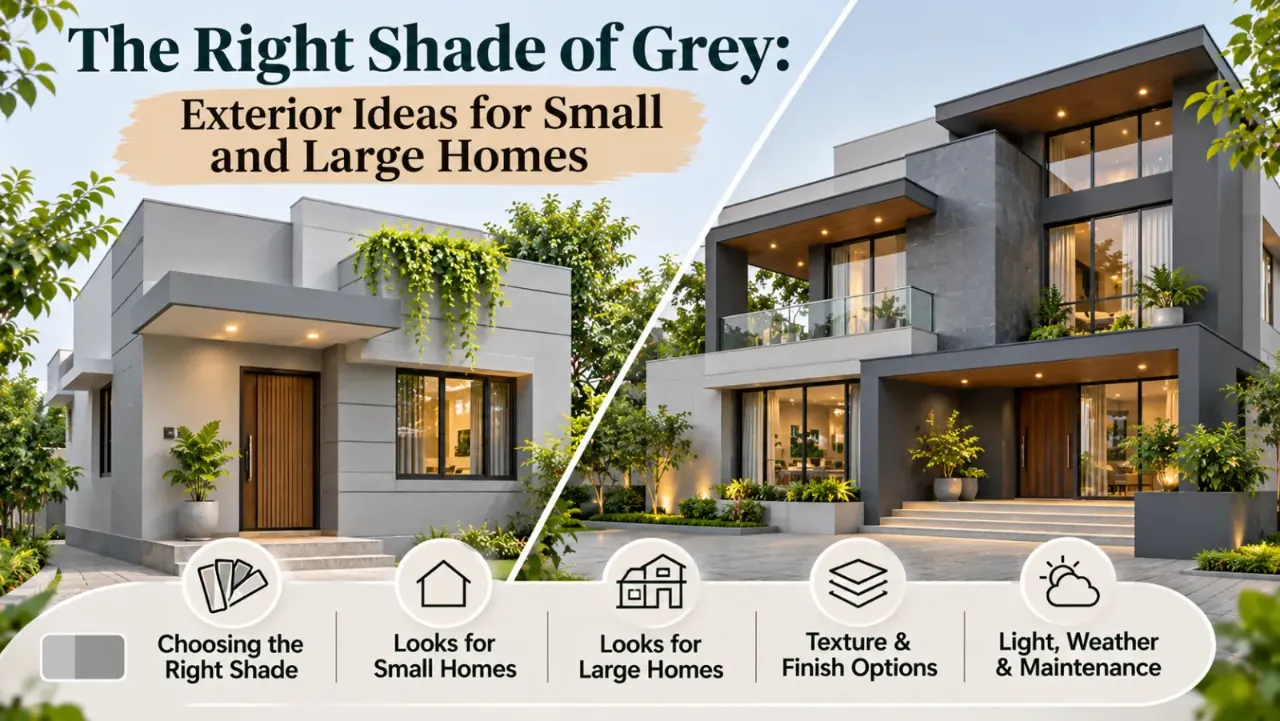
The Right Shade of Grey: Exterior Ideas for Small and Large Homes
A grey exterior can make a home look contemporary, understated and well-defined. It works with a wide range of architectural styles, from compact urban houses to spacious independent homes. But choosing grey is not simply a matter of selecting a paint shade. The result depends on the building's proportions, natural light, surrounding materials and the way different surfaces are combined.
A shade that looks elegant on a large facade may feel too heavy on a small house. Similarly, an all-grey exterior can appear flat if there is no variation in texture or depth. The key is to use grey in a way that complements the size and character of the building.
Here are practical ways to approach a grey exterior house design for different home sizes.
1. Why Grey Works for Home Exteriors
Grey is a versatile neutral that can look warm, cool, soft or dramatic depending on its undertone and surrounding colours. It can complement materials such as natural stone, timber, concrete, metal and glass.
- A balanced appearance: Grey can provide a quieter alternative to bright exterior colours.
- Flexible combinations: It pairs well with white, beige, black, muted green and natural wood tones.
- Architectural definition: Different grey shades can help distinguish projections, recesses, columns and other facade elements.
- A contemporary character: Grey often works well with clean lines, simple forms and modern materials.
However, grey is not automatically the right choice for every building. The shade should be assessed against the home's design, orientation and surroundings.
2. Small Homes: Keep the Exterior Light and Balanced
For a compact house, the main objective is to create a facade that feels visually open rather than crowded. Light grey, pale greige and soft cement-inspired shades can work well because they provide subtle character without making the exterior feel too dark.
Consider these approaches:
- Use light grey as the primary wall colour.
- Add white or off-white around window frames, bands or selected architectural details.
- Introduce a limited amount of darker grey to define an entrance or a recessed section.
- Keep material combinations simple so that the facade does not become visually busy.
- Use vertical or horizontal design elements thoughtfully to complement the building's proportions.
A compact home does not need several finishes to look distinctive. A well-chosen grey, a contrasting entrance door and carefully placed lighting can create a composed exterior.
3. Medium-Sized Homes: Create Depth With Two or Three Tones
Medium-sized houses offer more opportunities to divide the facade into visually distinct sections. A combination of light and medium grey can create depth while maintaining a consistent appearance.
For example, the main walls can use a soft grey, while a balcony wall, entrance projection or upper-floor volume uses a deeper charcoal-grey tone. White or a natural material can provide contrast.
Useful combinations include:
- Light grey with white and natural wood.
- Medium grey with warm beige and stone.
- Grey with charcoal accents and muted greenery.
- Cool grey with off-white and dark metal details.
The important point is to establish a clear colour hierarchy. One shade should dominate, while the other finishes support it. If every wall, projection and border has a different colour, the facade may lose visual unity.
4. Large Homes: Use Grey to Organise the Facade
A larger house can accommodate stronger contrasts, broader material changes and more detailed architectural features. Dark grey can be effective on selected volumes, while lighter shades can keep the overall facade from appearing too heavy.
Consider using different tones to distinguish:
- Main building volumes from projecting sections.
- Balcony recesses from external walls.
- Entrance features from the rest of the facade.
- Staircase or service blocks from primary living spaces.
Large surfaces also make texture more noticeable. Stone cladding, textured exterior coatings, exposed concrete finishes or timber-look elements can add variation without requiring many colours.
Avoid applying dark grey uniformly across an entire large facade without considering sunlight and the building's visual mass. A balanced combination of light and dark surfaces usually creates more depth.
5. Choose the Right Grey Undertone
Not all greys look the same. Some have blue or green undertones, while others lean towards beige or brown.
- Cool grey: Often has a blue or slightly green undertone. It can suit crisp, contemporary facades with glass and metal.
- Warm grey: Has beige or brown undertones and can work well with timber, sandstone and warmer surroundings.
- Light grey: Helps create a softer, less visually dominant exterior.
- Charcoal grey: Adds contrast and definition, but is usually more effective when used selectively.
Do not finalise a shade from a small digital image or paint-card sample alone. View a larger sample on the actual exterior, preferably at different times of day. Natural light, nearby surfaces and the direction a wall faces can change how the colour appears.
6. Combine Grey With Materials That Add Character
Grey becomes more interesting when paired with materials that introduce a different texture or visual temperature.
Natural stone
Stone can add variation and a grounded appearance around entrance walls, boundary features or selected facade sections.
Wood and wood-look finishes
Timber tones can soften a grey exterior and create a welcoming entrance or balcony feature. Check the product's suitability for outdoor exposure before selecting it.
Glass
Glass balcony panels and larger windows can complement a contemporary grey facade. Consider privacy, cleaning and heat exposure as part of the selection.
Metal
Dark metal railings, gates and window frames can provide definition. The coating and corrosion protection should suit the local weather conditions.
Textured finishes
A textured coating can create subtle depth on a large wall, but its cleaning and repainting requirements should be understood before application.
The goal is not to use every material. Select one or two supporting finishes that suit the architecture and can be maintained over time.
7. Pay Attention to Windows, Doors and Boundary Features
The smaller elements of a facade can strongly influence how the overall colour scheme looks.
Window frames in white, black or a coordinated neutral can make the grey walls appear more deliberate. An entrance door in a timber finish can create a focal point without introducing a competing colour.
Boundary walls and gates should also relate to the main house. They do not have to repeat every finish, but a shared colour or material detail can help the property feel cohesive.
Before finalising the scheme, review the exterior from the street and consider how the house, gate, boundary wall and entrance work together.
8. Consider Sunlight, Weather and Maintenance
Exterior colour selection should account for the conditions the building will face. Strong sunlight, rain, dust, humidity and pollution can affect how a finish looks and performs.
- Ask for exterior-grade products suitable for the local climate.
- Check the manufacturer's guidance on surface preparation, application and maintenance.
- Consider how dust and rain marks may appear on very light or very dark finishes.
- Inspect areas exposed to water, such as parapets, ledges and projecting bands.
- Coordinate paint selection with waterproofing, drainage and proper detailing.
- Confirm that different materials and coatings are compatible with one another.
A beautiful colour scheme cannot compensate for poor surface preparation or water-related problems. The finish should be selected as part of a complete exterior plan.
9. Common Mistakes to Avoid
A few decisions can make a grey exterior look less balanced than intended.
- Choosing grey only from a photograph: Lighting and screens can distort the appearance of a shade.
- Using too many grey tones: Too many similar shades can make the facade look patchy rather than layered.
- Making every surface dark: Extensive dark finishes may visually dominate a compact building.
- Ignoring neighbouring materials: A grey that looks good alone may clash with the roof, paving or boundary wall.
- Overusing decorative cladding: Too many textures can distract from the architecture.
- Forgetting maintenance: Exterior finishes need to be appropriate for exposure, cleaning and future repairs.
A restrained palette with a clear main colour and a few supporting elements is often easier to execute and maintain.
10. Finalise the Colour Scheme Before Execution
Before painting begins, view the proposed colours together with the actual exterior materials. Review them on sample patches, not just on a screen. Check the appearance in morning and afternoon light, and assess the facade from different viewing distances.
It is also useful to prepare a simple elevation marking which colour or finish belongs to each section. This reduces confusion during execution and helps painters, fabricators and other contractors follow the same design intent.
For inspiration and early visual planning, Walls to Wonder offers tools such as Design My Room and the Whole Home Visualizer. These are intended for interior planning and visualisation, rather than technical exterior design validation.
Planning an interior alongside your exterior? The Interior Design Cost Estimate can help with preliminary interior budget planning, while the Interior Quotation Checker can help review interior quotation scope, materials, charges and exclusions. These tools do not validate exterior construction specifications.
Final Thought
A successful grey exterior is not defined by how many shades or materials it uses. It is defined by how well the colour scheme responds to the size, proportions and architectural character of the home. A compact house may benefit from a light, restrained palette, while a larger facade can accommodate deeper contrasts and more varied textures.
Choose grey with the building in mind, test the finish in real light and coordinate every supporting element. The result can be an exterior that feels cohesive, distinctive and practical for everyday living.
Frequently Asked Questions
1. Which grey is best for a small house exterior?
Light grey, pale greige and soft cement-inspired shades are useful starting points for compact homes. The final choice should be tested against the building's natural light and surrounding materials.
2. Does grey go well with white on a house exterior?
Yes. Grey and white can create a clean, balanced combination. Grey can be used for the main walls, with white reserved for selected trims, window surrounds or architectural details.
3. Can dark grey be used on a large house exterior?
Yes. Dark grey can add definition to larger homes, particularly when balanced with lighter wall areas or natural materials. Consider the amount of direct sunlight and the visual weight of the facade.
4. Which materials look good with a grey exterior?
Natural stone, timber, glass, metal and selected textured finishes can complement grey. The best combination depends on the architecture, climate and maintenance requirements.
5. How can I choose the right exterior grey paint?
Compare larger samples on the actual building and view them at different times of day. Also check the product's exterior suitability, finish, application requirements and maintenance guidance.
Turn this idea into a plan for your home
Visualise your space, understand the likely budget, or find a professional who can bring the idea to life.