
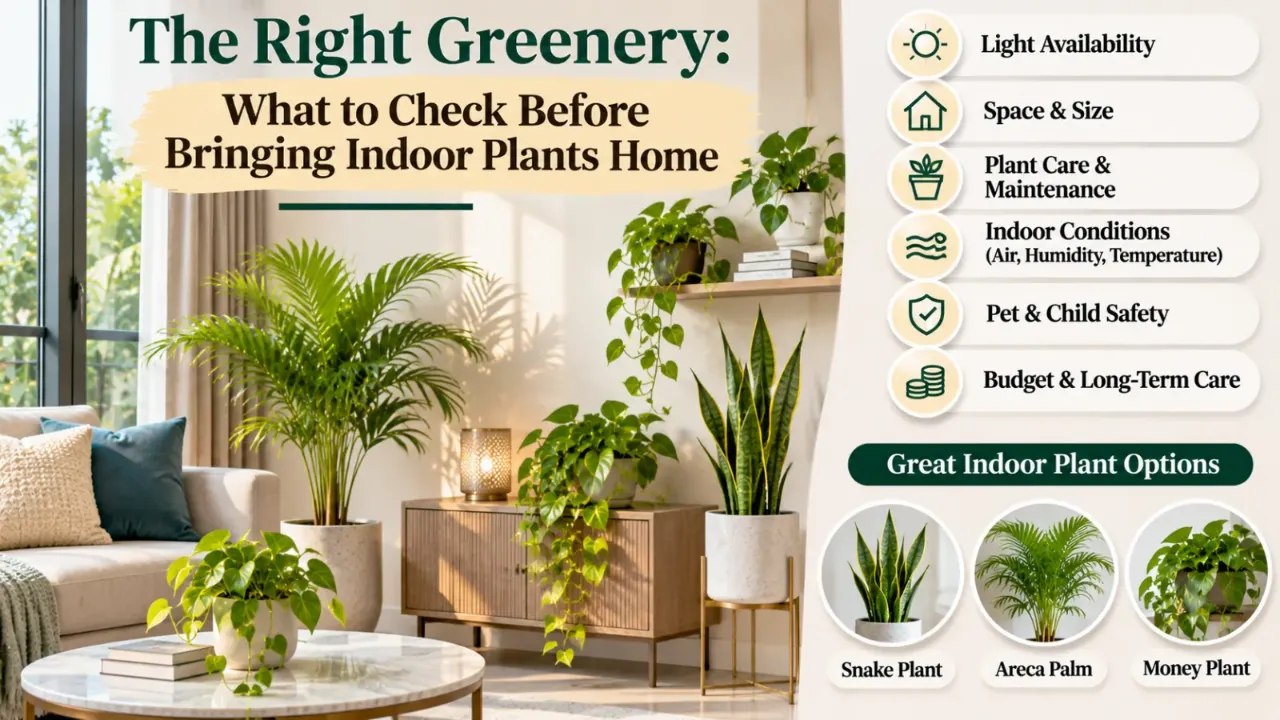
The Right Greenery: What to Check Before Bringing Indoor Plants Home
Indoor plants can make a home feel calmer, fresher and more connected to nature. A well-placed plant can soften an empty corner, add colour to a neutral room or bring life to a balcony-facing living area. But choosing the best indoor house plant is not simply about picking the prettiest one at a nursery.
A plant that thrives in a bright shop may struggle in a dim bedroom. A large floor plant may look beautiful in a photograph but obstruct movement in a compact living room. Even low-maintenance varieties need the right light, suitable watering and a pot that allows proper drainage.
Before bringing greenery home, take a little time to understand your space and routine. These are the planning mistakes worth avoiding.
1. Choosing a Plant Before Checking the Natural Light
One of the most common mistakes is selecting a plant based on appearance without checking how much natural light the intended spot receives.
Observe the room at different times of the day. Notice whether sunlight reaches the windows directly, whether the space receives bright indirect light or remains relatively dim. Also consider how nearby buildings, balconies, curtains and window orientation affect the light.
Different plants have different requirements. Snake plants and ZZ plants can tolerate lower-light conditions better than many flowering or sun-loving varieties, although they still need some suitable light to grow. Pothos and many common foliage plants generally do well in bright, indirect light.
Do not assume that a plant described as suitable for low light will thrive in a dark corner with no natural light. If the location is very dim, consider whether a suitable grow light is practical.
2. Buying a Plant That Is Too Large for the Space
A large indoor plant can make a strong visual statement, but size needs to be considered in relation to the room.
Before buying, measure the available floor area and think about the plant's likely mature height and spread. A plant that fits comfortably today may become difficult to manage as its leaves expand.
Check whether it will interfere with:
- Walking paths and door openings.
- Window access and curtains.
- Cupboards, drawers and furniture.
- Ceiling fans and air-conditioning units.
- Cleaning and everyday household activities.
For smaller rooms, a compact tabletop plant, a narrow floor planter or a carefully positioned hanging plant may be more practical than a wide, spreading variety.
3. Treating Every Indoor Plant as Low-Maintenance
Not all indoor plants need the same level of attention. Some tolerate occasional missed watering, while others need more consistent moisture, humidity or light.
Before purchasing, ask about the plant's watering frequency, light requirements, humidity preferences, growth rate and pruning needs. Consider whether you can realistically maintain those conditions.
For example, snake plants and ZZ plants are often selected for their relatively forgiving care requirements. Ferns may need more attention to moisture and humidity, depending on the variety and indoor conditions.
Choose plants according to the time you can give them, not just the time you hope to have.
4. Watering Without Checking the Soil
Watering on a fixed daily schedule is a common way to create problems. A plant's water needs change with the season, room temperature, light, pot size and soil mix.
Overwatering can leave roots sitting in poorly aerated, wet soil. Underwatering can cause wilting, dry leaves and slowed growth. The right approach is to check the soil and understand the needs of the particular plant.
Before watering, check the soil moisture with your finger or an appropriate moisture meter. Follow the care requirements of the plant rather than assuming that all indoor plants need water at the same interval.
Also make sure excess water can drain away. A decorative pot without drainage should not be used in a way that leaves the plant sitting in collected water.
5. Ignoring the Importance of the Right Pot
A beautiful planter can complete the look of an indoor corner, but the container also affects plant health.
The pot should suit the plant's size and have suitable drainage. A container that is too large can hold excess moisture around a small root system, while one that is too small may restrict growth.
Consider these details before purchasing:
- Drainage: Check that excess water can escape.
- Size: Choose a pot appropriate for the root ball and plant.
- Material: Terracotta, ceramic, plastic and other materials dry at different rates.
- Weight: Heavy planters may be difficult to move for cleaning or repositioning.
- Finish: Select a colour and texture that complement the room without compromising function.
If you prefer a decorative outer planter, keep the plant in a suitable inner pot and make sure collected water is emptied after watering.
6. Placing Plants in the Wrong Part of the Home
A plant should fit naturally into the room's layout. Placing it wherever there is an empty corner can create visual clutter or make daily movement inconvenient.
Think about how each area is used. A living room may have space for a floor plant near a suitable window. A bedroom might work better with a compact plant on a shelf or side table, provided its light and care needs are met. A kitchen may suit a small herb plant if the location receives enough light and is away from excessive heat.
Avoid placing plants directly against hot appliances, in strong air-conditioning drafts or in locations where water can damage furniture and flooring.
Also consider children and pets. Some common house plants can be harmful if chewed or swallowed. Check the specific plant's safety before placing it within reach, and choose an appropriate alternative if needed.
7. Buying Several Plants Without Planning Their Arrangement
A collection of attractive plants can quickly become a crowded display if their placement is not considered together.
Before buying multiple plants, decide where each one will go. Vary height and leaf shape to create interest, but leave enough space for plants to grow and for you to reach them while watering and cleaning.
You could plan a simple arrangement using:
- One taller floor plant as the main feature.
- A medium-sized plant on a stand or side table.
- A compact plant on a shelf or console.
- A hanging plant where it will not obstruct movement.
Keep plants with similar light and watering requirements together where practical. This makes routine care easier and helps avoid treating every plant in a group as if it has identical needs.
8. Forgetting Ventilation and Indoor Conditions
Light is important, but it is not the only factor. Indoor temperature, humidity and airflow also influence how well a plant adapts.
Some plants prefer more humid conditions, while others are more tolerant of typical indoor environments. Constant exposure to hot or cold air from an AC vent can stress certain varieties. Poor airflow around crowded plants can also make it harder for leaves and soil surfaces to dry appropriately.
Observe the room's conditions before selecting a plant. Avoid placing a plant directly in the path of strong air-conditioning or heating airflow, and leave enough space between pots for air to circulate.
9. Not Checking the Plant Before Buying It
A plant may look healthy from a distance but have damaged leaves, pests or signs of stress.
Before buying, inspect the foliage, stems and visible soil surface. Look for unusual spots, yellowing, sticky residue, webbing, insects or a persistent unpleasant smell from the soil. Check that the plant is reasonably stable in its pot and that there are no obvious signs of severe damage.
Ask the seller about the plant's name, care instructions and whether it has recently been repotted. If you are buying several plants, inspect each one rather than assuming they are all in the same condition.
When bringing a new plant into a home that already has greenery, keep it separate for a short observation period where practical. This can help you notice potential pest problems before placing it alongside other plants.
10. Choosing Plants Only to Match the Interior Theme
Plants are part of the interior, but their care requirements should come before colour coordination.
A sculptural plant may complement a minimalist living room, while trailing foliage may work well on a shelf or in a relaxed reading corner. However, do not select a plant that needs strong sunlight simply because its shape suits the room's aesthetic.
Instead, find a variety that suits the room's conditions and then choose a planter that complements the interior. Neutral ceramic, terracotta, textured stone-look finishes and simple metal stands can all work with different design styles.
The greenery should feel integrated into the room without making the space difficult to maintain.
11. Overlooking the Long-Term Care Routine
Buying a plant is the beginning of its care, not the end of the decision. Consider who will water it when you travel, how you will manage fallen leaves and whether you have a convenient place to clean the planter.
A simple care plan can include:
- Checking soil moisture before watering.
- Removing dead or damaged leaves.
- Cleaning dust from foliage when appropriate.
- Rotating the pot if the plant grows unevenly towards the light.
- Checking periodically for pests.
- Repotting when the plant outgrows its container or the growing medium needs replacing.
Keep plant care manageable. A few healthy, well-positioned plants often contribute more to a home than a large collection that is difficult to maintain.
Final Thought
The best indoor house plant is not necessarily the most expensive, unusual or popular variety. It is the one that suits your home's light, available space, indoor conditions and everyday routine.
Before purchasing, check the plant's care requirements, plan its position, choose a suitable pot and consider how it will fit into the room over time. A little preparation helps you create a greener home without turning plant care into an avoidable daily challenge.
Frequently Asked Questions
1. Which indoor house plants are suitable for beginners?
Snake plants and ZZ plants are commonly chosen by beginners because they can tolerate some variation in watering and indoor conditions. However, they still need suitable light, drainage and basic care.
2. Which indoor plants can grow in low light?
Some varieties, including snake plants and ZZ plants, can tolerate lower-light conditions better than many other house plants. Low light does not mean no light, so avoid placing plants in completely dark spaces.
3. How do I choose the right indoor plant for my living room?
Check the available natural light, floor space, ventilation and the time you can give to plant care. Then choose a plant whose mature size and growing requirements suit the intended location.
4. How often should indoor plants be watered?
There is no single watering schedule for every plant. Check the soil moisture and follow the specific plant's requirements, taking account of the season, room conditions and pot type.
5. Do indoor plants need pots with drainage holes?
Most indoor plants benefit from containers that allow excess water to drain. If you use a decorative outer pot without holes, make sure the inner pot drains properly and that collected water is emptied.
6. Can I keep indoor plants in an air-conditioned room?
Many common indoor plants can adapt to air-conditioned homes, but avoid placing them directly in strong cold-air drafts. Consider the plant's temperature and humidity requirements before choosing its position.
7. Are all indoor plants safe for pets and children?
No. Some common house plants can be harmful if chewed or swallowed. Check the identity and safety of each plant before bringing it home, especially if pets or young children can reach it.
Explore Your Interior Ideas With Walls to Wonder
Planning to bring greenery into your home? Use Design My Room to explore room concepts, finishes and furniture, or try the Whole Home Visualizer to coordinate design ideas across your home. For broader interior planning, the Interior Design Cost Estimate can help with indicative budgeting, while the Interior Quotation Checker can help review quotation scope, materials, charges and exclusions.
These tools support interior visualisation and planning; they do not replace plant-specific care guidance or advice from a horticulture professional.
Turn this idea into a plan for your home
Visualise your space, understand the likely budget, or find a professional who can bring the idea to life.