
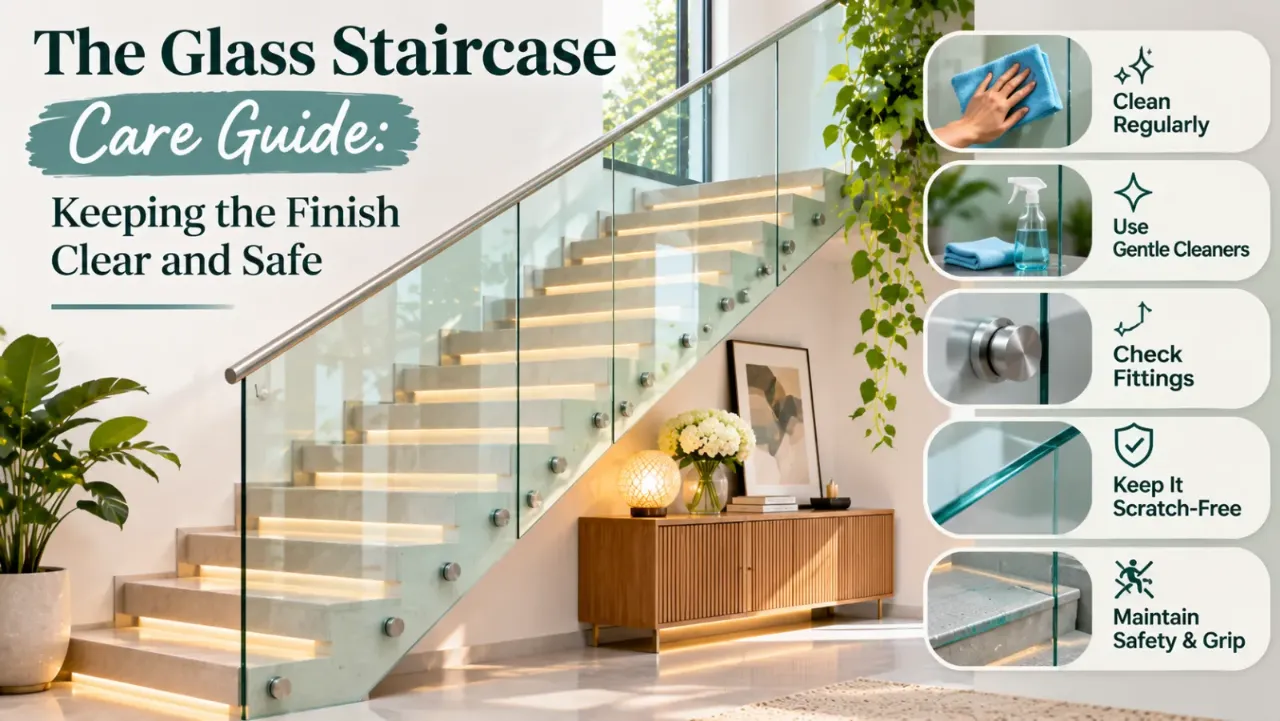
The Glass Staircase Care Guide: Keeping the Finish Clear and Safe
A staircase with glass can make an interior feel lighter, more open and visually connected. Transparent panels allow daylight to travel through the space, while their clean lines complement materials such as wood, stone, concrete and metal. But the appeal of a glass staircase does not end when installation is complete.
Fingerprints, dust, water marks and everyday contact can gradually affect its appearance. More importantly, the fittings, joints and supporting elements need attention to keep the installation in good condition. A glass staircase should therefore be planned not only around its appearance, but also around how it will be cleaned, inspected and maintained over the years.
The good news is that regular, appropriate care can help preserve its finish and make everyday upkeep more manageable. Here are the key maintenance requirements homeowners should understand.
1. Understand What Needs to Be Maintained
A glass staircase is not just a sheet of glass. Depending on the design, the installation may include glass panels, metal channels, clamps, brackets, handrails, gaskets, sealants and supporting structures.
Each component has a different maintenance requirement.
- Glass panels: Need regular cleaning and careful handling to prevent scratches, residue and visible marks.
- Metal fittings: Need inspection for corrosion, looseness, staining or surface deterioration.
- Rubber gaskets and seals: Should be checked for displacement, cracking or deterioration.
- Handrails: Need cleaning and checks at their connection points.
- Supporting structure: Should be inspected for movement, damage or signs of deterioration.
Understanding the complete system helps prevent a common mistake: cleaning the visible glass while overlooking the components that hold it in place.
2. Clean Glass Regularly Without Damaging the Surface
Glass can collect fingerprints, dust, grease and marks from frequent contact. The cleaning routine should remove these deposits without leaving scratches or residue.
For routine cleaning, use a soft, clean microfibre cloth and a suitable glass-cleaning solution. Follow the glass supplier's instructions, especially if the panels have a special coating or treatment.
A practical cleaning routine includes:
- Remove loose dust using a soft, dry cloth.
- Apply a suitable cleaner to the cloth rather than soaking joints and fittings.
- Wipe the surface gently, working from top to bottom.
- Use a separate clean cloth to dry the surface and reduce streaks.
- Pay attention to corners and edges where dust can collect.
Avoid rough scrubbers, abrasive powders, blades and harsh chemicals unless the manufacturer specifically approves them. These can damage the surface, coatings, adjacent finishes or fittings.
3. Deal With Fingerprints and Water Marks Early
Fingerprints are particularly noticeable on clear glass, especially when a staircase is used frequently. Water marks can also build up when droplets dry on the surface, leaving mineral deposits behind.
The best approach is to clean visible marks before they become difficult to remove.
In homes where hard water is common, avoid allowing water to dry repeatedly on the panels. Use a clean, soft cloth to dry the glass after cleaning. If mineral deposits have already formed, use only a cleaning product approved for the specific glass and its finish.
Do not scrape stubborn marks with a knife or metal blade. A method that appears effective on ordinary glass may cause permanent damage to a treated surface or create a safety concern.
4. Inspect the Fittings, Clamps and Connections
The hardware is an essential part of a glass staircase. Even when the panels look clean, the fittings should not be ignored.
During routine visual checks, look for:
- Clamps or brackets that appear loose or out of alignment.
- Visible corrosion, discolouration or unusual staining.
- Cracked, displaced or deteriorating gaskets.
- Gaps or changes around channels and connections.
- Unusual movement, rattling or sounds when the staircase is used.
Do not attempt to tighten structural fittings or adjust glass panels yourself unless the system manufacturer specifically provides a safe procedure for homeowners. A qualified installer or professional should assess and repair any suspected issue.
If a panel appears unstable, cracked or chipped, keep people away from the affected area and arrange a professional inspection promptly.
5. Protect the Glass From Scratches and Impact
Glass may look strong and smooth, but it can still be damaged by impact, inappropriate cleaning tools or contact with hard objects.
A few everyday habits can reduce the risk:
- Avoid leaning heavy furniture, ladders or equipment against the panels.
- Do not use the glass as a support for moving large objects.
- Keep sharp-edged items away from exposed glass edges.
- Avoid striking panels with vacuum-cleaner attachments or metal tools.
- Use suitable protective methods when carrying furniture up or down the stairs.
Pay particular attention to the edges and corners. Damage in these areas should never be dismissed as a minor cosmetic issue, because its significance depends on the glass type, location and installation system.
6. Keep Metal Components in Good Condition
Glass staircases often use stainless steel, aluminium or other metal components. Their condition affects both the appearance and performance of the installation.
Clean exposed metal surfaces using a soft cloth and a cleaner recommended for that particular metal and finish. Avoid steel wool, abrasive pads and aggressive chemical products.
Also consider the staircase's environment. Coastal air, humidity, cleaning chemicals and persistent moisture can affect some metals and finishes. If the installation is near an exterior opening or in a humid area, pay closer attention to signs of corrosion and residue.
If corrosion or deterioration appears around a structural connection, ask a qualified professional to assess it rather than simply polishing over the mark.
7. Do Not Ignore Seals, Channels and Joints
Some glass staircase systems use channels, gaskets or sealants to support or separate components. Dust and residue can collect in these areas, while seals may deteriorate over time.
During cleaning, remove accessible dust gently without pulling, cutting or disturbing the seals. Check for visible gaps, cracking, displacement or moisture where it should not be present.
Avoid applying household silicone or replacement sealant as a quick fix. The correct product and installation method depend on the system. Incorrect materials can interfere with the intended performance of the assembly.
8. Make Safety Checks Part of the Maintenance Routine
A glass staircase should be assessed as a safety installation, not simply as a decorative feature.
Homeowners can carry out basic visual checks, but these do not replace professional inspection. Look for cracks, chips, loose-looking fittings, unusual movement, sharp edges and changes in the handrail or supporting components.
The glass specification also matters. The type of safety glass, panel thickness, support method, fixing details and applicable building requirements must be established by the architect, structural professional and qualified installer. Do not assume that every glass panel is suitable for use as a staircase guard or balustrade.
If the staircase has experienced an impact, even when damage is not immediately obvious, seek professional advice before continuing normal use.
9. Create a Simple, Consistent Maintenance Schedule
A maintenance schedule makes it easier to spot changes before they become serious.
Regular cleaning
- Remove fingerprints and visible marks.
- Wipe dust from accessible glass and metal surfaces.
- Clean using products approved for the materials.
Periodic visual checks
- Look at fittings, clamps, channels and handrail connections.
- Check for damaged seals, corrosion, chips or cracks.
- Notice any new rattling, movement or unusual sounds.
Professional inspection
- Arrange an inspection according to the manufacturer's guidance and the installer's recommendations.
- Seek an assessment after impact, visible damage or any change in stability.
- Have repairs and adjustments carried out by qualified professionals.
The appropriate inspection frequency depends on the design, usage, environment and manufacturer's instructions. A high-traffic staircase or one exposed to moisture may need closer attention.
10. Plan for Maintenance Before Choosing the Design
The easiest glass staircase to maintain is often the one whose details have been considered before installation.
Before finalising the design, ask:
- Can both sides of the glass be accessed for cleaning?
- Will the fixing system collect dust in difficult-to-reach areas?
- Are the metal fittings suitable for the home's environment?
- Are replacement components and professional servicing available?
- What cleaning products does the manufacturer recommend?
- What inspection and maintenance guidance will be provided after installation?
- Does the design meet applicable safety and building requirements?
A frameless appearance may look minimal, but it should never take priority over safe support, suitable access and maintainable detailing.
Explore Interior Planning Tools
Once the practical requirements are understood, visualisation and planning tools can help explore how a staircase and its surrounding interior may work together. Walls to Wonder offers tools for different stages of interior planning:
- Design My Room – Explore room designs, finishes and furniture combinations around your staircase.
- Whole Home Visualizer – Explore coordinated design concepts across different areas of your home.
- Interior Design Cost Estimate – Get an indicative starting point for interior budget planning.
- Interior Quotation Checker – Review quotation scope, materials, charges and exclusions.
These tools support interior planning and visualisation. They do not verify glass specifications, structural adequacy, fixing details or staircase safety compliance. Those decisions require qualified professional input.
Final Thought
A glass staircase can remain an attractive feature for years, but long-term performance depends on more than keeping the panels spotless. The glass, fittings, seals, handrails and supporting structure all need appropriate attention.
Choose a system with clear maintenance guidance, use cleaning methods approved for its materials and take signs of damage or movement seriously. Most importantly, leave structural adjustments and safety-related repairs to qualified professionals. A well-maintained glass staircase should look considered while continuing to serve its everyday purpose safely.
Frequently Asked Questions
1. How often should a glass staircase be cleaned?
Clean visible fingerprints and dust as needed, depending on how frequently the staircase is used. A regular light-cleaning routine is generally easier than allowing marks and residue to build up.
2. What is the safest way to clean glass staircase panels?
Use a soft microfibre cloth and a glass cleaner approved by the manufacturer. Avoid abrasive pads, harsh chemicals and sharp tools.
3. How can I prevent water marks on glass railings?
Wipe away water droplets before they dry, particularly in areas where hard water is used. For existing deposits, use a product approved for the glass finish.
4. Do glass staircase fittings need maintenance?
Yes. Clamps, brackets, channels, gaskets and handrail connections should be checked for visible corrosion, deterioration, displacement or signs of movement.
5. What should I do if a glass staircase panel develops a chip or crack?
Keep people away from the affected area and contact a qualified glass or staircase professional. Do not attempt to repair, adjust or continue using a potentially damaged panel without professional assessment.
6. Can I use ordinary household cleaners on a glass staircase?
Not automatically. Some cleaners may damage coatings, metal finishes, seals or adjacent materials. Follow the glass and hardware manufacturers' recommendations.
Turn this idea into a plan for your home
Visualise your space, understand the likely budget, or find a professional who can bring the idea to life.