
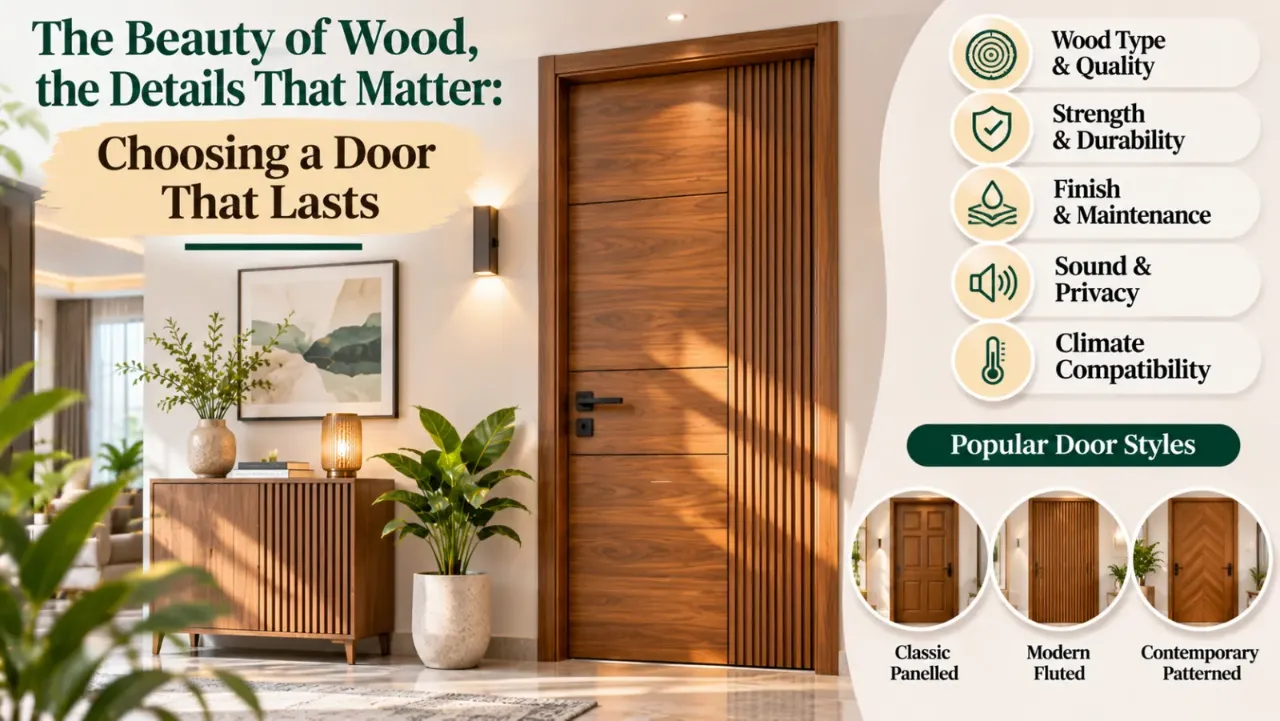
The Beauty of Wood, the Details That Matter: Choosing a Door That Lasts
A wooden door does more than separate one space from another. It contributes to the character of a room, provides privacy, supports everyday movement and, in the case of an entrance door, creates the first impression of your home. The grain, colour, proportions and finish can make a space feel traditional, contemporary, understated or richly detailed.
But choosing a door based only on its appearance can lead to problems later. Timber selection, construction quality, moisture exposure, hardware, frame alignment and surface protection all influence how well a wooden door performs over time.
A good wood door design balances appearance with durability and practical use. Whether you are selecting a main entrance door or doors for bedrooms and other internal spaces, understanding these details can help you make a more informed decision.
1. Start With the Door's Purpose and Location
Before looking at patterns and finishes, identify where the door will be installed. A main entrance door has different requirements from a bedroom, bathroom or utility-room door.
- Main entrance: Prioritise security, structural strength, suitable locking hardware, weather protection and a finish appropriate for the entrance's exposure.
- Bedroom doors: Focus on privacy, smooth operation, suitable sound separation and a finish that complements the room.
- Bathroom doors: Pay particular attention to moisture exposure, ventilation and material suitability. Not every wood-based door is appropriate for a consistently damp environment.
- Kitchen and utility doors: Consider cleaning requirements, humidity, ventilation and how frequently the door will be used.
The same design may not be suitable for every location. A decorative entrance door, for example, may need a different construction and hardware specification from a lightweight internal door.
2. Understand the Different Wood and Door Material Options
The material is one of the most important decisions because it influences strength, appearance, stability, maintenance and cost.
Solid wood
Solid wood doors are made from natural timber. Their grain patterns and natural variations give them a distinctive appearance. Depending on the timber species, construction and quality, they can offer a substantial feel and can sometimes be repaired or refinished.
However, natural wood responds to changes in moisture and temperature. It may expand, contract or develop surface defects if it is not properly seasoned, constructed, sealed and maintained.
Engineered wood
Engineered wood products are manufactured using wood fibres, veneers or layers bonded together. Their properties depend on the specific product and manufacturing process.
They can provide more consistent dimensions and may be suitable for particular interior applications. However, their moisture resistance, screw-holding capacity and durability should be checked against the manufacturer's specifications.
Veneered doors
A veneered door uses a thin layer of natural wood over a core material. It can provide the appearance of natural timber while allowing more flexibility in construction and cost.
Inspect the veneer quality, edge treatment, bonding and surface finish. Poorly applied veneer can peel, chip or become damaged, especially around exposed edges.
Laminated doors
Laminated doors use a decorative surface layer over a core. They offer a wide range of colours and patterns and can be relatively straightforward to clean.
Their appearance may imitate wood grain, but they do not have the same natural surface characteristics as solid timber. Check the quality of the core, edge banding and laminate application.
There is no universally best option. Select the material based on the door's location, expected use, budget and maintenance requirements.
3. Choose the Right Wood Species and Understand Its Properties
If you are considering a natural timber door, ask which species is being used and why it is suitable for the application.
Different woods vary in grain, colour, density, workability and response to moisture. The trade name alone is not enough to establish quality.
When comparing timber, check:
- Whether the wood has been properly seasoned.
- Whether the timber is suitable for the intended indoor or outdoor exposure.
- Whether it has visible cracks, excessive knots or signs of insect damage.
- Whether the grain and colour are consistent enough for the design you want.
- Whether the supplier can identify the timber species and provide relevant product details.
Do not assume that a darker or heavier-looking timber is automatically stronger or more durable. The actual species, grade, treatment, construction and installation all matter.
4. Select a Design That Complements Your Home
Wood door design can range from simple flat panels to detailed traditional patterns. The right choice should complement the architecture and interior style without making the door feel disconnected from the rest of the home.
Flush wooden doors
Flush doors have a relatively flat surface and a clean appearance. They can suit contemporary, minimalist and understated interiors.
Panelled wooden doors
Panelled doors use framed sections or recessed panels to create depth and visual detail. They can work well in traditional, transitional and classic interiors.
Grooved or linear designs
Vertical or horizontal grooves introduce texture while maintaining a relatively simple appearance. Their proportions should be planned carefully so that the pattern does not look crowded.
Carved wooden doors
Carved designs can introduce craftsmanship and decorative character, particularly at entrances. Consider the time required for cleaning and the need to protect detailed surfaces.
Wooden doors with glass inserts
Glass can introduce light and visual openness. For entrance doors, consider privacy, safety glazing and the suitability of the glass specification. For internal doors, check whether the amount of transparency works for the room's purpose.
Choose a design that suits the door's size and surrounding architecture. An elaborate pattern may overwhelm a narrow doorway, while a very plain door may feel under-detailed in a richly traditional interior.
5. Get the Measurements and Construction Details Right
Even a well-designed door can become difficult to use if its dimensions and installation are incorrect.
Before ordering, confirm the finished opening size, frame dimensions, shutter thickness, handing and direction of opening. The site measurements should account for the floor finish and any relevant clearances.
Ask the supplier or carpenter to specify:
- Door shutter thickness and construction.
- Core material and internal composition, where applicable.
- Frame material and dimensions.
- Edge treatment and joint quality.
- Suitable hinges and locking arrangements.
- Surface preparation and finish system.
- Installation and adjustment requirements.
Check that the door opens without hitting furniture, switches or nearby fittings. Also confirm that the frame is properly aligned and that the door has appropriate clearance from the finished floor.
Do not rely only on a catalogue image or a verbal description. Keep the approved design, material and construction specifications documented before production begins.
6. Pay Attention to the Finish and Colour
The finish protects the surface and influences how the wood looks. A suitable finish can bring out the grain, change the depth of colour and make routine cleaning easier.
- Clear finish: Allows the natural grain and colour to remain visible.
- Stained finish: Changes the apparent wood tone while retaining some grain visibility.
- Polished finish: Can create a richer appearance, depending on the product and application.
- Painted finish: Covers the natural grain and allows the door to coordinate with a chosen colour scheme.
- Matte or satin finish: Offers a less reflective appearance than a high-gloss surface.
The best option depends on the timber, location, desired appearance and maintenance expectations. Ask for a physical sample or finish panel before approving the final colour.
Remember that the same stain can look different on different wood species. Lighting also changes how a finish appears, so review the sample in the actual space where possible.
7. Do Not Overlook Hinges, Locks and Handles
Hardware affects the door's security, movement and overall appearance. It should be selected alongside the door rather than treated as a last-minute purchase.
- Hinges: Confirm that their type, number and load capacity are appropriate for the door's weight and dimensions.
- Locks: Choose a locking arrangement suitable for the door's location and security requirements.
- Handles: Consider grip, ease of use, height and compatibility with the door design.
- Door stoppers: Use suitable stoppers to reduce impact against nearby walls or furniture.
- Seals and accessories: Where required, check weather seals, thresholds and other fittings for the intended application.
For a main entrance, have the locking arrangement and overall security requirements assessed appropriately. Decorative hardware should never be a substitute for a suitable security specification.
8. Protect Wooden Doors From Moisture and Sunlight
Moisture is one of the key concerns when selecting and maintaining wooden doors. Excess moisture can contribute to swelling, finish damage, sticking and deterioration. Strong sunlight can fade or discolour some finishes over time.
To reduce avoidable problems:
- Keep the door and frame protected from direct water exposure.
- Use suitable sealing and finishing on exposed surfaces and edges.
- Address water seepage or dampness around the doorway promptly.
- Ensure bathrooms and utility spaces have appropriate ventilation.
- Use a suitable protective finish where the door receives strong sunlight.
- Follow the manufacturer's recommendations for cleaning and recoating.
For external doors, pay particular attention to the top, bottom and side edges, as well as joints and frame connections. These areas should be appropriately protected as part of the specified finishing system.
9. Follow a Simple Wooden Door Care Routine
Regular care can help preserve the appearance and usability of a wooden door.
Everyday cleaning
Remove dust using a soft, dry or slightly damp cloth as appropriate for the finish. Avoid soaking the surface or allowing water to collect around joints and edges.
Avoid harsh cleaning products
Strong chemicals, abrasive pads and unsuitable solvents can damage coatings. Use only cleaning products recommended for the specific finish.
Check hinges and handles
Notice any squeaking, loose screws or changes in movement. Tighten or repair hardware when necessary, using suitable components.
Inspect the finish
Look for peeling, cracks, fading, scratches or exposed timber. Address small areas of damage before moisture reaches the underlying material.
Watch for sticking or gaps
If a door begins to stick, do not immediately plane or cut it. First check for changes in humidity, frame movement, loose hinges or installation issues. Get the underlying cause assessed before making permanent adjustments.
Recoat when necessary
A finish may need maintenance or renewal depending on its type, exposure and condition. Follow the manufacturer's maintenance instructions rather than applying a new product over an incompatible existing coating.
10. Common Mistakes to Avoid Before Buying
A few checks can prevent unnecessary repairs and dissatisfaction after installation.
- Choosing only by appearance: A visually attractive door may not suit the location or expected use.
- Not confirming the material: Ask for the exact timber or core specification rather than accepting a broad label such as premium wood.
- Ignoring moisture conditions: The material and finish should be suitable for the room and exposure.
- Overlooking edge finishing: Exposed edges and joints can become vulnerable if they are not properly protected.
- Selecting hardware too late: Incompatible hinges, locks and handles can affect installation and appearance.
- Skipping sample approval: The final stain or polish may look different from a catalogue image.
- Not documenting specifications: Keep dimensions, material details, finish and hardware selections in writing.
- Ignoring maintenance needs: Understand how the surface should be cleaned, inspected and refinished before purchase.
Explore Your Interior Plans With Walls to Wonder
As you plan your door design and the rest of your home's interiors, Walls to Wonder offers tools to help you explore concepts and organise project decisions:
- Design My Room – explore room concepts, finishes and furniture combinations.
- Whole Home Visualizer – explore how design ideas can work across your home.
- Interior Design Cost Estimate – plan an indicative interior budget for your project.
- Interior Quotation Checker – review quotation scope, materials, charges and exclusions.
These tools support interior visualisation and preliminary planning. They do not replace timber specifications, product testing, site measurements, installation guidance or professional advice from a qualified carpenter or contractor.
Final Thought
A good wooden door is a combination of thoughtful design, suitable material, sound construction and regular care. The right choice should complement your home while handling the conditions and demands of its location.
Before making a decision, look beyond the pattern and polish. Confirm the timber or core, construction, measurements, hardware and protective finish. Once installed, follow a suitable maintenance routine and address small issues before they become larger repairs.
When these details are planned together, a wooden door can remain a practical and attractive part of your home for years.
Frequently Asked Questions
1. Which wood is best for a home door?
There is no single best wood for every application. The right choice depends on the timber species, seasoning, construction quality, location, moisture exposure, budget and maintenance requirements.
2. Are solid wood doors better than engineered wood doors?
Not in every situation. Solid wood offers natural grain and a substantial feel, while engineered products can provide consistent dimensions and suit certain applications. Compare the actual product specifications and intended use before deciding.
3. What finish is suitable for a wooden door?
Clear, stained, polished, painted, matte and satin finishes are all possible options. The suitable choice depends on the wood, location, desired appearance and the level of protection required.
4. How do I maintain a wooden door?
Dust it regularly, clean it with products suitable for its finish, keep it away from excessive moisture, inspect the hardware and check for surface damage. Follow the manufacturer's recommendations for maintenance and refinishing.
5. Why does a wooden door start sticking?
Sticking can result from moisture-related expansion, changes in the frame, loose hinges, alignment problems or installation clearances. Identify the cause before trimming or modifying the door.
6. Can wooden doors be used in bathrooms?
They may be suitable in some bathroom applications if the door construction, finish, edge protection and ventilation are appropriate. However, not every wood-based product is designed for high-moisture conditions. Check the manufacturer's suitability guidance before selecting one.
Turn this idea into a plan for your home
Visualise your space, understand the likely budget, or find a professional who can bring the idea to life.