
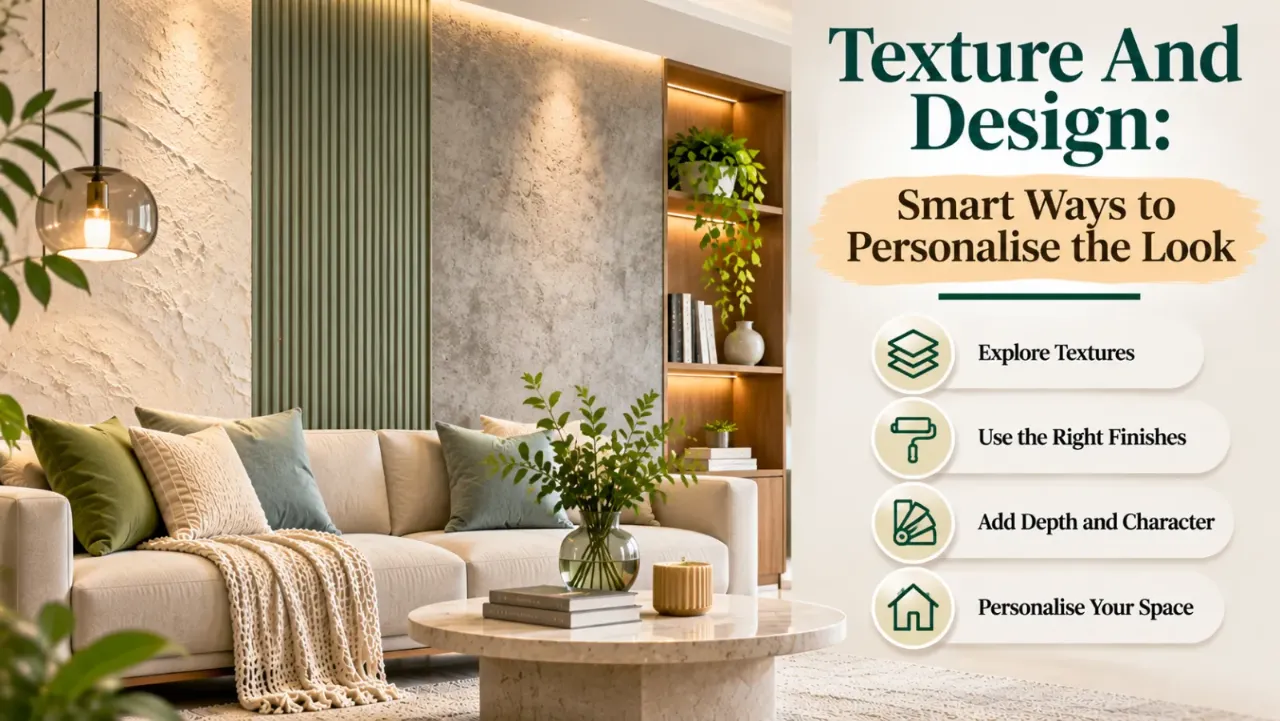
Texture And Design: Smart Ways to Personalise the Look
A room can have a beautiful colour palette, carefully selected furniture and attractive accessories, yet still feel a little flat. Often, what is missing is texture. Texture introduces depth, contrast and a sense of character through the surfaces and materials we see and touch every day.
From the grain of natural wood to the softness of linen, the subtle variation of stone and the gentle irregularity of textured plaster, every finish contributes to the way a space feels. The key is knowing how to combine these elements without making the room look busy.
Here is how to use texture and design to create an interior that feels personal, balanced and thoughtfully put together.
1. Understand the Role of Texture in an Interior
Texture is the surface quality of a material. It can be visually noticeable, physically tactile or both. A polished stone surface, for example, reflects light smoothly, while a woven fabric creates a softer, more varied appearance.
Texture can help an interior in several ways:
- Add depth: Different surface qualities prevent a room from feeling visually flat.
- Create contrast: Smooth and rough, matte and reflective, or soft and structured finishes can complement each other.
- Introduce warmth: Wood, woven fibres and natural fabrics can make a space feel more inviting.
- Define a style: Stone, metal, timber, glass and textiles each contribute a different visual character.
- Create focus: A textured wall or distinctive material can draw attention without requiring elaborate decoration.
The aim is not to use as many textures as possible. It is to choose a few that support the room's overall design.
2. Begin With a Simple Material Palette
Before selecting individual finishes, decide which materials will form the foundation of the room. A simple material palette makes it easier to coordinate surfaces and avoid unnecessary visual competition.
- Wood: Adds natural grain, warmth and a sense of familiarity.
- Stone: Introduces organic variation and a solid, grounded appearance.
- Metal: Provides definition through clean edges and reflective or brushed finishes.
- Glass: Adds visual lightness and a smooth, reflective surface.
- Fabric: Brings softness through upholstery, curtains, cushions and rugs.
- Plaster and textured paint: Create subtle or pronounced surface variation on walls.
Choose materials according to the room's purpose, existing finishes and maintenance requirements. A material that looks attractive in a sample may behave differently when used across a large surface.
3. Mix Smooth and Textured Finishes
Contrast is one of the simplest ways to make texture work. If every surface has a strong pattern or rough finish, the room can feel overwhelming. If everything is perfectly smooth, it may lack character.
- A textured feature wall with simple, smooth furniture.
- Natural timber with a clean stone or solid-colour countertop.
- Matte cabinetry with selected brushed-metal details.
- A smooth floor with a woven rug.
- Soft upholstery with a structured wooden or metal coffee table.
Allow one or two materials to lead the composition and use the remaining finishes as supporting elements. This creates variety while keeping the room visually calm.
4. Use Wall Textures With a Clear Purpose
Walls offer a large surface on which texture can make a noticeable difference. However, a textured finish should support the room rather than become an unnecessary focal point.
- Textured paint: Can create subtle movement or a more pronounced decorative effect, depending on the product and application.
- Limewash-style finishes: Offer tonal variation and a soft, layered appearance.
- Stone finishes: Bring natural pattern and visual weight to selected areas.
- Wood finishes: Add grain and warmth, particularly when used as an accent.
- Textured plaster: Can introduce depth through subtle surface variation.
Think about lighting, wall condition and how the finish will be cleaned or maintained. Strong textures may cast noticeable shadows under directional lighting, so review a sample in the actual room before making a decision.
5. Layer Textures Through Furniture and Fabrics
Texture should not stop at the walls. Furniture and soft furnishings are useful ways to introduce variety without making permanent changes.
- Linen or cotton curtains with smooth painted walls.
- A woven rug with a simple sofa.
- Bouclé or textured upholstery with a timber side table.
- Leather or leather-look details with soft cushions.
- Natural-fibre baskets with clean-lined storage.
- A knitted throw with a structured bed or armchair.
Pay attention to scale. A large, heavily patterned rug can dominate a small room, while a subtle woven cushion may add just enough detail. Choose textiles that suit the room's use and cleaning requirements.
6. Balance Texture With Colour and Light
Texture and colour influence one another. A pale textured wall may show more surface variation under side lighting, while a dark, matte finish can absorb more light and create a deeper visual effect.
- Test finishes beside the room's existing colour palette.
- Observe samples in daylight and under artificial lighting.
- Use directional light carefully, especially on uneven or heavily textured surfaces.
- Balance strong material patterns with quieter colours.
- Consider how reflective finishes may create glare or visible marks.
A room does not need many colours to feel layered. Differences in material, sheen and surface quality can create interest within a restrained palette.
7. Choose Textures According to the Room
Different rooms have different practical needs. The same material combination may not work equally well everywhere.
- Living room: Combine upholstery, rugs, timber, stone and selected metal details. Keep the largest surfaces relatively balanced so the room remains comfortable.
- Bedroom: Use softer textures through bedding, curtains, rugs and upholstery. A textured headboard or restrained feature wall can add depth without making the room feel busy.
- Kitchen: Prioritise surfaces that are suitable for regular cleaning. Consider the interaction between cabinetry, countertop, backsplash and hardware finishes.
- Bathroom: Select finishes designed for wet and humid conditions. Pay attention to slip resistance, cleaning and product suitability rather than appearance alone.
- Dining area: Use a mix of smooth table surfaces, textured seating and subtle decorative elements to create contrast without overcrowding the space.
8. Avoid Common Texture-Design Mistakes
A well-layered interior feels varied but still connected. These mistakes can make that balance difficult to achieve:
- Using too many statement finishes: Multiple strong textures can compete for attention.
- Ignoring scale: A bold pattern may overwhelm a compact room or a small furniture piece.
- Choosing materials only from photographs: Lighting and actual surface quality can change the appearance.
- Forgetting maintenance: Some porous, delicate or heavily textured surfaces need more care.
- Repeating the same texture everywhere: A room can feel monotonous when every surface has the same finish.
- Ignoring lighting: A finish may look different under daylight, warm artificial light and directional lighting.
- Mixing unrelated styles: Materials should share a visual connection through colour, tone, scale or overall design language.
9. Make the Design Personal Without Overdoing It
Personalisation does not require every surface to be unique. It can come from a material that reflects your preferences, a handcrafted object, a favourite fabric or a finish that connects with the architecture of the home.
Start with the elements that matter most to you. Perhaps it is the grain of natural wood, the character of stone, the softness of woven textiles or the simplicity of matte surfaces. Build the palette around those choices and repeat selected materials in small ways to create continuity.
If you are exploring how different finishes might look in a room, Walls to Wonder's Design My Room can help you explore room concepts and finishes. The Whole Home Visualizer can help you consider how material choices relate across different spaces.
For wider planning, the Interior Design Cost Estimate offers indicative budget planning, while the Interior Quotation Checker can help review quotation scope, materials, charges and exclusions.
Final Thought
Texture is not simply a decorative extra. It is part of what gives an interior its depth, comfort and identity. By combining a considered material palette with a balance of smooth and tactile finishes, you can create a home that feels layered without looking cluttered. Start with a few materials you genuinely like, test how they work together and let each finish have a clear purpose.
Frequently Asked Questions
1. What does texture mean in interior design?
Texture refers to the surface quality of materials and finishes. It may be tactile, visual or both, and helps create depth, contrast and character in a room.
2. How can I mix different textures in one room?
Start with a simple material palette and combine contrasting surfaces, such as smooth stone, natural wood, soft fabrics and matte finishes. Keep the strongest textures limited to selected areas.
3. Can texture make a small room look better?
Yes. A restrained mix of textures can add depth without relying on many colours or accessories. Avoid oversized patterns and too many competing finishes.
4. Which materials are useful for adding texture to a home?
Wood, stone, metal, glass, textured plaster, paint finishes, woven rugs and natural fabrics are common choices. Their suitability depends on the room, use and maintenance needs.
5. How do I choose a wall texture for my home?
Consider the room's lighting, wall condition, existing colours, furniture and cleaning requirements. Test a sample on the actual wall before deciding on the finish.
Turn this idea into a plan for your home
Visualise your space, understand the likely budget, or find a professional who can bring the idea to life.