
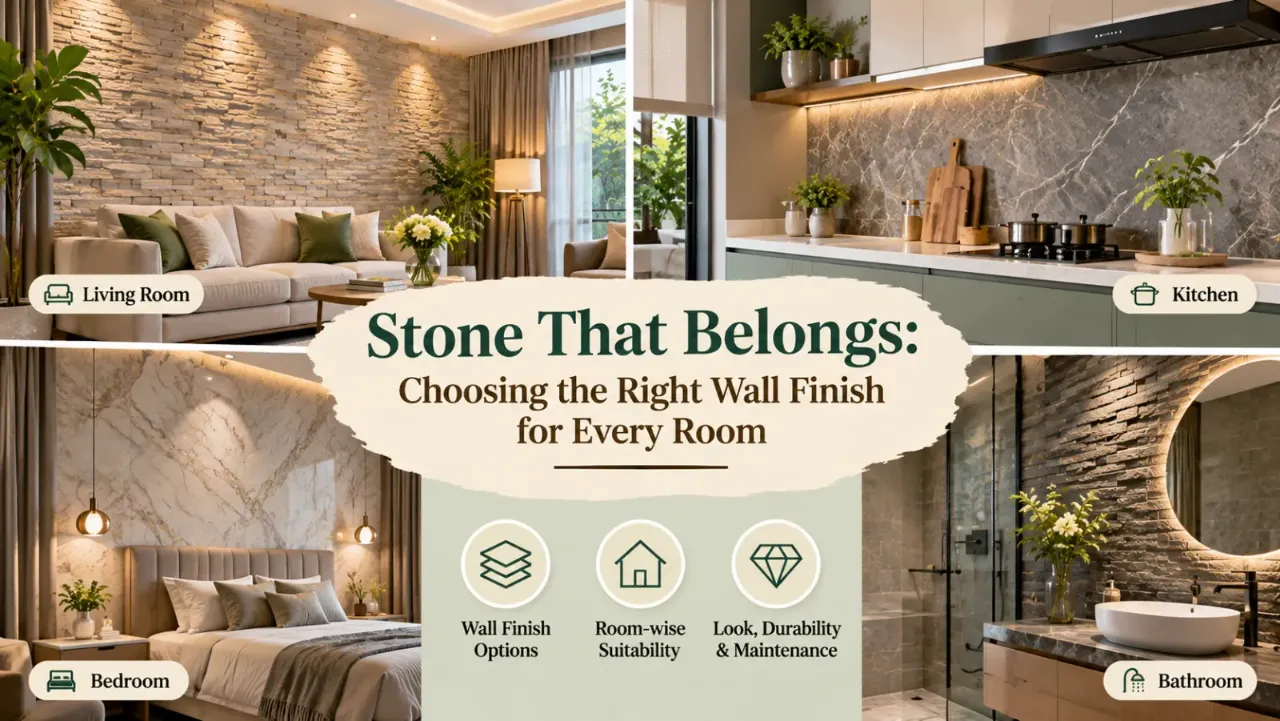
Stone That Belongs: Choosing the Right Wall Finish for Every Room
Stone can bring natural texture, depth and character to an interior, but choosing the right material involves more than finding a finish that looks attractive. Marble, granite, slate, sandstone and travertine each have different visual qualities, practical requirements and maintenance considerations.
A stone finish that works beautifully in a living room may not be the most practical choice for a kitchen or bathroom. Moisture, cleaning, daily use, installation conditions and the surrounding materials all influence how well it performs.
Instead of selecting stone based only on appearance, consider the room, the purpose of the wall and the amount of maintenance you are comfortable with. Here is how to choose a stone wall design that balances appearance, durability and everyday use.
1. Start With the Purpose of the Wall
Before choosing a stone, decide what you want the wall to achieve. A feature wall in a living room has different requirements from a wall near a kitchen counter or a bathroom vanity.
Consider:
- Whether the wall is purely decorative or needs to handle regular cleaning.
- How much moisture, heat or direct sunlight it may experience.
- Whether the wall is a focal point or part of a larger design scheme.
- How frequently the surface will be touched or used.
- Whether the existing wall can support the selected stone and fixing system.
Once the purpose is clear, it becomes easier to shortlist materials that suit the room rather than choosing a stone simply because it looks appealing in a photograph.
2. Understand the Different Types of Stone
Natural stones have distinct patterns, textures and characteristics. Their suitability depends on the specific product, finish, location and installation method.
Marble
Marble is recognised for its flowing veins and refined appearance. It can create an elegant feature wall in living rooms, dining areas and selected bedroom spaces.
Its natural patterns can make a wall visually distinctive, particularly when the slabs are planned carefully.
What to consider: Marble can be sensitive to staining and certain cleaning products. Ask about sealing, maintenance and the specific stone's suitability before installation.
Granite
Granite is known for its dense structure and varied mineral patterns. It can be considered for selected interior wall applications where a more defined, granular appearance is desired.
Its visual character ranges from subtle speckling to more prominent patterns, depending on the variety.
What to consider: Check the weight, surface finish, fixing requirements and whether the selected variety is appropriate for the intended wall application.
Slate
Slate often has a layered, naturally textured appearance. Its darker shades and uneven surface can introduce depth to contemporary, rustic and understated interiors.
It can work well as a feature behind a seating arrangement or in a selected entrance area.
What to consider: Its surface profile may collect dust in textured varieties. Check the finish and cleaning requirements before choosing it for a frequently used space.
Sandstone
Sandstone offers an earthy appearance with natural variations in colour and texture. It can create a relaxed, organic character in living spaces and selected feature areas.
Its tones can work with timber, neutral paint shades and natural-looking furnishings.
What to consider: Porosity and maintenance requirements vary by stone. Ask whether sealing is recommended and how the material should be cleaned.
Travertine
Travertine has a distinctive natural pattern with pores and subtle tonal variations. It can bring a calm, understated character to contemporary and classic interiors.
It is often considered for feature walls where a natural stone appearance is preferred over a highly polished surface.
What to consider: Its pores and finish require attention during selection. Check filling, sealing and cleaning recommendations for the particular product.
3. Match the Stone to the Room
The right stone wall design should respond to how the room is used. A material that looks impressive in one setting may create unnecessary maintenance in another.
Living room
A living room offers flexibility for decorative stone applications. A feature wall behind the television, a focal wall near the seating arrangement or a selected architectural surface can introduce texture without overwhelming the room.
Marble, slate, sandstone and travertine can all be considered depending on the desired appearance.
Design approach: Choose one focal wall and coordinate the stone's pattern with the flooring, furniture and lighting.
Bedroom
In a bedroom, stone can be used to create a subtle backdrop behind the bed or to highlight a specific architectural section.
Materials with softer patterns and restrained finishes can help maintain a comfortable visual atmosphere.
Design approach: Avoid overly busy patterns if the room already contains strong furniture details, decorative lighting or patterned fabrics.
Kitchen
Kitchen walls need more consideration because they may be exposed to cooking residue, moisture and frequent cleaning. A stone finish should be selected according to its location and the maintenance it requires.
For example, a decorative stone feature away from the cooking zone may be easier to maintain than a highly textured surface directly behind a hob.
Design approach: Check cleaning instructions, stain resistance, sealing requirements and compatibility with the surrounding kitchen finishes.
Bathroom
Bathrooms require careful material selection because of regular moisture exposure. Not every natural stone is suitable for every bathroom application.
Consider the stone's porosity, surface finish, sealing requirements and compatibility with the waterproofing and installation system.
Design approach: Consult the material supplier and installer before using natural stone in wet areas, especially inside showers.
Entrance and foyer
An entrance feature wall can establish the visual character of the home. Stone can be used around a console, near the main door or on a selected wall that is visible when entering.
Design approach: Keep the treatment coordinated with the entrance door, flooring, lighting and furniture rather than introducing an unrelated finish.
4. Choose the Right Surface Finish
The same stone can look very different depending on how its surface is treated. The finish influences the appearance, texture, cleaning and overall feel of the wall.
Common options include:
- Polished finish: Creates a smoother, reflective appearance and can highlight the stone's natural pattern.
- Honed finish: Offers a smoother, less reflective surface with a more understated look.
- Natural finish: Retains more of the stone's original surface character.
- Split-face finish: Creates a pronounced layered texture and adds depth to feature walls.
- Brushed finish: Produces a textured appearance through surface treatment, depending on the stone and process.
Do not choose a finish based only on a catalogue image. Ask to see a physical sample and understand how it will look under the lighting conditions of the room.
5. Consider the Weight and Installation Requirements
Stone is not simply a decorative layer. Depending on the material and thickness, it can add considerable weight to a wall. The existing substrate and fixing method must be suitable for the selected product.
Before installation, check:
- The weight and thickness of the selected stone.
- The condition and strength of the existing wall.
- Whether mechanical fixing or an appropriate adhesive system is required.
- Whether the wall needs additional preparation or reinforcement.
- How joints, edges, corners and cut-outs will be finished.
- Whether the installer has experience with the selected material.
Large-format slabs, irregular stone pieces and textured cladding may require different installation approaches. The fixing system should be selected by a qualified professional according to the product and site conditions.
6. Balance Stone With Other Interior Materials
Stone already has a strong visual presence. Pairing it with too many competing finishes can make a room feel visually crowded.
Consider combining stone with:
- Wood: Introduces warmth and can soften the visual weight of stone.
- Metal: Adds definition through details such as trims, lighting and furniture frames.
- Glass: Helps maintain a lighter appearance when used in suitable locations.
- Neutral paint: Allows the stone to remain the main visual feature.
- Soft furnishings: Balances harder surfaces through upholstery, rugs and curtains.
For example, a heavily veined marble wall may work better with simple furniture and restrained accessories. A textured slate wall may pair well with softer fabrics and warm timber details.
7. Plan Lighting Around the Stone Texture
Lighting can change how stone looks throughout the day. Directional lighting may highlight natural variations, while softer illumination can create a more subtle effect.
Some useful approaches include:
- Wall washers to illuminate a larger stone surface evenly.
- Directional spotlights to highlight selected textures.
- Concealed LED lighting for suitable niches or architectural details.
- Accent lighting to draw attention to a feature wall without illuminating every surface.
Consider the position of the light source and the stone's surface profile. Strong grazing light can exaggerate unevenness, joints and installation imperfections, so test the lighting before finalising the design.
8. Understand Maintenance Before You Buy
Natural stone is not maintenance-free. Different varieties and finishes may require different cleaning methods, protective treatments and periodic care.
Ask the supplier:
- Does the stone need sealing before or after installation?
- How often should the protective treatment be renewed?
- Which cleaning products are suitable?
- Can common household cleaners damage the surface?
- How should stains, scratches or localised damage be handled?
- Can individual pieces be replaced if they become damaged?
Textured surfaces may need more attention during cleaning, while polished surfaces may show certain marks more visibly. Choose a finish that fits the amount of care you are willing to provide.
9. Understand the Complete Cost
The price of the stone is only one part of the total project cost. Transportation, cutting, wastage, surface preparation, fixing materials, labour and finishing can all influence the final amount.
When requesting quotations, ask for a breakdown of:
- Stone type, grade, thickness and quantity.
- Material rate per square foot or other stated unit.
- Cutting, edge treatment and fabrication charges.
- Adhesive, mechanical fixing or supporting systems.
- Surface preparation and any required repairs.
- Installation labour and finishing charges.
- Transport, handling and wastage.
- Sealing or protective treatments, where applicable.
- Taxes, exclusions and warranty conditions.
Compare quotations using the same material specification and wall measurements. A lower material rate does not necessarily mean a lower installed cost.
10. Avoid These Common Stone Wall Design Mistakes
A few avoidable decisions can affect both the appearance and long-term performance of a stone wall.
- Choosing stone only for its appearance: Consider the room's use, exposure and maintenance requirements.
- Ignoring the wall's condition: Check the substrate before approving a heavy stone finish.
- Using unsuitable stone in wet areas: Verify product suitability and the complete installation system.
- Overusing decorative stone: Too many feature surfaces can make the interior feel crowded.
- Ignoring slab and pattern alignment: Plan joints, veins and transitions before installation.
- Choosing the wrong finish: A highly textured surface may not suit every cleaning requirement.
- Underestimating installation costs: Include fabrication, fixing, transport and labour in the budget.
- Skipping physical samples: Check the actual stone under the room's lighting before making a final decision.
A thoughtful selection, suitable installation and realistic maintenance plan can help the stone wall remain a useful part of the interior rather than becoming an expensive feature that is difficult to care for.
11. A Practical Checklist Before Finalising the Stone
Before approving the material and design, make sure you have considered:
- The purpose and location of the wall.
- The stone type, thickness and surface finish.
- The wall's condition and load-bearing suitability.
- Moisture, heat, sunlight and cleaning exposure.
- The fixing method and installation requirements.
- How the stone coordinates with flooring, furniture and other finishes.
- The lighting direction and final appearance.
- Cleaning, sealing and long-term maintenance.
- The complete installed cost and quotation exclusions.
- A physical sample or mock-up before final approval.
If you are deciding between two materials, compare them in the actual room and against the same installation scope. This makes the decision more practical than relying on photographs alone.
Visualise your interior design direction
Use Design My Room to explore room concepts, finishes and furniture combinations. You can also use the Whole Home Visualizer to coordinate design ideas across different spaces. Visualisation can help with design exploration, but stone suitability, wall strength and installation should be checked by the relevant professionals.
Final Thought
A successful stone wall design is not simply about selecting an attractive material. It is about choosing a stone, finish and installation approach that make sense for the room and the way it is used.
Consider the wall's purpose, the material's maintenance needs, its relationship with other finishes and the complete installation cost. A carefully selected feature can add character without making the room difficult to maintain.
When the material and setting work together, stone becomes a considered part of the home rather than just another decorative surface.
Plan Your Interior Budget and Quotations
Before finalising your interior project, use the Interior Design Cost Estimate for indicative interior budget planning. The Interior Quotation Checker can help review quotation scope, materials, charges and exclusions. These tools support planning and do not replace professional material specifications or on-site installation advice.
Frequently Asked Questions
1. Which stone is best for an interior feature wall?
There is no single best option for every room. Marble, granite, slate, sandstone and travertine offer different appearances and maintenance requirements. Choose according to the wall's location, intended look and practical use.
2. Is natural stone suitable for bathroom walls?
Some natural stones can be used in bathrooms, but suitability depends on the specific stone, finish, moisture exposure, sealing and installation system. Consult the supplier and installer before using it in wet areas.
3. Does a stone feature wall require regular maintenance?
Maintenance depends on the stone and its finish. Some varieties may require sealing or specialised cleaning products. Follow the supplier's care instructions to maintain the surface.
4. Can stone cladding be installed on any interior wall?
Not automatically. The existing wall must be suitable for the weight of the material and its fixing system. Have the substrate and installation requirements assessed before work begins.
5. Is stone wall cladding expensive?
The cost varies according to the stone type, thickness, quantity, fabrication, transport and installation. Using stone on one carefully selected feature wall can help control the overall project budget.
Turn this idea into a plan for your home
Visualise your space, understand the likely budget, or find a professional who can bring the idea to life.