
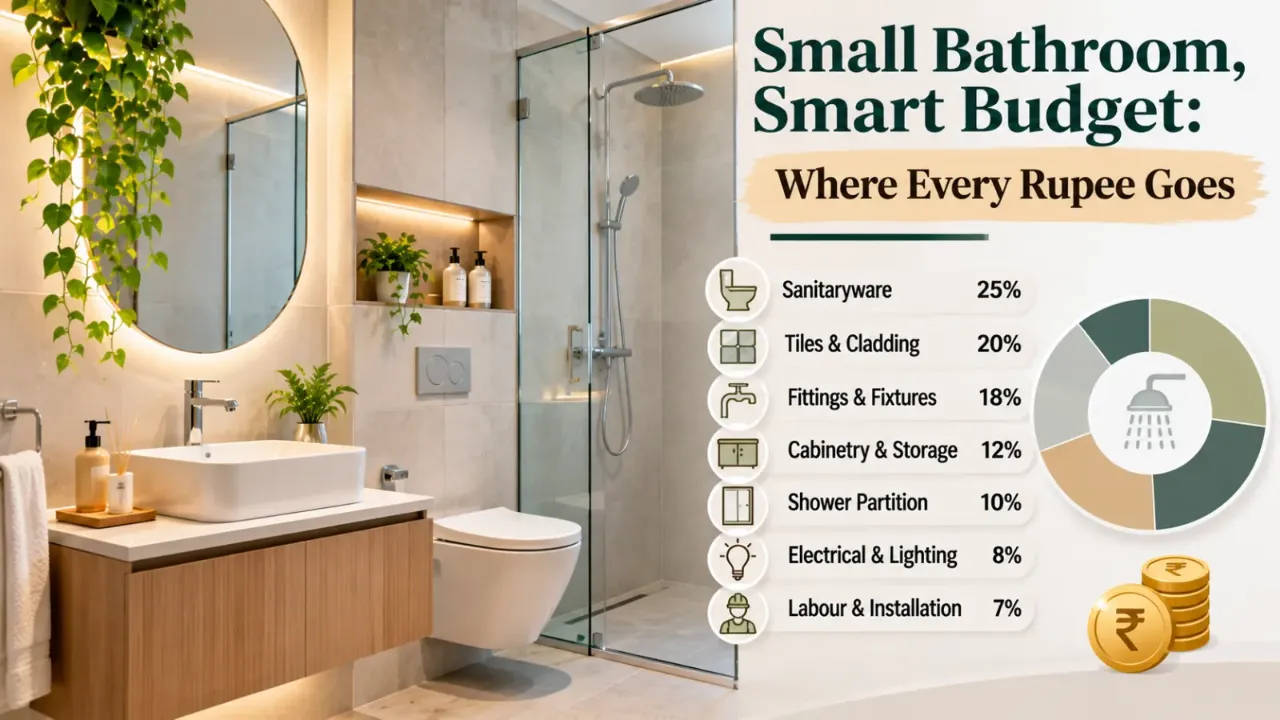
Small Bathroom, Smart Budget: Where Every Rupee Goes
A small bathroom may occupy only a few square feet, but renovating it can involve several separate expenses. Tiles, sanitaryware, taps, plumbing, waterproofing, storage, lighting and labour all contribute to the final amount. Without a clear plan, even a modest makeover can stretch beyond the budget.
The good news is that a comfortable, attractive bathroom does not depend on expensive finishes or designer fittings. It depends on making sensible decisions in the right order. For Indian homes, where bathrooms often need to handle daily family use, moisture, hard water and limited space, durability and maintenance matter just as much as appearance.
Here is how to plan a small bathroom design on a budget, understand the main cost components and avoid spending on details that do not improve everyday use.
1. Start With a Clear Renovation Budget
Before choosing tiles or browsing sanitaryware, decide how much you can realistically spend. Your budget should cover more than the visible products.
- Plumbing and waterproofing: Repairs, pipe changes, drainage and protection against leakage.
- Tiles and surface preparation: Floor and wall tiles, adhesives, grout and installation.
- Sanitaryware: WC, washbasin and related accessories.
- Fittings: Taps, shower, health faucet, valves and other hardware.
- Storage and accessories: Mirror, shelves, vanity and towel holders.
- Electrical and lighting: Appropriate bathroom lights, switches and exhaust provision.
- Labour and disposal: Installation, demolition, debris removal and finishing.
- Contingency: A reserve for unexpected repairs or changes.
Keep a contingency amount aside rather than allocating every rupee to the planned work. The appropriate reserve depends on the bathroom's age, existing condition and how much of the plumbing or flooring will be disturbed.
2. Measure the Bathroom Before Buying Anything
In a compact bathroom, a few centimetres can affect movement, door clearance and the placement of fixtures. Measure the room before selecting products.
Record:
- Overall length, width and ceiling height.
- Door position and direction of opening.
- Existing WC, basin and shower locations.
- Window, ventilation and plumbing points.
- Floor slope and drain position.
- Available wall space for storage.
Make a simple layout showing the WC, basin and shower area. If the existing arrangement works, retaining it may reduce plumbing changes and labour. Moving a toilet, shower point or basin can involve pipe rerouting, breaking and repairing surfaces, and additional waterproofing work.
The cheapest layout is not necessarily the one with the fewest fixtures. It is the one that uses the available space comfortably without creating avoidable construction work.
3. Prioritise Waterproofing and Plumbing
Decorative finishes can be upgraded later; water leakage is much harder and more expensive to correct after the bathroom is completed.
Before spending on new tiles or fittings, inspect:
- Existing water supply and drainage pipes.
- Signs of dampness on adjoining walls or ceilings.
- Floor slope towards the drain.
- Shower-area waterproofing.
- Pipe joints, valves and concealed connections.
If the bathroom is being renovated extensively, ask the contractor to specify the waterproofing system, preparation, application method and testing process in the quotation. Confirm which areas are included and whether the work carries a warranty.
Do not reduce the budget by skipping essential waterproofing or using unsuitable plumbing components. Have technical work assessed by a qualified professional.
4. Choose Tiles With Cost and Maintenance in Mind
Tiles can take up a substantial part of a bathroom renovation budget. The final expense depends on the selected material, size, finish, quantity, wastage and installation.
For a budget-conscious bathroom:
- Compare locally available ceramic and vitrified options suitable for the intended application.
- Choose a slip-resistant floor finish appropriate for wet areas.
- Consider simpler wall tiles instead of expensive patterns across every surface.
- Use a feature tile in one limited area if you want visual interest.
- Ask for the rate per square foot and the expected quantity, including wastage.
- Check whether tile adhesive, grout, skirting and edge finishing are included.
A large-format tile may look seamless, but it can require a suitable substrate and more careful installation. Smaller or standard-sized tiles may be more economical depending on the product and labour rates in your area.
Do not choose a glossy floor tile simply because it looks brighter. A wet bathroom floor needs a finish that supports safe movement.
5. Select Sanitaryware That Fits the Space
A compact bathroom does not need oversized or elaborate sanitaryware. Choose fixtures that fit the layout and leave enough room for comfortable use.
Consider:
- A compact WC that suits the available clearance.
- A wall-mounted or pedestal basin depending on the plumbing and budget.
- A simple basin with practical dimensions.
- A shower arrangement that does not obstruct movement.
- Products with accessible replacement parts and service support.
Compare the complete product cost, not just the display price. Ask whether the quoted amount includes the required fittings, mounting accessories, traps, connectors and installation.
A low-priced product may not be economical if replacement parts are difficult to find or the installation requires extra modifications.
6. Spend Carefully on Taps and Shower Fittings
Taps, showers and valves are used every day. They should be durable, easy to operate and suitable for the water conditions in your area.
When comparing options, check:
- Material and finish.
- Cartridge or valve quality.
- Water-flow performance.
- Availability of replacement parts.
- Warranty and after-sales support.
- Compatibility with existing plumbing points.
You do not need an expensive rain shower or a collection of premium accessories to make a small bathroom functional. A reliable shower, basin mixer or tap, and health faucet may be more useful than decorative extras.
Where hard water is common, consider how easily the finish can be cleaned and whether the manufacturer provides care instructions.
7. Plan Storage Without Making the Room Feel Smaller
Storage is useful, but bulky cabinets can make a small bathroom difficult to move around in.
Use the available vertical space thoughtfully:
- Install a compact mirror cabinet if the wall and plumbing arrangement allow it.
- Add a recessed niche in the shower area only where construction conditions permit.
- Use a small shelf for daily essentials.
- Choose a vanity with practical drawers if there is enough clearance.
- Keep frequently used items accessible and avoid unnecessary countertop clutter.
Before adding a wall niche or drilling into a wall, check for concealed pipes and waterproofing requirements. A simple shelf may be more economical than a custom-built storage feature.
8. Do Not Forget Lighting and Ventilation
A bathroom can feel cramped when it is poorly lit or poorly ventilated. Plan these essentials alongside the fixtures.
Use suitable bathroom-rated lighting and place it to illuminate the basin and shower areas. A mirror light can improve visibility without requiring elaborate decorative lighting.
Ventilation is equally important. If there is a window, ensure it can provide adequate airflow and privacy. Where an exhaust fan is required, include its electrical provision and installation in the estimate.
Electrical fittings in wet areas should be selected and installed by a qualified electrician according to applicable safety requirements.
9. Understand Labour and Installation Charges
Two quotations may list similar products but have very different installation costs. Ask contractors to separate material and labour wherever practical.
Check whether the estimate includes:
- Removal of existing tiles and fixtures.
- Plumbing changes and pipe connections.
- Waterproofing and testing.
- Surface preparation and tile installation.
- Grouting, silicone and edge finishing.
- Sanitaryware and fitting installation.
- Electrical work and exhaust fan installation.
- Debris removal and final cleaning.
Also confirm who will supply materials, who will arrange transport and whether labour charges change if the scope is modified.
A low initial quotation is not necessarily the lowest final cost if essential work is excluded.
10. Watch for Common Hidden Costs
Small bathroom projects can involve unexpected expenses, particularly when old finishes are removed.
Possible additional costs include:
- Damaged or leaking concealed pipes.
- Replacement of old valves and connections.
- Uneven floors requiring additional preparation.
- Extra waterproofing or repair work.
- Tile wastage, cutting and edge profiles.
- Changes to the drain or plumbing layout.
- Door adjustments or replacement.
- Debris disposal and additional transport.
- Extra accessories or fittings not included in the original scope.
Ask the contractor to identify provisional items and explain how additional work will be priced. Approve changes in writing before the work proceeds.
11. Compare Quotations Line by Line
Collect at least two or three estimates based on the same layout, product specifications and scope. Otherwise, the comparison may be misleading.
- Tiles: Brand, size, finish, quantity and rate.
- Sanitaryware: Model, dimensions, accessories and warranty.
- Fittings: Material, finish, brand and service support.
- Plumbing: Pipe specifications, connections and labour.
- Waterproofing: Product, coverage, process and testing.
- Storage: Dimensions, material and hardware.
- Labour: Individual tasks and installation inclusions.
- Extra work: Demolition, disposal, transport and repairs.
Ask for a written list of exclusions. Confirm the payment stages, expected timeline, warranty terms and process for handling additional work.
A clear quotation makes it easier to understand what you are paying for and reduces the chance of disagreements later.
12. Where Can You Save Without Compromising the Bathroom?
A budget-friendly renovation is about controlling unnecessary expenses, not choosing the cheapest option in every category.
You may be able to save by:
- Retaining the existing fixture layout where it is functional.
- Choosing standard tile sizes and readily available finishes.
- Limiting decorative tiles to a small feature area.
- Selecting simple, reliable sanitaryware.
- Avoiding elaborate false ceilings and unnecessary lighting.
- Using ready-made storage instead of extensive custom carpentry.
- Finalising product choices before work begins to reduce last-minute changes.
However, avoid cutting corners on waterproofing, drainage, safe electrical work, plumbing quality or slip resistance. These decisions affect the bathroom's long-term performance.
13. Use Planning Tools Before Finalising the Design
Visualising the bathroom and understanding the scope before work begins can help prevent avoidable changes.
Walls to Wonder offers tools that can support different parts of the planning process:
- Design My Room: Explore room design ideas, finishes and furniture arrangements.
- Whole Home Visualizer: Explore coordinated design concepts across different areas of your home.
- Interior Design Cost Estimate: Get an indicative starting point for interior budget planning.
- Interior Quotation Checker: Review quotation details, scope, materials, charges and exclusions.
These tools can support visualisation and preliminary interior planning. They do not replace a site inspection, contractor's measured estimate, plumbing assessment, waterproofing specification or qualified technical advice.
Final Thought
A small bathroom can be comfortable, attractive and practical without an oversized renovation budget. The key is to understand the existing condition, plan the layout, prioritise essential work and compare quotations on the same basis.
Spend on what protects the bathroom and supports everyday use. Keep decorative choices simple, avoid unnecessary layout changes and leave room in the budget for unexpected repairs. A well-planned bathroom is not defined by how much you spend, but by how wisely you use the available space and money.
Frequently Asked Questions
1. How can I design a small bathroom on a budget?
Start with accurate measurements, retain the existing plumbing layout where practical, select affordable and suitable tiles, choose compact sanitaryware and avoid unnecessary decorative features. Keep essential waterproofing and safe installation in the budget.
2. What is the biggest expense in a small bathroom renovation?
There is no single answer for every bathroom. The cost depends on the extent of demolition, plumbing changes, waterproofing, tile selection, sanitaryware, fittings and labour. Replacing finishes alone is different from a complete renovation.
3. Can I renovate a bathroom without changing the plumbing layout?
Often, yes, if the existing layout is functional and the pipes and drainage are in suitable condition. Retaining fixture positions can reduce breaking, pipe rerouting and repair work. Have the existing plumbing inspected before deciding.
4. Which tiles are suitable for a budget bathroom?
Compare locally available ceramic and vitrified tiles based on their intended use, finish, durability, maintenance and installation cost. For floors, prioritise a suitable slip-resistant finish rather than appearance alone.
5. How much extra money should I keep aside for unexpected costs?
The amount depends on the age and condition of the bathroom and the extent of renovation. Keep a separate contingency rather than committing the full budget to planned materials and labour. Ask the contractor to identify likely provisional expenses.
6. How do I compare bathroom renovation quotations?
Use the same layout and specifications when requesting estimates. Compare materials, quantities, labour, waterproofing, plumbing, installation, demolition, disposal, exclusions, payment stages and warranty terms line by line.
Get a personalised estimate for your home
Choose your rooms, materials and preferences to understand a practical interior budget before you commit.