
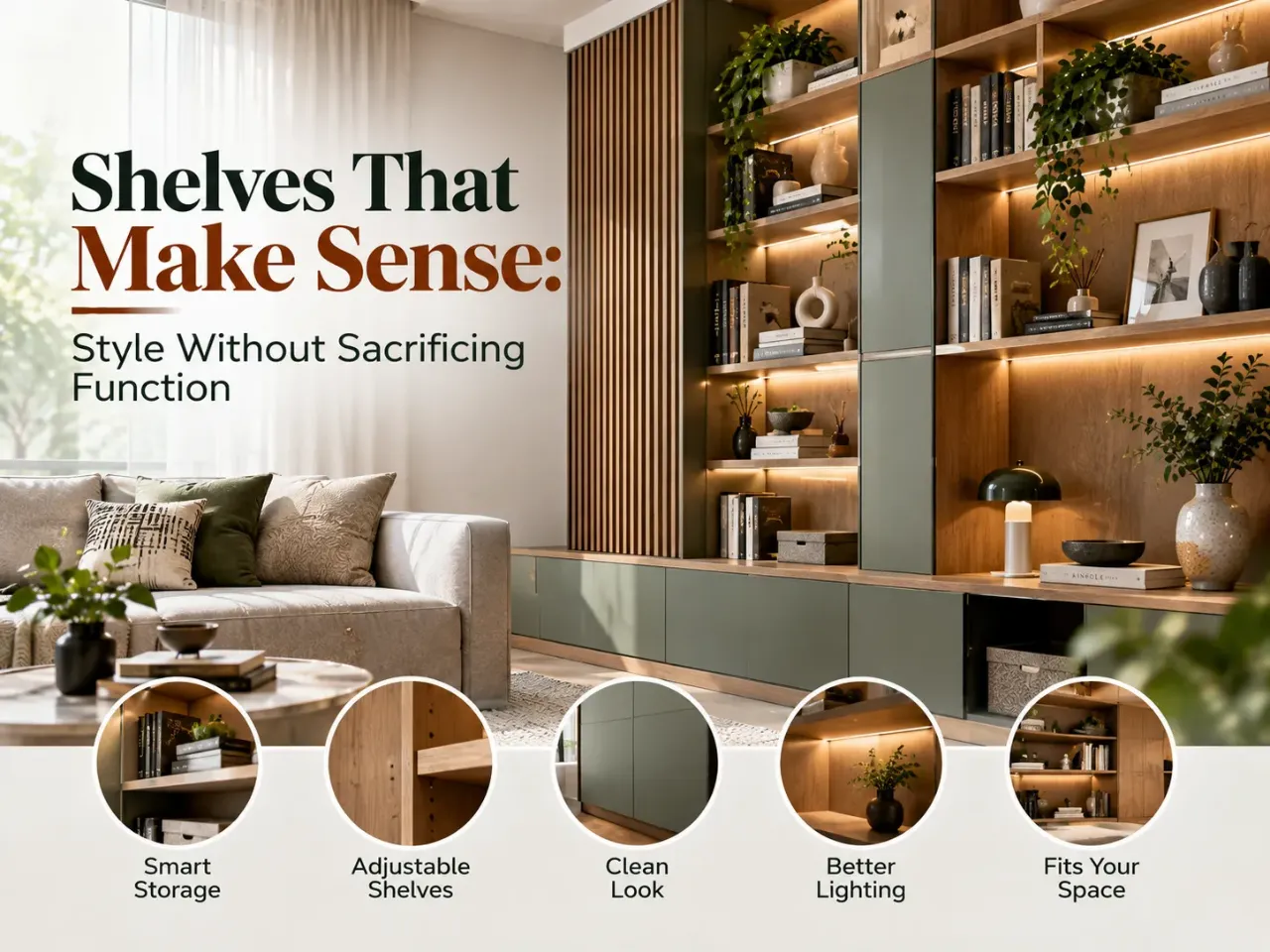
Shelves That Make Sense: Style Without Sacrificing Function
An empty wall can offer more possibilities than it first appears to. A thoughtfully planned shelf can display books, hold everyday essentials, introduce decorative details or make use of an awkward corner. But a shelf that looks attractive in a photograph may not work well once it is part of a busy home.
The best wall shelves design balances appearance with purpose. It considers what needs to be stored, how much weight the shelf must carry, where it will be placed and how it will relate to the rest of the room.
Whether you are planning a simple floating shelf or a larger arrangement, these are the details worth getting right.
1. Decide What the Shelf Needs to Do
Start with the purpose, not the shape. A shelf intended for books has different requirements from one designed to display small decorative objects.
Think about what you plan to place on it:
- Books and files: Need adequate depth, reliable support and enough space between shelves.
- Decorative objects: Can work with shallower shelves and more varied arrangements.
- Everyday essentials: Should be easy to reach and simple to keep organised.
- Plants: Need consideration for watering, drainage, sunlight and protection of the wall below.
- Kitchen items: Require finishes that are suitable for the room's moisture, grease and cleaning conditions.
A clear purpose helps determine the shelf's size, material, position and support system. It also prevents a decorative feature from becoming an inconvenient storage area.
2. Choose a Shelf Style That Suits the Room
Wall shelves are available in several forms, and each creates a different visual effect.
- Floating shelves: Concealed supports create a clean, minimal appearance. They are useful for displaying a limited number of objects, provided the fixing system is suitable for the intended load.
- Open bracket shelves: Visible brackets can become part of the design and provide a straightforward support arrangement.
- Box shelves: Individual box-shaped units can create a geometric display and help organise smaller objects.
- Corner shelves: Make use of otherwise underused corners, particularly in compact rooms.
- Built-in or recessed shelves: Can create a more integrated appearance, although they need to be planned around the wall construction and available depth.
- Adjustable shelving: Offers flexibility when the items being stored may change over time.
Choose a style that complements the room rather than introducing a completely unrelated design language.
3. Get the Length, Depth and Spacing Right
Shelf proportions affect both usability and appearance. A shelf that is too shallow may not hold the intended objects, while one that projects too far can feel intrusive in a narrow passage.
Measure the wall and the items you intend to store before finalising dimensions. Books, framed photographs, planters and kitchen containers all have different space requirements.
Also consider the spacing between shelves. Books need enough vertical clearance to be removed comfortably. Decorative displays can benefit from varied gaps, but the arrangement should still feel intentional.
For multiple shelves, check their alignment with nearby furniture, wall panels, windows and door frames. A well-proportioned arrangement should look connected to the room rather than randomly attached to an empty wall.
4. Select Materials Based on Use and Maintenance
The material influences the shelf's appearance, durability, maintenance and suitability for different rooms.
- Solid wood: Adds natural grain and character. Its finish and suitability should be considered in areas exposed to moisture or frequent cleaning.
- Plywood with veneer or laminate: Offers flexibility in finishes and can work well for custom shelving when properly specified and supported.
- MDF: Can provide a smooth painted finish, but its suitability depends on the product specification and exposure conditions.
- Metal: Creates a crisp, contemporary or industrial look and can be useful for slim support structures.
- Glass: Keeps a display visually light, but needs appropriate thickness, edge treatment and support for its intended use.
- Stone: Can create a substantial, premium feature, but its weight and support requirements need careful planning.
For kitchens and bathrooms, pay particular attention to moisture, steam, splashes and cleaning products. Do not choose a material only because its sample looks attractive.
5. Treat Load Capacity and Wall Fixing as Design Decisions
A shelf must be designed for the objects it will carry. A display shelf holding a few lightweight accessories has different requirements from one filled with books, crockery or equipment.
The shelf board, brackets, screws, anchors and supporting wall all contribute to the final load capacity. A strong bracket alone does not guarantee a safe installation.
Before installation, establish whether the wall is solid masonry, concrete, a framed partition or another construction type. The fixing method must suit that actual substrate. Follow the shelf and hardware manufacturer's instructions, and seek a qualified installer or structural professional when the wall condition or expected load is uncertain.
Avoid placing heavy objects on a shelf until the installation has been checked. Distribute items sensibly rather than concentrating all the weight at one end.
6. Place Shelves Where They Are Useful and Accessible
The right location depends on what the shelf is expected to do.
In a living room, shelves can sit above a console, beside a television unit or within a dedicated display area. In a bedroom, they can provide space for books and small personal items, provided they do not interfere with comfortable movement around the bed.
In a home office, keep frequently used files and stationery within easy reach. In a kitchen, place everyday items where they can be accessed without stretching over a hot cooking area.
Avoid blocking switches, vents, windows or access routes. Also consider whether the shelf will be easy to clean and whether objects placed on it can be reached safely.
7. Use Lighting to Improve the Display
Lighting can make a shelf arrangement more useful and visually interesting. Integrated LED strips, small spotlights or concealed lighting can highlight objects and improve visibility.
However, lighting should be planned before the shelf is installed. Consider the position of wiring, the location of the power supply, access for maintenance and whether the light source will create glare.
A soft, concealed light can work well for a decorative display. A practical storage shelf may not need additional lighting at all. Keep the effect proportionate to the purpose of the shelf and the room.
8. Style the Shelves Without Overfilling Them
A shelf can become cluttered when every available space is filled. Leave some empty areas so that the objects have room to stand out.
A balanced arrangement might combine books, a small plant, a framed photograph and one or two sculptural objects. Varying heights and shapes creates interest, while a limited colour palette helps the display feel connected.
Try these simple styling principles:
- Group smaller objects together rather than scattering them.
- Mix vertical and horizontal book arrangements.
- Use one larger object as a focal point.
- Introduce texture through wood, ceramic, glass or natural materials.
- Leave breathing space between groups.
- Keep frequently used items accessible rather than treating every shelf as a display.
The aim is not to make every shelf look identical. It is to create a composition that feels considered and remains practical to use.
9. Plan for Cleaning, Repairs and Future Changes
Open shelves collect dust more readily than closed storage. Consider this before choosing a design for a busy kitchen, a high shelf or a home with many display objects.
Check whether the finish can be cleaned with suitable products and whether the shelf can be removed or adjusted if your needs change. For modular or adjustable systems, confirm that additional components will be available if required.
If you are planning a custom unit, record the approved dimensions, material, finish, bracket type and installation details. This makes it easier to maintain or modify the shelving later.
10. Review the Complete Wall Before Installation
Do not assess the shelf in isolation. Look at the entire wall, including furniture below it, nearby lighting, wall finishes and the room's circulation.
A single long shelf may create a calm horizontal line, while several smaller shelves can form a more playful arrangement. Neither is automatically better. The right choice depends on the wall's proportions and the items being stored.
You can use Design My Room to explore how different shelf styles and finishes might look in your space. If you are coordinating several rooms, the Whole Home Visualizer can help you explore a more consistent interior direction.
For preliminary project budgeting, try the Interior Design Cost Estimate. If the shelving is included in a larger interior quotation, the Interior Quotation Checker can help you review the listed scope, materials and charges.
Final Thought
Good wall shelves do more than fill an empty space. They make everyday items easier to organise, give meaningful objects a place to be seen and bring another layer of detail to a room.
Prioritise purpose, proportion, material and safe support before settling on the final style. When these decisions work together, shelves become a natural part of the interior rather than an afterthought.
Frequently Asked Questions
1. Which wall shelves are best for a modern home?
Floating shelves, simple box shelves and clean-lined metal-and-wood combinations can suit modern interiors. The best choice depends on the room, storage needs and wall construction.
2. What material is suitable for wall shelves?
Wood, plywood, metal, glass and stone can all be used. Choose according to the intended load, moisture exposure, finish, maintenance and support requirements.
3. Are floating shelves strong enough for books?
They can be, but only when the shelf, concealed supports, fixings and wall are designed for the combined weight. Check the manufacturer's load rating and installation requirements.
4. How deep should a wall shelf be?
The required depth depends on what it will hold. Measure the intended objects first; a shelf for small decorative pieces can be shallower than one intended for books or larger containers.
5. Can wall shelves be installed on any wall?
Not with the same fixing method. Concrete, brick, framed partitions and other wall types require suitable hardware and installation methods. Assess the wall before mounting a loaded shelf.
6. How do I make wall shelves look less cluttered?
Use a limited number of objects, vary their heights and textures, group smaller pieces and leave some empty space. Keep frequently used items easy to reach.
Turn this idea into a plan for your home
Visualise your space, understand the likely budget, or find a professional who can bring the idea to life.