
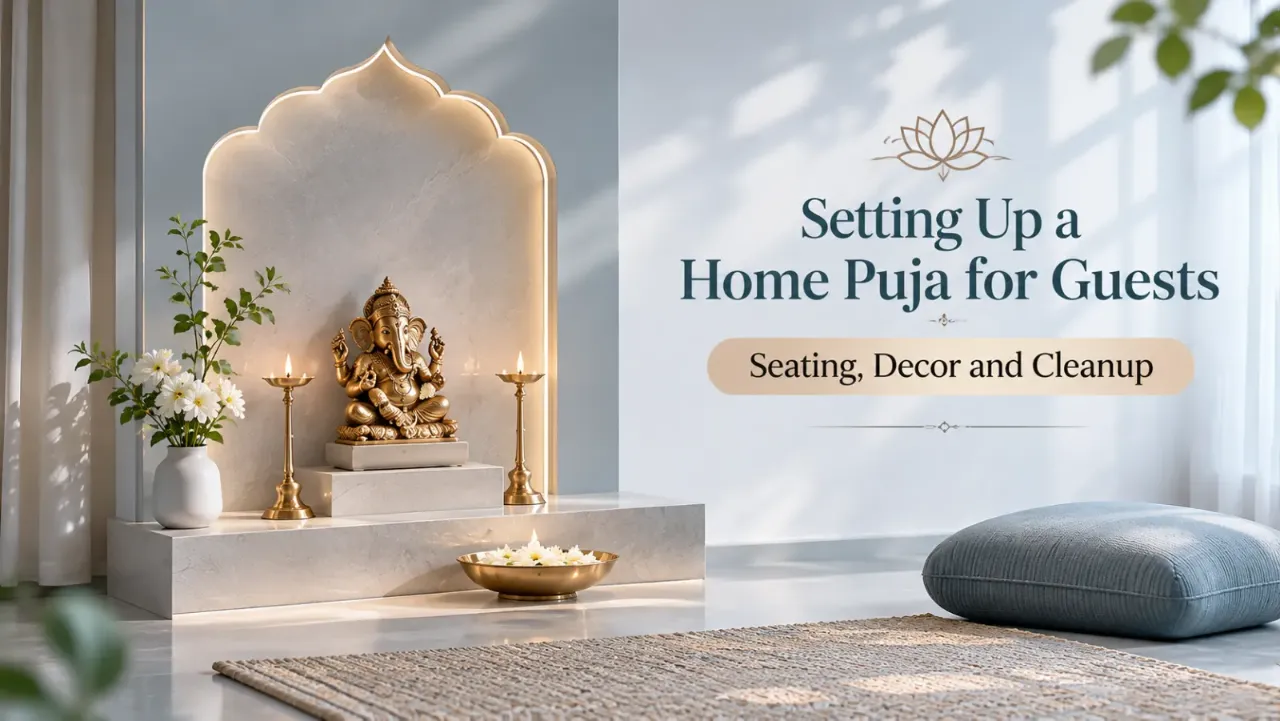
Setting Up a Home Puja for Guests: Seating, Decor and Cleanup
A home puja often brings family members, friends and neighbours together. While the prayer arrangement is naturally the centre of attention, preparing the rest of the home is just as important. Guests need comfortable places to sit, enough room to move, and convenient access to essentials such as drinking water, footwear storage and washrooms.
The challenge is to make the home feel welcoming without overcrowding it with furniture or decorations. A little planning can help the puja proceed smoothly while keeping the space organised before, during and after the gathering.
Here is how to prepare your home for a puja when you are expecting guests.
1. Decide Where the Puja and Guests Will Be Accommodated
Start by deciding where the puja will take place and how many guests you expect. The arrangement will depend on the size of your home, the number of attendees and the type of ceremony.
A dedicated puja room may be suitable for a small gathering, but a larger group may need an adjacent living or dining area. If the prayer area is compact, avoid trying to fit every guest inside it.
- Dedicated puja room: Keep the immediate prayer space for the person conducting the rituals and those who need to participate closely.
- Living room: Use it for additional seating, especially when guests need to remain within view of the ceremony.
- Dining area: Keep it available for refreshments or prasad distribution, rather than allowing it to become an extension of the main seating area.
- Open or covered balcony: This can sometimes accommodate extra guests, provided it is safe, comfortable and protected from weather.
The goal is to create a connected arrangement without making every area feel crowded.
2. Plan Guest Seating Before Moving Furniture
Seating is one of the most important parts of a home puja setup. Guests may be sitting for an extended period, so the arrangement should be comfortable and easy to access.
For floor seating, use clean mats, rugs or dhurries with cushions. Keep the arrangement even and leave enough space for people to sit down and stand up without disturbing others.
For guests who may find floor seating difficult, provide chairs with suitable back support. Older guests and anyone with mobility limitations should not have to navigate a crowded floor arrangement.
- Arrange seating in rows or a gentle U-shape, depending on the room.
- Maintain a clear view of the prayer area where possible.
- Leave a passage for the priest or family members conducting the rituals.
- Avoid placing chairs directly in front of doors or narrow walkways.
- Keep a few extra seats available for unexpected guests.
- Avoid mixing unstable stools, low tables and chairs in a way that creates trip hazards.
3. Keep Guest Movement Simple and Uninterrupted
A home can feel crowded even when there are enough seats if guests have to cross the prayer area to reach another room. Plan the movement routes before placing furniture.
Think about the journey guests will make from the entrance to the seating area, washroom and refreshment space.
Keep these routes clear:
- Entrance to the main seating area.
- Seating area to the washroom.
- Seating area to drinking water and refreshments.
- Prayer area to the entrance, where people may need to move during the ceremony.
Do not place decorative stands, extension wires, loose rugs or flower arrangements in these pathways. If the gathering includes children or older guests, keeping the floor clear becomes especially important.
4. Create a Simple and Respectful Puja Decor Arrangement
Decorations can make the home feel festive, but they should not interfere with the rituals or take up useful seating space.
Start with the prayer area. Clean the surface, arrange the required items neatly and use a few decorative elements to frame the space. Fresh flowers, a simple toran, a clean cloth and a small rangoli near the entrance can create a welcoming look.
- Fresh flowers: Use garlands or small arrangements around the prayer area, keeping them away from flames and electrical fittings.
- Entrance toran: A floral or fabric toran can mark the entrance without taking up floor space.
- Rangoli: Place it where guests can see it without needing to walk over it.
- Fabric accents: A clean runner or decorative cloth can bring colour to a table or prayer platform.
- Soft lighting: Use suitable fixed lights or securely placed decorative lights to make the space inviting.
Avoid placing too many small decorative objects around the floor. They can make cleaning difficult and create obstacles when guests are moving around.
5. Arrange Puja Essentials and Offerings in Advance
During a puja, people may need to access flowers, lamps, incense, water, prasad and other ritual items. Keeping everything in one organised place helps prevent last-minute searching.
Use a dedicated tray or table for the items that need to be accessible. Separate the materials used during the rituals from guest refreshments and personal belongings.
- Ritual essentials: Items required by the priest or family members conducting the puja.
- Offerings: Flowers, fruits, sweets and other offerings, arranged according to the ceremony.
- Prasad distribution: A separate clean area for serving and collecting prasad.
- Guest essentials: Drinking water, tissues and any other basic items guests may need.
The exact requirements vary by ritual and family custom. Confirm the list with the person conducting the puja rather than assuming that every ceremony requires the same items.
6. Set Up a Separate Place for Footwear and Personal Belongings
When several guests arrive together, footwear can quickly accumulate near the entrance. Without a designated place, it may block the doorway or make the entrance look untidy.
Use a shoe rack, shoe organiser or clearly designated corner near the entrance. Keep it away from the main passage and make sure guests can access it without crowding the doorway.
- Keep a small mat or washable tray beneath the footwear area.
- Leave enough space for guests to remove and collect shoes comfortably.
- Provide a separate place for umbrellas or bags if needed.
- Keep personal belongings away from the prayer platform and ritual supplies.
If the entrance is narrow, avoid adding a large shoe cabinet just for the occasion. A temporary, compact arrangement may work better.
7. Prepare the Dining or Prasad Distribution Area
If refreshments or a meal will follow the puja, plan where they will be served before guests arrive. Keeping food service separate from the main prayer area can reduce congestion.
For a small gathering, a dining table or cleared countertop may be sufficient. For a larger group, consider a serving table where guests can collect prasad or refreshments without interrupting those still participating in the ceremony.
- Keep serving items organised and covered until needed.
- Provide a convenient place for used plates and cups.
- Keep drinking water accessible.
- Avoid placing food near electrical equipment, lamps or incense.
- Ensure the serving route does not cross the main prayer area unnecessarily.
If guests will be eating a full meal, arrange seating and serving space according to the expected number of people rather than relying on the regular everyday dining setup.
8. Make the Home Comfortable for Older Guests and Children
A gathering should be easy to navigate for people of different ages. Older guests may need chairs, armrests or a shorter walking distance. Children may need a safe place to sit without being close to lamps, incense or fragile decorations.
- Reserve chairs with back support for guests who need them.
- Keep frequently used routes free from loose rugs and wires.
- Place lamps and hot items on stable surfaces, away from the edge.
- Keep matches, camphor, incense and other potentially hazardous materials out of children's reach.
- Avoid placing glass decor or breakable objects near floor seating.
- Keep a clear route to the washroom.
These practical details can make the gathering more comfortable without changing the overall look of the room.
9. Protect Floors, Furniture and Surfaces
Puja arrangements may involve flowers, water, oil, food, incense and temporary furniture movement. A little preparation can prevent stains and damage.
Use washable mats or suitable floor coverings beneath seating and serving areas. Keep trays beneath flower arrangements where water may collect, and use stable surfaces for lamps and other ritual items.
- Move delicate decor and valuable objects away from crowded areas.
- Use coasters or trays on wooden furniture.
- Keep liquids away from electrical connections.
- Avoid dragging heavy furniture across the floor.
- Follow the manufacturer's care instructions for rugs, upholstery and furniture finishes.
For lamps and open flames, maintain safe clearance from curtains, flowers, fabrics and other combustible materials. Never leave a burning lamp or candle unattended.
10. Make Cleanup Easier Before Guests Arrive
Cleanup is much easier when the home has been prepared for it in advance. Instead of deciding where everything goes after the ceremony, keep a few basic supplies ready.
- A waste bin for disposable plates, cups and tissues.
- A separate container for flower waste, where appropriate.
- A tray or basket for collecting reusable puja items.
- Cleaning cloths for spills.
- A designated place for used mats and cushion covers.
If you are using reusable serving items, decide where they will be collected so they do not end up scattered around the house.
Also check whether any local waste-separation or disposal practices apply to the materials used during the ceremony. Do not pour oil, wax or other unsuitable materials into drains.
11. Follow a Simple Post-Puja Cleanup Sequence
Once the guests have left or the ceremony has concluded, avoid trying to clean every area at once. Work in a sensible order.
Step 1: Collect Reusable Items
Put trays, lamps, decorative vessels, cushions and other reusable objects aside. Allow hot items to cool completely before handling or storing them.
Step 2: Clear Food and Serving Waste
Collect used plates, cups, tissues and leftover food. Store suitable leftovers safely and dispose of waste appropriately.
Step 3: Remove Flowers and Decorations
Take down temporary decor carefully. Separate reusable fabric, stands and lighting from flowers and other items that need disposal or composting where suitable.
Step 4: Clean Surfaces
Wipe tables, countertops and other affected surfaces with products suitable for their material. Avoid using harsh cleaners on delicate stone, wood or metal finishes.
Step 5: Clean the Floor
Remove loose debris first, then clean spills and stains using a method suitable for the flooring. Let damp areas dry before putting rugs or furniture back.
Step 6: Restore the Regular Room Layout
Return furniture to its original position, check that walkways are clear and put stored items back in their designated places.
12. A Quick Home Puja Preparation Checklist
Use this checklist to review the arrangement before guests arrive.
- Confirm the guest count and seating plan.
- Decide which room will accommodate the puja and which will accommodate additional guests.
- Keep the prayer area clean and organised.
- Arrange floor seating and chairs according to guest needs.
- Leave clear walking routes.
- Set up the entrance and footwear area.
- Organise ritual essentials and offerings.
- Prepare the prasad or refreshment area.
- Check lighting, wires and lamp placement.
- Keep cleaning supplies and waste containers ready.
- Protect delicate furniture and floor surfaces.
- Check washroom access and basic supplies.
Final Thoughts
A well-organised home puja does not require elaborate decorations or a complete rearrangement of the house. Comfortable seating, clear pathways, an organised prayer area and a practical serving arrangement can make a much bigger difference.
The most effective setup is one that respects the ceremony while making guests feel welcome. By planning the arrangement beforehand and keeping cleanup in mind, you can enjoy the gathering without spending the entire occasion managing the space.
Frequently Asked Questions
1. How should I arrange seating for a home puja with many guests?
Use floor mats and cushions where suitable, with chairs reserved for guests who need additional support. Keep the prayer area visible and leave clear walking routes.
2. Where should guests sit during a home puja?
Guests can sit in the living room or an adjacent open area, depending on the home layout. Keep the immediate prayer space accessible to the people conducting the rituals.
3. How can I decorate my home for a puja without making it crowded?
Use a few focused elements such as flowers, a toran, a simple rangoli and suitable lighting. Avoid filling the floor and walkways with decorative objects.
4. What should I keep ready before guests arrive?
Prepare the seating, ritual essentials, offerings, drinking water, footwear area, washroom supplies and prasad or refreshment arrangements in advance.
5. How can I make a home puja comfortable for older guests?
Provide chairs with back support, keep routes short and unobstructed, and avoid loose rugs, wires or low objects that could cause someone to trip.
6. How do I manage footwear during a home puja?
Set aside a compact, clearly defined footwear area near the entrance. Make sure it does not block the doorway or the main route into the home.
7. How can I make cleanup after a puja easier?
Keep separate containers for reusable items and waste, collect serving items promptly, remove temporary decorations and clean surfaces according to their materials.
8. Should I use fresh or artificial flowers for home puja decor?
Both can work depending on the ceremony and personal preference. Fresh flowers offer natural fragrance and texture, while good-quality artificial flowers can be reused. Keep either option away from open flames and electrical fittings.
Plan a Home That Works Beautifully
Thoughtful interiors make everyday living and special gatherings easier. Explore Walls to Wonder's AI tools to plan, visualise and evaluate your home interiors.
- Whole Home Visualizer – Explore ideas for your entire home.
- Design My Room – Try different looks for an individual room.
- Interior Design Cost Estimate – Get an initial estimate for your interior project.
- Interior Quotation Checker – Review and understand an interior quotation.
- Rate My Room Design – Get feedback on a room design.
- Interior Style Finder – Discover an interior style that suits your preferences.
Explore more ideas and tools at Walls to Wonder.
Turn this idea into a plan for your home
Visualise your space, understand the likely budget, or find a professional who can bring the idea to life.