
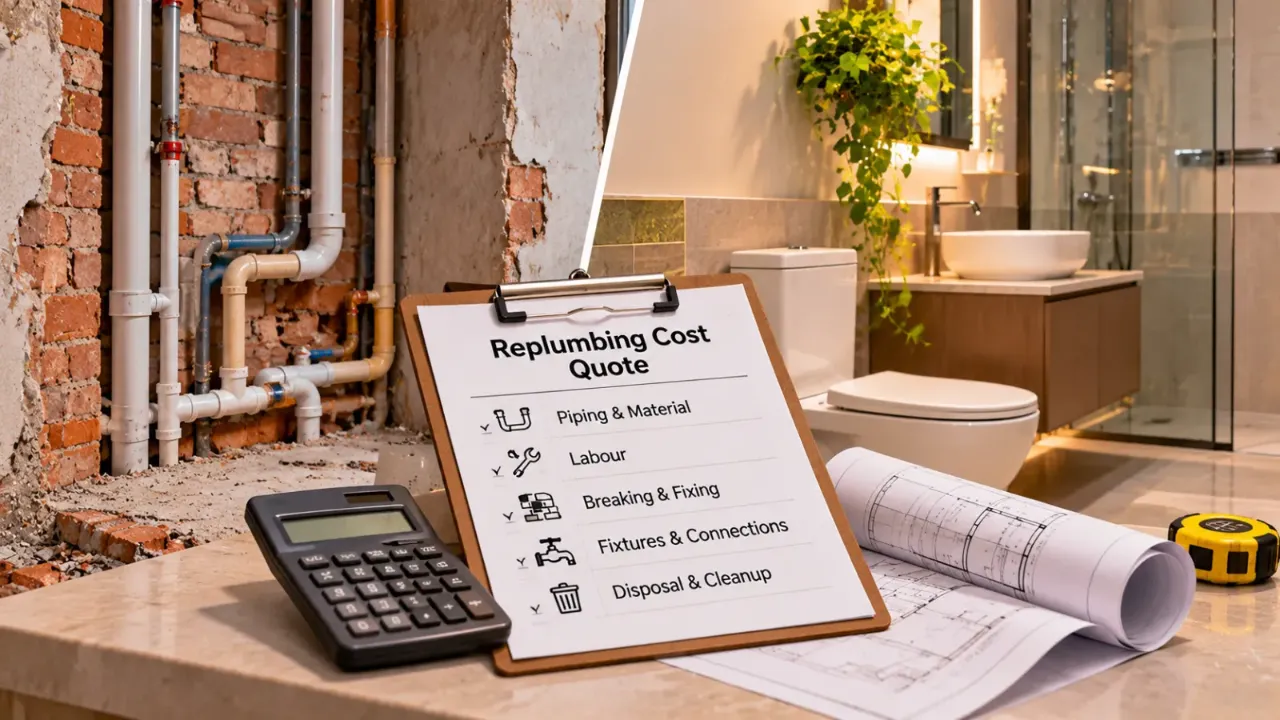
Replumbing Costs: What Drives the Quote?
When planning a home renovation, plumbing is often treated as a small part of the overall budget. A few new pipes, updated connections and replacement fittings may sound straightforward. But when the existing plumbing system is old, leaking or poorly planned, the work can become much more extensive.
Replumbing involves replacing some or all of the existing water supply or drainage pipework. The final cost depends on more than the length of pipe required. The location of the pipes, accessibility, material selection, demolition, labour, testing and surface restoration all influence the quotation.
For homeowners renovating an older Indian house or apartment, understanding these factors before work begins can make it easier to compare estimates and avoid unexpected expenses.
1. First Understand What Replumbing Includes
Not every plumbing problem requires an entire home to be replumbed. The first step is identifying what actually needs replacement.
Replumbing may involve:
- Replacing the cold-water supply lines.
- Replacing hot-water supply lines where applicable.
- Renewing concealed pipes inside walls or floors.
- Replacing drainage and waste pipes.
- Updating connections to bathrooms, kitchens and utility areas.
- Replacing old valves, connectors and isolation points.
- Correcting poorly routed or inaccessible pipework.
- Reconnecting existing fixtures and appliances.
There is an important distinction between repairing a local leak, replacing one section of pipe and renewing an entire plumbing network. These are different scopes of work and should not be priced as though they are the same project.
Before asking for a quote, request an inspection and a clear description of which pipes are being retained, repaired or replaced.
2. The Extent of Pipe Replacement
The size of the job is one of the biggest cost drivers.
A contractor may need to replace only a short damaged section, the complete supply line to one bathroom, or the pipework throughout the property.
| Type of work | What it involves | Cost implication |
|---|---|---|
| Local pipe repair | Fixing or replacing a damaged section | Usually a smaller scope |
| Partial replumbing | Replacing pipes in selected rooms or zones | Depends on the number of connections and areas involved |
| Full supply-line replacement | Renewing the main water distribution network | More pipework, connections and labour |
| Supply and drainage replacement | Renewing both water supply and waste lines | More extensive work and coordination |
A larger home may require more pipework, but the number of bathrooms, kitchens, water points and the complexity of the layout can matter just as much as the total floor area.
For example, a compact flat with multiple bathrooms and a relocated kitchen may require more complicated work than a larger home with a simpler layout.
3. Pipe Material and Quality
The type of pipe selected affects the material cost, fittings, installation method and suitability for the application.
Common pipe materials used in residential plumbing include:
| Pipe material | Common application | What to consider |
|---|---|---|
| CPVC | Hot and cold water supply, where specified | Temperature rating, compatible fittings and installation requirements |
| uPVC | Selected cold-water and drainage applications | Correct application, jointing system and pressure suitability |
| PPR | Hot and cold water supply | Fusion-joint quality, pipe specification and installation workmanship |
| HDPE | Suitable water supply and external or underground applications | Pressure rating, jointing method and site conditions |
| PVC drainage pipes | Wastewater and soil lines, depending on specification | Diameter, slope, joint quality and support |
The cheapest pipe is not automatically the most economical choice. A pipe must be suitable for the water temperature, pressure, installation location and intended use.
Also check whether the quotation specifies the pipe brand, product series, diameter, pressure or service rating and relevant standard. The contractor should explain why the selected system is appropriate for the particular application.
4. Pipe Diameter and Number of Connections
The cost of a plumbing system is affected by the sizes and quantities of pipes, not simply the material type.
A replumbing estimate may include different pipe diameters for main supply lines, branch connections and individual outlets. Drainage lines also require suitable diameters and gradients.
The number of connections can add to the work involved. Consider the connections required for:
- Washbasins and showers.
- Toilets and health faucets.
- Kitchen sinks and dishwashers.
- Washing machines.
- Water heaters or geysers.
- Utility sinks and outdoor taps.
- Water storage tanks and pumps.
A home with several bathrooms or additional appliances may need more branches, valves and fittings.
Ask the contractor to provide a pipe schedule or at least a room-wise breakdown showing the approximate pipe sizes, quantities and connection points.
5. Concealed Pipes and Accessibility
One of the biggest differences between a straightforward plumbing replacement and a major replumbing project is where the existing pipes are located.
Exposed pipes may be easier to reach and replace. Concealed pipes can require opening tiled walls, floors, shafts, ceilings or service panels.
The quote may therefore include:
- Removing selected tiles or wall finishes.
- Cutting channels in walls or floors.
- Opening access panels or service ducts.
- Removing and reinstalling sanitary fittings.
- Protecting nearby surfaces and fixtures.
- Repairing plaster, waterproofing and finishes after installation.
In apartment buildings, access to shared service shafts or concealed common lines may also involve coordination with building management.
Ask whether the estimate includes only pipe replacement or also the work required to reach the pipes and restore the affected areas.
6. Labour and Installation Complexity
Labour charges depend on the time, skill and coordination needed to complete the work.
A straightforward exposed installation may require less labour than replacing concealed pipework in an occupied home.
Factors that influence labour include:
- Number of bathrooms, kitchens and utility points.
- Length and route of the pipework.
- Difficulty accessing concealed lines.
- Height, working conditions and site restrictions.
- Number of existing fittings to disconnect and reconnect.
- Complexity of joints, bends, valves and branches.
- Coordination between plumbers, electricians, masons and tilers.
The contractor may charge labour as a combined project amount, per connection, per point or through another agreed measurement basis.
Do not compare labour quotations without checking whether they include dismantling, installation, testing, reconnection and finishing coordination.
7. Replacement of Valves, Fittings and Accessories
Pipes are only one part of a plumbing system. The fittings that connect, control and support them also matter.
A replumbing quote may include:
- Elbows, tees and reducers.
- Couplers and adaptors.
- Isolation valves.
- Stop valves and angle valves.
- Clamps and pipe supports.
- Connectors and flexible hoses.
- Traps and waste fittings.
- Inspection and access fittings.
- Sealants and jointing materials.
A quote that specifies only the pipe material may leave these components unclear.
Ask whether fittings are included in the quoted price, whether they are from a compatible system and whether the contractor has allowed for the correct number and type of valves.
8. Drainage Work Is Different From Water Supply Work
Replacing water supply pipes and replacing drainage lines are not identical tasks.
Supply pipes carry water under pressure. Drainage pipes rely on gravity, suitable gradients, correctly sized connections and proper venting arrangements where required.
Drainage replacement may involve:
- Removing old waste pipes.
- Adjusting pipe gradients.
- Replacing soil and waste lines.
- Changing connections to floor traps.
- Reworking kitchen sink drainage.
- Checking inspection points and cleanouts.
- Repairing floors and waterproofing around affected areas.
If a drainage pipe is poorly aligned or has inadequate fall, simply replacing the material may not solve the underlying problem.
Ask the contractor to identify whether the quote covers supply lines, drainage lines or both. The two should be listed separately wherever possible.
9. Demolition, Wall Repairs and Tile Replacement
This is an expense homeowners can easily overlook.
When concealed plumbing needs replacement, parts of the finished home may need to be opened. After the new pipework is installed and tested, those areas may need to be restored.
| Work item | Why it may be required |
|---|---|
| Tile removal | To access pipes concealed behind tiled surfaces |
| Wall or floor cutting | To reach embedded pipe routes |
| Debris removal | To clear broken tiles, plaster and construction waste |
| Masonry and plaster repair | To close opened sections |
| Waterproofing | To restore protection in affected wet areas |
| Tile replacement | To reinstate bathroom or kitchen finishes |
| Painting and touch-ups | To restore walls and ceilings |
Matching old tiles can be difficult if the original design or batch is no longer available. This may affect how much of a surface needs to be retiled.
Ask for the restoration work to be listed separately from the plumbing installation. This makes it easier to understand the complete project budget.
10. Testing and Quality Checks
A plumbing system should not be concealed behind fresh tiles or plaster before the relevant checks are completed.
Depending on the pipe system and scope, the contractor may need to carry out pressure or leak testing on supply lines, along with appropriate flow, drainage and leak checks.
Ask for clarity on:
- Which sections will be tested.
- The testing method and applicable requirements.
- Whether testing is carried out before closing walls and floors.
- Whether the contractor will correct leaks or failed joints.
- Whether a final inspection is included.
- Whether test results or handover records will be provided.
The testing process should follow the requirements of the selected pipe system and be carried out by a suitably qualified professional.
11. Changes to Bathroom and Kitchen Layouts
Sometimes replumbing is required because the homeowner wants to change the layout.
Moving a shower, shifting a washbasin, relocating a kitchen sink or adding an appliance connection can change the pipe routes and drainage arrangements.
This may involve additional:
- Supply pipe extensions or rerouting.
- Drainage modifications.
- Floor cutting and wall opening.
- Waterproofing work.
- New valves and connectors.
- Repositioning of fixtures.
- Coordination with cabinetry, electrical work and tiling.
A replacement project that keeps the existing layout may be relatively straightforward compared with one that also relocates fixtures.
Finalise the fixture positions before approving the plumbing layout. Changes after installation can mean additional labour and material.
12. Water Supply, Building Access and Site Conditions
The location and condition of the property can affect the work.
For example, a contractor may need to account for:
- Difficult access to the main water supply.
- Existing tank or pump arrangements.
- High-rise apartment service shafts.
- Restricted working hours.
- Building or society permissions.
- Limited material storage.
- Water shutdown coordination.
- Access to common plumbing lines.
In an apartment, confirm which pipes belong to the individual flat and which are part of the building's shared services. Changes to common lines may require permission and coordination with the building management or association.
Do not assume that a flat owner can independently alter every pipe inside or outside the apartment.
13. Temporary Arrangements During Replumbing
Replumbing can interrupt everyday water use. If the home remains occupied, the project may require temporary arrangements.
These can include:
- Temporary water connections.
- Coordinated water shutdowns.
- Access to an alternate bathroom.
- Temporary kitchen arrangements.
- Protection of furniture and appliances.
- Additional cleaning after dusty work.
These expenses may not appear in a plumber's basic estimate, but they can affect the household's overall renovation budget.
Ask how long the water supply will be interrupted and whether the work can be completed in stages to reduce disruption.
14. How to Read a Replumbing Quote
A good quotation should explain the work rather than simply provide one combined figure.
Check whether it identifies:
- Rooms and areas included.
- Supply pipes and drainage pipes separately.
- Pipe brands, types and specifications.
- Pipe diameters and estimated quantities.
- Valves, fittings and accessories.
- Labour and installation charges.
- Demolition and access work.
- Waterproofing and surface restoration.
- Testing and inspection.
- Disposal and cleaning.
- Taxes and applicable additional charges.
- Warranty or workmanship terms.
- Exclusions and provisional costs.
If the quotation uses a lump-sum amount, request a supporting scope breakdown. This will help you understand what is included and compare it with other estimates.
15. Common Reasons a Replumbing Quote Increases
| Reason | How it affects the budget |
|---|---|
| More damaged pipes are discovered | The replacement scope expands |
| Concealed routes are difficult to access | Additional demolition and labour may be needed |
| Fixture locations change | New pipe routes and connections are required |
| Drainage problems are found | Additional pipework or gradient correction may be necessary |
| Existing tiles cannot be matched | A larger surface may need replacement |
| Additional valves or fittings are required | Material and installation costs increase |
| Building access is restricted | Work may take longer or need additional coordination |
| Changes are made after installation begins | Rework, new materials and labour can add costs |
Not every project will encounter these issues. The best way to reduce uncertainty is to inspect the existing system carefully and document the work before the contractor begins.
16. A Replumbing Cost Checklist Before You Approve
- Confirm whether the work is a repair, partial replumbing or full replacement.
- Identify all rooms and pipe routes included.
- Separate water supply and drainage work.
- Confirm pipe type, brand, size and specifications.
- Check the quantity of pipes and fittings.
- Confirm labour, dismantling and installation charges.
- Ask whether wall and floor opening is included.
- Check waterproofing and tile restoration charges.
- Confirm testing and inspection before closing concealed work.
- Clarify water shutdowns and temporary arrangements.
- Check building permissions where applicable.
- Review exclusions, taxes, warranty and additional-work terms.
- Keep a separate reserve for genuinely unforeseen conditions.
Final Thoughts
Replumbing costs depend on the condition of the existing system and the amount of work required to replace it safely and properly. Pipe material matters, but so do accessibility, connections, labour, demolition, drainage, testing and the restoration of finished surfaces.
Before comparing quotations, make sure each contractor is pricing the same scope. A lower estimate may cover only the new pipes, while a more complete quotation may include fittings, testing and reinstatement.
The most useful replumbing quote is not necessarily the cheapest one. It is the one that clearly explains what will be replaced, how the work will be completed and what is included in the final amount.
Frequently Asked Questions
1. What is included in the cost of replumbing a house?
It may include new supply or drainage pipes, fittings, valves, labour, removal of old pipework, access work, testing and restoration. The exact inclusions depend on the agreed scope.
2. Is partial replumbing cheaper than full replumbing?
Usually, partial replacement involves a smaller scope, but the actual cost depends on accessibility, pipe condition, the number of connections and the amount of repair work required.
3. Does replumbing include replacing drainage pipes?
Not necessarily. Some estimates cover only water supply lines. Ask whether waste, soil and drainage pipes are included or quoted separately.
4. Which pipe material is best for home replumbing?
There is no single best material for every application. The choice depends on whether the pipe carries hot water, cold water or wastewater, along with pressure, temperature, installation conditions and product specifications.
5. Why does concealed plumbing cost more to replace?
Concealed pipes may require tiles, plaster, walls or floors to be opened before installation. The affected surfaces also need to be restored afterwards.
6. Should wall and tile repairs be included in a replumbing quote?
They should at least be clearly identified. Some plumbers quote only for pipework, while masonry, waterproofing, tiling and painting may be handled separately.
7. How can I compare two replumbing quotations?
Compare the same pipe routes, materials, diameters, quantities, fittings, labour, demolition, testing, restoration, exclusions and warranty terms. Comparing only the final total can be misleading.
8. Should plumbing be tested before tiles and walls are closed?
Yes. Relevant supply lines should be tested, and drainage should be checked before concealed work is covered. The contractor should follow the testing requirements for the selected system.
Planning a Home Renovation? Start With Walls to Wonder
Explore your design ideas, understand project costs and plan your home improvements with Walls to Wonder's AI tools.
- Whole Home Visualizer – Explore design ideas across your home.
- Design My Room – Experiment with different room styles.
- Interior Design Cost Estimate – Explore an indicative budget for your project.
- Interior Quotation Checker – Review and understand interior quotations.
- Rate My Room Design – Get feedback on your room design.
- Interior Style Finder – Explore styles that match your preferences.
Discover more at Walls to Wonder.
Get a personalised estimate for your home
Choose your rooms, materials and preferences to understand a practical interior budget before you commit.