
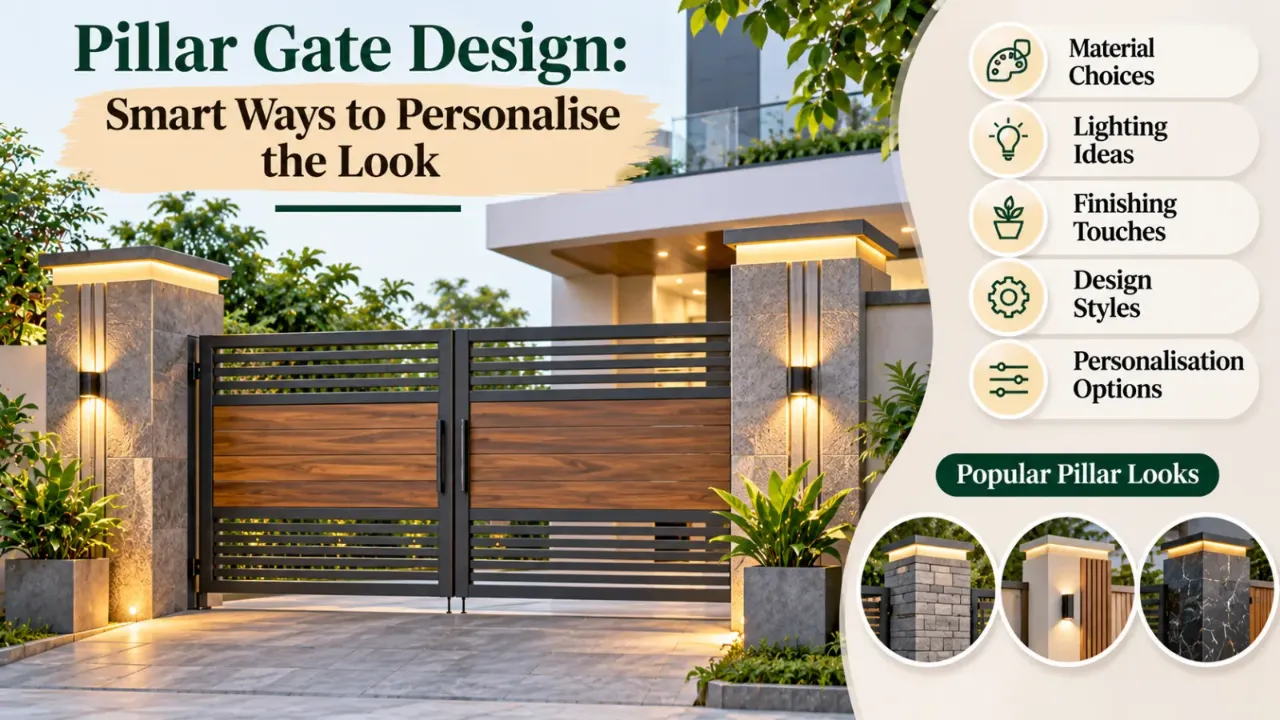
Pillar Gate Design: Small Details That Make a Big Difference
A gate may be the main point of entry to your home, but the pillars supporting and framing it have an important role in how the entrance looks. They create visual boundaries, establish a sense of proportion and offer an opportunity to introduce materials, colours and details that reflect the character of the house.
A well-planned pillar gate design does not need excessive decoration. Sometimes, a change in surface texture, a contrasting cap, a thoughtfully placed light or a simple nameplate is enough to make the entrance feel distinctive.
Whether you are building a new house or updating an existing gate, here are practical ways to personalise your gate pillars while keeping the overall exterior balanced.
1. Begin With the Architecture of Your Home
Before selecting a pillar finish, look at the house facade and the gate together. The pillars should feel like a natural extension of the exterior rather than separate decorative structures.
For a contemporary home, clean rectangular pillars with smooth finishes and restrained detailing can work well. A traditional house may suit more pronounced profiles, textured surfaces or decorative caps. If the facade uses natural stone, exposed concrete or wood-look finishes, repeating one of those materials on the pillars can create a visual connection.
Consider:
- The architectural style and overall colour palette of the house.
- The width and height of the gate opening.
- Whether the gate has horizontal slats, vertical bars, solid panels or a combination.
- The materials already used on the boundary wall and facade.
- How visible the pillars are from the street and driveway.
The objective is to make the gate, pillars and house look like one coordinated entrance.
2. Choose a Material That Defines the Look
The material or surface finish is one of the most noticeable ways to personalise a gate pillar. Your choice should consider appearance, exposure to weather, maintenance and compatibility with the existing structure.
Natural stone or stone cladding
Stone finishes can give pillars a substantial, textured appearance. They work particularly well with contemporary homes that use neutral exterior colours, natural landscaping or other stone elements. The pattern, colour variation and joint detailing should be selected carefully so the pillars do not compete with the gate.
Textured exterior finish
A textured plaster or exterior coating can add depth without introducing another major material. It can be subtle and understated, or more pronounced depending on the finish selected. Check that the product is suitable for exterior exposure and can be maintained in local weather conditions.
Smooth painted finish
A smooth painted pillar offers flexibility in colour and is often a good choice when the house already has a clean, minimal exterior. You can match the boundary wall for continuity or use a slightly contrasting shade to define the entrance.
Tile or other decorative cladding
Exterior-rated tiles and selected cladding materials can create a more distinctive surface. They offer a wide range of patterns and finishes, but the choice should account for outdoor suitability, fixing method, edge treatment and ease of cleaning.
Concrete-inspired finishes
A concrete-look surface can suit industrial, contemporary and minimalist architecture. It pairs well with dark metal gates, simple landscaping and restrained lighting. The finish should be selected and applied with attention to consistency and weather exposure.
3. Personalise the Shape and Proportions
A pillar's dimensions influence how the entire entrance is perceived. A very bulky pillar can overwhelm a modest gate, while a narrow or visually weak one may look out of balance with a large entrance.
You can personalise the appearance through:
- Simple rectangular forms: Clean edges and uncomplicated proportions suit modern architecture.
- Layered profiles: Recessed bands or shallow projections can add definition without excessive ornamentation.
- Contrasting top caps: A distinct cap can visually complete the pillar and create a neat transition at the top.
- Vertical grooves: Carefully spaced grooves introduce rhythm and can complement vertical gate patterns.
- Recessed panels: A shallow inset can provide space for a nameplate, number or subtle decorative treatment.
The visible design should not compromise the pillar's structural role. Dimensions, reinforcement and foundation requirements must be determined by a qualified professional based on the gate, site and loads involved.
4. Use Colour to Create a Distinctive Entrance
Colour is a simple but effective way to personalise gate pillars. You do not necessarily need a dramatic contrast. A carefully chosen combination can make the entrance look coordinated and intentional.
Some approaches to consider:
- Tone-on-tone: Use a pillar shade close to the boundary wall, with a slight difference in texture.
- Dark and light contrast: Pair a charcoal or deep grey gate with lighter stone or neutral pillars.
- Natural combinations: Combine earthy stone shades with muted exterior colours and greenery.
- Wood and metal balance: If the gate has wood-look panels, use a restrained warm accent on the pillars rather than repeating the same finish everywhere.
- Monochromatic styling: Use different textures within one colour family to create depth without adding too many colours.
Always review a physical sample outdoors if possible. Natural daylight, shade and artificial lighting can make a finish look different from how it appears in a catalogue.
5. Add Lighting That Serves a Purpose
Lighting can make gate pillars more useful and visually appealing, especially at night. It can improve visibility around the entrance while highlighting selected architectural details.
- Wall-mounted lights: A fixture on the pillar can illuminate the gate area and create a clear visual feature.
- Up-and-down lights: These cast light in two directions and can emphasise the pillar's height and texture.
- Recessed lighting: Integrated fittings can create a cleaner appearance, provided the installation is planned properly.
- Cap lighting: A light near the top can create a subtle outline or highlight the pillar's upper profile.
- Address or nameplate lighting: A dedicated light can make the house number or name easier to read after dark.
Choose outdoor-rated fittings and plan the wiring, switching, access for maintenance and protection from water before the pillar finish is completed. Avoid excessive brightness that causes glare for people approaching the property or passing on the road.
6. Add Personal Details Without Overdecorating
Personalisation is most effective when it reflects something about the home without making the entrance visually crowded.
A few thoughtful additions can include:
- A house name or number in a finish that contrasts clearly with the pillar.
- A simple metal or stone nameplate.
- A small recessed panel for an intercom or doorbell.
- A coordinated letterbox where the layout permits.
- A planter or carefully positioned greenery near the base.
- A subtle decorative motif that relates to the gate pattern or facade.
Keep functional elements accessible. Doorbells, intercoms, access controls and letterboxes should be positioned at convenient heights and should not interfere with the gate's movement or the clear passage.
7. Coordinate the Pillars With the Gate
A personalised pillar design works best when it complements the gate rather than competing with it.
If the gate has a strong pattern or decorative panel, keep the pillars relatively restrained. If the gate is plain, the pillars can carry more of the visual detail through texture, lighting or a contrasting finish.
Look at the following combinations:
- Horizontal metal slats with simple stone-textured pillars.
- Vertical metal bars with pillars featuring subtle vertical grooves.
- Wood-look panels with neutral painted pillars and restrained lighting.
- Minimal solid gates with a textured finish or carefully detailed pillar caps.
- Decorative gates with plain pillars that allow the gate to remain the focal point.
Also check that the gate hinges, sliding track, motor, lock, access panel and service routes have enough space. These functional details should be coordinated before the pillar design is finalised.
8. Plan the Budget and Execution Details
The cost of personalising gate pillars depends on their size, existing condition, chosen finish and the amount of electrical or construction work involved. A surface treatment on an existing sound pillar is different from rebuilding or resizing the structure.
Before work begins, clarify:
- Whether the existing pillars can be retained.
- The proposed dimensions and finish specifications.
- Material quantities and installation method.
- Surface preparation and waterproofing requirements where applicable.
- Lighting fixtures, wiring and access for maintenance.
- Nameplates, intercoms and other fittings.
- Labour, finishing, cleaning and debris removal.
- Warranty terms and exclusions.
Ask for an itemised quotation and confirm the finished appearance through samples or a drawing. If the pillars are being constructed or modified, have the structural design and foundation requirements assessed by an appropriately qualified professional. Decorative planning alone cannot establish structural safety.
Final Thought
Gate pillars are more than supports at the entrance. They help establish the first impression of your home and provide a useful surface for introducing texture, colour, lighting and personal details.
The best pillar gate design is one that complements the architecture, works with the gate and remains practical to maintain. Choose a few details that matter, coordinate them carefully and let the overall entrance feel considered rather than crowded.
Frequently Asked Questions
1. Which material is suitable for a modern pillar gate design?
Stone cladding, smooth exterior finishes, textured coatings and concrete-inspired surfaces can all work. The right option depends on the house style, outdoor exposure, maintenance needs and installation method.
2. How can I make simple gate pillars look attractive?
A contrasting finish, subtle grooves, a neat top cap, a well-designed nameplate or suitable exterior lighting can add character without excessive decoration.
3. Should gate pillars match the main gate?
They should coordinate, but they do not have to use identical materials or colours. A complementary finish often creates a more balanced entrance.
4. Can lights be installed inside gate pillars?
Lighting can be integrated or recessed where the design and construction allow it. Wiring, outdoor-rated fittings, water protection and future maintenance access should be planned before finishing.
5. What should I check before constructing gate pillars?
Confirm the gate dimensions, opening width, site conditions, foundation and structural requirements with a qualified professional. Also coordinate hinges, sliding mechanisms, electrical points and the final surface finish before execution.
Turn this idea into a plan for your home
Visualise your space, understand the likely budget, or find a professional who can bring the idea to life.