
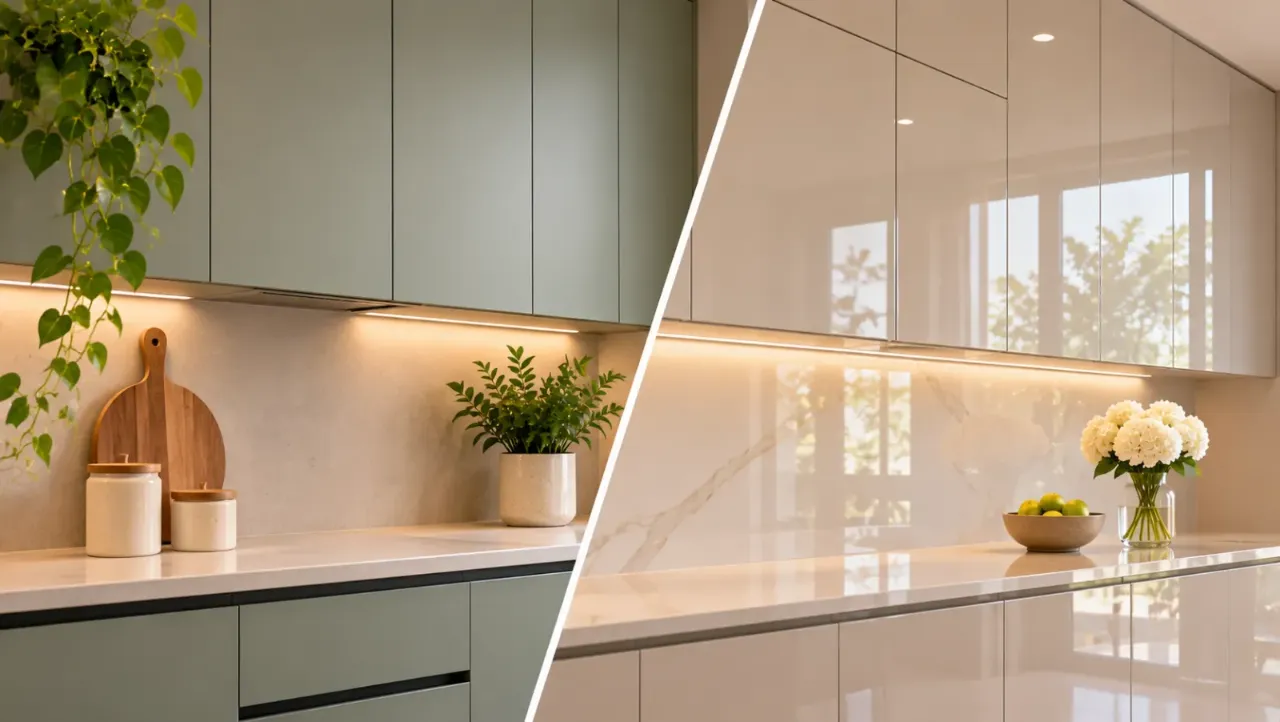
Matte vs Glossy Finishes: Which Is Easier to Maintain at Home?
When choosing finishes for a home, appearance is often the first thing people notice. Matte surfaces create a soft, understated look, while glossy surfaces add shine and reflect light. But once the home is in everyday use, another question becomes important: which one is easier to keep clean?
The answer is not as simple as saying matte is low-maintenance or glossy is easier to wipe. A matte kitchen cabinet may hide reflections but show oily fingerprints. A glossy cabinet may wipe clean quickly but make smudges and scratches more noticeable under bright light.
The right choice depends on the surface material, finish quality, colour, location and how the space is used.
1. Understanding Matte and Glossy Finishes
Matte finishes have little to no visible shine. They scatter light rather than reflecting it sharply, giving surfaces a softer and more subdued appearance. They are commonly used on painted walls, laminates, furniture, cabinetry and tiles.
Glossy finishes have a smoother, more reflective surface. They bounce light around the room and can make colours appear brighter or more pronounced. They are popular for kitchen shutters, wardrobes, furniture panels, wall tiles and decorative surfaces.
Some products also come in satin, eggshell or semi-gloss finishes. These sit between matte and high-gloss options, offering a moderate level of sheen.
It is important to remember that the finish is only one part of the material. A matte laminate, matte paint and matte porcelain tile do not have identical cleaning requirements.
2. Matte vs Glossy: A Quick Maintenance Comparison
| Maintenance factor | Matte finish | Glossy finish |
|---|---|---|
| Everyday dust | Can be visible on darker surfaces | Can show dust under direct light |
| Fingerprints | May show oily marks, depending on texture | Often visible on smooth, dark surfaces |
| Water spots | Depends on colour and surface texture | Can be noticeable because of reflections |
| Cleaning | Some textured surfaces need more care | Smooth surfaces are often easy to wipe |
| Scratches | Minor marks may be less noticeable on some textures | Scratches can stand out in reflected light |
| Light reflection | Low reflection | High reflection |
| Appearance | Soft and understated | Bright and polished |
There is no universal winner. A smooth matte surface may be easier to clean than a textured glossy one, while a high-quality glossy laminate may be simpler to wipe than a deeply textured matte finish.
3. Matte Finishes: Where They Work and What to Expect
Matte finishes are popular in contemporary interiors because they create a calm appearance without strong reflections.
Advantages of matte finishes
- They reduce glare from windows and artificial lighting.
- They can make large cabinetry and furniture look visually understated.
- Some matte textures help disguise minor surface irregularities.
- They work well in spaces where a soft, restrained appearance is preferred.
Maintenance considerations
Matte does not automatically mean stain-resistant. Some matte laminates and coatings can retain oily fingerprints, especially around handles and frequently touched areas. Textured matte surfaces may also collect dust in their grooves.
For easier upkeep, choose a product with a smooth, washable surface and check the manufacturer's cleaning instructions. Avoid assuming that every matte coating can tolerate strong cleaners or abrasive scrubbing.
4. Glossy Finishes: Where They Work and What to Expect
Glossy finishes are often selected for their clean, reflective appearance. They can help smaller or darker spaces feel brighter when used thoughtfully.
Advantages of glossy finishes
- Smooth glossy surfaces are often straightforward to wipe.
- They reflect available light and can make a room feel more open.
- They work well for contemporary kitchen shutters, wardrobes and selected wall surfaces.
- Their polished appearance can create a crisp, refined look.
Maintenance considerations
Glossy surfaces can make fingerprints, water marks, dust and fine scratches more noticeable, particularly on dark colours and under strong lighting. Frequent wiping may be needed to maintain a streak-free appearance.
Use a soft microfibre cloth and a cleaner approved for the specific material. Avoid rough sponges and abrasive products that can dull or scratch the surface.
5. Which Finish Is Better for Different Areas of the Home?
The best finish can change from one room to another. Consider the type of contact, moisture, cooking residue and cleaning frequency each surface experiences.
Kitchen cabinets
Kitchen shutters are exposed to grease, food splashes and frequent handling. Smooth glossy laminates can be convenient to wipe, but fingerprints and scratches may stand out. Matte laminates can create a more subdued look, though textured versions may need more attention around cooking and handling zones.
Choose a product specifically suitable for kitchen use and compare actual samples before deciding.
Wardrobes and bedroom furniture
Both finishes can work well. Matte finishes create a calm look and are often preferred for large wardrobe panels. Glossy finishes can brighten a room, but large reflective doors may show fingerprints and surface marks.
For sliding wardrobes, consider how often the doors are touched and whether the finish is easy to clean without streaking.
Living room furniture
TV units, coffee tables and display cabinets are available in both finishes. Matte surfaces can reduce distracting reflections around screens. Glossy surfaces can create a polished focal point but may require more frequent dusting and wiping.
Walls and painted surfaces
Matte paint is often chosen for living rooms and bedrooms because it reduces glare and gives walls a soft appearance. However, ordinary matte paint may not tolerate repeated scrubbing.
For hallways, children's rooms and other high-contact areas, consider a washable paint formulation and check its stated scrub resistance. A satin or eggshell finish may be a useful middle ground.
Bathroom surfaces
Glossy wall tiles are often easier to wipe because they are generally smooth, while matte tiles can offer a more subdued appearance. For bathroom floors, slip resistance and the manufacturer's suitability rating matter more than sheen alone.
Do not assume that all matte tiles are slip-resistant or that all glossy tiles are unsuitable for every bathroom location. Check the product's intended application and performance information.
6. Colour Makes a Difference to Maintenance
The same finish can behave differently depending on its colour.
- Dark glossy surfaces: Fingerprints, dust and water marks can be highly visible under direct light.
- Light glossy surfaces: They may make some dust less noticeable, but streaks and certain stains can still show.
- Dark matte surfaces: Dust, pale residue and oily fingerprints may stand out.
- Light matte surfaces: Some everyday marks may blend in, but stains can remain visible depending on the material.
Neutral mid-tones can be a practical choice when you want a balance between appearance and visible everyday marks. Still, the product's actual surface performance matters more than colour alone.
7. How to Maintain Matte and Glossy Surfaces
For matte surfaces
- Remove loose dust with a soft microfibre cloth.
- Use a mild, material-compatible cleaning solution.
- Wipe spills promptly, especially oil and coloured liquids.
- Clean textured areas gently with a soft brush if the manufacturer permits it.
- Avoid aggressive scrubbing that can polish or damage the surface unevenly.
For glossy surfaces
- Use a clean, soft microfibre cloth.
- Wipe in gentle, consistent strokes to reduce streaking.
- Dry the surface after cleaning where water marks are a concern.
- Avoid abrasive pads, scouring powders and harsh chemicals.
- Follow the manufacturer's guidance for removing grease or stubborn marks.
For both finishes, test a cleaning product on a small, inconspicuous area first.
8. Common Mistakes to Avoid When Choosing a Finish
| Common mistake | Why it can be a problem |
|---|---|
| Choosing matte because it is assumed to be maintenance-free | Some matte surfaces retain oils or are difficult to scrub |
| Choosing glossy because it looks easy to clean | Reflections can make fingerprints and scratches more visible |
| Ignoring surface texture | Deep textures can collect dust and residue |
| Selecting only by colour | Colour affects visible marks, but material quality also matters |
| Using abrasive cleaners | They can damage coatings and reduce sheen |
| Not checking a sample | Lighting can change how marks and reflections appear |
9. A Practical Checklist Before You Finalise a Finish
Before selecting matte or glossy finishes, check:
- Where will the surface be installed?
- How frequently will it be touched or cleaned?
- Is it likely to come into contact with grease, moisture or spills?
- Does the surface have a smooth or textured profile?
- Are fingerprints, water marks or scratches likely to be noticeable?
- Does the manufacturer provide clear cleaning and care instructions?
- Have you viewed a sample under your home's actual lighting?
- Is the finish suitable for the intended application?
Final Thought
Matte and glossy finishes can both be practical when selected for the right surface and used in the right location. Matte offers a softer look and reduces sharp reflections, while glossy surfaces are often simple to wipe but can reveal fingerprints, streaks and scratches more clearly.
Instead of choosing one finish for the entire home, consider how each surface will be used. A smooth, easy-to-clean finish in the kitchen, a low-glare wall finish in the living room and a carefully selected surface for bathroom floors can create a more practical overall design.
The best finish is not simply the one that looks clean on installation day. It is the one that continues to suit your home after everyday use.
Visualise different finishes in your home
Explore how different finishes could look in your spaces with Design My Room and the Whole Home Visualizer. You can also use the Interior Style Finder to explore a design direction before finalising materials.
Frequently Asked Questions
1. Is matte or glossy finish easier to clean?
Smooth glossy surfaces are often easier to wipe, but they can show fingerprints and streaks. Matte surfaces may hide reflections but some textures retain dust or oily marks. The material and product quality make a difference.
2. Do matte finishes show fingerprints?
They can. Oily fingerprints may be visible on certain matte laminates, painted surfaces and darker colours. The amount of marking depends on the coating and texture.
3. Are glossy finishes high-maintenance?
Not necessarily. Many smooth glossy surfaces are easy to wipe, but they may need more frequent attention to remove visible fingerprints, dust and water marks.
4. Which finish is better for kitchen cabinets?
Both can work. Choose a kitchen-grade surface with suitable stain and cleaning performance. Compare samples for fingerprints, grease marks and scratch visibility before finalising.
5. Is matte paint suitable for high-traffic areas?
Some washable matte paints are suitable for busy areas, but ordinary matte paint may not withstand repeated scrubbing. Check the product's washability and scrub-resistance specifications.
6. Does glossy finish make a small room look bigger?
Glossy surfaces reflect light and can make a room feel brighter. However, the effect depends on the amount of natural light, the surface area and the overall design.
7. Are matte tiles better for bathroom floors?
Matte tiles are commonly considered for bathroom floors, but the finish alone does not establish slip resistance. Check the tile's slip-performance rating and suitability for wet areas.
8. Can matte and glossy finishes be used together?
Yes. Combining finishes can create visual contrast. For example, matte cabinetry with a glossy backsplash can balance a soft overall appearance with a reflective accent. Keep the combination intentional and consider how each surface will be maintained.
Plan Your Home Interiors with Walls to Wonder
Choosing finishes is one part of creating a practical and well-coordinated home. Explore the Whole Home Visualizer to explore ideas across your home, or try Design My Room to experiment with individual spaces.
Use the Interior Design Cost Estimate for indicative budget planning and the Interior Quotation Checker to review quotation details.
You can also explore Rate My Room Design for design feedback and the Interior Style Finder to discover styles that suit your preferences.
Discover more ideas and tools at Walls to Wonder.
Turn this idea into a plan for your home
Visualise your space, understand the likely budget, or find a professional who can bring the idea to life.