
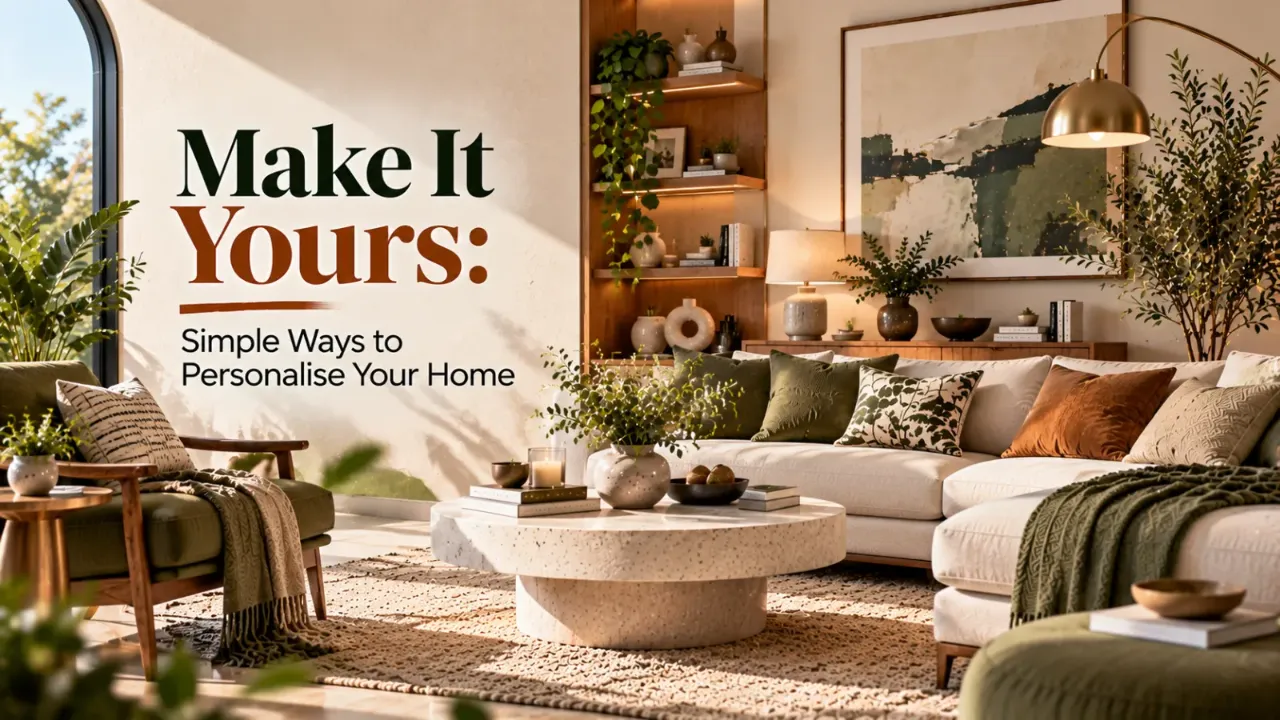
Make It Yours: Simple Ways to Personalise Your Home
A home can look beautifully designed and still feel as though something is missing. The furniture may be well chosen, the colours may complement one another, and the accessories may be arranged carefully, yet the space might not reflect the people who live there. Personal touches are what make a house feel like home: treasured objects, favourite colours, meaningful memories and arrangements that suit everyday life.
Personalising your home does not require an expensive makeover or a room filled with decorative items. A few thoughtful choices can make a space feel more individual while keeping it practical, comfortable and visually balanced.
1. Start With What Makes You Feel at Home
Before buying anything new, consider what you want your home to feel like. Do you prefer a calm, understated atmosphere, a colourful and expressive interior, or a comfortable space filled with natural materials?
Your preferences can guide decisions about colours, furniture, fabrics and accessories. Someone who enjoys reading might prioritise a comfortable reading corner, while someone who loves entertaining might focus on flexible seating and a welcoming dining area.
Make a short list of the things that matter most to you. This gives your decorating decisions a clear direction and reduces the temptation to follow every passing trend.
2. Use Colours That Reflect Your Personality
Colour can influence the mood of a room and help express your personal style. Soft neutrals may create a quiet backdrop, while earthy greens, deep blues, terracotta or muted yellows can introduce character.
You do not need to repaint every wall to personalise a space. Begin with smaller, reversible changes such as cushion covers, curtains, throws, lampshades or artwork. If you are confident about a colour, consider using it on one feature wall or a selected piece of furniture.
Keep the overall palette connected by repeating one or two shades in different parts of the room. This helps the space feel personal without becoming visually overwhelming.
3. Display Memories With Intention
Photographs, travel souvenirs, family heirlooms, handmade gifts and objects collected over time can give a home a sense of history. These pieces often carry more meaning than accessories purchased solely to fill an empty shelf.
Choose a few favourites and give them room to stand out. A small gallery wall, a framed photograph on a console, or a carefully arranged collection on a bookshelf can communicate personality without making every surface feel crowded.
Try grouping objects by a shared colour, material, theme or story. This creates a more deliberate display while preserving the individuality of each piece.
4. Make Artwork Part of Your Story
Artwork does not have to be expensive or chosen to match a particular design trend. It can be a print from a favourite artist, a local craft, a painting made by someone in the family or an image that brings back a meaningful memory.
Consider where each piece will have the greatest impact. A large artwork can anchor a living room, while smaller works can add interest to a hallway, study or bedroom.
Pay attention to scale and placement. Artwork should relate to the furniture and wall around it, and it should be hung at a height that feels comfortable to view. If you are creating a gallery wall, lay out the arrangement before fixing anything to the wall.
5. Layer Textures for a More Personal Feel
Textures can make a room feel distinctive without relying on bold colours or large decorative statements. Natural wood, woven baskets, linen, cotton, ceramics, glass and metal each contribute a different character.
Choose materials that appeal to you and suit your lifestyle. If you prefer a relaxed atmosphere, natural fibres and tactile fabrics may feel right. If you enjoy a cleaner, more contemporary look, smoother finishes with a few textured accents may be more appropriate.
A mix of materials works best when it is balanced. Repeating a timber finish, fabric texture or metal detail in more than one place can help the room feel connected.
6. Personalise Furniture Through Small Changes
Replacing all your furniture is rarely necessary to make a room feel different. Sometimes, changing the arrangement or updating a few details is enough.
You could add a distinctive cushion to a neutral sofa, replace ordinary cabinet handles with a suitable alternative, introduce a colourful side table or use a favourite chair as a focal point. Before making changes, consider the furniture's condition, construction and suitability for the room.
Furniture should also support how you live. A decorative table that obstructs movement or a chair that is uncomfortable to use may look attractive but will not make the home more enjoyable.
7. Create Corners Around Your Interests
Personalisation becomes especially effective when it supports an activity you enjoy. A reading corner might include a comfortable chair, a floor lamp and a small bookshelf. A creative workspace might feature accessible storage, a pinboard and materials you use regularly.
Even a small home can accommodate a dedicated area. A compact desk, a shelf for a hobby or a window-side seat can establish a sense of purpose without requiring an entire room.
Keep the arrangement proportionate to the available space. Choose furniture that fits comfortably and use vertical storage where appropriate so that your interests do not turn into unnecessary clutter.
Want to explore different colours, furniture and styles for your existing space? Try Walls to Wonder's Design My Room tool to visualise a fresh direction using a photo of your room.
8. Use Lighting to Create the Right Atmosphere
Lighting can change how a room feels throughout the day. Bright, functional light may be useful for work and household tasks, while softer lighting can make an evening space feel more relaxed.
Combine general lighting with task lights and selected accent lights. A reading lamp beside a favourite chair, for example, can make that corner feel more inviting while serving a practical purpose.
Choose lamps and fixtures that reflect your taste, but consider light output, placement and ease of use as well. Decorative lighting should support the room rather than compete with everything else in it.
9. Personalise Without Creating Clutter
When every object has a story, it can be tempting to display everything at once. However, a room often feels more personal when its most meaningful items have enough space to be noticed.
Rotate seasonal decorations, store collections that are not currently on display, and keep everyday essentials in convenient storage. Group smaller objects together instead of spreading them across multiple surfaces.
Before adding something new, ask three questions: Do I enjoy it? Does it have a useful purpose or personal meaning? Do I have a suitable place for it? If the answer to these questions is unclear, you may not need to bring it into the room.
10. Plan Bigger Changes Around Your Budget
Personalising a home can be done gradually, but larger updates such as new furniture, lighting, storage or finishes benefit from a realistic budget. Prioritise changes that will improve how you use the space before spending on decorative extras.
If you are planning a broader home makeover, explore the Walls to Wonder Whole Home Visualizer to explore a coordinated design concept across rooms. This can help you consider how your personal style might carry through the home.
For budget planning, the Walls to Wonder Interior Design Cost Estimate tool can help you explore an indicative cost range based on your home and project requirements. Actual costs will depend on measurements, material choices, local rates and the final scope of work.
Before approving a contractor's quotation, review the scope, materials, quantities, payment terms and exclusions. The Walls to Wonder Interior Quotation Checker can help you identify missing details and questions to clarify before you commit.
The Final Thought
A personalised home is not defined by how many accessories it contains or how closely it follows a particular trend. It feels personal because its colours, objects, furniture and arrangements reflect the people who use it.
Start with what matters to you, display meaningful pieces with care, make room for your interests and choose details that suit your everyday routines. When each addition has a reason to be there, your home can become more expressive without sacrificing comfort or simplicity.
Frequently Asked Questions
How can I personalise my home without spending too much?
Rearrange existing furniture, display meaningful photographs, change cushion covers, introduce artwork and use accessories you already own. Small changes can make a room feel more individual without requiring a complete makeover.
How do I make my home reflect my personality?
Choose colours, artwork, textures and objects that reflect your interests and preferences. You can also create dedicated areas for activities you enjoy, such as reading, crafting or entertaining.
How can I display personal objects without creating clutter?
Select a few meaningful items, group them thoughtfully and leave open space around each arrangement. Rotate decorations and store items that do not need to remain on display.
Can I personalise a rented home?
Yes. Consider reversible changes such as removable decor, cushions, rugs, lamps, freestanding shelves and artwork hung using landlord-approved methods. Check your rental agreement before making permanent changes.
Do all the rooms in a home need to match?
No. Each room can reflect a different mood or purpose. Repeating a few colours, materials or finishes throughout the home can provide continuity while allowing each space to express its own character.
Turn this idea into a plan for your home
Visualise your space, understand the likely budget, or find a professional who can bring the idea to life.