
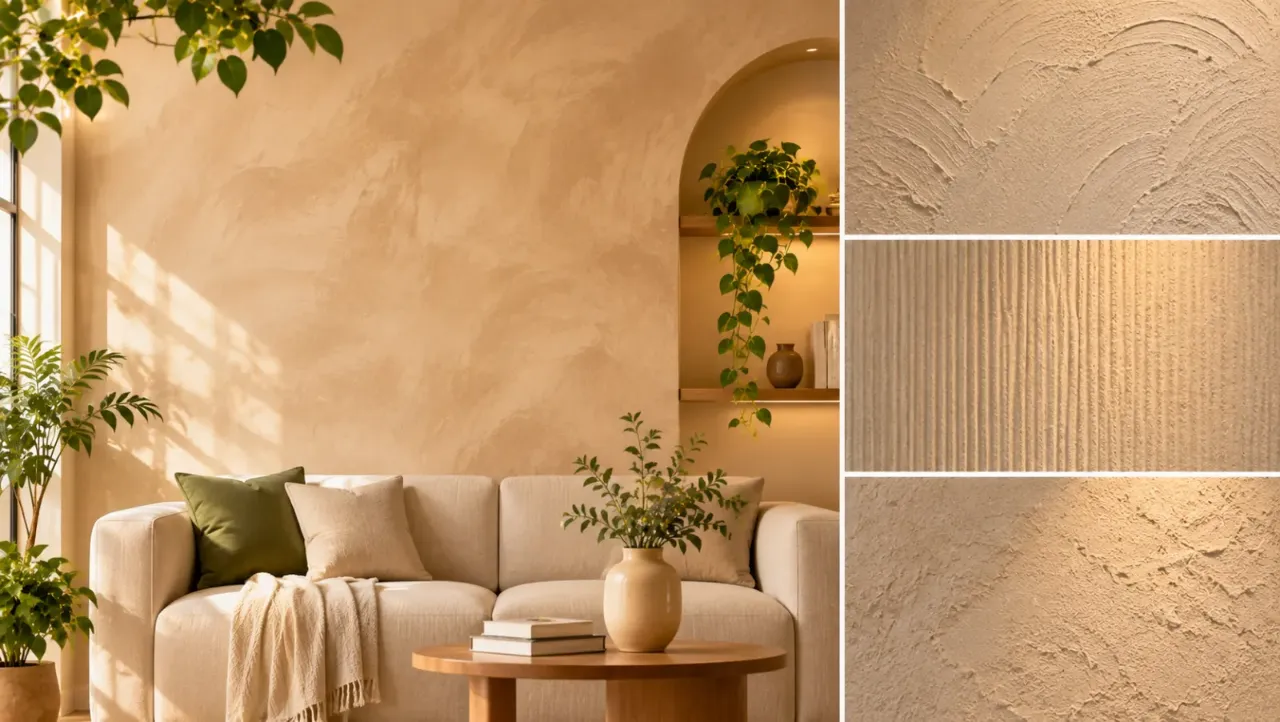
Limewash and Textured Wall Finishes: What Homeowners Should Know
Walls do not always need artwork, panelling or elaborate decoration to make a room feel considered. Sometimes, the finish on the wall itself can create enough visual interest. Limewash and textured wall finishes are popular choices for homeowners who want more depth and character than a standard flat-painted surface.
From soft, cloudy limewash walls to subtle sand textures and richly layered plaster effects, these finishes can change how a room looks under natural and artificial light. However, they are not interchangeable. Each has its own material composition, application method, surface requirements and maintenance needs.
Before choosing one, it helps to understand what you are actually buying and whether it suits the condition of your walls, the room's use and your expectations for upkeep.
1. What Is a Limewash Wall Finish?
Limewash is a traditional mineral-based wall coating made using lime and water, often with suitable pigments for colour. Unlike conventional emulsion paint, which generally forms a film over a surface, traditional limewash works with absorbent mineral substrates.
Its most recognisable feature is its soft, cloudy appearance. The wall may show gentle tonal variations and brush movement rather than one perfectly uniform shade. This gives the surface a natural, slightly weathered character.
Limewash is often chosen for:
- Living rooms that need a calm, understated feature wall.
- Bedrooms where a soft, matte finish is preferred.
- Dining areas where natural-looking surfaces complement wood and stone.
- Selected exterior walls, when the product is specifically suitable for outdoor exposure.
It is important to remember that limewash is not simply ordinary paint with a textured appearance. The wall beneath it and the application method both influence the final result.
2. What Are Textured Wall Finishes?
Textured wall finishes are a broader category of decorative treatments that create visible or tactile variation on a wall. They can be made using specialist paints, plaster compounds, mineral coatings, or other decorative materials.
Some textures are subtle and are noticeable mainly when light falls across the surface. Others create a more pronounced pattern that becomes a feature in its own right.
Textured paint
Special paint systems can create fine grain, sand-like effects or subtle raised patterns. The final appearance depends on the product, tools and application technique.
Decorative plaster
Plaster-based finishes can create soft movement, layered effects or a more sculpted surface. Some systems can be polished or burnished for a smoother appearance.
Lime plaster
A mineral plaster finish that can create natural tonal variation and a tactile surface. Its appearance depends on the plaster system and finishing technique.
Venetian-style plaster
A decorative plaster treatment known for layered depth and a smoother, sometimes polished appearance. It is generally more technique-dependent than ordinary wall paint.
Sand and stone-effect finishes
These create a grainy or mineral-like appearance. The texture can range from fine and understated to more pronounced.
The important distinction is that a textured finish is not automatically more durable or easier to maintain than a smooth wall. Performance depends on the material, product specifications, installation and room conditions.
3. Limewash vs Other Textured Finishes
| Feature | Limewash | Textured Paint | Decorative Plaster |
|---|---|---|---|
| Appearance | Soft, cloudy, mineral matte | Fine grain or raised patterns | Layered, tactile or polished |
| Surface feel | Usually relatively smooth with visual variation | Depends on texture | Can range from subtle to pronounced |
| Application | Usually brush-applied in thin coats | Product- and tool-dependent | Skilled application often required |
| Surface requirement | Suitable absorbent or prepared substrate | Depends on product | Depends on plaster system |
| Maintenance | Product-specific; may mark or rub if unprotected | Depends on texture and coating | Depends on sealer and finish |
| Repair | Local repairs may show tonal differences | Matching the original pattern can be difficult | Skilled patching may be needed |
Do not compare products by appearance alone. Ask for the exact product name, finish system, preparation requirements and maintenance instructions before approving the work.
4. Where Do These Finishes Work Best?
Living room
A limewash or subtle plaster finish can add depth to a main seating wall without introducing another decorative object. Choose a wall that receives suitable light and is not exposed to constant contact.
Bedroom
Muted, low-sheen finishes can create a quiet background behind the bed. Keep the texture restrained if the room already has patterned bedding, panelling or detailed furniture.
Dining area
A textured finish can help define the dining zone, particularly in an open-plan home. Consider how easily the surface can be cleaned if chairs or dining furniture sit close to it.
Entryway
A decorative finish can make a small entrance feel more considered. However, this area often experiences frequent contact, bags brushing against walls and dust, so a suitable protective system may be important.
Bathroom
Do not assume ordinary limewash or decorative wall plaster is suitable inside a shower or in areas exposed to continuous splashing. Use a product specifically rated for the intended wet-area application and follow its waterproofing and sealing system.
5. Why Wall Preparation Matters
The finished appearance depends heavily on what lies underneath. A decorative coating cannot reliably correct dampness, loose plaster, peeling paint or poorly repaired cracks.
Before application, check:
- Whether the wall is dry and free from active seepage.
- Whether existing paint is firmly bonded.
- Whether dust, grease and loose material have been removed.
- Whether cracks and damaged plaster have been repaired.
- Whether repaired patches have a similar absorption level to the surrounding surface.
- Whether the selected product is compatible with the existing wall.
Traditional limewash needs a suitable absorbent mineral surface. If the wall has an existing acrylic or other non-porous coating, a compatible preparation system may be needed. Do not let an applicator assume that the finish can simply be brushed over any existing paint.
Approve a sample before full application
Ask the contractor to prepare and finish a sample patch on the actual wall. Check its colour after drying, texture, adhesion and appearance under the room's lighting before approving the full area.
6. How Lighting Changes the Final Appearance
Texture is particularly sensitive to lighting. A wall that appears subtle in a showroom may look much more pronounced under a ceiling spotlight or light falling from one side.
- Natural daylight: Can reveal tonal variation and brush movement in limewash.
- Wall washers: Highlight surface depth and make raised textures more noticeable.
- Directional spotlights: Can create shadows across pronounced plaster finishes.
- Soft, diffused lighting: Usually makes subtle textures feel calmer and more uniform.
Check the sample wall at different times of day and under the lighting that will actually be used in the room.
7. Maintenance and Everyday Care
Maintenance varies by product. A sealed decorative plaster finish, an unsealed mineral wash and a textured paint system should not all be cleaned in the same way.
- Ask whether the finish can be wiped, lightly dusted or only dry-cleaned.
- Use the cleaning method recommended by the manufacturer.
- Avoid abrasive pads and strong chemicals unless the product instructions specifically allow them.
- Keep furniture from rubbing repeatedly against delicate finishes.
- Address moisture and leaks rather than trying to cover the affected area with another coat.
- Keep the product name, shade, batch details and application instructions for future repairs.
Some limewash finishes naturally show tonal variation. This is part of their character, but strong patchiness, powdering or peeling should not automatically be dismissed as a design feature. The applicator should check whether the cause is preparation, moisture, product compatibility or application technique.
8. What Affects the Cost?
There is no single reliable price for limewash or textured wall finishes. The installed cost can vary significantly depending on:
- The brand and type of finish.
- The number of coats and the area being covered.
- Wall repairs, levelling and primer requirements.
- Whether the existing coating needs to be removed.
- The complexity of the texture or decorative pattern.
- The skill and experience of the applicator.
- Whether a compatible sealer or protective coat is required.
Ask for an itemised quotation that separates surface preparation, materials, labour, coats, protective treatment and exclusions. Compare quotations for the same product and scope rather than choosing only by the lowest per-square-foot figure.
9. Common Mistakes to Avoid
- Choosing from a small catalogue sample: The finish can look different across a full wall and under different lighting.
- Ignoring the existing paint: Some finishes need a particular substrate or primer to bond properly.
- Using texture to hide wall damage: Repair dampness, cracks and loose plaster first.
- Applying a finish in the wrong location: A delicate decorative coating may not suit a high-contact or wet area.
- Overdoing the feature wall: Too many textures and patterns can make a room feel visually busy.
- Skipping a sample patch: Colour, texture and application technique should be approved before full execution.
- Not discussing repairs: Ask how damaged areas can be touched up and whether the repaired section will remain visible.
10. A Homeowner's Checklist Before Finalising
Before approving the finish, confirm:
- The exact product and finish type.
- Whether it is limewash, lime plaster, textured paint or another decorative system.
- Whether it is suitable for the intended room and exposure.
- The existing wall's condition and preparation requirements.
- The primer or base coat, if required.
- The number of coats and application technique.
- The final colour after drying.
- Whether a sealer or protective coat is required.
- Cleaning and maintenance instructions.
- Repair and touch-up procedure.
- Material, labour and preparation costs in the quotation.
A good contractor should be able to explain these points clearly rather than relying only on a sample photograph.
Final Thought
Limewash and textured wall finishes can bring character to a home without relying on elaborate decoration. Their success, however, depends on choosing the right system for the wall and understanding how it will look and perform after installation.
If you prefer gentle tonal movement, limewash may be worth exploring. If you want a more defined pattern or tactile surface, a suitable textured paint or decorative plaster system may be a better choice. In either case, prioritise preparation, sample approval and product-specific maintenance guidance.
The best wall finish is not necessarily the most dramatic one. It is the one that complements the room, suits everyday use and continues to look appropriate as the home is lived in.
Explore your home's interior design options
Use Walls to Wonder's AI tools to explore design ideas, plan rooms and understand your interior requirements:
- Design My Room – Explore room layouts, colours and interior concepts.
- Whole Home Visualizer – Explore a coordinated design direction across your home.
- Interior Style Finder – Discover interior styles that suit your preferences.
- Rate My Room Design – Get feedback on your room design.
- Interior Design Cost Estimate – Explore indicative interior budget requirements.
- Interior Quotation Checker – Review the scope and details of an interior quotation.
Explore more at Walls to Wonder.
Frequently Asked Questions
1. Is limewash the same as textured paint?
No. Traditional limewash is a mineral-based coating that creates a soft, cloudy appearance on suitable surfaces. Textured paint uses a different product system to create grain, patterns or raised effects.
2. Can limewash be applied over existing emulsion paint?
Not usually as a direct application. Existing acrylic or emulsion coatings may be too non-porous. A compatible mineral preparation system may be required, depending on the product and wall condition.
3. Is limewash suitable for Indian homes?
It can be suitable for selected interior and exterior applications, provided the product, substrate, climate exposure and application method are appropriate. Check the manufacturer's instructions for the specific location.
4. Can limewash be used in bathrooms?
It may be suitable for some dry bathroom walls, depending on the product and ventilation. Ordinary limewash should not be assumed suitable for shower interiors or surfaces exposed to continuous water.
5. Are textured walls difficult to clean?
It depends on the texture depth and protective coating. Deep textures may collect more dust, while some sealed finishes can be cleaned according to the manufacturer's instructions.
6. Does limewash hide wall imperfections?
It may soften the appearance of minor surface variation, but it is not a substitute for proper wall preparation. Cracks, dampness and loose plaster should be addressed first.
7. Does limewash change colour after application?
Yes. Limewash can look darker when wet and become lighter as it dries. Always approve the shade using a fully dried sample on the actual wall.
8. Is a sealer necessary for textured wall finishes?
Not always. Some finishes are designed to remain unsealed, while others need a compatible protective coating for their intended use. Follow the product specification rather than applying a generic sealer.
Turn this idea into a plan for your home
Visualise your space, understand the likely budget, or find a professional who can bring the idea to life.