
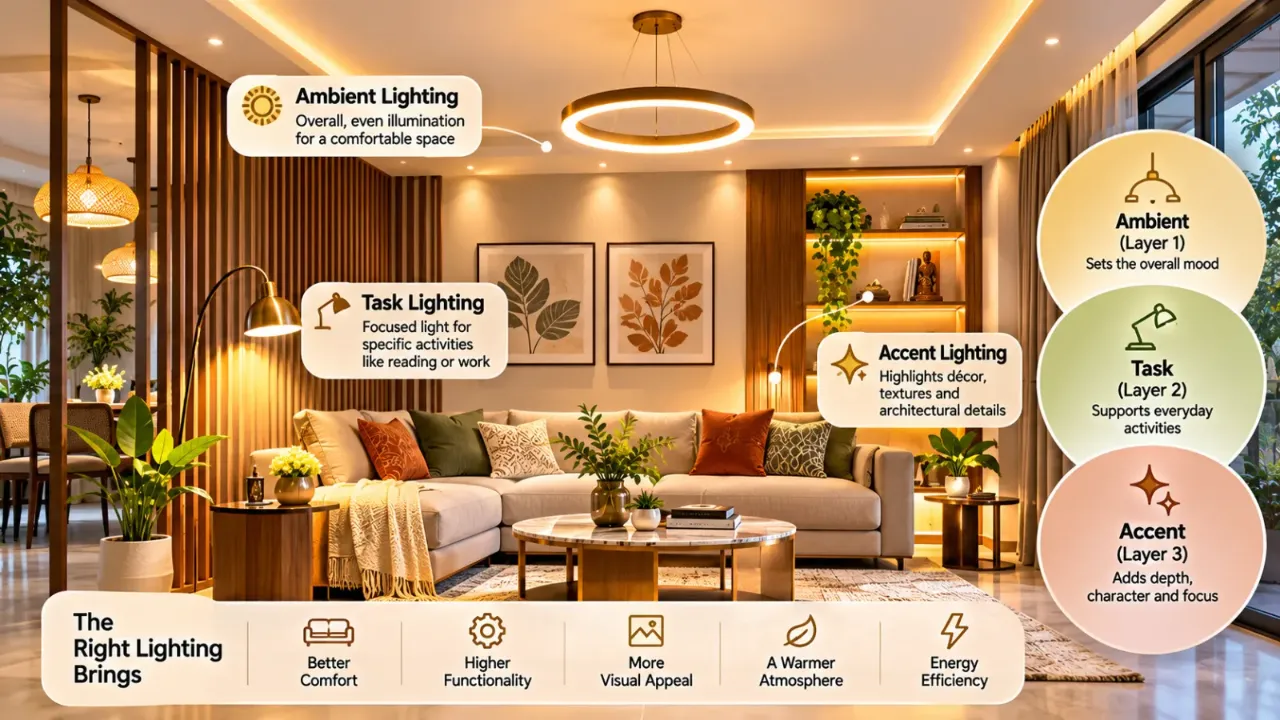
Layered Home Lighting: How to Combine Ambient, Task and Accent Lights
Lighting influences how a home looks, feels and functions throughout the day. It affects how comfortably you read, cook, work, relax and move between rooms. Yet lighting is often planned around a single ceiling fixture, with additional lights selected only after the furniture and finishes are in place.
This approach can leave some areas too bright, others poorly lit and the overall room without much depth. A better solution is layered lighting: combining ambient, task and accent lights so that each serves a different purpose.
The idea is not to fill every corner with fixtures. It is to create a thoughtful lighting arrangement that provides general visibility, supports specific activities and highlights the features worth noticing.
1. Understand the Three Layers of Home Lighting
Before choosing fixtures, understand what each layer does. They work best when planned together rather than treated as separate decorative decisions.
Ambient Lighting: The Overall Illumination
Ambient lighting provides the general light needed to use a room comfortably. It helps people move around, recognise objects and carry out everyday activities without relying on individual lamps.
Common ambient lighting options include:
- Recessed ceiling downlights.
- Cove lighting and concealed LED strips.
- Flush-mount and surface-mounted ceiling lights.
- Chandeliers and pendant lights that provide broad illumination.
- Wall-mounted lights that spread light across a room.
The right choice depends on ceiling height, room size, furniture arrangement and the amount of daylight available. Avoid relying on a single bright fixture to illuminate a large room. Distributing light across the ceiling or combining multiple sources usually creates a more comfortable result.
Task Lighting: Light for Specific Activities
Task lighting provides focused illumination where a particular activity takes place. It helps reduce the need to depend on general room lighting for everything.
Examples include:
- Under-cabinet lights for kitchen counters.
- Pendant lights above a dining table.
- Reading lamps beside a bed or armchair.
- Desk lamps for study and work areas.
- Mirror lights near a dressing unit or bathroom vanity.
Position task lights according to how the area will be used. A desk lamp should illuminate the work surface without creating distracting reflections. A reading light should be easy to reach and should not shine directly into the user's eyes.
Accent Lighting: Light That Draws Attention
Accent lighting adds visual interest by highlighting selected features. It can bring out the texture of a wall, the shape of a decorative object or the details of an architectural element.
Common examples include:
- Wall washers that illuminate textured or feature walls.
- Spotlights directed towards artwork.
- LED strips inside display shelves.
- Concealed lighting behind a headboard.
- Lighting within niches and display cabinets.
Accent lighting is most effective when it has a clear purpose. Highlighting every wall, shelf and decorative object can make a room visually busy. Choose a few features and let them stand out.
2. How the Three Layers Work Together
A room does not need three completely separate sets of fixtures. Sometimes one fixture can contribute to more than one lighting purpose. What matters is that the combined arrangement supports the room's activities.
For example, in a living room:
- Ambient lighting provides comfortable general illumination.
- A floor lamp near the sofa supports reading.
- A spotlight highlights artwork or a feature wall.
In a bedroom:
- Cove lighting or ceiling fixtures provide general illumination.
- Bedside lamps support reading.
- Concealed headboard or wardrobe lighting adds a softer visual layer.
The advantage is flexibility. You can use all three layers together when needed, or switch on only selected lights to create a more suitable atmosphere.
3. Plan Layered Lighting Room by Room
The ideal combination changes according to the room's purpose. A kitchen needs practical light on work surfaces, while a bedroom benefits from a more flexible arrangement for relaxing and getting ready.
Living Room
A living room is often used for several activities, including watching television, entertaining guests, reading and relaxing. Its lighting should be adaptable.
- Ambient: Recessed downlights, cove lighting or a suitable ceiling fixture.
- Task: A floor lamp beside a reading chair or a table lamp near the sofa.
- Accent: Wall washers, display-shelf lighting or spotlights for artwork.
Avoid placing strong lights where they create reflections on the television screen. Use separate controls for the main ceiling lights and decorative or accent lighting where practical.
Bedroom
Bedroom lighting should support different routines, from getting dressed to reading and winding down at night.
- Ambient: Ceiling lights or concealed cove lighting.
- Task: Bedside reading lights and dedicated dressing-area lighting.
- Accent: Headboard lighting, wardrobe display niches or a subtle wall wash.
Make bedside controls accessible without getting out of bed. If the room has a dressing mirror, provide suitable lighting around it rather than expecting a central ceiling light to do the job.
Kitchen
Kitchen lighting needs careful planning because shadows on work surfaces can make everyday tasks uncomfortable.
- Ambient: Evenly distributed ceiling lights.
- Task: Under-cabinet lighting above counters and focused light near preparation areas.
- Accent: Pendant lights over an island or breakfast counter, and lighting inside selected display cabinets.
Plan under-cabinet lights so that they illuminate the working surface rather than the backsplash alone. Check that the placement of ceiling fixtures does not cause your body to cast shadows over the counter.
Dining Area
The dining table is usually the visual centre of this space. Lighting should make the table comfortable to use while keeping the surrounding area inviting.
- Ambient: Recessed ceiling lights or cove lighting.
- Task: A pendant or chandelier positioned above the dining table.
- Accent: Wall lights, artwork illumination or a softly lit display cabinet.
Choose a pendant size and hanging position that suit the table. It should illuminate the surface without obstructing sightlines between people seated across from each other.
Study or Home Office
A study area needs lighting that supports concentration and reduces distracting glare.
- Ambient: Evenly distributed ceiling lighting.
- Task: An adjustable desk lamp or focused light over the work surface.
- Accent: Shelf lighting or a subtle wall light behind the desk.
Position the desk lamp according to the user's dominant hand and the direction of natural light. Check reflections on monitors before finalising the fixture position.
Bathroom
Bathroom lighting should support grooming, cleaning and safe movement. A decorative light alone cannot replace suitable general and mirror illumination.
- Ambient: Suitable ceiling lights for overall visibility.
- Task: Well-positioned mirror or vanity lighting.
- Accent: Niche lighting or subtle illumination around selected architectural details.
Choose fixtures with electrical and moisture-protection ratings appropriate for their installation zones. Have bathroom electrical work planned and installed by a qualified professional.
4. Choose the Right Colour Temperature
Colour temperature influences the appearance and atmosphere of a room. It is measured in Kelvin (K). Lower values generally appear warmer, while higher values appear cooler.
| Colour Temperature | General Appearance | Common Use |
|---|---|---|
| 2700K–3000K | Warm white | Bedrooms, lounges and relaxing areas |
| 3000K–3500K | Soft or neutral white | Living and dining areas |
| 3500K–4000K | Neutral to cool white | Kitchens, studies and work areas |
These are practical starting points, not fixed rules. The best choice depends on the finishes, daylight, personal preference and activity in the room.
Try to avoid mixing noticeably different colour temperatures in the same visual area unless the contrast is intentional. For example, a very cool task light beside a very warm ambient light can make the room feel inconsistent.
5. Get Brightness and Fixture Placement Right
Choosing the right type of light is only part of the planning process. Brightness, beam direction and fixture placement also affect the result.
- Think about the activity: A reading corner needs focused light, while a passage needs comfortable general illumination.
- Avoid glare: Do not position exposed bulbs or strong spotlights where they shine directly into the eyes.
- Watch for shadows: Check how people, cabinets and furniture may block light from reaching important surfaces.
- Use suitable beam angles: A narrow beam can highlight artwork, while a wider spread is more useful for general illumination.
- Consider ceiling height: A large pendant may suit a tall room but obstruct movement in a low-ceiling space.
- Check fixture access: Plan for cleaning, replacement and maintenance, especially with concealed fittings.
Instead of choosing fixtures by appearance alone, review their light output, distribution, colour rendering and compatibility with the intended use.
6. Use Separate Switches and Dimmers for Flexibility
One of the most useful parts of a layered lighting plan is independent control. If every light is connected to one switch, you may have to turn on the entire arrangement even when you need only one layer.
Where practical, plan separate switching for:
- General ceiling lighting.
- Cove or concealed lighting.
- Task lights.
- Accent and display lighting.
Dimmers can provide additional flexibility, but check that the light source, driver, dimmer and control system are compatible. Not every LED fixture is dimmable.
You can also plan convenient switch locations near entrances, bedsides and frequently used work areas. For larger homes, consider whether scene-based controls would make everyday use easier.
7. Common Layered Lighting Mistakes to Avoid
A carefully selected set of fixtures can still produce a poor result if the layout is not considered as a whole.
- Depending on one ceiling light: It may leave corners and work surfaces poorly illuminated.
- Adding too many spotlights: More fixtures do not automatically mean better lighting.
- Ignoring task areas: Decorative lighting cannot replace focused illumination where it is needed.
- Creating glare: Poorly directed light can make reading, cooking and watching television uncomfortable.
- Mixing colour temperatures without a plan: Inconsistent light colours can affect the overall appearance.
- Forgetting independent controls: A room becomes less flexible when all fixtures operate together.
- Planning lights after the ceiling and furniture: Late decisions can lead to awkward wiring, misplaced fixtures and unnecessary rework.
8. A Practical Checklist Before Finalising Your Lighting Plan
Before electrical points and fixtures are finalised, review the following:
- Identify the main activities in each room.
- Mark the areas that need general illumination.
- Identify work surfaces, reading corners and dressing areas.
- Select the architectural or decorative features worth highlighting.
- Check fixture positions against furniture and ceiling plans.
- Review glare, shadows and reflections.
- Choose suitable brightness and colour temperature.
- Plan separate switches for different lighting layers.
- Confirm dimmer and LED compatibility.
- Check fixture ratings and installation requirements.
- Allow for access, maintenance and future replacement.
A lighting layout should be reviewed alongside the electrical plan, ceiling design and furniture arrangement. This reduces the chance of having to relocate fixtures after installation.
Final Thoughts
Layered lighting is not about installing as many lights as possible. It is about giving each light a clear role. Ambient lighting makes the room usable, task lighting supports everyday activities and accent lighting adds depth and visual interest.
When these layers are planned together, a home can feel comfortable during the day, practical when work needs to get done and more relaxed in the evening. Start with the way each room is used, select fixtures that serve those needs and make sure the controls allow you to adjust the lighting without unnecessary effort.
Frequently Asked Questions
1. What are the three main layers of home lighting?
The three main layers are ambient, task and accent lighting. Ambient lighting provides general illumination, task lighting supports specific activities and accent lighting highlights selected features.
2. Can one light fixture serve more than one purpose?
Yes. Some pendant lights, wall lights and floor lamps can provide both functional and decorative illumination. The important thing is to check whether the fixture delivers enough light for the activity it is intended to support.
3. Is layered lighting suitable for small homes?
Yes. Small homes can benefit from layered lighting without needing many fixtures. A ceiling light, a focused reading lamp and a small accent light may be enough to create a flexible arrangement.
4. Which lighting layer should be planned first?
Start with the room's activities and general illumination requirements. Plan ambient lighting first, identify task-lighting needs next and add accent lighting after deciding which features deserve attention.
5. Should all lights in a room have the same colour temperature?
Not necessarily, but the colours should work together. Keeping the main lighting within a coordinated range usually creates a more consistent appearance. Any deliberate contrast should be tested before installation.
6. Are dimmers necessary for layered lighting?
Dimmers are not essential, but they can make a room more flexible. They are especially useful in living rooms, bedrooms and dining areas where lighting needs change throughout the day.
7. How can I avoid glare from recessed lights?
Choose suitable beam angles, position fixtures thoughtfully and avoid placing strong downlights directly where people look or sit. Test the arrangement against the actual furniture layout wherever possible.
8. When should lighting be planned during a home renovation?
Plan lighting during the layout and electrical-planning stage, before ceiling work and wiring are finalised. This makes it easier to coordinate fixture positions with furniture, storage, false ceilings and other services.
Plan Your Home Interiors with Walls to Wonder
Planning your home's lighting alongside the rest of your interiors? Explore Walls to Wonder's AI tools to visualise spaces, compare design directions and plan your project.
- Whole Home Visualizer – Explore how different design choices can work across your home.
- Design My Room – Experiment with room layouts and interior design ideas.
- Interior Design Cost Estimate – Get an initial estimate for your interior project.
- Interior Quotation Checker – Review and understand your interior design quotation.
- Rate My Room Design – Get feedback on your room design.
- Interior Style Finder – Discover an interior style that suits your preferences.
Visit Walls to Wonder to explore more interior design ideas and tools.
Turn this idea into a plan for your home
Visualise your space, understand the likely budget, or find a professional who can bring the idea to life.