
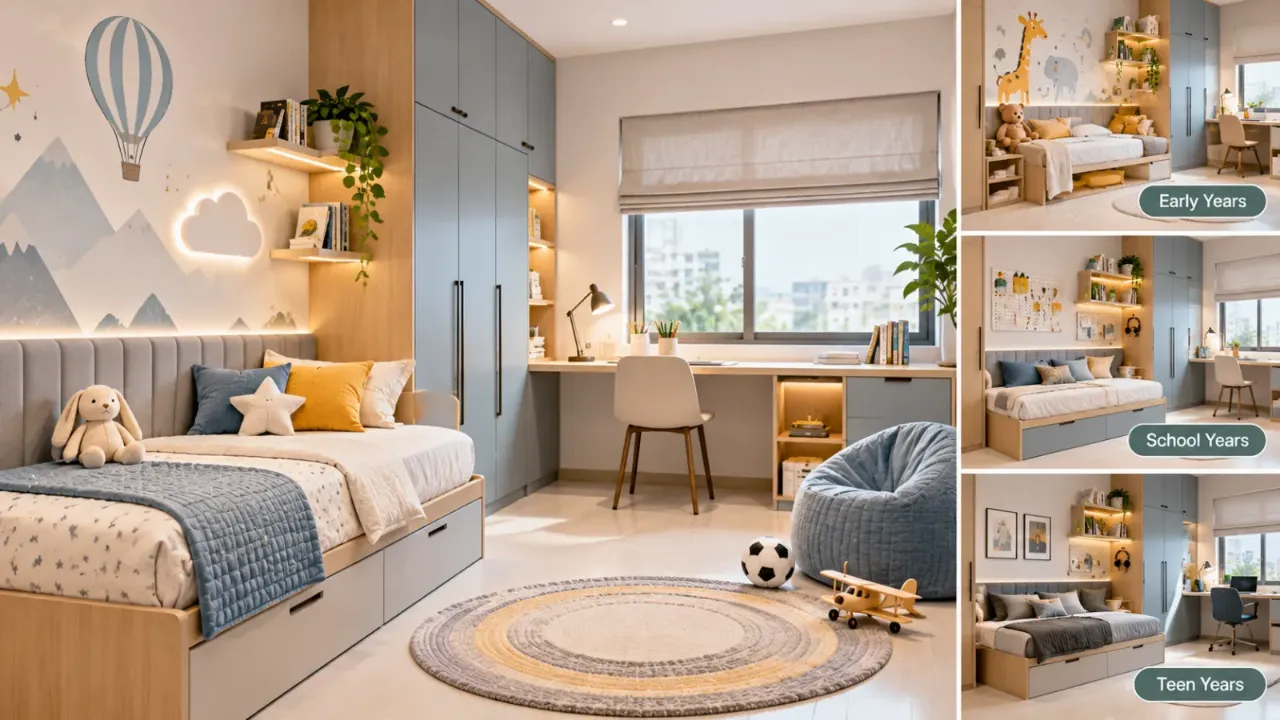
Kids' Bedroom Design That Can Adapt as Children Grow
A child's bedroom rarely stays the same for long. What works for a toddler may not suit a primary-school student, and a room designed around toys and colourful characters may feel too young once a child becomes a teenager.
This is why a kids' bedroom should be planned with change in mind. Instead of redesigning the entire room every few years, homeowners can create a practical foundation with flexible furniture, adaptable storage, safe layouts and decor that is easy to update.
The goal is not to make the room look grown-up from the beginning. It is to make sure that the important elements can continue to work as the child's interests, routines and independence change.
1. Design Around Changing Stages, Not Just the Child's Current Age
Before selecting furniture or colours, think about how the room may be used over the next several years.
A child's needs generally change across three broad stages.
- Early childhood: The room needs accessible storage for toys, books and clothes, comfortable floor space for play, and furniture suited to the child's current size.
- School years: A dedicated place for homework, better book storage, organised stationery and more space for hobbies become important.
- Teenage years: The room may need a larger study setup, more clothing storage, personal display space and a layout that offers greater privacy and independence.
These stages do not follow the same timetable for every child. Use them as planning prompts rather than fixed age categories.
2. Keep Permanent Elements Simple and Adaptable
The most expensive parts of a bedroom are not always the easiest to change. Built-in wardrobes, flooring, electrical points and large furniture should therefore be planned for long-term use.
A practical approach is to divide the design into three groups:
- Long-term elements: Flooring, wardrobes, wall finishes, electrical points and major furniture.
- Adaptable elements: Beds, desks, storage units, shelves and seating.
- Personal elements: Bedding, cushions, posters, artwork, toys and decorative accessories.
Keep the long-term elements relatively timeless. Let the child's personality appear through items that can be replaced or rearranged without major renovation.
For example, instead of permanently installing a character-themed wall treatment, use removable wall decals, framed prints or themed bedding. These can be changed when interests evolve.
3. Choose Furniture That Can Serve More Than One Stage
Furniture has a major influence on how easily a bedroom can adapt. Whenever possible, select pieces that can be adjusted, repositioned or used for more than one purpose.
An Adjustable Study Desk
A desk with an adjustable height or a replaceable chair can accommodate changing study requirements. Check that the dimensions and adjustment range suit the child.
A Bed With Practical Storage
Drawers beneath the bed can hold extra bedding, toys or seasonal belongings. Make sure drawers can open without blocking the room's main circulation route.
Modular Storage Units
Separate storage modules can be rearranged as books, toys and personal belongings increase.
A Flexible Bedside Unit
A simple drawer unit or small table can remain useful even when the rest of the room changes.
A Convertible Bed
Some bed designs can be adjusted or extended as the child grows. Check the manufacturer's age, weight and safety guidance before selecting one.
Avoid buying furniture solely because it is described as multi-functional. It should still be comfortable, stable and convenient for the child to use.
4. Plan Storage That Changes With the Child's Belongings
Storage needs change considerably as children grow. Toys may occupy most of the room in the early years, while books, clothing, sports equipment, school supplies and hobby materials may require more space later.
A flexible storage plan should include different types of compartments.
- Closed cabinets: Useful for keeping larger belongings and less frequently used items out of sight.
- Open shelves: Suitable for books, selected toys and display items.
- Drawers: Helpful for clothes, stationery and smaller accessories.
- Storage baskets: Convenient for toys and items that need to be collected quickly.
- Wardrobe compartments: Plan a combination of hanging space, shelves and drawers that can accommodate changing clothing needs.
Keep frequently used items within the child's reach, while heavier or less frequently accessed belongings should be stored safely. As the child becomes more independent, storage can be reorganised to make more everyday items accessible.
5. Create a Study Area That Can Evolve
A study area may not be necessary in the earliest years, but it is worth considering where it could fit in the future.
For younger children, a small activity table may be sufficient. As schoolwork increases, the room may need a proper desk, a supportive chair, bookshelves and task lighting.
Plan for:
- A desk with sufficient working surface.
- A chair suited to the child's current size and adjustability needs.
- Accessible storage for books and stationery.
- Adequate task lighting without glare.
- Convenient electrical points for permitted devices.
- A comfortable position that does not obstruct windows or circulation.
If the study desk is not needed immediately, avoid purchasing a large unit too early. Instead, reserve a suitable wall or corner and plan the electrical points and storage around its future use.
6. Use Colours and Decor That Are Easy to Update
Children may quickly move from one favourite colour, character or theme to another. If every permanent surface follows a specific theme, updating the room can become expensive.
A more flexible approach is to use a relatively neutral base and introduce personality through changeable details.
- Keep larger furniture in light wood, white or a muted neutral finish.
- Use colourful bedding and cushions to introduce favourite colours.
- Display artwork and posters using frames that can be replaced.
- Use removable wall decals rather than permanent themed wall treatments.
- Add colour through rugs, curtains and accessories.
This does not mean a child's room needs to be plain. It simply makes it easier to refresh the design without replacing major furniture or finishes.
7. Plan Lighting for Play, Study and Relaxation
A child's bedroom serves several purposes, so one ceiling light may not be enough.
- General lighting: Provides overall brightness for everyday movement and activities.
- Study lighting: A suitable desk lamp helps illuminate books and the work surface. Position it to reduce shadows and glare.
- Bedside lighting: A suitable bedside light supports reading and quieter activities.
- Accent lighting: Subtle lighting can highlight shelves or decorative details, but avoid exposed bright light sources and unnecessary decorative electrical fittings.
Plan switches and electrical points with safety and accessibility in mind. Keep cords managed and away from areas where children may pull or trip over them.
8. Make Safety Part of the Design From the Beginning
A visually attractive room must also be suitable for the child's age and abilities. Safety should be considered when selecting furniture, storage, electrical fittings and decorative elements.
Important checks include:
- Secure tall wardrobes, bookcases and other furniture to suitable structural supports using appropriate anti-tip fixings.
- Choose stable furniture with suitable edges and finishes.
- Avoid placing climbable furniture beside windows.
- Keep heavy objects on lower shelves.
- Use age-appropriate beds and guardrails where required.
- Keep electrical sockets and cords appropriately protected and managed.
- Choose window coverings with safe cord arrangements.
- Make sure drawers, shutters and doors do not create avoidable pinch points.
- Keep walkways clear of toys and loose cables.
Follow product instructions and applicable safety standards. As the child grows, review the room again because a layout that was suitable earlier may no longer be appropriate.
9. Leave Room for Hobbies and Personal Interests
A bedroom should allow children to express their interests. One child may enjoy drawing, another may collect books, while someone else may need space for musical instruments, sports equipment or craft supplies.
Rather than permanently designing the room around one hobby, create flexible areas that can be repurposed.
- A small display shelf for collections.
- A pinboard or magnetic board for drawings and notes.
- A compact craft or activity surface.
- Storage boxes for hobby materials.
- Wall hooks or organisers for selected equipment.
As interests change, these areas can be reorganised without altering the main layout.
10. Plan the Room So Furniture Can Be Rearranged
A flexible bedroom should not depend on one fixed furniture arrangement.
Where possible, keep the main circulation area open and avoid placing too many built-in elements along every wall. This makes it easier to move a desk, add a chair or change the position of a storage unit later.
Before finalising the layout, check:
- Whether the bed can be repositioned if needed.
- Whether the study desk has another suitable location.
- Whether shelves can be adjusted or moved.
- Whether wardrobe doors and drawers have enough clearance.
- Whether future furniture can fit without blocking the entrance or windows.
It is also useful to plan electrical points at likely desk and bedside locations before the room is completed.
11. Avoid These Common Kids' Bedroom Design Mistakes
- Designing entirely around one theme: A character-based room can quickly feel outdated. Use changeable decor for themes and interests.
- Buying furniture too early: A large study desk or teenage-sized furniture may not suit a young child. Select pieces according to current needs while allowing for future upgrades.
- Ignoring storage growth: Storage that works for toys may not be suitable for school books, clothing and hobby materials later.
- Making everything fixed: Too many built-in shelves and furniture units can restrict future layout changes.
- Choosing appearance over usability: Furniture should be comfortable, stable and appropriate for the child's size.
- Forgetting safety as the child grows: Review furniture anchoring, window access, electrical arrangements and storage as the room's use changes.
- Filling every wall: Leaving some open space makes it easier to introduce new furniture and activities later.
12. Final Checklist Before Approving the Design
- The bed and major furniture suit the current room dimensions.
- Long-term finishes are simple enough to work with future decor changes.
- Storage includes shelves, drawers and closed compartments.
- Frequently used belongings are accessible.
- A future study area has been considered.
- The desk and chair can be updated as requirements change.
- Lighting supports general activities, reading and studying.
- Furniture can be rearranged without blocking circulation.
- Heavy furniture is securely anchored.
- Cords, sockets, windows and other potential hazards have been considered.
- Personal decor can be changed without major renovation.
- The child has some space to display interests and belongings.
Final Thoughts
A well-designed kids' bedroom should not be planned for just one moment in childhood. It should provide a comfortable foundation that can respond to changing routines, interests, study requirements and storage needs.
Keep the major elements practical, choose furniture that can adapt where possible, and use colour and decoration to reflect the child's current personality. Most importantly, involve the child in age-appropriate decisions so that the room feels like their own space.
A little planning today can help avoid repeated redesigns tomorrow.
Explore More with Walls to Wonder
Planning a children's bedroom? Use Walls to Wonder's AI tools to explore design possibilities, understand costs and review your ideas before execution.
- Whole Home Visualizer – Explore how different interior styles can work across your home.
- Design My Room – Visualise ideas for your child's bedroom and other spaces.
- Interior Design Cost Estimate – Get an initial understanding of your interior budget.
- Interior Quotation Checker – Review and understand your interior quotation.
- Rate My Room Design – Get feedback on your room design.
- Interior Style Finder – Discover an interior style that suits your preferences.
Discover more at Walls to Wonder.
Frequently Asked Questions
1. How do I design a kids' bedroom that grows with the child?
Start with practical, timeless furniture and finishes. Choose adaptable storage, plan for a future study area and use changeable accessories to reflect the child's changing interests.
2. Which furniture is best for a growing child's bedroom?
Adjustable desks and chairs, modular storage, practical beds and flexible bedside units can remain useful through different stages. Always check dimensions, stability and age suitability.
3. Should I choose a themed bedroom for my child?
You can introduce a theme through bedding, artwork, cushions and removable wall decals. Keeping permanent furniture and finishes more neutral makes it easier to update the room later.
4. How can I create more storage in a kids' bedroom?
Combine wardrobes, drawers, shelves, storage baskets and under-bed compartments. Organise belongings by category and keep everyday items accessible to the child.
5. When should I add a study area to a kids' bedroom?
Plan where a study area could fit early, even if you do not install a full desk immediately. Add a suitable desk, chair, storage and task lighting when the child's routine requires them.
6. What safety features should a kids' bedroom have?
Secure tall furniture against tipping, manage electrical cords, use age-appropriate beds and guardrails, keep heavy objects low and ensure windows and furniture are arranged safely. Review these details as the child grows.
Turn this idea into a plan for your home
Visualise your space, understand the likely budget, or find a professional who can bring the idea to life.