
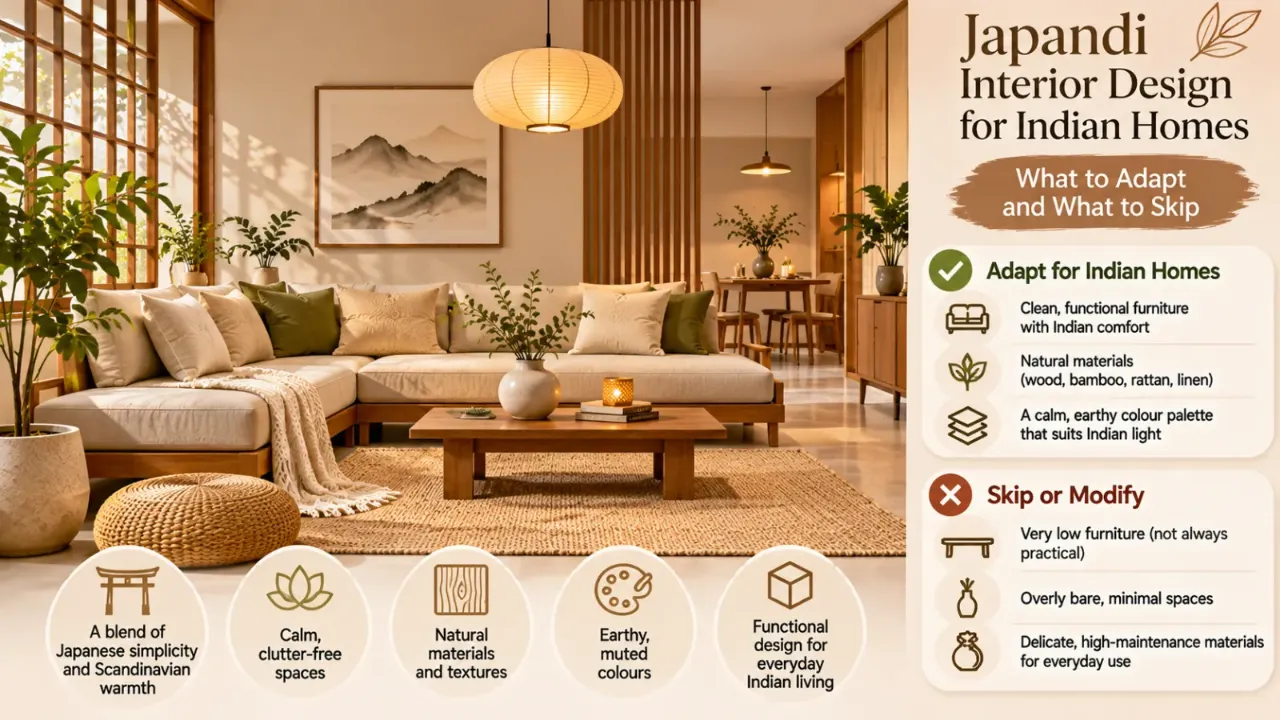
Japandi Interior Design for Indian Homes: What to Adapt and What to Skip
Japandi interiors are recognised for their calm atmosphere, simple furniture, natural materials and uncluttered spaces. The style brings together two design approaches: Japanese interiors, which value simplicity, craftsmanship and an appreciation of natural imperfections, and Scandinavian interiors, which focus on comfort, practicality and everyday functionality.
Together, they create homes that feel understated without being cold and minimal without appearing empty.
The style can work beautifully in Indian homes, but it needs thoughtful adaptation. A room designed for a Scandinavian climate or a Japanese lifestyle may not automatically suit Indian weather, storage requirements, cooking habits or family routines.
The goal is not to recreate a photograph of a Japandi home. It is to understand the principles behind the style and apply them in a way that makes sense for everyday Indian living.
1. Understand What Makes an Interior Japandi
Japandi is not simply a beige room with wooden furniture. It is a balance between the visual restraint of Japanese design and the warmth and comfort associated with Scandinavian interiors.
Japanese influences bring:
- Simple forms and clean architectural lines.
- Natural materials with visible textures.
- Thoughtful use of empty space.
- Functional objects with a sense of craftsmanship.
- An appreciation for subtle irregularities and natural ageing.
Scandinavian influences bring:
- Comfortable, practical furniture.
- Light and neutral colour palettes.
- Soft textiles and inviting surfaces.
- Well-planned lighting.
- A focus on making everyday spaces feel welcoming.
When these ideas come together, the result is a space that feels organised, comfortable and connected to nature.
2. What to Adapt for Indian Homes
Choose a Neutral Palette, but Do Not Make Everything Beige
Japandi interiors often use ivory, warm white, beige, taupe, muted grey and natural wood tones. These colours provide a calm foundation, but an Indian home does not need to follow an entirely pale palette.
Consider introducing muted sage, earthy brown, soft olive, charcoal or restrained terracotta. These shades can add character without making the room feel visually busy.
A practical combination could be:
- Walls in warm ivory or light greige.
- Furniture in natural oak or walnut tones.
- Upholstery in beige, oatmeal or soft grey.
- Small accents in muted green or charcoal.
Use darker colours selectively on furniture, lighting fixtures or accessories to create contrast.
Select Materials That Suit Local Conditions
Natural materials are central to Japandi interiors, but their suitability depends on where and how they are used.
| Material | Where It Works | What to Consider |
|---|---|---|
| Solid or engineered wood | Furniture, shelves and cabinetry | Select suitable finishes and protect against moisture. |
| Cane and rattan | Cabinet fronts, chairs and accents | Check durability and cleaning requirements. |
| Natural stone | Countertops, flooring and selected surfaces | Consider porosity, sealing and maintenance. |
| Cotton and linen | Curtains, cushions and upholstery | Choose practical, washable fabrics. |
| Bamboo | Accessories and selected furniture | Check construction quality and finish. |
| Terracotta | Planters and selected decorative surfaces | Consider water absorption and sealing. |
You do not need to import expensive materials to achieve the look. Locally available wood finishes, stone, woven materials and well-made textiles can create a similar natural character.
Keep Furniture Visually Light, Not Necessarily Low to the Floor
Low-profile furniture is commonly associated with Japanese-inspired interiors. However, very low seating or floor-level furniture may not be comfortable or practical for every Indian household.
Instead, choose furniture with:
- Simple silhouettes and clean edges.
- Comfortable seat heights.
- Slim but sturdy legs.
- Rounded corners where movement is restricted.
- Storage that does not make the room look bulky.
A sofa with a modest profile and visible legs can create a light appearance without requiring floor seating.
Make Space for Practical Storage
A calm interior is easier to maintain when everyday belongings have designated places.
Indian homes often need storage for clothing, kitchen supplies, appliances, footwear, cleaning products and other household essentials. Avoid interpreting minimalism as having too little storage.
Consider:
- Full-height wardrobes with organised internal sections.
- Closed kitchen cabinets for everyday utensils and appliances.
- Shoe storage near the entrance.
- Concealed drawers in TV units and sideboards.
- Built-in storage in beds or window seating, where appropriate.
Keep frequently used items accessible. A beautiful room that is difficult to use will not remain comfortable for long.
Adapt the Layout to Your Household's Routine
Japandi interiors often favour open, uncluttered layouts. But the best layout for an Indian home depends on how the family uses each space.
For example, a living room may need comfortable seating for guests, while a dining area may also be used for studying or working. A kitchen needs clear preparation areas and accessible storage for frequently used cookware.
Before selecting furniture, consider:
- How many people regularly use the room?
- Does the space need to accommodate guests?
- Are there children or older family members who need easier access?
- Which activities happen in the same room?
- How much clear circulation space is required?
The design should support the household rather than force the household to adjust to the design.
3. What to Skip or Avoid Copying Directly
Do Not Make the Entire Home Stark White
A completely white interior can look clean in photographs, but it may feel flat or difficult to maintain in a busy household.
Use a combination of warm neutrals, natural wood and a few deeper accents. Different finishes and textures will create depth without requiring excessive decoration.
Do Not Sacrifice Comfort for Low Furniture
Floor cushions, very low beds and low seating can create a strong Japanese-inspired look. However, they may not suit everyone's mobility, posture or everyday preferences.
Choose seating and bed heights based on comfort first. The Japandi aesthetic can still be achieved through simple shapes and natural finishes.
Do Not Use Delicate Materials Everywhere
Unfinished wood, delicate woven surfaces and absorbent natural fabrics can require more maintenance than expected.
In areas exposed to water, cooking residue, dust or heavy use, choose finishes that are easier to clean and maintain. Use delicate materials as accents rather than automatically specifying them throughout the home.
Do Not Remove Storage Just to Achieve a Minimalist Look
A room with no visible storage can appear spacious, but it may become difficult to maintain if household essentials have nowhere to go.
Plan storage before finalising the furniture and layout. A few well-designed cabinets are more useful than a visually empty room filled with items that have no proper place.
Do Not Overuse Decorative Objects
Japandi styling is selective. A few well-chosen objects can have more impact than multiple decorative pieces competing for attention.
Avoid filling every shelf with vases, plants, sculptures and accessories. Leave some surfaces open and give important pieces enough space to stand out.
4. How to Apply Japandi Style Room by Room
Living Room
Use a comfortable sofa with a simple profile, a wooden coffee table and a restrained selection of cushions. A textured rug, understated artwork and one or two carefully placed plants can complete the room.
Keep the circulation area clear and make sure the seating arrangement works for both everyday use and guests.
Bedroom
Choose a simple bed frame, comfortable bedding and understated bedside furniture. Use warm neutral colours and soft lighting to create a restful atmosphere.
A practical wardrobe with well-organised storage is more important than an entirely empty bedroom. Keep decorative elements limited and choose curtains that provide the privacy and light control the room needs.
Kitchen
A Japandi-inspired kitchen can combine natural wood finishes with muted cabinetry and a light stone countertop.
However, prioritise practical storage, ventilation, easy-to-clean surfaces and suitable hardware. Keep frequently used appliances and cooking essentials accessible rather than hiding everything for the sake of appearance.
Dining Area
A solid wood dining table, comfortable chairs and a simple pendant light can establish the style without much decoration.
If the dining area is compact, select furniture with suitable proportions and maintain enough space to pull out chairs comfortably.
Bathroom
Use a restrained combination of stone-look surfaces, simple fittings and warm wood tones. Keep wet and dry areas properly planned, and select finishes that can handle regular moisture and cleaning.
Natural wood can be used selectively, but it should be suitably treated and kept away from areas where it is likely to deteriorate.
5. A Practical Japandi Colour and Material Combination
Instead of using the same palette in every room, build a consistent foundation and vary the accents.
| Design Element | Suggested Choice |
|---|---|
| Main wall colour | Warm ivory or light greige |
| Secondary colour | Muted sage or soft taupe |
| Wood finish | Natural oak or medium walnut |
| Countertop and stone | Light beige or subtle grey |
| Upholstery | Oatmeal, cream or soft grey |
| Metal accents | Matte black or brushed bronze |
| Decorative details | Handmade ceramics, woven textures and simple artwork |
The combination should feel coordinated, not identical from room to room.
6. Common Mistakes When Creating Japandi Interiors
Even a well-planned design can lose its character if the details are not balanced.
- Using only beige and white: Without contrast or texture, the room can feel flat.
- Choosing appearance over comfort: Furniture should suit the people using it.
- Ignoring Indian weather: Select materials and finishes with humidity, dust, heat and cleaning in mind.
- Removing essential storage: Clutter-free interiors need organised storage, not an absence of storage.
- Overdecorating: Too many accessories work against the simplicity of the style.
- Copying every reference image: Adapt proportions, materials and layouts to the actual home.
7. Japandi Interior Design Checklist
Before finalising a Japandi-inspired home, review these points:
- Choose a restrained but comfortable colour palette.
- Combine natural wood with practical, durable finishes.
- Select furniture that is comfortable for everyday use.
- Plan enough closed storage for household essentials.
- Use natural textures without overcrowding the space.
- Plan lighting for different activities and times of day.
- Check materials for moisture resistance and maintenance.
- Keep walkways and frequently used areas clear.
- Add only a few meaningful decorative elements.
- Adapt the design to the household's actual routines.
Conclusion
Japandi interior design offers a useful way to create a home that feels calm, functional and connected to natural materials. Its appeal lies in the balance between simplicity and comfort, rather than in a fixed set of colours or furniture choices.
For Indian homes, the most successful approach is selective adaptation. Use the clean lines, natural finishes and thoughtful styling, but adjust furniture heights, storage, materials and layouts to suit local conditions and everyday routines.
A well-designed Japandi home should not feel like a showroom. It should feel like a comfortable home where every element has a purpose.
Frequently Asked Questions
1. What is Japandi interior design?
Japandi is a design style that combines Japanese simplicity and craftsmanship with Scandinavian comfort and functionality. It uses natural materials, clean lines, neutral colours and carefully selected furnishings.
2. Is Japandi suitable for Indian homes?
Yes. It can work in apartments and larger homes when adapted to local weather, storage needs, household routines and available materials.
3. Which colours are commonly used in Japandi interiors?
Warm white, ivory, beige, taupe, soft grey and natural wood tones are common. Muted sage, olive, charcoal and restrained earthy accents can also work.
4. Which materials work well for Japandi interiors in India?
Wood, stone, cane, bamboo, cotton, linen and ceramics can all contribute to the look. Their suitability depends on the location, finish, construction quality and maintenance requirements.
5. Does Japandi design require low furniture?
No. Low-profile furniture is one possible influence, but comfortable and accessible furniture heights should take priority. Simple silhouettes and natural finishes can achieve the look without floor-level seating.
6. Is Japandi the same as minimalism?
No. Although both favour simplicity and uncluttered spaces, Japandi combines Japanese design principles with Scandinavian comfort. It often uses more natural textures and a warmer, more lived-in atmosphere than strict minimalism.
7. How can I create a Japandi look on a limited budget?
Start with a restrained colour palette, simplify existing furniture arrangements and introduce a few natural textures. You do not need to replace every piece of furniture or buy expensive imported accessories.
Plan Your Home with Walls to Wonder
Thinking about bringing Japandi style into your home? Explore the Walls to Wonder AI tools to visualise rooms, compare design ideas and plan your interiors.
- Whole Home Visualizer – Explore a coordinated design direction for your entire home.
- Design My Room – Experiment with room layouts, colours and styling ideas.
- Interior Design Cost Estimate – Get an initial estimate for your interior design plans.
- Interior Quotation Checker – Review and understand interior design quotations.
- Rate My Room Design – Get feedback on your room design.
- Interior Style Finder – Explore interior styles that match your preferences.
Discover more ideas and tools at Walls to Wonder.
Turn this idea into a plan for your home
Visualise your space, understand the likely budget, or find a professional who can bring the idea to life.