
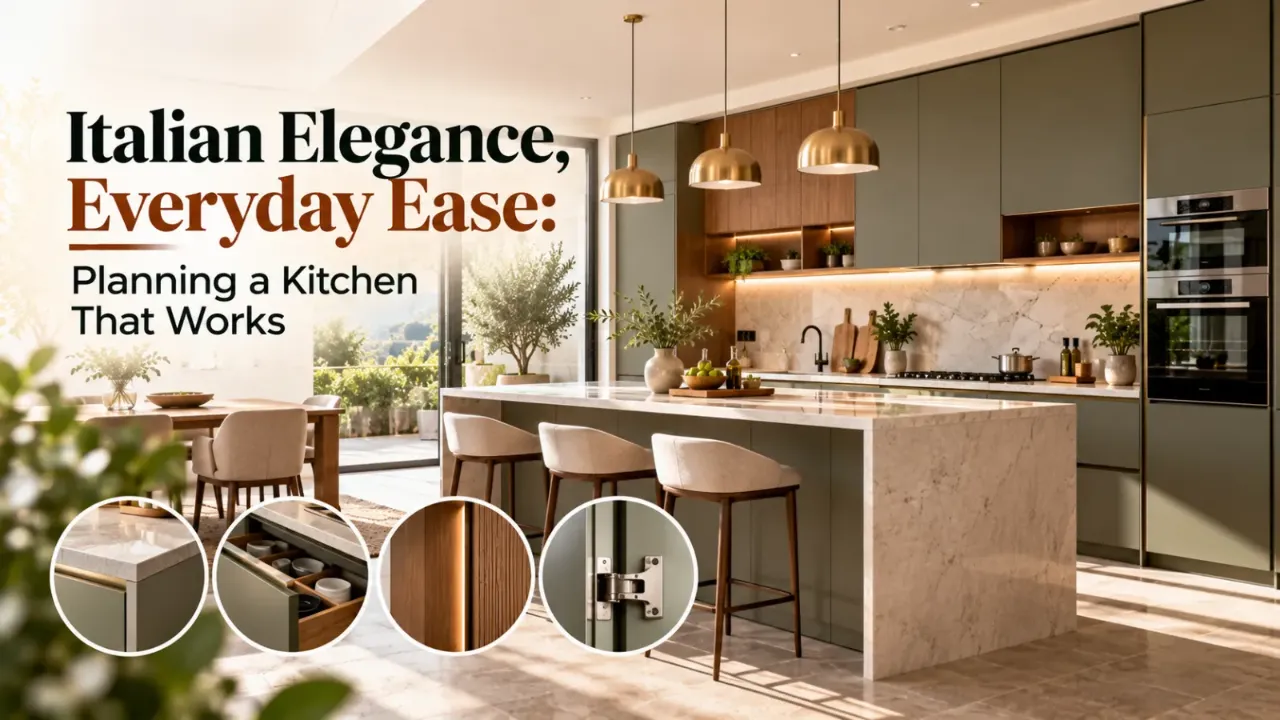
Italian Elegance, Everyday Ease: Planning a Kitchen That Works
Italian kitchen design is often associated with clean lines, seamless cabinetry, refined materials and a carefully balanced colour palette. Its appeal lies in the way the kitchen feels composed rather than crowded. Yet a beautiful kitchen must do more than look impressive. It should support everyday cooking, provide accessible storage, withstand regular use and remain easy to maintain.
For Indian homes, this balance needs particular attention. A kitchen may need to accommodate frequent cooking, spices, oil, steam, large utensils and several appliances. The aim is not to copy a showroom exactly, but to adapt the elegance of Italian design to the way the household actually lives.
1. Understand What Defines an Italian Kitchen
Italian kitchen design is generally recognised by its restrained detailing and emphasis on proportion. Instead of relying on elaborate decoration, it uses clean cabinet fronts, integrated storage, thoughtful material combinations and carefully finished edges.
Common features include:
- Handle-less cabinetry: Recessed profiles, integrated handles or push-to-open systems create a clean appearance.
- Simple, balanced lines: Consistent cabinet heights and aligned fronts help the kitchen feel organised.
- Integrated appliances: Built-in ovens and carefully planned appliance spaces reduce visual clutter.
- Tactile materials: Wood textures, stone surfaces, glass and refined metal details add depth without excessive decoration.
- Controlled colour palettes: Neutral shades, muted colours and natural finishes create a composed look.
These features are design choices, not rules that every kitchen must follow. The best result is one that suits the room, budget and household routine.
2. Choose a Layout Around Your Cooking Routine
The layout should be decided before the cabinet finish or colour. Consider where groceries are stored, where vegetables are washed and prepared, where cooking happens and how food is served.
An L-shaped kitchen can work well when you want to keep one side of the room more open. A parallel layout can provide useful counter space and storage on two sides, provided the central passage remains comfortable. A U-shaped layout offers extensive work surfaces but needs enough room to avoid a cramped feeling.
An island can become a striking feature in a larger kitchen, but it should have a clear purpose. It might provide preparation space, storage or casual seating. If it interrupts movement or reduces access to cabinets, it is not adding practical value.
Map the refrigerator, sink, hob, preparation counter and major appliances on a floor plan. Check door swings and drawer openings as well. A layout that looks balanced in a photograph may feel inconvenient when several people use it.
3. Select Materials for Both Appearance and Use
Materials create much of the visual character of an Italian kitchen. The important decision is to choose finishes that look cohesive and suit the conditions in which they will be used.
For cabinet fronts, matte laminates, acrylic, lacquered finishes and wood-look surfaces can all create different effects. Matte finishes offer a softer appearance, while glossy fronts reflect light and can make a compact kitchen feel brighter. The suitability of each finish depends on its quality, cleaning requirements and exposure to heat, moisture and frequent handling.
For countertops, compare options such as granite and engineered quartz based on stain resistance, maintenance, appearance and the manufacturer's care instructions. Natural stone has variation that can make each surface distinctive, while engineered surfaces offer a more controlled pattern.
The backsplash should be practical to wipe down, particularly around the hob and sink. Large-format tiles or other suitable low-maintenance surfaces can reduce the number of joints where grease and dirt collect.
Before finalising a material, ask for a physical sample. Check it under the kitchen's actual lighting and compare it with the cabinet and floor finishes.
4. Plan Storage That Keeps the Kitchen Calm
A minimal kitchen can quickly become cluttered if there is not enough storage behind its clean cabinet fronts. Plan the internal arrangement around the objects you use, rather than choosing cabinets only for their external appearance.
Deep drawers can accommodate larger cooking vessels, while organisers can separate lids, cutlery and smaller utensils. Tall pantry units can store dry groceries and provisions. Corner mechanisms may improve access to otherwise difficult spaces, depending on the cabinet dimensions and hardware selected.
For Indian cooking, account for pressure cookers, kadhais, spice containers, oil bottles, grain jars, mixers and other frequently used appliances. Keep everyday items within convenient reach and store occasional-use equipment higher or farther away.
Open shelves can introduce warmth, but use them selectively. Too many display shelves can make a kitchen harder to keep visually tidy and may increase cleaning effort.
5. Make Handle-less Cabinets Comfortable to Use
Handle-less cabinetry is one of the most recognisable features of contemporary Italian-style kitchens. It creates uninterrupted surfaces, but the opening mechanism matters as much as the appearance.
Recessed channels and integrated profiles provide a defined grip. Push-to-open systems create a particularly minimal front, but test them before committing. Consider how they respond when hands are wet or greasy and whether the doors require frequent adjustment.
Check the quality of hinges, drawer runners, soft-close mechanisms and internal fittings. Ask about load capacity, replacement availability and warranty coverage. A refined cabinet front is only as useful as the hardware that supports it.
6. Use Lighting to Support Work and Atmosphere
Lighting should make the kitchen comfortable to work in while reinforcing its visual character. A single ceiling light may leave shadows on the countertop, particularly when someone stands in front of the work area.
Use general lighting for the whole room and focused task lighting over preparation counters, the sink and cooking areas. Under-cabinet lights can illuminate the worktop and bring out the texture of the backsplash. Pendant lights may suit an island or breakfast counter, provided they do not obstruct movement or sightlines.
Choose light colour and intensity with the finishes in mind. Warm lighting can complement wood and beige tones, while neutral lighting can help with clear visibility during food preparation. Make sure the lighting plan is coordinated with cabinetry and electrical points before installation.
7. Adapt the Design to Indian Cooking
A kitchen inspired by an Italian showroom may need practical adjustments before it works comfortably in an Indian home. Frequent frying, tempering, grinding and pressure cooking can create heat, steam, oil deposits and strong aromas.
Plan an effective chimney and an appropriate ventilation route. Keep the hob area easy to clean, and choose cabinet finishes that can handle the expected level of use. Protect storage near the sink from moisture and make sure cleaning access is not blocked by decorative details.
Separate wet and dry activities where possible. Keep dry groceries away from splash zones, and place frequently used spices and cooking utensils close to the preparation and cooking areas. The exact arrangement should reflect the household's cooking habits rather than a fixed showroom template.
8. Balance Colour, Texture and Decorative Details
Italian kitchens often feel elegant because they use a limited number of finishes with care. Start with one main cabinet colour, then introduce a supporting material such as wood or stone. A small amount of metal detailing can add definition without competing with the overall scheme.
For example, warm wood cabinetry can soften a stone countertop, while muted grey or beige fronts can create a quieter contemporary look. Dark finishes can be striking, but consider the room's natural light and how visible dust, fingerprints and water marks may be.
Avoid combining too many strong patterns, glossy surfaces and decorative accessories. Let the cabinetry, countertop and backsplash establish the character of the room. Add only a few objects that are useful or meaningful.
9. Review the Complete Plan Before Finalising
Before approving the design, review the kitchen as a working space rather than judging only the rendered image. Check the layout, storage, appliance dimensions, ventilation, lighting, materials, hardware and installation details together.
Ask your designer or vendor to clarify:
- The exact material and thickness specified for cabinet shutters and carcasses.
- The finish, edge treatment and maintenance requirements of each surface.
- The make and model of hinges, drawer channels and other hardware.
- The appliance sizes and ventilation provisions allowed for in the design.
- The scope of installation, electrical and plumbing coordination.
- What is included in the quotation and what may be charged separately.
You can use Design My Room to explore interior looks and finishes, and the Whole Home Visualizer to consider how the kitchen relates to the rest of your home's interiors. For preliminary interior budget planning, try the Interior Design Cost Estimate. When reviewing a vendor's proposed interior scope and charges, the Interior Quotation Checker can help you examine the quotation. These tools support interior planning; they do not replace technical checks, site measurements or professional installation advice.
Final Thought
An Italian kitchen should not be designed only to impress on the day it is completed. Its real value becomes clear in everyday use: when drawers open smoothly, work surfaces are easy to clean, appliances are accessible and the room feels organised even during a busy cooking routine.
Choose the visual details you love, but let the layout, storage, materials and lighting make them work. That is how an elegant kitchen becomes a comfortable part of daily life.
Frequently Asked Questions
1. What are the main features of Italian kitchen design?
Italian kitchen design often uses clean lines, handle-less cabinetry, integrated appliances, restrained colours, refined materials and carefully planned storage.
2. Is Italian kitchen design suitable for Indian homes?
Yes, if it is adapted to the household's cooking habits. Storage for larger utensils and groceries, effective ventilation, easy-care surfaces and practical work areas should be planned from the beginning.
3. Are handle-less kitchen cabinets practical?
They can be practical, but the opening system matters. Test recessed profiles or push-to-open mechanisms and check the quality and serviceability of the hardware.
4. Which colours work well in an Italian-style kitchen?
Neutral shades, muted greys, warm wood tones, beige and soft earthy colours can create a balanced look. The best choice depends on room size, natural light and the other finishes.
5. What should I check before approving an Italian kitchen quotation?
Review cabinet materials, finishes, hardware brands, appliance provisions, installation scope, ventilation coordination, warranty and exclusions. Compare the complete specifications rather than the total price alone.
Turn this idea into a plan for your home
Visualise your space, understand the likely budget, or find a professional who can bring the idea to life.