
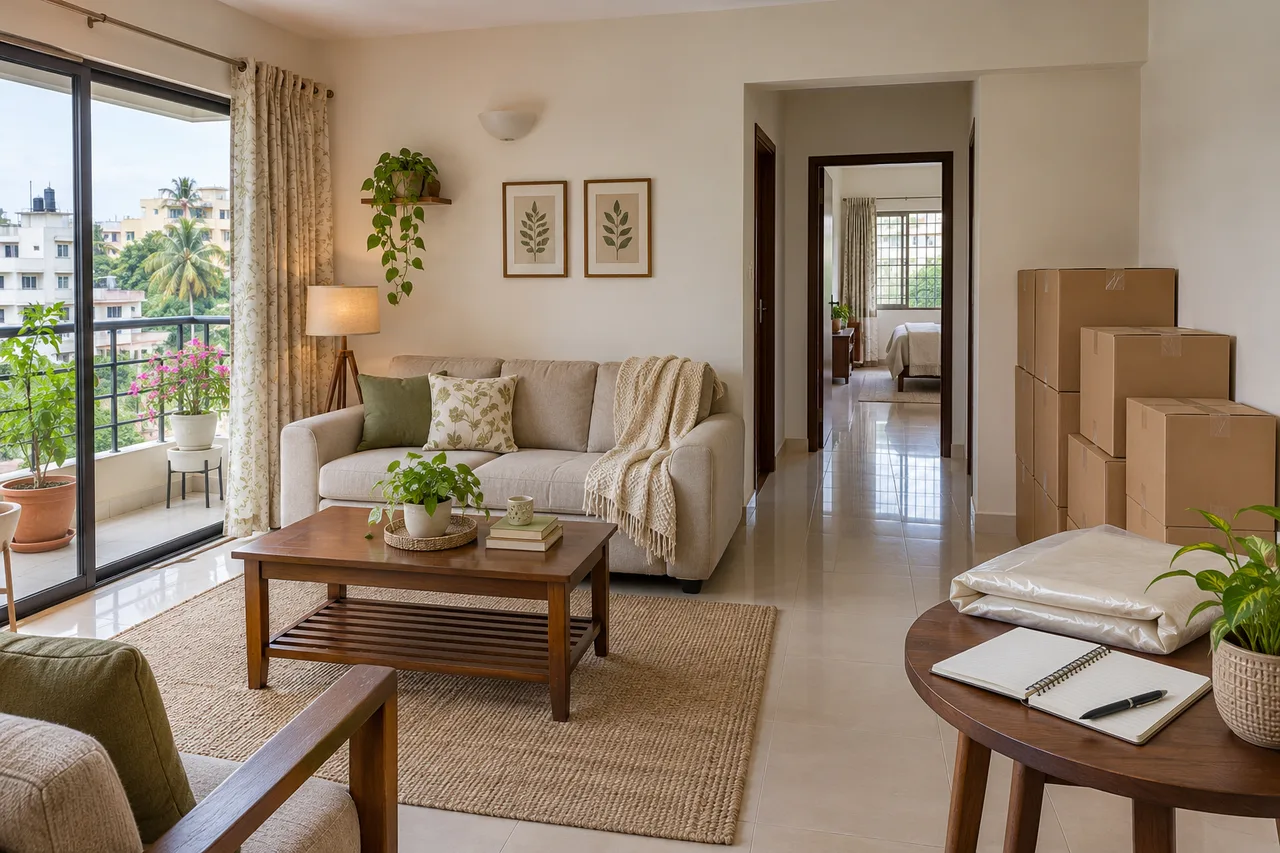
Interior Designers in Bangalore: Plan a Renovation While Living at Home
An occupied-home renovation brief is different from a vacant-site brief. The practical question is what your household can keep using safely while particular areas are unavailable. This guide applies to Bengaluru apartments without assuming every building follows the same working hours, lift rules or contractor access procedure.
Prepare a household-use map
Materials: floor plan or sketch, daily schedule, storage inventory and a list of essential services. Prep time: 60–90 minutes with the household, followed by a feasibility discussion with the designer. Planning spend: ₹0 for your own map; confirm charges for professional survey, storage and temporary arrangements separately. The time estimate is for the brief, not the renovation.
Mark sleeping, bathing, cooking, work and medicine storage needs. Record when people will be home and who needs easier access. Identify any activity that cannot coexist with occupation, rather than assuming a temporary partition makes all work acceptable.
Ask for a phase plan with usable outcomes
| For each phase | Write down |
|---|---|
| Unavailable area | The exact room or service affected |
| Essential alternative | Where the household will sleep, wash, cook or work |
| Access | Resident route, material movement and storage location |
| Handover condition | What must be cleaned, tested and usable before the next phase |
| Stop or relocate trigger | What happens if essential access or services cannot be maintained |
Use these five steps before approving work
- Confirm feasibility: ask the designer which activities require a vacant home or temporary relocation. Do this before assuming the project can be phased around you.
- Check building arrangements: obtain the actual rules for deliveries, lift use, waste removal and work access from your building contact.
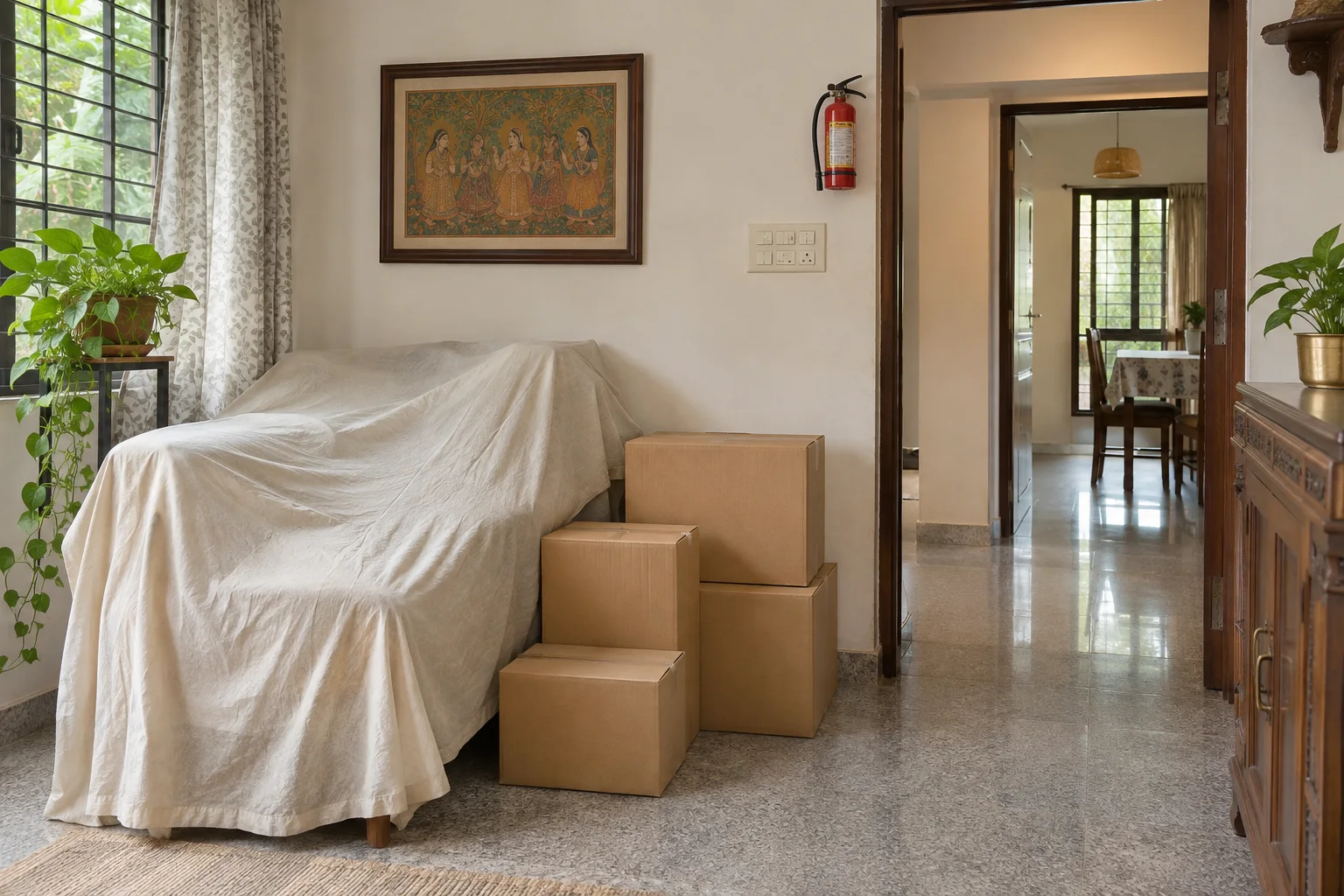
- Plan storage: count boxes and furniture that must move. Decide who packs, moves and protects them, and where they can stay without blocking escape or daily access.
- Record service interruptions: ask when water, power or essential appliances may be unavailable and how notice will be given.
- Agree on review points: require a usable phase handover before the next occupied area is taken out of service.
Budget for living arrangements as well as construction
Keep a separate worksheet for packing, off-site storage if needed, extra travel, alternate meals, cleaning and temporary accommodation. For illustration, ₹12,000 of storage plus ₹8,000 of extra meals and travel adds ₹20,000 to your household plan; those are chosen example amounts, not Bengaluru prices. Ask providers for actual charges, duration and exclusions.
A low construction quote can still be difficult for a household if the occupation plan is missing. Conversely, staying at home is not automatically cheaper once disruption and temporary services are counted.
Clarify communication and responsibility
Choose one resident contact and one project contact. Keep a shared list of access issues and decisions. Ask who checks the area before residents return to normal use. A decorative screen or improvised sheet should not be treated as proof that dust, fumes or construction hazards are controlled.
Start discovery with WallsToWonder company profiles for Bengaluru, then ask shortlisted teams specifically about occupied-home experience and supervision. Use the Interior Quotation Checker to organise questions about temporary work and exclusions in a written proposal.
For a more local shortlist discussion, see the Sarjapur Road designer guide and ask each firm about your exact address and occupied-home scope.
Frequently asked questions
Can I stay in my Bengaluru apartment throughout interior work?
It depends on the scope and whether essential facilities and safe access can be maintained. Ask the project team to assess feasibility and plan relocation when needed.
Does room-by-room work guarantee a shorter project?
No. Phasing can introduce repeat mobilisation, protection and waiting. Ask for a scope-specific programme rather than assuming it saves time.
What temporary costs should I track?
Track packing, storage, alternate meals, travel, cleaning and temporary accommodation where relevant. Obtain actual charges and avoid treating example allowances as local market rates.
Turn this idea into a plan for your home
Visualise your space, understand the likely budget, or find a professional who can bring the idea to life.