
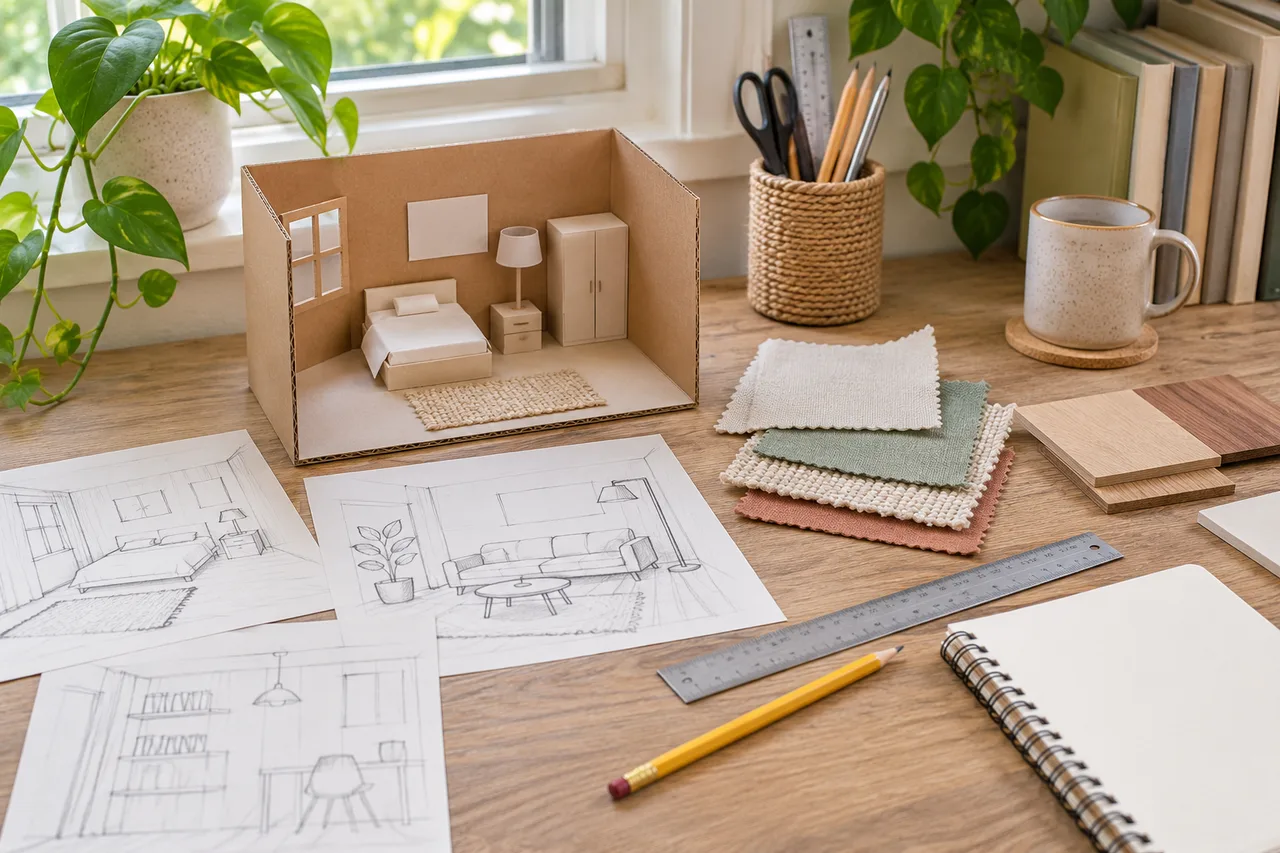
Interior Design Courses: 7 Practical Skills to Test Before Enrolling
Interest in interior design courses can begin with enjoying room images, but studying design also involves testing ideas, explaining decisions and responding to constraints. These exercises are a low-cost way to discover which parts interest you before committing to a programme. They are not an admissions test, a qualification or permission to undertake professional work.
Set up a beginner practice kit
Materials: paper, pencil, ruler, tape measure used safely, recycled cardboard and a few clean material samples. Planning allowance: ₹0–₹1,000 for optional basic supplies, depending on what you already own; this is not a course-fee estimate. Time: spread the seven exercises over several sessions. The suggested times are practice allocations, not promises of proficiency.
1. Observe one daily task
Try 20–30 minutes: watch how you enter a room, put down a bag and reach storage. Write the sequence and identify one inconvenience. Do not start by deciding which colour would improve the photograph. Ask a course provider how students learn observation and user research.
2. Measure a simple room
Try 45–60 minutes: draw the perimeter, locate openings and note the measurements you can safely take. Mark anything uncertain. Ask how a course teaches measurement, accuracy and verification; confidence with a tape measure is not the same as a professional survey.
3. Draw to communicate
Try 30–45 minutes: sketch the room and explain a proposed furniture move to someone else. Notice what they misunderstand. Ask whether the course teaches drawings and annotations that communicate decisions, not just polished perspective images.
4. Compare materials
Try 30 minutes: place a wood sample, fabric and tile together. List what you know about their care and what needs product information. Ask how material selection is taught, including appropriate use and evidence rather than appearance alone.
5. Test a layout with paper pieces
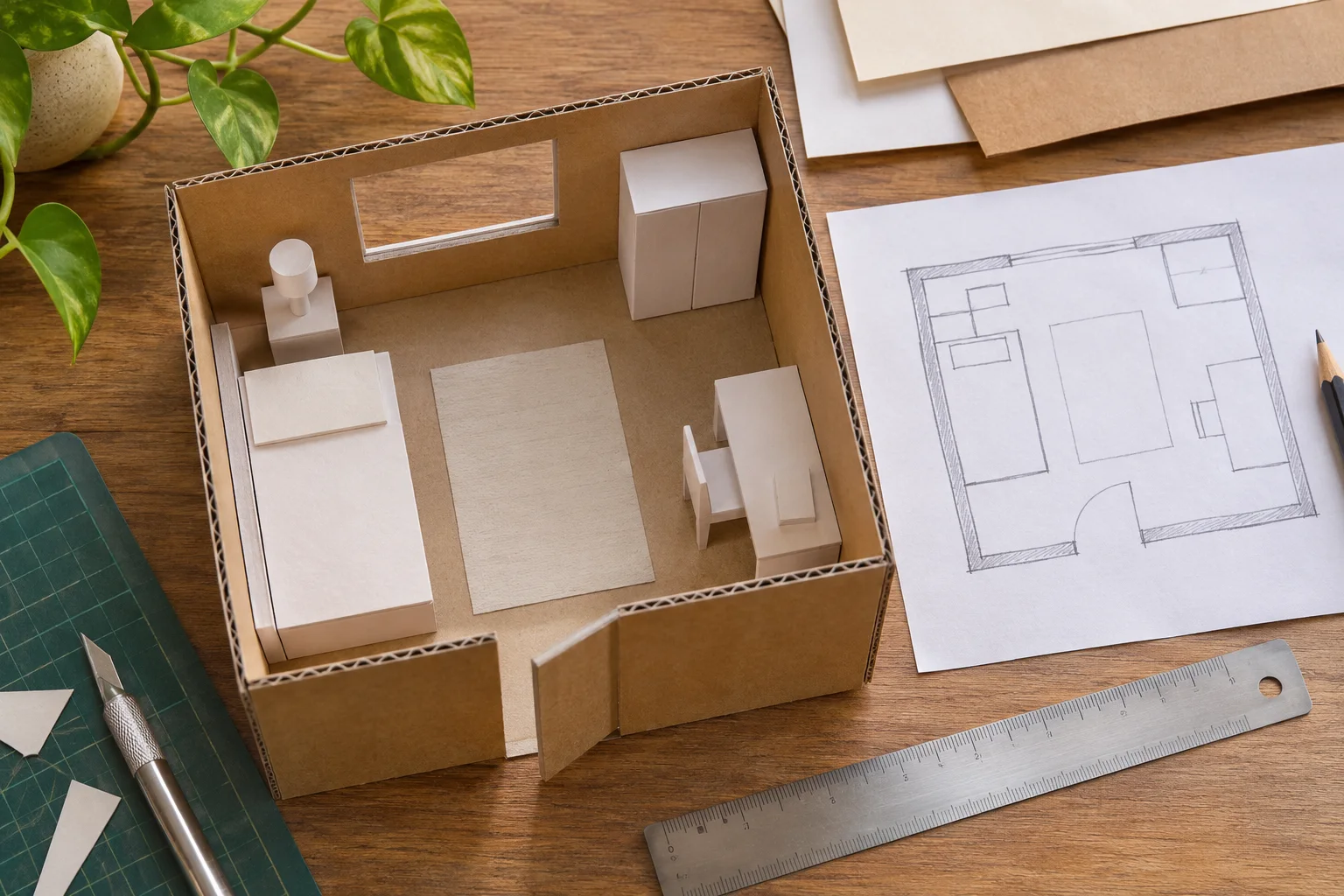
Try 45–60 minutes: make paper furniture shapes at the same scale as your sketch. Compare two arrangements and test door movement. Keep uncertain dimensions visible. Ask how students test layouts and respond when a first idea does not work.
6. Write a one-page brief
Try 30–45 minutes: describe the user, daily needs, retained items, constraints and questions. Ask another person to summarise it back to you. Ask the provider how assignments teach briefing, presentation and feedback.
7. Revise after criticism
Try 30 minutes: change one layout after someone identifies a real problem. Keep the first version and explain the revision. Ask whether the programme includes individual critique and iteration, and who gives it.
Questions to ask before paying
| Ask for | Why it helps |
|---|---|
| Current syllabus and sample assignment | Shows what you will actually practise |
| Teaching and feedback format | Clarifies contact, critique and class expectations |
| Assessment and award details | Lets you verify the actual programme and awarding body directly |
| Full charges and required tools | Exposes expenses beyond the advertised fee |
| Evidence behind career claims | Separates a marketing promise from information you can check |
Do not choose only by software names or an unverified job guarantee. If you use WallsToWonder Design My Room for a practice mood direction, keep the generated output clearly labelled and show your own observation, reasoning and revisions separately.
Frequently asked questions
Do I need expensive software before exploring interior design?
Not for these beginner exercises. Paper, simple measurements and material observation can help you identify your interests before choosing tools or a programme.
Does completing these exercises make me an interior designer?
No. They are introductory practice, not a qualification or proof of professional competence. Verify a course and its award directly with the provider and relevant institution.
What should I ask about a course job guarantee?
Ask for the exact written terms and evidence behind the claim. Do not assume a qualification, software lesson or portfolio image guarantees employment.
Turn this idea into a plan for your home
Visualise your space, understand the likely budget, or find a professional who can bring the idea to life.