
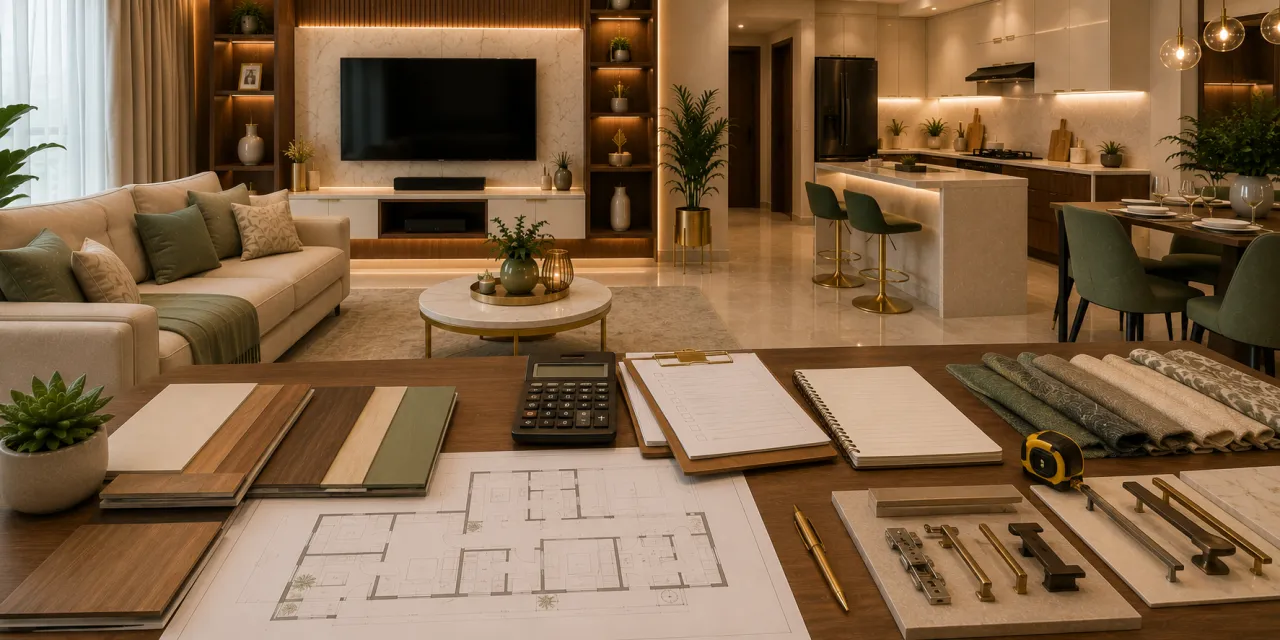
Interior Cost Saving Tips Without Quality Loss: Smart Budget Guide for Indian Homes
Home interiors can become expensive very quickly if the design scope, materials, storage, lighting, furniture, and quotation are not planned properly. Many homeowners try to reduce cost by choosing the cheapest option, but that often leads to poor finishing, weak hardware, low durability, and higher repair cost later.
The smarter approach is not to reduce quality everywhere. The right approach is to spend more where quality matters and save money where premium features do not add enough value.
This guide explains practical interior cost saving tips without quality loss for Indian homes, including modular kitchen, wardrobes, TV unit, false ceiling, lighting, furniture, materials, hardware, quotation comparison, and budget planning.
Quick Interior Cost Saving Tips
The biggest cost saving in interiors comes from planning, not from compromising on basic material quality.
Plan Your Interior Budget Smarter
Use the WallsToWonder Interior Design Cost Estimator to understand your budget for modular kitchen, wardrobes, TV unit, living room, bedrooms, false ceiling, lighting, and full home interiors before finalising your designer.
Get Free Interior Cost Estimate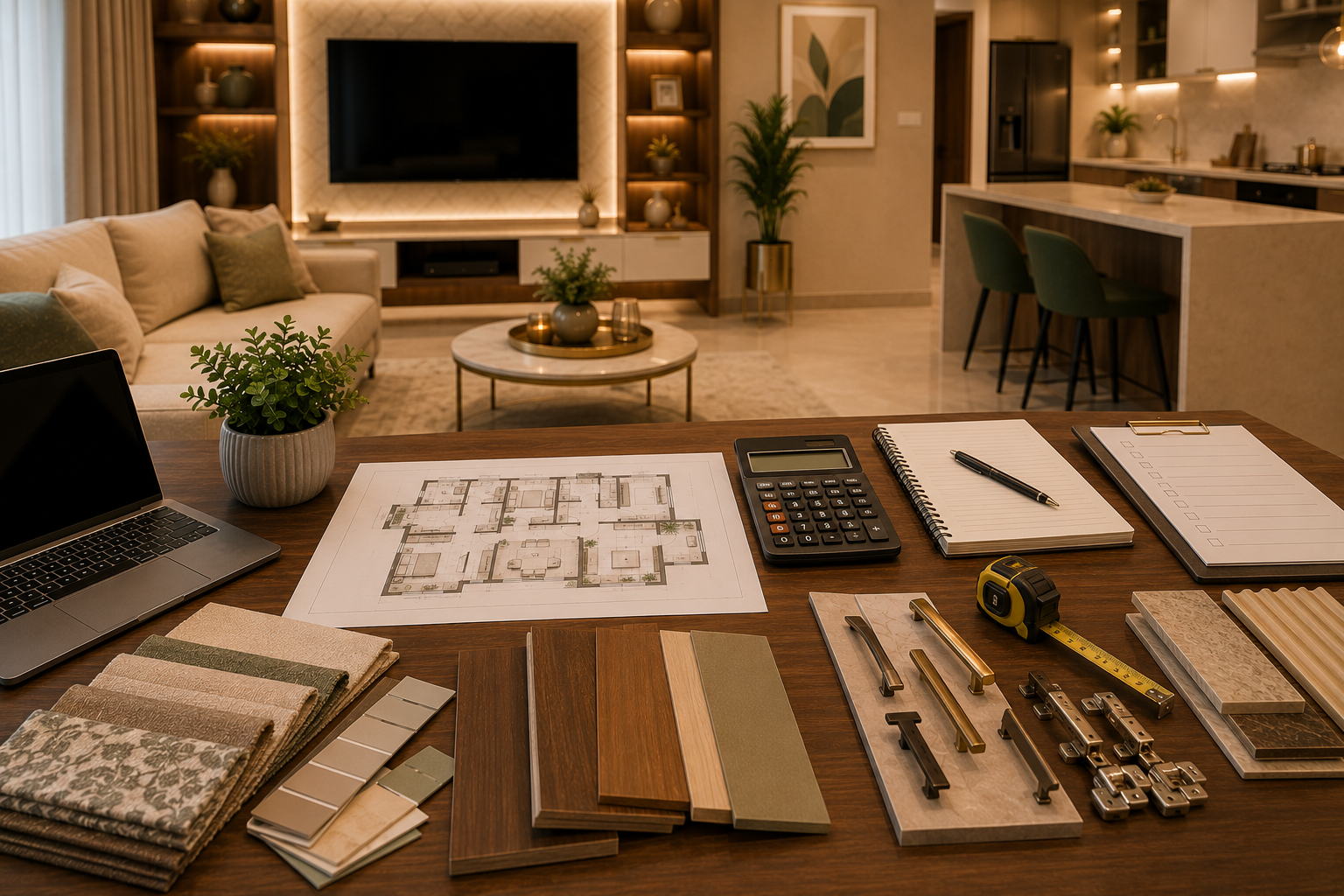
1. Start with a Clear Scope of Work
A vague interior requirement usually leads to budget confusion. Before asking for quotations, list what you actually need in every room. This helps you avoid unnecessary additions during execution.
| Scope Type | Examples | Budget Priority |
|---|---|---|
| Essential Work | Kitchen, wardrobes, basic storage, electrical points, lighting, beds | High |
| Comfort Work | Sofa, curtains, study unit, pooja unit, dining, shoe rack | Medium |
| Decorative Work | Wall panels, wallpaper, premium trims, luxury decor, display shelves | Optional |
| Luxury Upgrades | PU finish, veneer, marble panels, designer lights, automation | Only if budget allows |
Cost Saving Tip: Finalise must-have items first. Add decorative and luxury items only after your kitchen, wardrobes, storage, and lighting budget is clear.
2. Use Premium Finishes Only in Highlight Areas
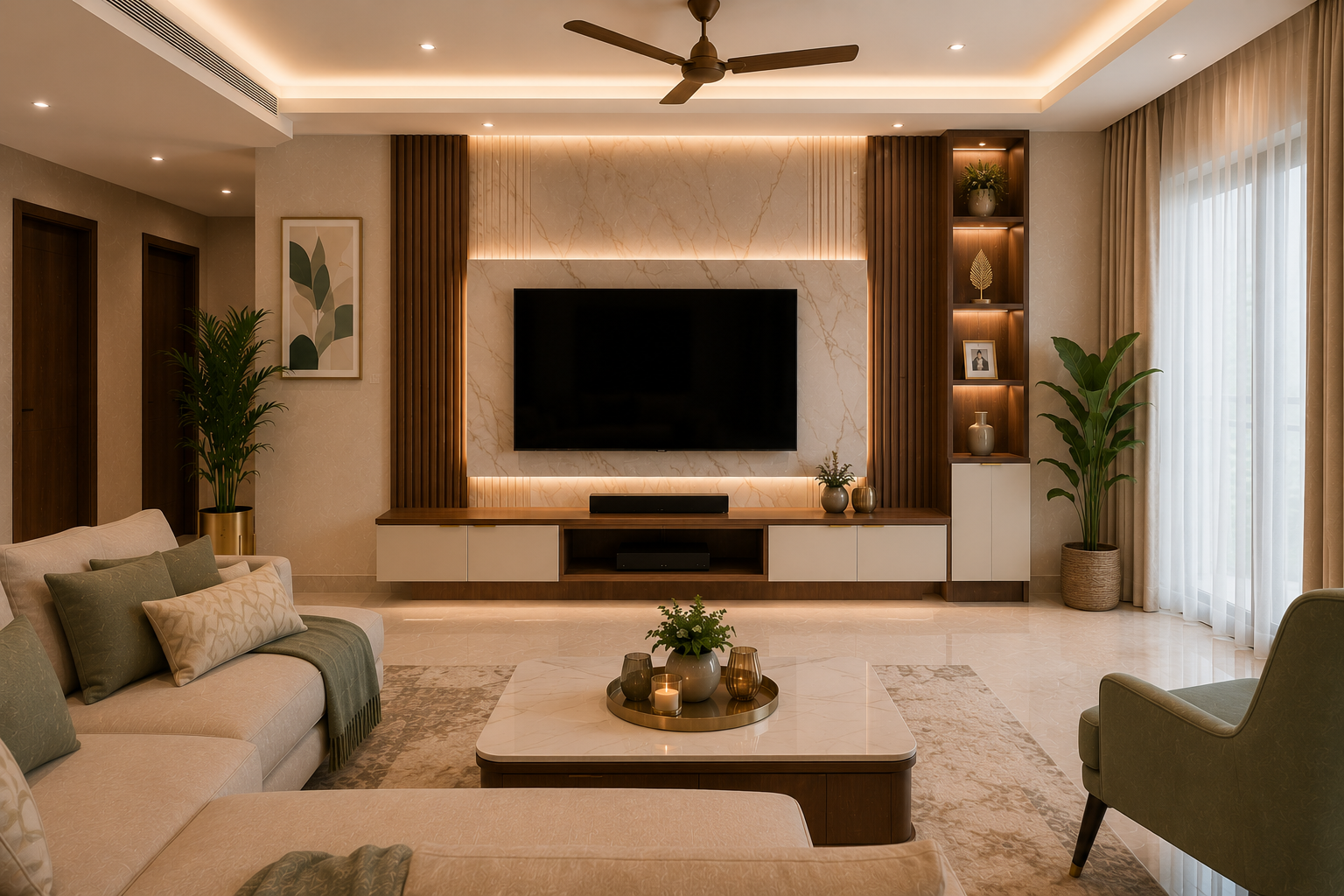
One common mistake is using expensive finishes everywhere. Premium materials look beautiful, but using them on every surface can increase cost without improving daily function.
A smart approach is to use practical finishes for large surfaces and premium finishes only in selected areas.
| Area | Budget-friendly Choice | Premium Highlight Option |
|---|---|---|
| Wardrobes | Laminate shutters | Mirror strip, profile handle, or one accent shutter |
| Kitchen | Laminate lower and upper cabinets | Acrylic or PU only on visible shutters |
| TV Unit | Laminate console and panel | Fluted panel, stone-look panel, or profile lighting |
| Bedroom Wall | Paint and simple headboard | Fabric panel or small wood accent |
| Living Room | Simple wall paint and clean furniture | One feature wall with lighting |
This creates a premium look without making the entire project expensive.
3. Do Not Compromise on Hardware
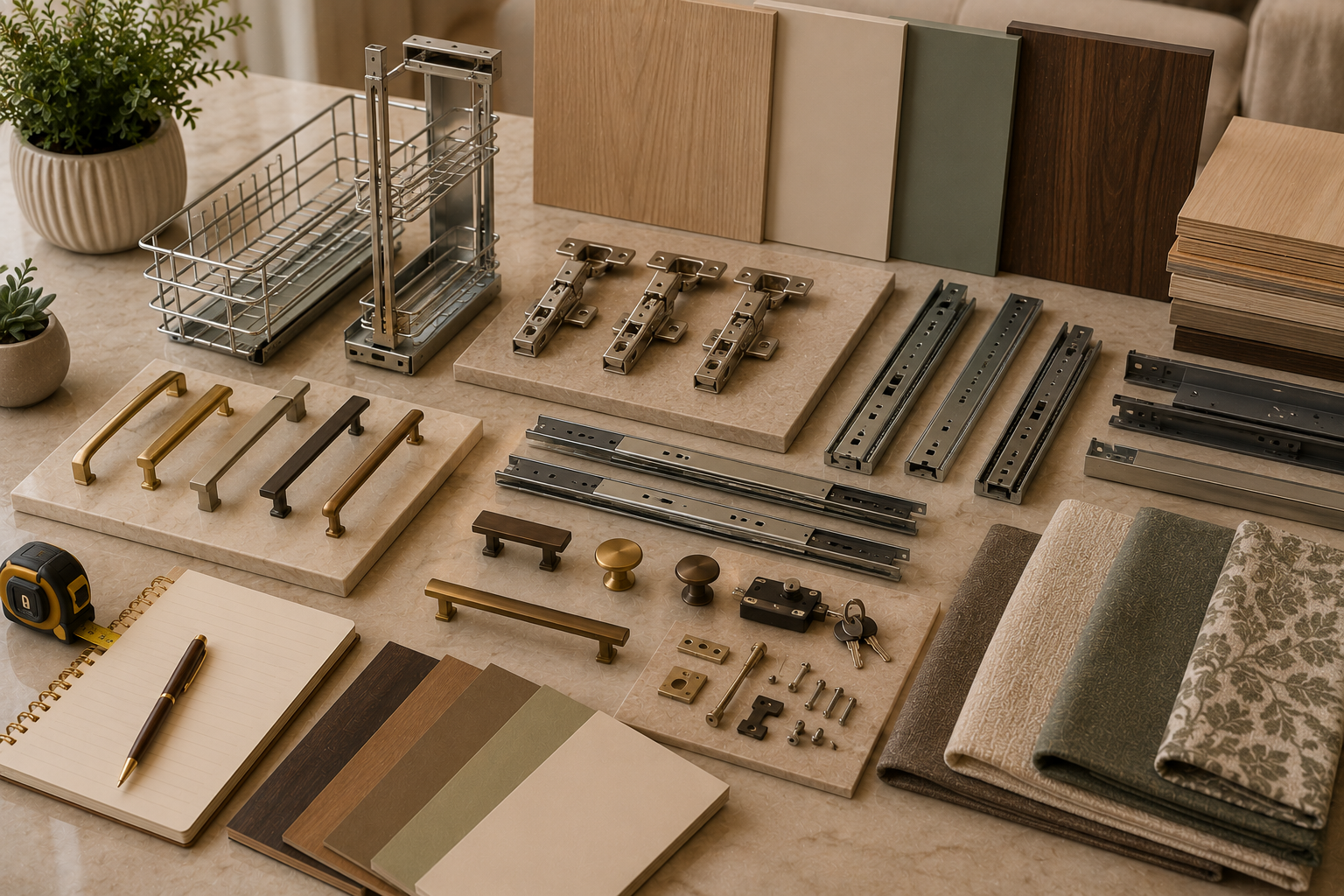
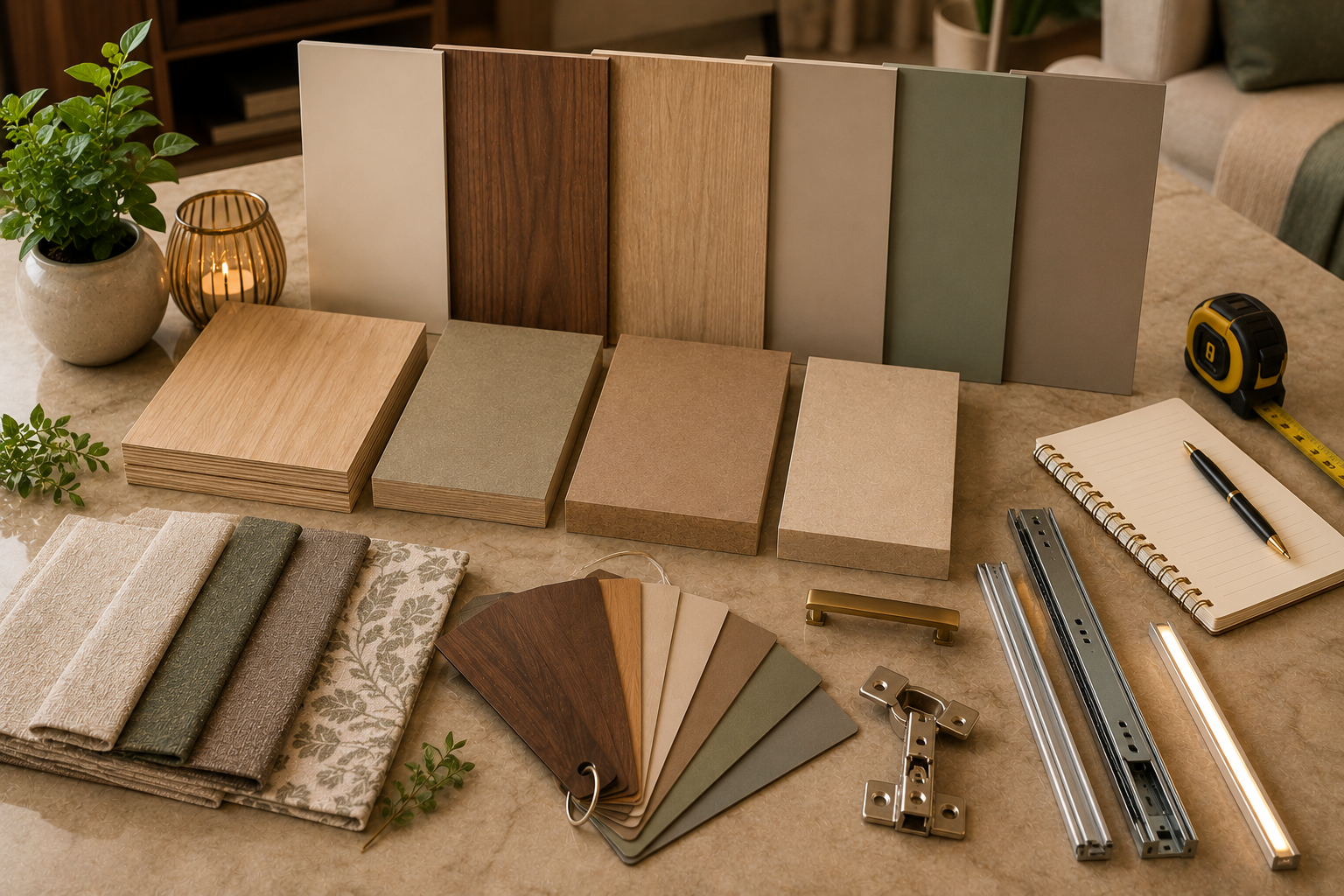
Hardware is not always visible, but it affects daily experience. Hinges, drawer channels, baskets, lift-up systems, and sliding mechanisms are used every day. Poor-quality hardware can fail quickly and create repair costs.
- Use good hinges for kitchen shutters and wardrobe shutters.
- Use better channels for heavy drawers and daily-use drawers.
- Use soft-close hardware in high-use areas if budget allows.
- Avoid very cheap kitchen baskets that bend or rust easily.
- Check sliding wardrobe channel quality before finalising.
Quality Rule: Save on decorative surfaces if needed, but do not save too much on hardware used every day.
4. Choose Laminate Smartly
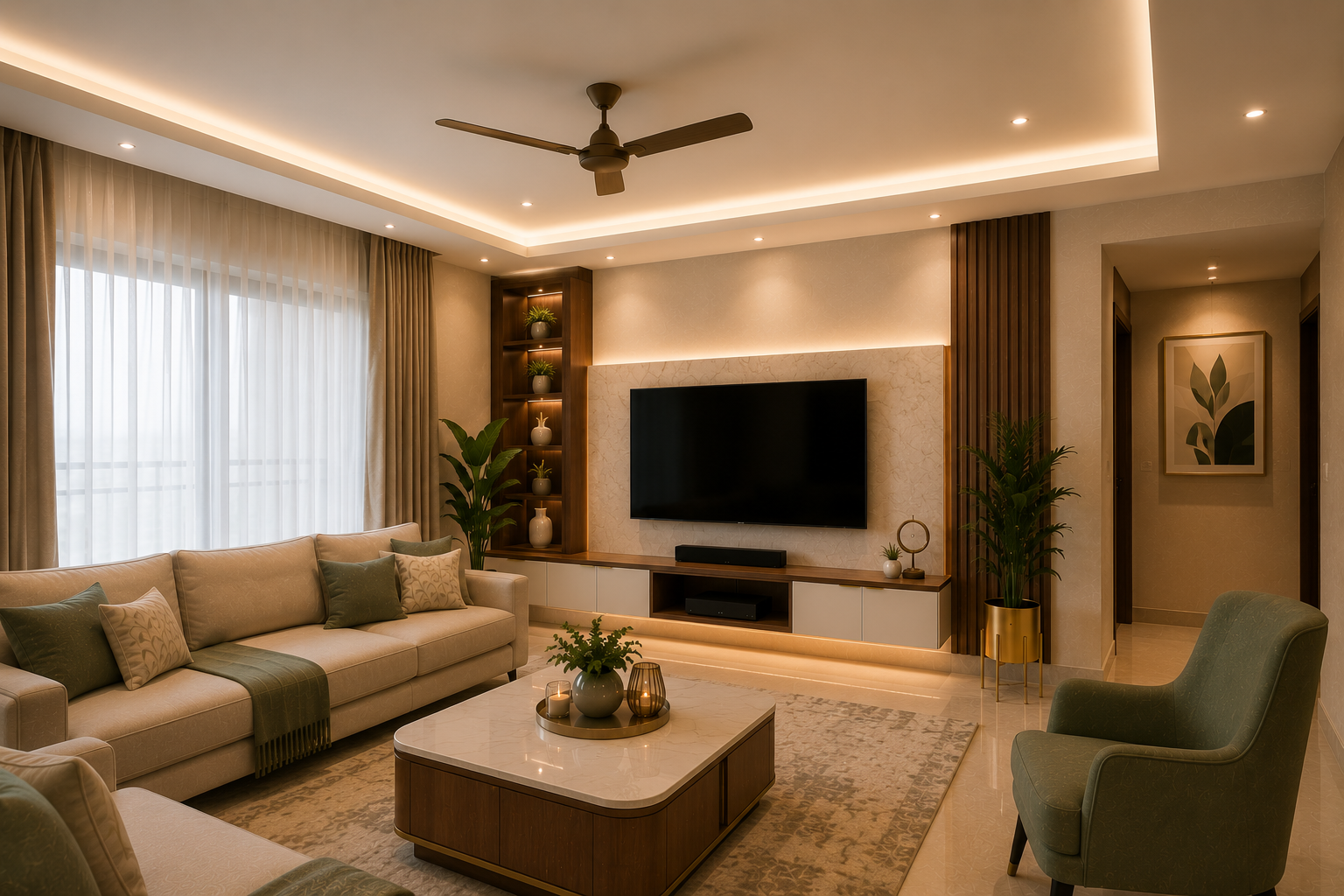
Laminate is one of the most practical materials for Indian home interiors. It is budget-friendly, available in many colours, easy to maintain, and suitable for kitchens, wardrobes, TV units, and storage furniture.
Instead of avoiding laminate, choose better colours, textures, and combinations.
A well-designed laminate interior can look premium if proportions, lighting, handles, and colours are planned properly.
5. Keep False Ceiling Simple
False ceiling can improve lighting and ambience, but heavy ceiling designs can increase cost and reduce room height. In many homes, simple ceiling borders, clean profile lighting, and selected spotlights are enough.
| Ceiling Choice | Cost Impact | Recommended Use |
|---|---|---|
| No False Ceiling | Lowest | Bedrooms, rental homes, budget projects |
| Simple Peripheral Ceiling | Medium | Living room and master bedroom |
| Profile Light Ceiling | Medium to High | Premium living room highlight |
| Heavy Designer Ceiling | High | Only for large living rooms or luxury homes |
In compact apartments, a simple ceiling with good lighting usually looks cleaner and more spacious.
6. Plan Electrical Points Before Furniture Production
Electrical changes after carpentry or modular furniture installation can create extra cost, damage finished panels, and delay handover.
- Plan TV, router, set-top box, speaker, and charging points.
- Plan kitchen appliance points before cabinet production.
- Confirm refrigerator, microwave, oven, chimney, hob, and water purifier positions.
- Plan bedside charging points before bed and headboard installation.
- Plan study table plug points and task lighting.
- Plan wardrobe lights and mirror lights only where needed.
Good electrical planning saves money because it avoids cutting, patching, repainting, and reworking finished areas.
7. Reduce Wall Panels Without Reducing Style
Wall panels are popular, but using panels on every wall can quickly increase budget. Instead, choose one focal wall and keep the rest simple.
| Room | Smart Panel Use | Where to Save |
|---|---|---|
| Living Room | TV wall only | Avoid paneling all side walls |
| Bedroom | Headboard wall only | Use paint for other walls |
| Dining | Mirror or small accent panel | Avoid full wall cladding if not needed |
| Passage | Simple lights or paint texture | Avoid expensive decorative panels |
A single well-designed feature wall often looks better than too many decorative surfaces.
8. Use Modular Storage Where It Adds Real Value
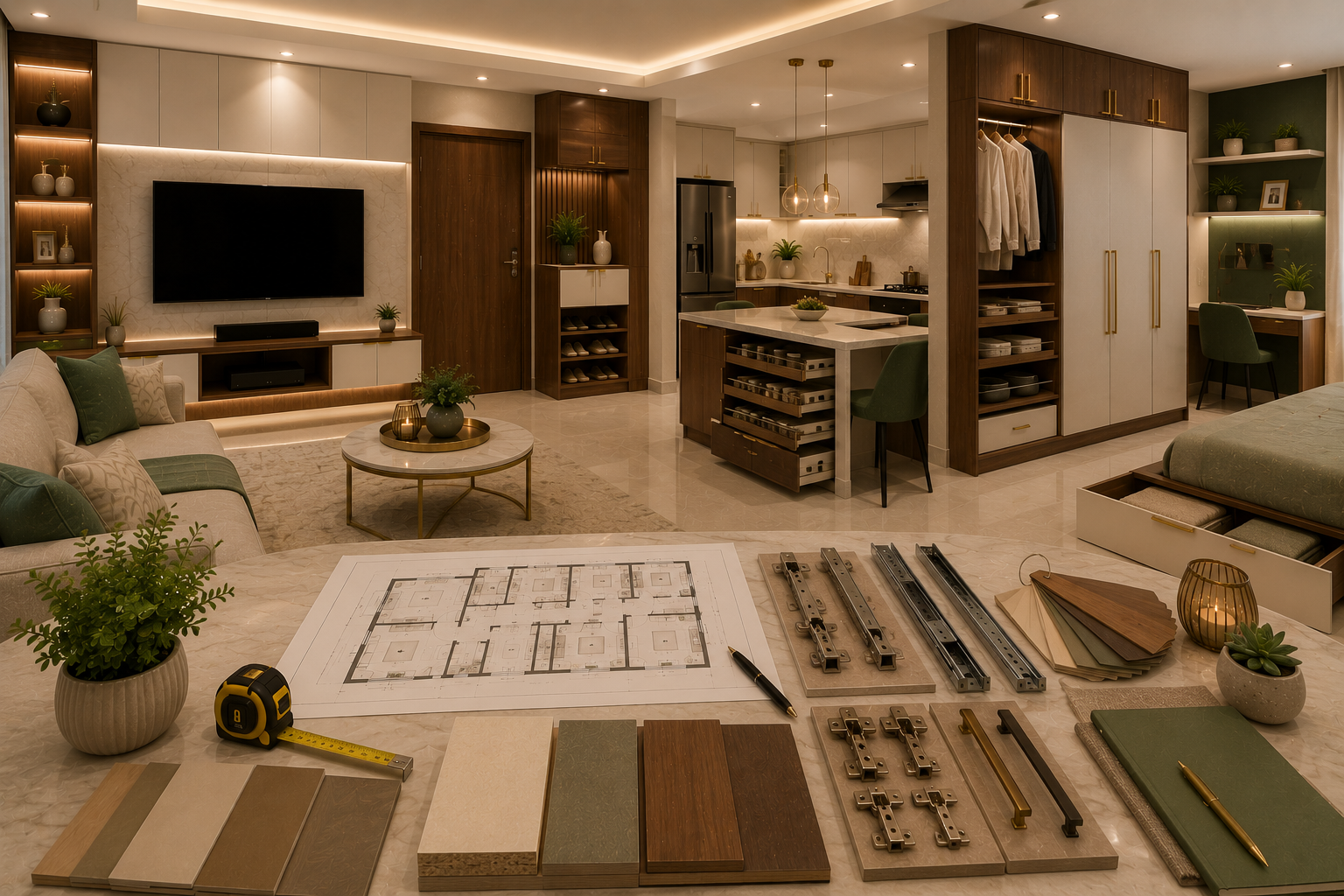
Storage is important, but overbuilding storage in every corner increases cost and can make the home feel heavy. Plan storage based on actual use.
- Use full-height wardrobes where storage is required.
- Add lofts only where luggage or seasonal storage is needed.
- Use drawers in kitchen and wardrobes for daily-use items.
- Avoid too many open shelves that collect dust.
- Use closed storage in living rooms for a cleaner look.
- Use storage beds only if you actually need extra storage.
Storage Tip: More storage is useful only when it is accessible and planned well. Random cabinets can increase cost without improving daily life.
9. Save on Decor, Not on Structure
Decor items can always be added later. Structural and modular items are harder to change once installed. So, when budget is limited, first complete the permanent work properly.
| Do First | Add Later |
|---|---|
| Kitchen cabinets and countertop | Decor jars and styling accessories |
| Wardrobes and internal storage | Extra cushions and wall art |
| Electrical points and lighting basics | Designer lamps and decorative lights |
| TV unit wire management | Display decor and plants |
| Bed, sofa, curtains, essential furniture | Premium rugs, showpieces, and accessories |
This approach keeps your home functional from day one while giving you flexibility to upgrade decor slowly.
10. Compare Quotations Correctly
The lowest interior quotation is not always the cheapest in the long run. Sometimes a low quote excludes hardware, electrical work, lighting, countertop, chimney, accessories, transport, installation, or GST.
Always compare quotations item by item.
- Check room-wise furniture scope.
- Check material type and thickness.
- Check laminate, acrylic, PU, veneer, or paint finish details.
- Check hardware brand and quantity.
- Check kitchen baskets and accessories.
- Check countertop, backsplash, sink, hob, and chimney inclusion.
- Check electrical, false ceiling, painting, and lighting scope.
- Check transport, installation, taxes, warranty, and after-service.
Quotation Tip: Compare scope first, price second. A detailed quote with transparent materials is safer than a low quote with unclear inclusions.
11. Avoid Last-minute Design Changes
Design changes after production starts are one of the biggest reasons for interior budget increase. Changing layout, finish, size, hardware, or electrical points later can create wastage and rework.
- Finalise furniture layout before production.
- Approve material samples physically where possible.
- Confirm appliance sizes before kitchen production.
- Check wardrobe internal layout before manufacturing.
- Confirm electrical points before wall panel and furniture work.
- Review quotation carefully before paying advance.
Spending extra time during planning can save a large amount during execution.
12. Room-wise Cost Saving Ideas
Every room has different cost-saving opportunities. The goal is to save without affecting daily comfort and durability.
| Room / Area | Where to Save | Where Not to Compromise |
|---|---|---|
| Kitchen | Use laminate shutters, simple backsplash, limited premium finish | Carcass, countertop, hinges, channels, chimney, plumbing |
| Wardrobe | Use laminate shutters, simple handles, avoid unnecessary glass | Internal layout, structure, hinges, sliding channels |
| Living Room | Keep TV wall simple, limit display shelves, avoid heavy paneling | Sofa comfort, lighting, wire management, storage |
| Bedroom | Use simple headboard, paint instead of full panels | Wardrobe, bed size, walking space, lighting |
| Kids Room | Avoid theme-heavy fixed furniture | Safety, rounded edges, storage, study lighting |
| Bathroom | Use standard tiles and fittings | Waterproofing, plumbing, anti-skid flooring, ventilation |
| Balcony | Use simple seating and planters | Drainage, safety, outdoor material durability |
Estimate Before You Finalise Interiors
Planning a 1 BHK, 2 BHK, 3 BHK, villa, modular kitchen, wardrobe, TV unit, or full home interiors? Get a quick budget estimate and plan smarter before finalising your designer.
Calculate Interior CostBest Cost-saving Material Combinations
The right material combination can reduce cost while keeping the home durable and premium-looking.
| Interior Area | Smart Material Combination | Why It Saves Cost |
|---|---|---|
| Kitchen | Plywood or suitable board + laminate shutters + granite/quartz countertop | Balances durability, maintenance, and budget |
| Wardrobe | Plywood/HDHMR + laminate shutters + selected mirror shutter | Keeps cost practical while adding one useful highlight |
| TV Unit | Laminate console + simple back panel + profile light | Creates a premium focal wall without luxury materials everywhere |
| Bedroom | Painted wall + upholstered headboard + laminate furniture | Looks soft and premium without full wall paneling |
| Dining | Simple dining table + wall mirror + pendant light | Improves visual impact at controlled cost |
| Pooja Unit | Compact laminate mandir + brass bells + warm light | Looks elegant without heavy carving or expensive wood |
Interior Cost Saving Checklist
Use this checklist before approving your interior quotation.
| Checklist Point | Status |
|---|---|
| Room-wise scope finalised | Check before quotation |
| Must-have and optional items separated | Check before budget approval |
| Material samples reviewed | Check before production |
| Hardware brand and quality confirmed | Check before final quote |
| Kitchen appliance sizes confirmed | Check before cabinet production |
| Electrical points finalised | Check before wall panel and furniture work |
| False ceiling kept practical | Check before execution |
| Decor budget separated | Check before final planning |
| Quotation compared item-wise | Check before advance payment |
| Budget buffer kept aside | Check before project starts |
Common Cost-saving Mistakes to Avoid
- Choosing the cheapest designer without checking scope.
- Reducing hardware quality in kitchen and wardrobes.
- Using weak material in moisture-prone areas.
- Ignoring electrical planning before furniture work.
- Adding too many wall panels and decorative features.
- Finalising premium finishes without checking maintenance.
- Not comparing quotations item-wise.
- Changing design after production starts.
- Not keeping a budget buffer for site changes.
- Spending too much on decor before finishing essential interiors.
How WallsToWonder Helps You Save Interior Cost
WallsToWonder helps homeowners plan interiors smarter before they finalise a designer or contractor. You can explore design ideas, understand room-wise costs, estimate your budget, compare designers, and avoid common cost mistakes.
- Estimate full home interior cost
- Understand room-wise interior budget
- Explore modular kitchen, wardrobe, living room and bedroom ideas
- Compare interior designers and companies
- Plan materials, finishes, lighting and storage before quotation
Useful Internal Links
FAQs on Interior Cost Saving Without Quality Loss
How can I reduce interior design cost without reducing quality?
Finalise scope clearly, use practical materials for large surfaces, spend on hardware and structure, reduce unnecessary panels, keep false ceiling simple, compare quotations properly, and avoid last-minute design changes.
Where should I not compromise in home interiors?
Do not compromise on kitchen carcass, wardrobe structure, hinges, drawer channels, countertop, electrical planning, waterproofing, plumbing, and daily-use furniture quality.
Is laminate good for budget interiors?
Yes. Laminate is practical, budget-friendly, easy to clean, and suitable for kitchens, wardrobes, TV units, and storage furniture. A good laminate combination can look premium if designed well.
How can I save money on modular kitchen interiors?
Use laminate shutters, keep the layout practical, avoid unnecessary premium finishes, plan drawers and baskets carefully, choose a durable countertop, and confirm appliance sizes before production.
Can I add decor later to save cost?
Yes. Decor items, rugs, wall art, cushions, lamps, and accessories can be added later. Complete permanent work such as kitchen, wardrobes, storage, electrical points, lighting basics, and furniture first.
How do I compare interior quotations?
Compare room-wise scope, material type, thickness, finish, hardware, accessories, countertop, lighting, electrical work, installation, transport, taxes, warranty, and exclusions before comparing the final price.
What is the biggest reason interior cost increases?
The biggest reasons are unclear scope, poor planning, material changes, electrical changes, appliance size changes, and design changes after production starts.
Final Thoughts
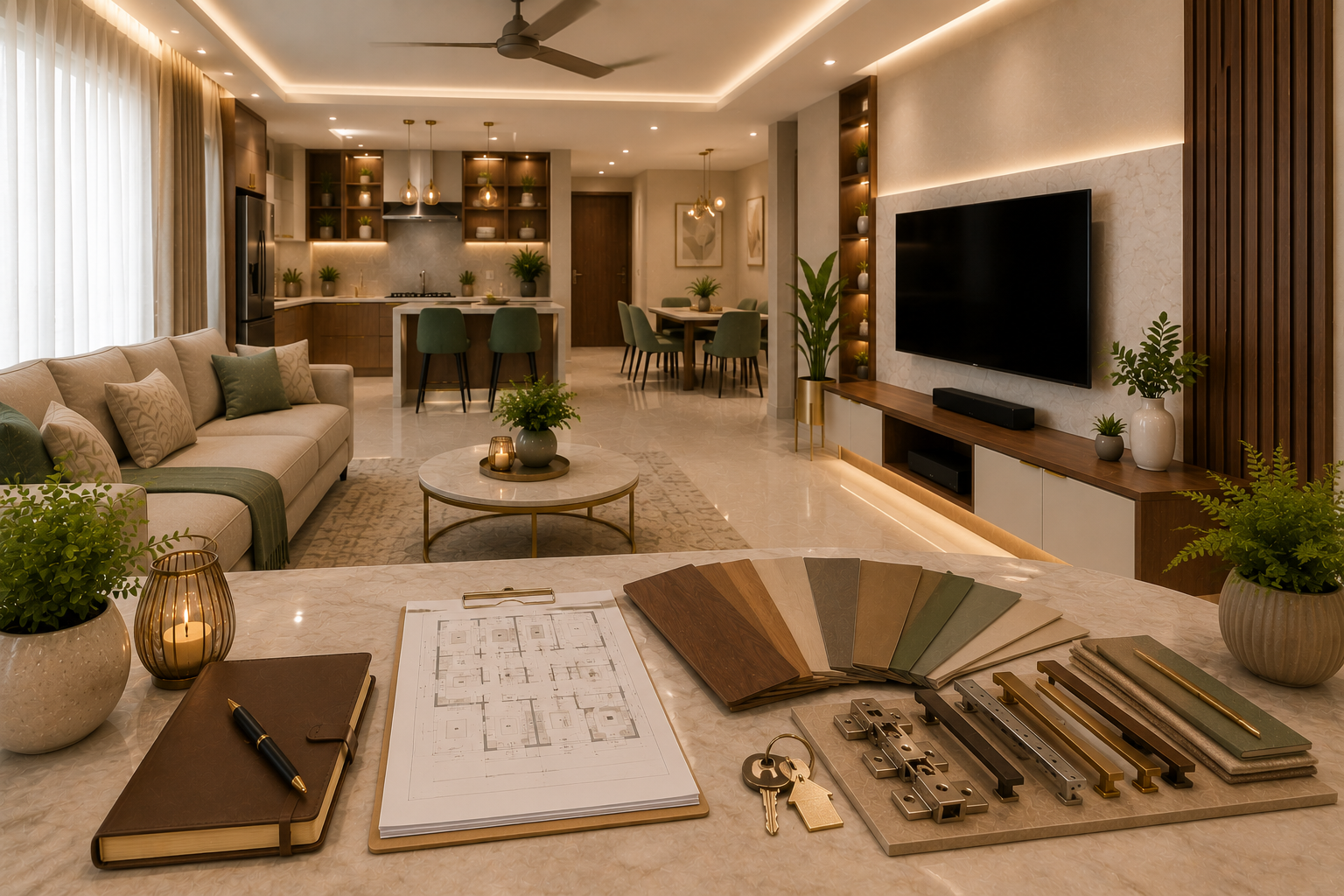
Saving interior cost does not mean choosing cheap materials everywhere. It means planning carefully, choosing practical materials, spending on durability, avoiding unnecessary features, and comparing quotations correctly.
Spend on kitchen, wardrobes, hardware, storage, countertop, electrical planning, and long-term usability. Save on excessive decor, heavy false ceilings, too many wall panels, and premium finishes used everywhere. With smart planning, you can create a beautiful, practical, and durable home interior without unnecessary cost.
Get a personalised estimate for your home
Choose your rooms, materials and preferences to understand a practical interior budget before you commit.