
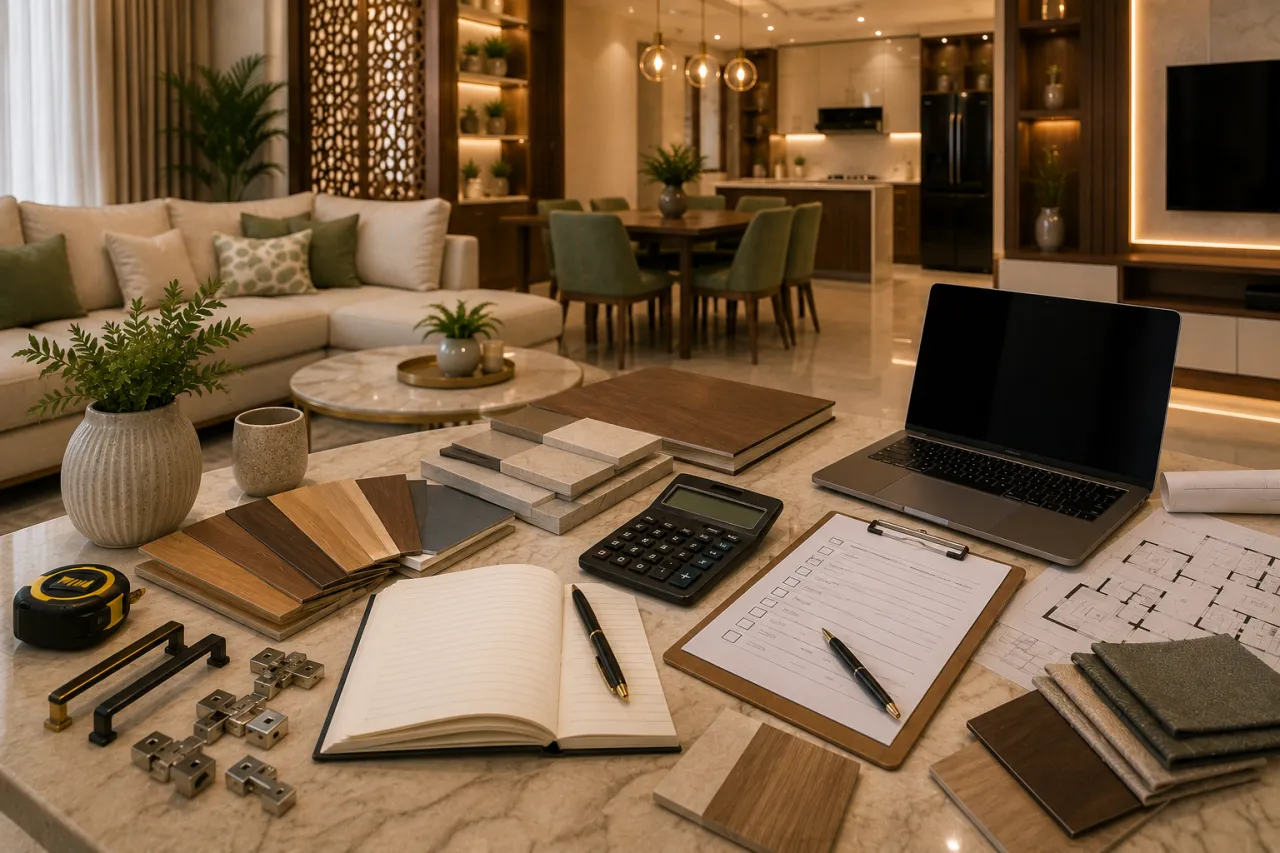
Interior Budget Planning Checklist: How to Plan Your Home Interior Cost Smartly
Planning home interiors without a clear budget can quickly become confusing. One designer may quote ₹6 lakh, another may quote ₹12 lakh, and a third may give a very low price that excludes important items like hardware, accessories, lighting, countertop, GST, transport, or installation.
That is why every homeowner should prepare an interior budget planning checklist before meeting an interior designer, modular company, or contractor. A checklist helps you understand your real requirements, compare quotations correctly, avoid hidden costs, and decide where to spend and where to save.
This guide will help you plan your home interior budget room-wise, material-wise, and stage-wise. You can use it before starting interiors for a 1 BHK, 2 BHK, 3 BHK, villa, rental home, renovation project, or premium apartment.
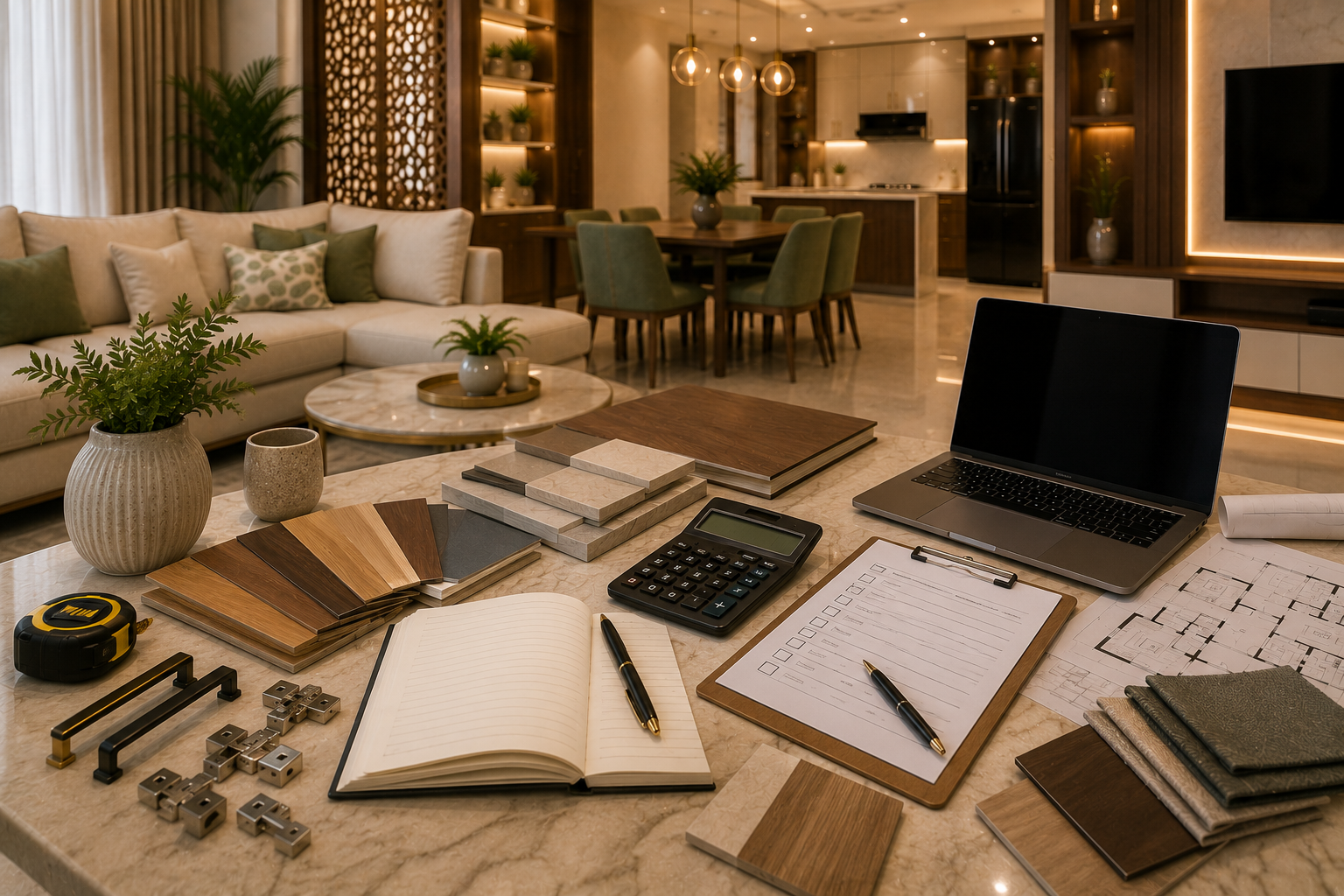
Quick Interior Budget Planning Checklist
The smartest way to plan your interior budget is to start with your must-have requirements, then add optional upgrades based on your available budget.
Estimate Your Interior Budget First
Before finalising an interior designer, use the WallsToWonder Interior Design Cost Estimator to get a quick planning range for your home interiors.
Get Free Interior Cost EstimateStep 1: Decide Your Interior Scope
The first step in budget planning is to decide what exactly you want to include. Interior cost changes a lot depending on whether you need only modular work or a full turnkey interior.
| Scope Type | What It Usually Includes | Best For |
|---|---|---|
| Basic Modular Work | Kitchen, wardrobes, TV unit, selected storage | Budget homes, rental homes, essential interiors |
| Standard Home Interiors | Kitchen, wardrobes, living room, bedrooms, pooja unit, lighting | Most family apartments |
| Premium Interiors | Custom furniture, wall panels, false ceiling, lighting, decor, premium finishes | Premium apartments, villas, luxury homes |
| Renovation Interiors | Old furniture removal, kitchen upgrade, repainting, storage correction | Existing homes needing improvement |
| Design-only Service | 2D layout, 3D views, material mood board, design drawings | Homeowners who already have contractors |
WallsToWonder Tip: Do not ask for a final quote before deciding the scope. If your scope is unclear, every designer will quote differently and comparison becomes confusing.
Step 2: Plan Room-wise Interior Budget
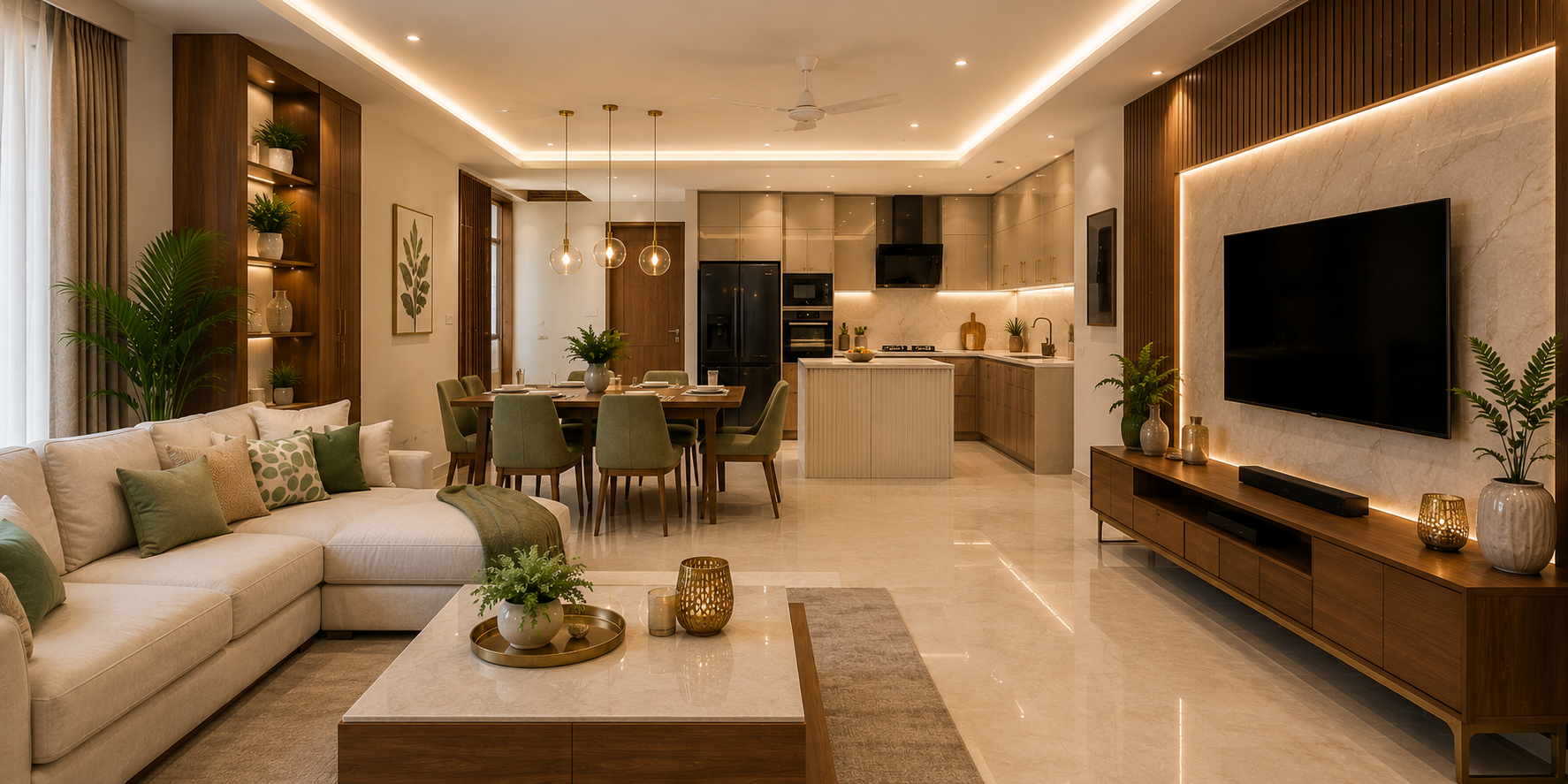
A room-wise budget helps you understand where your money will be used. In most homes, modular kitchen and wardrobes take the biggest share of the budget.
| Room / Area | Common Work | Budget Priority |
|---|---|---|
| Living Room | TV unit, wall panel, sofa, shoe rack, ceiling, lighting, decor | Medium to High |
| Modular Kitchen | Base cabinets, wall cabinets, countertop, backsplash, accessories, hardware | Very High |
| Master Bedroom | Wardrobe, bed, dressing, side tables, bed back panel | High |
| Second Bedroom | Wardrobe, study table, bed, storage, simple wall treatment | Medium |
| Kids Room | Study unit, wardrobe, bed, open shelves, safe storage | Medium |
| Pooja Unit | Mandir unit, jaali, lighting, drawers, back panel | Low to Medium |
| False Ceiling | Gypsum or POP ceiling, cove lighting, profile lights, spotlights | Optional to Medium |
| Balcony | Seating, planter wall, deck flooring, outdoor lights | Optional |
If your budget is limited, prioritise the kitchen, wardrobes, and storage first. Living room wall panels, heavy ceiling work, premium decor, and luxury finishes can be added later or planned selectively.
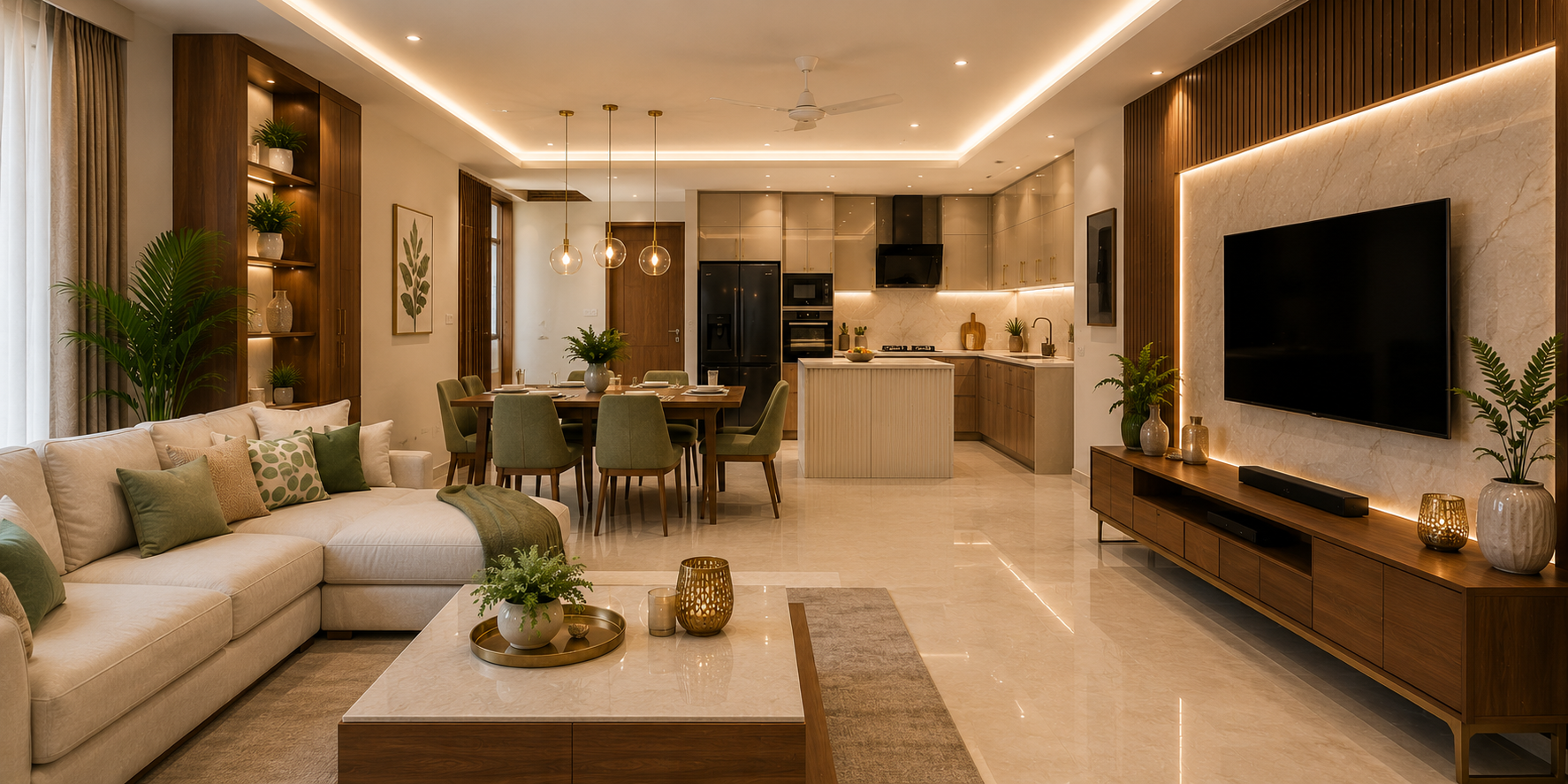
Step 3: Create a Must-have vs Nice-to-have List
Many interior budgets increase because homeowners keep adding features during design or execution. A simple must-have and nice-to-have list can help you stay in control.
| Must-have Items | Nice-to-have Items |
|---|---|
| Modular kitchen storage | Premium acrylic or PU kitchen finish |
| Bedroom wardrobes | Mirror shutters or glass shutters |
| Basic TV unit | Full designer TV wall panel |
| Good-quality hardware | Sensor lights and premium accessories |
| Essential electrical changes | Profile lights and decorative ceiling details |
| Practical storage | Decor shelves, luxury wallpapers, and wall art |
This approach helps you avoid overspending on visual upgrades while ignoring important practical items like storage, hardware, and kitchen functionality.
Step 4: Estimate Interior Cost by Home Type
Your home size affects the budget because larger homes usually need more wardrobes, furniture, ceiling work, lighting, and decor. These are general planning ranges for Indian homes.
| Home Type | Basic Budget | Standard Budget | Premium Budget |
|---|---|---|---|
| 1 BHK | ₹2.5L – ₹4.5L | ₹4.5L – ₹7L | ₹7L – ₹10L+ |
| 2 BHK | ₹4.5L – ₹7L | ₹7L – ₹12L | ₹12L – ₹18L+ |
| 3 BHK | ₹7L – ₹11L | ₹11L – ₹18L | ₹18L – ₹28L+ |
| 4 BHK / Large Apartment | ₹12L – ₹18L | ₹18L – ₹30L | ₹30L – ₹50L+ |
| Villa / Bungalow | ₹18L – ₹30L | ₹30L – ₹60L | ₹60L+ |
These numbers are only planning ranges. The final budget depends on material, finish, site condition, city, carpenter or factory-made work, designer fees, and project scope.
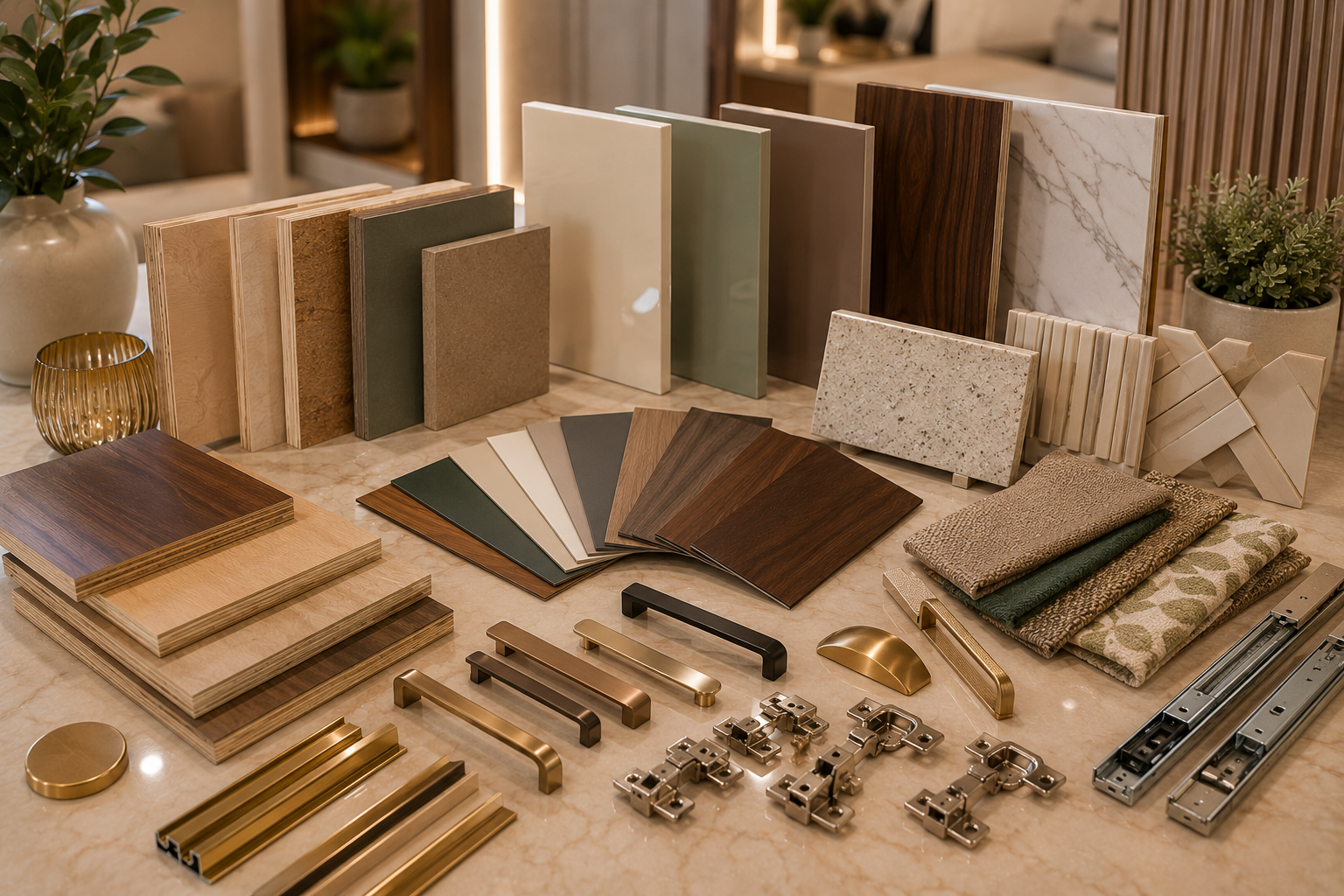
Step 5: Select Materials Before Finalising the Quote
Material selection has a direct impact on your budget. Two quotations may look similar, but one may include better plywood, branded hardware, and premium finish while the other may include basic materials.
| Material / Finish | Budget Level | Best Use |
|---|---|---|
| Particle Board | Low | Temporary furniture, rental homes, low-usage areas |
| MDF | Low to Mid | Wall panels, shutters, decorative work |
| HDHMR | Mid | Kitchen shutters, wardrobe shutters, moisture-prone areas |
| BWR / BWP Plywood | Mid to Premium | Kitchen, wardrobes, long-term furniture |
| Laminate Finish | Budget Friendly | Kitchen, wardrobes, TV units, daily-use furniture |
| Acrylic Finish | Premium | Glossy kitchens and wardrobes |
| PU Finish | Premium | Luxury smooth finish and custom colours |
| Veneer Finish | Premium | Natural wood look for premium walls and furniture |
Budget Tip: Use durable materials in high-use areas like kitchen and wardrobes. Use premium finishes only in selected visible areas like TV wall, kitchen shutters, or master bedroom panel to control cost.
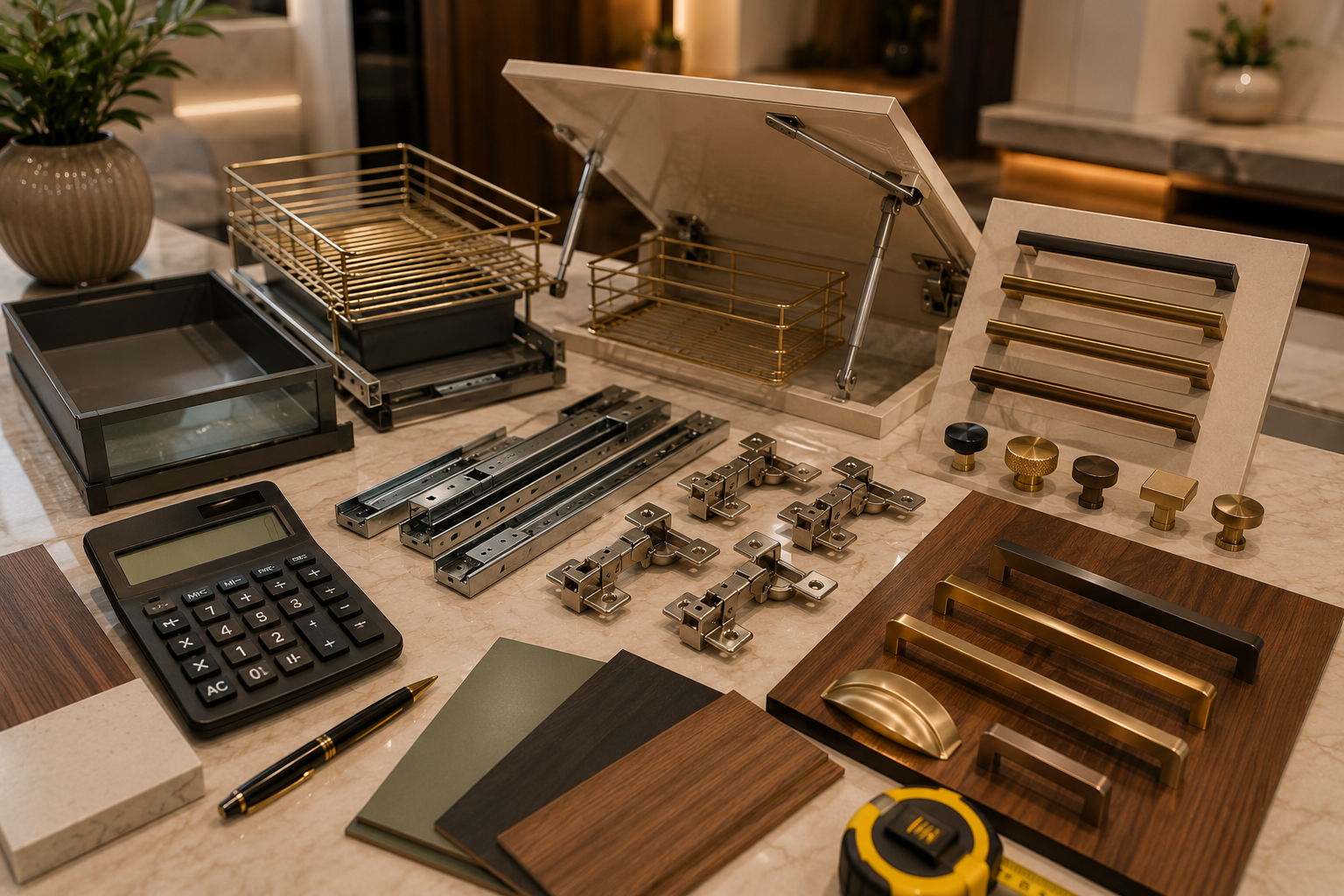
Step 6: Check Hardware, Accessories and Hidden Items
Many homeowners compare only furniture cost and forget hardware, accessories, and installation details. These items can make a big difference in both quality and final price.
| Item | Why It Matters |
|---|---|
| Hinges and Channels | Daily-use items that affect durability and smooth movement |
| Soft-close Hardware | Improves comfort and reduces wear and tear |
| Kitchen Baskets | Increases storage efficiency but adds cost |
| Tall Unit / Pantry | Useful for storage but can significantly increase kitchen budget |
| Countertop | Granite, quartz, and solid surface have different price levels |
| Backsplash | Tiles, quartz, glass, or stone finish affect cost and maintenance |
| Lighting | Profile lights, cove lights, spotlights, and pendant lights add to budget |
| Transport and Installation | Sometimes excluded from low quotations |
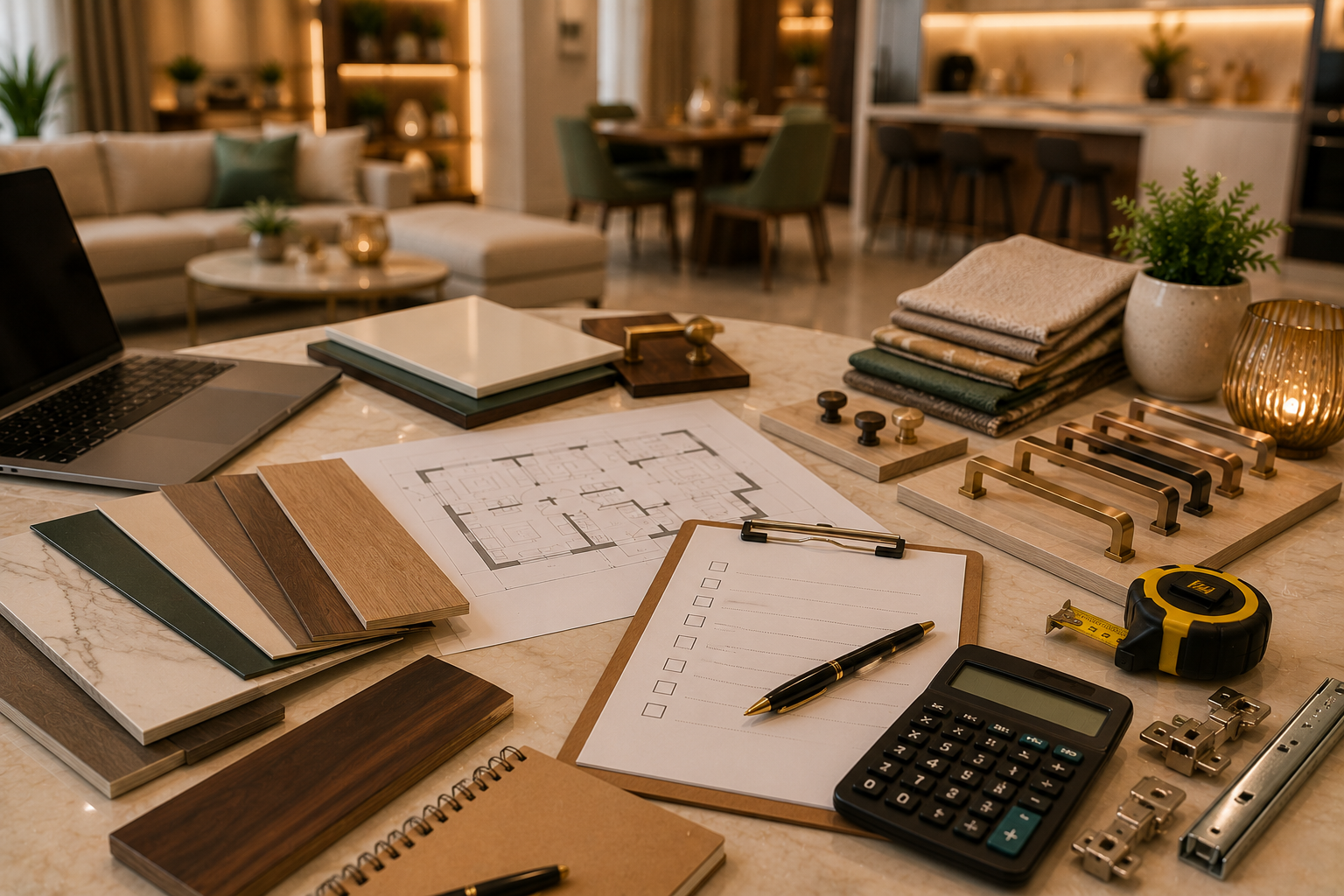
Step 7: Compare Interior Quotations Correctly
A low quotation is not always a better quotation. Before comparing designers, make sure all quotes include the same scope, material quality, finish, dimensions, and installation details.
- Compare room-wise scope, not only total amount.
- Check furniture dimensions in feet or square feet.
- Ask for plywood or board brand and thickness.
- Check laminate, acrylic, PU, veneer, or glass finish details.
- Confirm hardware brand and soft-close fittings.
- Check kitchen accessories, baskets, countertop, and backsplash.
- Ask whether electrical, ceiling, painting, civil work, and decor are included.
- Confirm GST, transport, labour, and installation charges.
- Ask for timeline, warranty, and payment schedule.
Interior Quotation Checklist
Use this checklist before approving any interior quotation.
| Checklist Item | Should Be Mentioned? |
|---|---|
| Room-wise scope of work | Yes |
| Furniture dimensions | Yes |
| Material brand and thickness | Yes |
| Finish type and colour code | Yes |
| Hardware brand | Yes |
| Kitchen accessories list | Yes |
| Countertop and backsplash details | Yes |
| Electrical and lighting scope | Yes |
| False ceiling area | Yes |
| Painting or polishing scope | Yes |
| Warranty terms | Yes |
| Payment schedule | Yes |
| Project timeline | Yes |
Compare Designers Before You Finalise
Explore interior designers, companies, portfolios, and cost guides on WallsToWonder before selecting the right professional for your home.
Explore Interior DesignersStep 8: Keep a Separate Budget for Loose Furniture and Appliances
Many homeowners assume that sofa, dining table, curtains, lights, appliances, mattresses, and decor are included in the interior quotation. Sometimes they are included, sometimes they are not.
| Usually Included in Interior Work | Often Charged Separately |
|---|---|
| Modular kitchen cabinets | Chimney, hob, refrigerator, microwave |
| Wardrobes | Mattress, pillows, bedsheets |
| TV unit | TV, speakers, appliances |
| Basic furniture work | Sofa, dining table, loose chairs |
| Selected lighting points | Decorative lights, chandeliers, designer lamps |
| Fixed storage units | Curtains, rugs, decor, paintings, plants |
To avoid budget shock, keep a separate amount for appliances, loose furniture, decor, curtains, and furnishings.
Step 9: Plan Timeline Along with Budget
Delayed decisions can increase project cost. If material selection, design approval, or site readiness is delayed, execution may take longer and extra coordination costs may appear.
| Stage | Approx Timeline | Budget Impact |
|---|---|---|
| Requirement Discussion | 3 – 7 days | Helps define scope clearly |
| 2D Layout and Quotation | 5 – 10 days | Helps compare cost before design finalisation |
| 3D Design and Material Selection | 7 – 15 days | Delays can push execution timeline |
| Factory Production / Carpentry | 20 – 35 days | Changes during this stage can increase cost |
| Site Installation | 10 – 25 days | Site readiness affects labour and coordination |
| Final Finishing and Handover | 5 – 10 days | Snag fixes and add-ons may need extra budget |
Step 10: Keep a Budget Buffer
Even with good planning, some changes may happen during execution. You may want extra storage, better lighting, a different finish, additional drawers, or a premium countertop after seeing the design.
Keep at least 10% to 15% extra budget for changes, add-ons, GST, transport, installation adjustments, decor, and finishing items.
Simple rule: If your planned interior budget is ₹10 lakh, keep ₹1 lakh to ₹1.5 lakh as a buffer. This helps you make better decisions without stress.
Common Budget Planning Mistakes to Avoid
- Starting design without a clear budget range.
- Choosing the lowest quotation without checking material quality.
- Not comparing room-wise scope.
- Ignoring hardware, accessories, and internal storage details.
- Assuming appliances and loose furniture are included.
- Not keeping a buffer for changes and add-ons.
- Changing materials after production starts.
- Not checking GST, transport, labour, and installation charges.
- Approving work without timeline and payment schedule clarity.
- Spending too much on decor while compromising on storage and durability.
Final Interior Budget Planning Checklist
| Planning Point | Status |
|---|---|
| Home size and rooms finalised | Check before quotation |
| Must-have and nice-to-have list prepared | Check before design |
| Room-wise scope documented | Check before comparison |
| Material and finish preference selected | Check before final quote |
| Hardware and accessories list reviewed | Check before approval |
| Loose furniture and appliances separated | Check before budgeting |
| GST, transport, installation checked | Check before payment |
| Timeline and payment schedule confirmed | Check before starting work |
| Warranty and after-service discussed | Check before finalising designer |
| 10% to 15% budget buffer kept | Check before execution |
How WallsToWonder Helps with Interior Budget Planning
WallsToWonder helps homeowners plan interiors smarter before hiring a designer or starting execution. You can estimate interior cost, explore design ideas, compare professionals, and understand how material and room-wise choices affect your final budget.
- Get quick interior cost estimates
- Explore room-wise design ideas
- Understand material and finish options
- Compare designer and company profiles
- Read city-wise and room-wise cost guides
- Plan your budget before finalising quotations
Plan Your Interior Budget Smarter
Estimate your cost, compare options, and plan your home interiors confidently with WallsToWonder.
Calculate Interior BudgetFAQs on Interior Budget Planning
How do I plan my home interior budget?
Start by listing your rooms, furniture requirements, must-have items, material preference, and budget range. Then compare room-wise quotations from designers or contractors.
How much extra budget should I keep for interior work?
It is smart to keep 10% to 15% extra budget for changes, add-ons, GST, transport, installation adjustments, decor, and finishing items.
What is the biggest cost in home interiors?
Modular kitchen and wardrobes usually take the biggest share of the budget because they involve material, hardware, storage planning, finish, and installation.
How can I reduce interior cost?
Use laminate finish for most furniture, avoid heavy wall panelling in every room, choose premium finishes selectively, compare item-wise quotes, and keep loose furniture separate.
What should I check in an interior quotation?
Check room-wise scope, furniture dimensions, material brand, finish type, hardware brand, kitchen accessories, countertop, lighting, GST, transport, installation, warranty, and timeline.
Should appliances be included in the interior budget?
Appliances are often charged separately. Keep a separate budget for chimney, hob, refrigerator, microwave, TV, washing machine, air conditioner, and other appliances.
Is the cheapest interior quotation a good choice?
Not always. A cheap quote may exclude important items or use lower-quality materials. Always compare material quality, scope, warranty, hardware, and installation details before deciding.
Final Thoughts
Interior budget planning is not about spending less on everything. It is about spending smartly on the right things. Durable kitchen materials, good wardrobes, practical storage, quality hardware, and clear execution planning are more important than unnecessary decorative upgrades.
Before hiring an interior designer, prepare your checklist, estimate your budget, compare quotations carefully, and keep a small buffer for changes. A clear budget plan will help you avoid confusion, hidden costs, and last-minute stress during your home interior project.
Get a personalised estimate for your home
Choose your rooms, materials and preferences to understand a practical interior budget before you commit.