
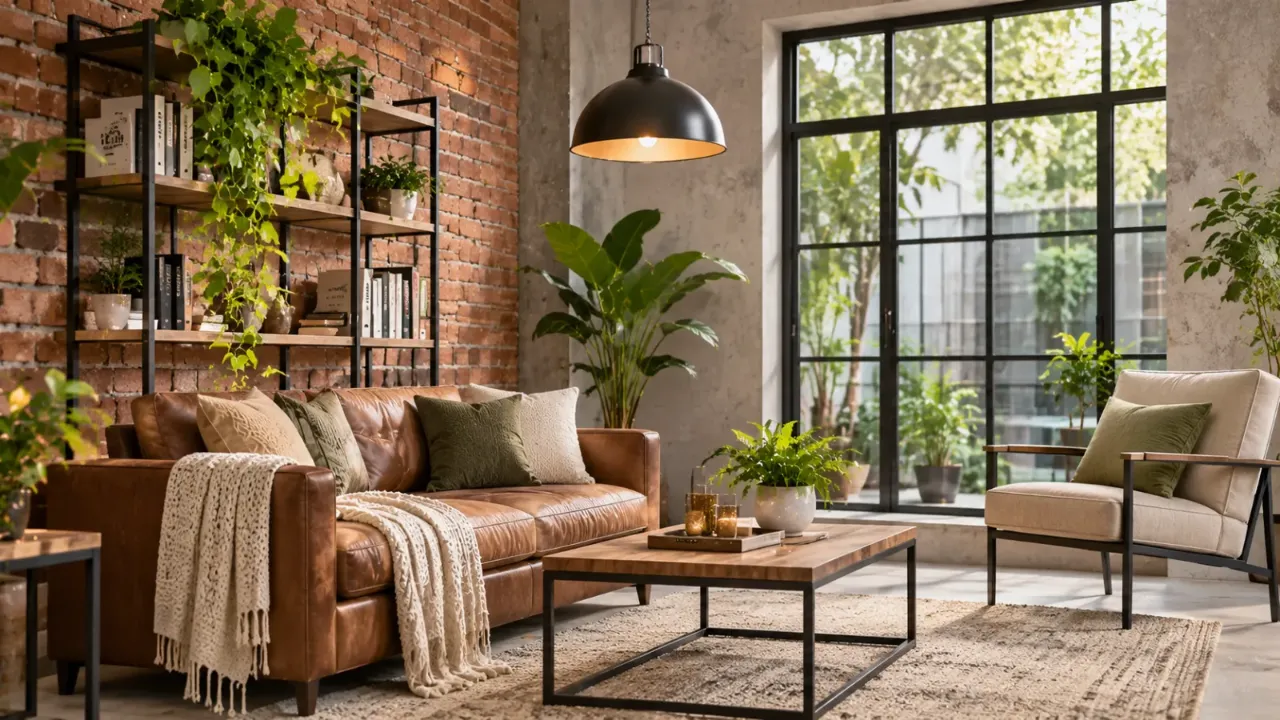
Industrial Style in the Indian Climate: What Works and What Doesn't
Exposed brick walls, concrete surfaces, black metal frames and practical-looking furniture give industrial interiors their distinctive character. Inspired by old factories and warehouses, this style celebrates materials and structural details instead of hiding everything behind decorative finishes.
But bringing this look into an Indian home requires some thought. A design that works in a cool warehouse or converted loft may not feel comfortable in a hot apartment, a humid coastal home or a house exposed to strong afternoon sunlight. Dark surfaces, poorly protected metal, unsuitable wall finishes and inadequate ventilation can turn an attractive industrial interior into a difficult space to maintain.
The solution is not to abandon the style. It is to adapt it to the local climate, building conditions and everyday lifestyle.
1. Understand What Makes an Interior Industrial
Industrial design takes inspiration from factories, workshops and warehouses. Its appearance comes from practical materials, visible construction details and simple, functional furniture.
The main characteristics include:
- Exposed brick, concrete or unfinished-looking walls.
- Metal frames, shelving, railings and furniture.
- Visible conduits, ducts or structural details.
- Simple furniture with practical forms.
- Neutral colours such as charcoal, grey, brown and black.
- Pendant lights, task lighting and utilitarian fixtures.
- Open layouts and minimal decorative detailing.
However, industrial design does not mean leaving every surface unfinished or making the entire room dark. A successful interior uses a few strong industrial elements and gives them enough space to stand out.
For a typical Indian apartment, a brick feature wall, a metal-framed partition and a concrete-effect finish may be sufficient. Repeating every industrial element in one room can make the design feel heavy.
2. Why Indian Climate Conditions Matter
India does not have one uniform climate. Homes may experience hot and dry summers, humid monsoons, high coastal humidity, strong sunlight or significant seasonal changes.
The National Building Code recognises five broad climate zones: hot-dry, warm-humid, composite, temperate and cold. The design choices that improve comfort differ across these zones.
This matters because industrial interiors often rely on materials such as concrete, brick, glass and metal. Their suitability depends on where they are used, how they are detailed and how much sunlight, moisture and weather exposure they receive.
For example:
- In hot and dry locations, shading, insulation and careful management of daytime heat gain matter.
- In warm and humid locations, moisture management, ventilation and corrosion protection become especially important.
- In composite climates, the design must respond to both hot summers and cooler seasons.
The goal is to preserve the industrial appearance without compromising indoor comfort.
3. Choose Exposed Brick Carefully
Exposed brick is one of the most recognisable industrial design features. Its natural colour, uneven texture and visible joints add character without requiring elaborate decoration.
But not every wall is suitable for exposure.
Before removing plaster from an existing wall, check the condition of the brickwork. The surface may have uneven masonry, old repairs, moisture damage, salts or electrical and plumbing routes that need attention.
There are three common ways to achieve the look:
Existing exposed brick: If the original masonry is suitable, the plaster can be removed carefully and the brickwork repaired and finished.
Brick slips or cladding tiles: Thin brick pieces can create an exposed-brick appearance on an existing wall. They are useful when the original masonry is unsuitable or unavailable.
Brick-effect finishes: Wallpaper, textured coatings and decorative panels can imitate the appearance, although they will not have the same depth or surface character as real brick.
For Indian homes, consider the following:
- Inspect walls for dampness before applying a finish.
- Avoid exposing masonry on a wall with unresolved seepage.
- Use a suitable protective finish that does not trap moisture.
- Pay attention to cleaning because textured joints can collect dust.
- Use brick as a feature rather than covering every wall.
A single brick wall behind a sofa, dining area or study can establish the style without making the room visually crowded.
4. Use Concrete Finishes Without Making the Room Feel Heavy
Concrete is another defining industrial material. It can appear on floors, ceilings, walls, countertops and decorative surfaces.
However, actual structural concrete and a concrete-look finish are different things.
Depending on the existing construction, you can consider:
- A properly inspected and finished exposed concrete ceiling.
- Microcement or other cement-based decorative coatings.
- Concrete-effect wall paint or texture.
- Cement-based tiles.
- Concrete-look laminates or porcelain surfaces.
In an apartment, a decorative concrete-effect finish may be more practical than attempting to expose an unsuitable structural surface.
Before exposing a slab, check for cracks, seepage, loose material, exposed reinforcement and existing service routes. Any structural or water-related issue needs appropriate professional attention before the finish is finalised.
Also consider the location. A concrete finish on an internal feature wall has different implications from an exposed roof or exterior wall that receives direct sunlight.
For a balanced appearance, pair grey concrete textures with warm wood, lighter walls and comfortable fabrics.
5. Select Metal That Can Handle Moisture and Daily Use
Metal is essential to industrial interiors. It appears in window frames, furniture legs, shelving, stair railings, partitions, handles and lighting fixtures.
Black metal is particularly popular because it contrasts well with brick, wood and concrete.
However, metal selection should account for the environment in which it will be used.
In humid regions and areas exposed to water, unprotected mild steel may corrode. Even in drier locations, poor coating, scratches and neglected joints can create maintenance problems.
Consider these practical choices:
- Use appropriately treated or coated mild steel for furniture and frames.
- Consider galvanised steel where suitable for the application.
- Use stainless steel or aluminium in locations where their properties make them more suitable.
- Specify a durable finish and inspect joints, cut edges and concealed sections.
- Avoid leaving untreated metal in wet areas.
- Repair scratches or coating damage before corrosion spreads.
Powder-coated black metal is a popular option for industrial-style furniture and partitions, but the quality of preparation and coating matters as much as the colour.
For a home, use metal where it adds structure or definition rather than introducing it into every fitting.
6. Keep Ventilation and Shading in the Design Plan
A visually open industrial interior is not automatically a well-ventilated one.
Large glass partitions, fixed windows and decorative metal screens can look industrial, but they do not necessarily allow fresh air to move through the home.
If the layout permits, plan openings so air can enter and leave the room. Cross-ventilation is particularly useful when outdoor conditions are suitable.
Also consider:
- Shading windows exposed to strong afternoon sun.
- Using curtains, blinds, external screens or suitable overhangs.
- Keeping air-conditioning equipment and ventilation routes accessible.
- Avoiding partitions that unnecessarily block existing air movement.
- Using ceiling fans where appropriate.
- Considering outdoor dust, noise and humidity before relying on open windows.
Opening windows is not always beneficial. During very hot or humid periods, outdoor air may increase indoor heat or moisture. Ventilation should respond to local weather and how the home is occupied.
Industrial-style steel-and-glass partitions can be designed with suitable opening sections where practical. Fixed glass panels should not be mistaken for ventilation openings.
7. Adapt the Colour Palette to Indian Homes
The traditional industrial palette often includes black, charcoal, grey, rust, deep brown and brick red.
These colours create a strong visual identity, but using them across every wall, ceiling and furniture surface can make a compact Indian home feel darker than intended.
A more adaptable approach is to balance dark industrial accents with lighter surfaces.
Try combinations such as:
- Charcoal metal with warm oak or walnut tones.
- Exposed brick with ivory or off-white walls.
- Concrete grey with beige upholstery.
- Black frames with muted green accents.
- Rust-toned accessories with natural wood.
- Dark shelving against a light wall.
Dark interior colours do not automatically make a room hotter. Actual heat gain depends more directly on sunlight, glazing, external surfaces, insulation and building construction. Nevertheless, lighter finishes can help a room feel brighter and more spacious.
Choose the palette according to the room's natural light, size and orientation rather than following a fixed industrial colour scheme.
8. Soften the Look With Wood, Fabrics and Greenery
Industrial interiors contain many hard surfaces. Brick, metal, glass and concrete can make a room feel visually rigid and acoustically uncomfortable when used without softer elements.
Introduce materials that improve comfort without taking away the industrial character.
Wood: Use timber or wood-look finishes in coffee tables, dining surfaces, shelves and cabinet details. Wood adds warmth to grey and black finishes.
Upholstery: Choose comfortable sofas and chairs in practical fabrics. Muted beige, grey, olive and earthy brown shades work well.
Rugs: A suitable rug can soften a seating area and reduce the impression of a hard, echoing floor.
Curtains: Fabric window treatments add texture, help control glare and provide privacy.
Plants: Greenery can soften the raw material palette. Select plants according to available daylight, ventilation and maintenance requirements.
The aim is not to decorate every corner. A few carefully chosen soft elements can make the industrial setting feel more welcoming.
9. Plan Industrial Lighting for Indian Homes
Industrial lighting often features metal pendants, exposed bulbs, track lights, wall-mounted task lamps and simple functional fixtures.
These can look effective, but lighting should be planned for the actual activities taking place in each room.
Consider a layered arrangement:
- Ambient lighting: Provides general illumination through ceiling fixtures, tracks or suitable surface-mounted lights.
- Task lighting: Supports reading, cooking, working and other activities.
- Accent lighting: Highlights brick walls, artwork, shelving or architectural details.
Warm or neutral-white LED lighting can complement brick, wood and concrete finishes. Choose colour temperature according to the mood and task, and check colour rendering when the appearance of materials matters.
If the ceiling is left exposed, plan the conduit routes, cable management, junction boxes and fixture positions before execution. Visible services should look deliberate and orderly, not like unfinished electrical work.
Use appropriate electrical fittings and have installation carried out by a qualified electrician.
10. Where Industrial Style Works Best
Industrial design does not need to be applied equally throughout the home.
| Space | Industrial elements that work | Practical consideration |
|---|---|---|
| Living room | Brick feature wall, metal shelving, concrete-effect finish | Balance hard surfaces with rugs and upholstery |
| Kitchen | Metal handles, open shelves, dark frames | Choose easy-to-clean surfaces and protect metal from moisture |
| Dining area | Metal pendant, timber table, simple chairs | Provide adequate task lighting |
| Bedroom | Metal bedside fittings, wood furniture, muted palette | Keep the room comfortable rather than overly dark |
| Study | Metal desk frame, open shelving, task lamp | Manage glare, cables and storage |
| Balcony | Metal furniture and durable finishes | Check weather exposure, drainage and corrosion protection |
In smaller apartments, the living room or study is often a good place to introduce industrial detailing without making the whole home feel themed.
11. Common Mistakes to Avoid
Industrial design can lose its appeal when the style is applied without considering the building or the people living in it.
Avoid these mistakes:
- Exposing brickwork without checking its condition.
- Leaving concrete surfaces untreated when they require protection.
- Using unprotected mild steel in moisture-prone locations.
- Covering every wall in dark finishes.
- Assuming glass partitions automatically improve ventilation.
- Exposing electrical conduits without planning their routes.
- Using too many decorative factory-style lights.
- Ignoring acoustics in rooms with multiple hard surfaces.
- Choosing materials based only on photographs.
- Treating an industrial look as an excuse to leave construction incomplete.
A successful industrial interior should look intentional, not unfinished.
12. A Practical Checklist Before Starting
Before planning an industrial-style home, check:
- Which industrial elements suit the existing home?
- Is the existing brickwork suitable for exposure?
- Are concrete surfaces structurally and visually suitable for finishing?
- Is the selected metal finish appropriate for the location?
- Have moisture and seepage issues been addressed?
- Are windows and openings planned for suitable ventilation?
- Is strong sunlight controlled through shading?
- Are lighter finishes used where the room needs more brightness?
- Have wood and soft furnishings been included for balance?
- Are electrical conduits and lighting routes properly planned?
- Can the selected materials be cleaned and maintained easily?
A Final Thought
Industrial style can bring character, texture and a sense of simplicity to Indian homes. But the best results come from adapting the look rather than copying a warehouse interior.
Choose exposed brick, concrete and metal carefully. Give ventilation, shading, moisture protection and everyday maintenance the same attention as colour and furniture. Balance raw finishes with wood, fabrics and comfortable lighting.
The result can be an industrial home that feels distinctive without becoming uncomfortable or difficult to live in.
Frequently Asked Questions
Is industrial interior design suitable for Indian homes?
Yes. It can work in apartments and independent houses when materials and finishes are selected according to the local climate, sunlight, ventilation and maintenance requirements.
Do exposed brick walls make a room hotter?
An internal exposed-brick feature wall does not automatically make a room hotter. Heat gain depends on the wall's construction, orientation, insulation and exposure to sunlight. Exterior walls require climate-appropriate detailing.
Is concrete flooring suitable for Indian homes?
It can be suitable when the surface, substrate, finish and sealing system are appropriate for the room. Concrete-effect tiles and decorative coatings may be practical alternatives to an exposed structural floor.
Which metal is suitable for industrial-style furniture?
The choice depends on location and use. Properly treated or coated mild steel, galvanised steel, stainless steel and aluminium each have different applications. Moisture exposure and coating quality should be considered.
How can I make industrial interiors look less dark?
Use light walls, natural wood, lighter upholstery, well-positioned lighting and selective dark accents. You do not need black or charcoal on every surface to achieve the style.
Can industrial style work in a small Indian apartment?
Yes. Use a few elements, such as a metal-framed partition, one textured wall or simple metal-and-wood furniture. Avoid excessive dark finishes and bulky furniture.
How do I prevent metal furniture from rusting?
Choose a suitable metal and protective finish, keep it away from persistent moisture, inspect joints and repair scratches or coating damage promptly.
What is the difference between industrial and modern industrial style?
Traditional industrial interiors emphasise raw materials and utilitarian details. Modern industrial interiors combine these elements with cleaner lines, softer colours, contemporary furniture and more comfortable finishes.
Plan Your Home Design with Walls to Wonder
Explore these tools to visualise your spaces, understand costs and prepare before finalising your interior project.
- Whole Home Visualizer – Explore a coordinated look for your home.
- Design My Room – Experiment with room layouts and design ideas.
- Interior Design Cost Estimate – Explore an indicative interior budget.
- Interior Quotation Checker – Review quotation details and identify points that need clarification.
- Rate My Room Design – Get feedback on your room design.
- Interior Style Finder – Discover an interior style that suits your preferences.
Visit Walls to Wonder for more home design ideas and planning resources.
Turn this idea into a plan for your home
Visualise your space, understand the likely budget, or find a professional who can bring the idea to life.