
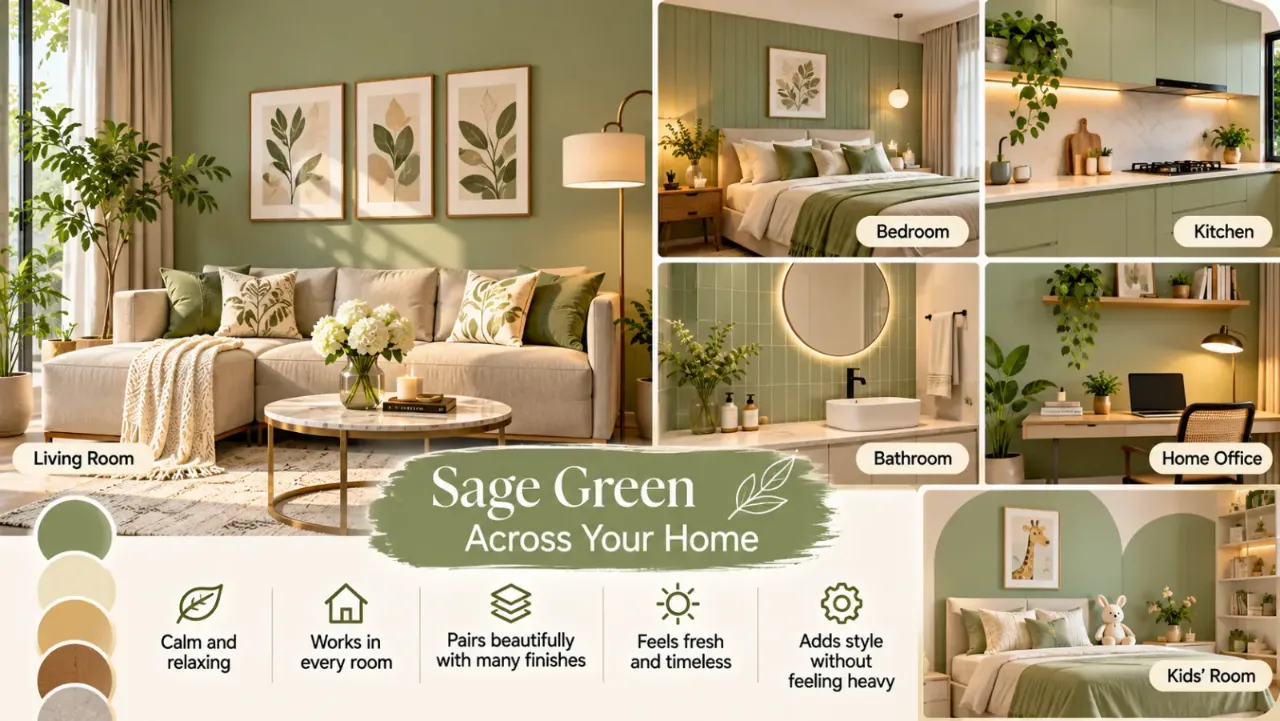
How to Use Sage Green in Different Rooms of Your Home
Sage green has become a popular choice for home interiors because it brings a natural, understated colour into a space without feeling as strong as darker greens. It works with contemporary, minimal, Scandinavian-inspired and traditional Indian interiors.
However, choosing sage green is only the first step. The overall result depends on the colours, materials, finishes and lighting around it. The same shade can look soft and elegant with ivory and light oak, more sophisticated with charcoal and stone, or warmer when paired with walnut and textured fabrics.
The key is to treat sage green as part of a complete interior palette rather than using it as an isolated colour.
1. Understanding Sage Green Before Choosing It
Sage green is a muted green with grey undertones. Depending on the shade, it can appear slightly warmer, cooler, lighter or deeper.
- Light sage: A soft, pale green that works well in smaller rooms and spaces with limited natural light.
- Grey sage: A cooler, more subdued shade that pairs well with grey stone, white and contemporary finishes.
- Warm sage: A slightly earthy green that works with beige, natural wood and warm neutral fabrics.
- Deep sage: A stronger shade that can be used for feature walls, cabinetry or selected furniture.
Do not choose a shade only by looking at a small colour card. Test a larger sample on the intended surface and observe it in morning, afternoon and evening light.
2. Colours That Pair Well With Sage Green
The most successful sage-green interiors usually combine the shade with neutrals and one or two supporting colours. This prevents the room from feeling overly green or visually busy.
Sage Green and Ivory
Ivory creates a gentle contrast with sage green. It keeps the space bright while allowing the green to remain visible.
- Sage-green walls with ivory curtains.
- Ivory sofas with sage cushions.
- Sage cabinetry with light ivory walls.
- Ivory bedding with a sage-green headboard.
This is a suitable combination for bedrooms, living rooms and compact apartments where a light, open appearance is preferred.
Sage Green and Beige
Beige adds a softer, earthy quality. It works particularly well when the room includes natural fabrics, wooden furniture or textured rugs.
Consider beige upholstery, linen curtains, rugs and wall finishes alongside sage-green accents. Avoid using too many similar beige shades without variation in texture, as the room can appear flat.
Sage Green and Natural Wood
Natural wood is one of the most versatile partners for sage green. Light oak creates a fresh, relaxed look, while walnut introduces more depth.
- Kitchen shutters and open shelves.
- Wardrobe finishes.
- Bed frames and bedside tables.
- TV consoles and wall panels.
- Dining tables and chairs.
Try to keep the wood tones coordinated. Too many competing wood shades can make an otherwise restrained palette look disconnected.
Sage Green and Charcoal Grey
Charcoal grey gives sage green a more contemporary and defined appearance. It is best used in controlled amounts rather than across every large surface.
Try charcoal in metal frames, lighting fixtures, handles, furniture legs or selected accessories. Balance it with lighter walls and upholstery so the room does not become too dark.
Sage Green and Muted Terracotta
Terracotta introduces a warm contrast to the cooler, muted character of sage green. The combination feels earthy and relaxed when neither shade dominates.
Use terracotta in cushions, pottery, planters, artwork or a small accent chair. It is generally easier to update these elements than large permanent surfaces.
Sage Green and Navy Blue
Navy blue gives sage green a more structured and sophisticated contrast. It works well in cushions, artwork, rugs or a single upholstered piece.
Keep ivory, cream or light grey in the palette to prevent the darker colours from overwhelming the room.
3. Materials That Complement Sage Green
Colour alone does not create a complete interior. Materials influence how the shade looks and how the room feels.
| Material | How it works with sage green | Where to use it |
|---|---|---|
| Light oak | Creates a fresh, natural combination | Flooring, furniture, cabinetry |
| Walnut | Adds depth and contrast | Bed frames, consoles, shelves |
| White marble | Keeps the palette light and refined | Countertops, tabletops, wall details |
| Beige or grey stone | Adds subtle texture | Flooring, backsplashes, feature surfaces |
| Linen | Creates a relaxed, soft appearance | Curtains, cushions, bedding |
| Bouclé | Adds tactile texture | Accent chairs, cushions |
| Brushed brass | Introduces a restrained metallic detail | Handles, lights, accessories |
| Matte black metal | Creates a sharper contemporary contrast | Frames, fittings, furniture details |
Wood Finishes
Wood and sage green work well because both have a natural visual character. Light oak is useful when the aim is to create an airy room. Walnut is better suited to spaces where a richer contrast is desired.
For a coordinated finish, repeat the selected wood tone in at least two places, such as the wardrobe and bedside table or the kitchen shutters and dining furniture.
Stone and Marble
White marble can make sage-green cabinetry feel brighter, while beige and grey stone introduce a more understated effect.
For kitchens, pay attention to the practical requirements of the countertop, including stain resistance, maintenance and suitability for daily cooking. For floors and bathrooms, consider slip resistance, water exposure and cleaning requirements before selecting a finish.
Fabrics and Upholstery
Fabrics help soften the appearance of green surfaces. Linen, cotton, textured weaves and bouclé can all work well.
You do not need to use sage green in every fabric. A neutral sofa with sage cushions, or neutral bedding with a sage headboard, can be enough to establish the palette.
Metal Finishes
Brushed brass can add warmth, particularly alongside sage cabinetry and wood. Matte black gives the room a more defined and modern appearance.
Choose one dominant metal finish for visible hardware and repeat it consistently. Mixing too many metallic finishes can make the room look less cohesive.
4. How to Use Sage Green in Different Rooms
Living Room
A living room offers several ways to introduce sage green without committing to a fully green space.
You could use it on one accent wall, in a sofa, in cushions or on a TV-unit panel. Pair it with ivory upholstery, natural wood, a neutral rug and a few carefully selected accessories.
If the living room is small, keep most large surfaces light and use sage as an accent.
Bedroom
Sage green is suitable for bedrooms because its muted character can create a restful atmosphere.
- A sage-green headboard.
- A painted wall behind the bed.
- Sage and ivory bedding.
- Natural wood bedside tables.
- Beige or soft grey curtains.
Avoid combining too many strong patterns with a prominent green wall. Keep the bedding and larger furnishings relatively simple.
Kitchen
Sage-green kitchen cabinets can look fresh without being overly bright. Pair them with white or light stone countertops, neutral backsplashes and wood accents.
A practical approach is to use sage on the lower cabinets and a lighter finish on the upper cabinets. This can help the kitchen feel visually balanced.
Before finalising the colour, check the laminate or painted finish under the kitchen's actual lighting. Also consider cleaning requirements, heat exposure, edge quality and hardware.
Bathroom
In bathrooms, sage green can be introduced through vanity cabinetry, wall tiles or smaller decorative elements.
Pair it with beige stone, white sanitaryware and restrained metal details. If using green tiles in a wet area, check their suitability for water exposure, cleaning and slip resistance where relevant.
A sage vanity with neutral wall and floor finishes is often easier to maintain visually than covering every surface in green.
Study or Home Office
A sage-green wall behind the desk can add colour without distracting from the workspace. Combine it with a natural wood desk, neutral storage and good task lighting.
If the room receives limited daylight, use a lighter sage shade and avoid pairing it with too many dark finishes.
5. Three Sage Green Palettes to Consider
| Palette | Main colours and materials | Overall effect |
|---|---|---|
| Soft and airy | Light sage, ivory, light oak, linen | Bright, calm and relaxed |
| Earthy and warm | Warm sage, beige, walnut, terracotta | Natural and welcoming |
| Modern and defined | Grey sage, charcoal, white stone, matte black | Contemporary and structured |
Choose one palette as the starting point rather than combining all three. You can then introduce a small contrasting accent if the room needs more visual interest.
6. Common Mistakes to Avoid When Decorating With Sage Green
- Using the wrong undertone: A cool grey sage may not work as expected with very warm cream finishes. Check all major materials together before finalising.
- Using too much green: Covering walls, furniture, cabinetry and accessories in similar green shades can make the room feel monotonous. Add neutral surfaces and varied textures.
- Ignoring natural light: Sage green can look different in direct sunlight, shaded rooms and artificial lighting. Always test samples in the actual space.
- Mixing too many wood finishes: Light oak, reddish wood and dark walnut can compete when used without a clear plan. Select a dominant wood tone and use contrasting finishes sparingly.
- Choosing materials only for appearance: Kitchen and bathroom finishes must also meet practical requirements. Check maintenance, durability, moisture suitability and cleaning needs.
- Forgetting the lighting: Warm lighting can make some sage shades appear more yellow, while cooler lighting can emphasise their grey undertones. Review the palette under the lights you plan to install.
7. A Simple Checklist Before Finalising Your Sage Green Palette
- Identify whether you want a light, grey, warm or deep sage shade.
- Check the room's natural light and artificial lighting.
- Select one primary neutral such as ivory, beige or soft grey.
- Choose a dominant wood finish.
- Select stone, countertop or tile finishes where needed.
- Decide whether metal details will be brass, black or another finish.
- Test paint, laminate and fabric samples together.
- Check cleaning and maintenance requirements.
- Review the complete palette from different viewpoints in the room.
Conclusion
Sage green can work across several interior styles, from minimal bedrooms and contemporary kitchens to relaxed living rooms and compact home offices. Its success depends less on the shade itself and more on the colours and materials chosen around it.
Pair it with ivory for a light appearance, beige for a softer atmosphere, natural wood for warmth, stone for texture and charcoal or navy for contrast. Use these combinations thoughtfully, test finishes in the actual space and maintain a balance between colour and neutral surfaces.
A well-planned sage-green interior does not need to be entirely green. A few carefully chosen surfaces, materials and accents can create a coordinated look that remains comfortable and practical for everyday living.
Frequently Asked Questions
1. Which colours look best with sage green in home interiors?
Ivory, beige, cream, natural wood, soft grey, charcoal, navy and muted terracotta can all complement sage green. The best choice depends on the shade of green and the mood you want to create.
2. Does sage green work in small Indian homes?
Yes. Lighter sage shades can work well in compact rooms, especially when paired with ivory walls, light flooring and simple furniture. Avoid using dark green across too many large surfaces in a small room.
3. Which wood finish goes best with sage green?
Light oak creates a fresh and airy appearance, while walnut offers a richer contrast. Choose a finish that works with the flooring, doors and other furniture in the home.
4. Can sage green be used in a modular kitchen?
Yes. Sage-green shutters can be paired with white or beige countertops, neutral backsplashes and wood accents. Select a finish that is practical to clean and suitable for everyday kitchen use.
5. Is sage green better for walls or furniture?
Both can work. A sage-green wall creates a more noticeable colour feature, while sage furniture or accessories provide a more flexible way to introduce the shade. The choice depends on how permanent you want the colour to be.
6. Does sage green work with warm or cool lighting?
It can work with both, but the appearance changes. Warm lighting may make some shades look more earthy, while cooler lighting can emphasise grey undertones. Test samples under the planned lighting before making a final decision.
Plan Your Home Interior With Walls to Wonder
Choosing colours and materials is easier when you can explore different possibilities before making a final decision. Explore Walls to Wonder's AI tools to visualise rooms, discover styles and plan your interior project.
- Whole Home Visualizer – Explore coordinated design ideas across your home.
- Design My Room – Experiment with room layouts, colours and interior styles.
- Interior Design Cost Estimate – Get an initial estimate for your interior project.
- Interior Quotation Checker – Review and understand interior design quotations.
- Rate My Room Design – Get feedback on your room design.
- Interior Style Finder – Explore interior styles that match your preferences.
Discover more at Walls to Wonder.
Turn this idea into a plan for your home
Visualise your space, understand the likely budget, or find a professional who can bring the idea to life.