
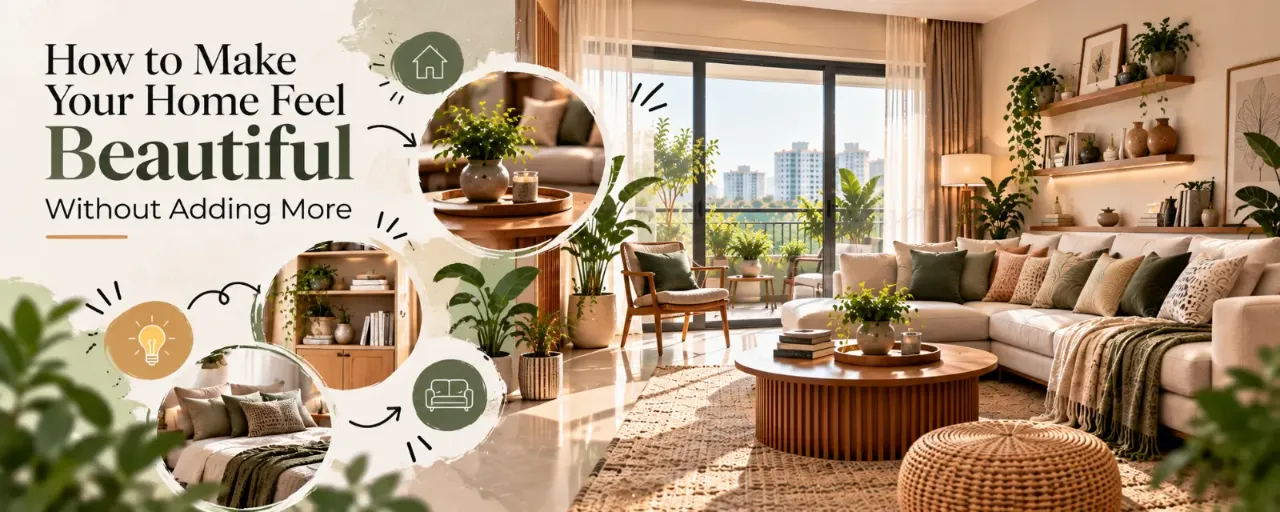
How to Make Your Home Feel Beautiful Without Adding More
A beautifully decorated home is not necessarily one filled with accessories, statement pieces or carefully arranged objects. Often, the spaces that feel the most inviting are the ones where every element has a purpose. The light feels right, the colours work together, the textures add warmth, and nothing competes unnecessarily for attention.
Home decor plays an important role in shaping how a room feels. A living room can feel relaxed and welcoming, a bedroom can encourage rest, and a reading corner can become a quiet retreat. The challenge is creating these moods without adding so many decorative elements that the room begins to feel crowded.
The key lies in choosing decor intentionally. Instead of asking what else a room needs, consider what you want the room to make you feel.
Quick answer: To create the right mood without cluttering a room, focus on layered lighting, a coordinated colour palette, contrasting textures and a few meaningful accessories. Leave enough open space around furniture and decorative objects so the room feels balanced, comfortable and functional.
1. Start With the Mood, Not the Accessories
Before buying cushions, artwork, vases or decorative objects, decide how you want the room to feel. This simple step makes it easier to select pieces that work together rather than accumulate items that look attractive individually but feel disconnected as a group.
For a calm living room, consider warm neutrals, natural wood, soft fabrics and diffused lighting. If you prefer a more expressive space, introduce deeper colours through a single accent chair, artwork or a carefully chosen textile. For a bedroom, muted shades and tactile bedding can create a softer atmosphere without requiring additional decoration.
Your existing furniture can also help establish the mood. A wooden console, upholstered sofa or textured armchair already contributes colour, shape and material to the room.
Design tip: Choose three words that describe your intended atmosphere, such as warm, relaxed and understated. Use them to guide every decor decision.
2. Use Lighting to Change the Atmosphere
Lighting is one of the most effective ways to influence the mood of an interior, yet it is often treated as a purely functional requirement.
A single bright ceiling light can make a room feel flat, especially in the evening. Layered lighting creates greater flexibility by combining general illumination with task and accent lighting.
A floor lamp beside an armchair can make a reading corner feel intimate. A table lamp on a console can highlight decorative objects without requiring more accessories. Wall lights can create a gentle glow, while adjustable lighting allows a living room to transition from daytime activity to evening relaxation.
Warm-white lighting often works well in spaces intended for rest and comfort. Task areas, however, may benefit from brighter, more focused illumination.
The objective is not to add as many light fixtures as possible. It is to place light where it improves the room's function and atmosphere.
3. Let Colour Create the Feeling
Colour can influence the character of a room long before someone notices its decorative details. However, a thoughtful palette does not require multiple contrasting shades across every surface.
Begin with a base of two or three compatible colours. Soft beige, warm white, muted grey and natural wood can establish a restrained foundation. Introduce a stronger accent through olive green, terracotta, rust, deep blue or another shade that suits the room.
The accent might appear in a chair, a cushion, a rug or a piece of artwork. Repeating that colour subtly elsewhere can help the space feel coordinated without making it visually busy.
Consider the size and natural light of the room, too. Lighter colours can help a compact room feel more open, while darker tones can create intimacy when balanced with suitable lighting and contrasting textures.
Rather than distributing every colour evenly, let one or two elements provide the visual emphasis.
4. Add Texture Instead of More Objects
A room can feel rich and layered even when it contains very few decorative accessories. Texture makes this possible.
Combine materials such as linen, wood, wool, stone, ceramic and woven fibres to introduce visual depth. A smooth wooden tabletop can contrast beautifully with a textured ceramic vase. A soft rug can balance the clean lines of a sofa, while linen curtains can soften the appearance of large windows.
These differences give the eye something to explore without requiring additional objects on every surface.
Texture is especially useful in neutral interiors, where colour variation is deliberately limited. Instead of introducing several new shades, vary the finishes and materials to prevent the room from feeling flat.
The most effective combinations are often subtle. Two or three contrasting textures can be enough to make a space feel considered and comfortable.
5. Style Surfaces With Intention
Console tables, coffee tables, bedside tables and open shelves can easily become collection points for objects. Styling them thoughtfully helps create a focal point without sacrificing usable space.
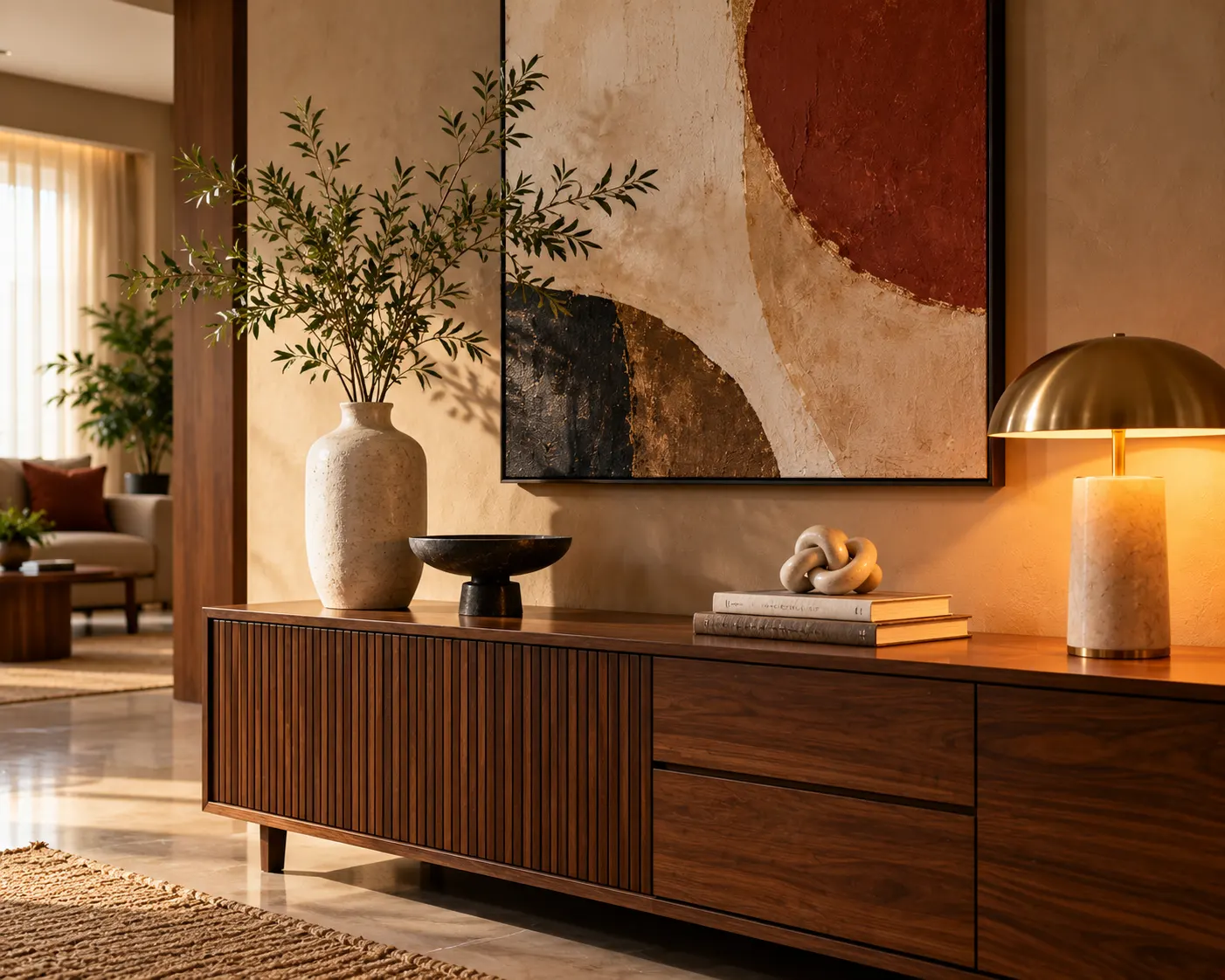
Begin by clearing the surface and returning only the items that contribute to the intended look. A console might need a lamp, a ceramic vessel and one meaningful decorative object. A coffee table could hold a small tray with a book and a compact vase, leaving enough room for everyday use.
Vary the height of objects to create interest, but avoid arranging too many items in a straight line. A little asymmetry can feel natural, provided the overall composition remains balanced.
Most importantly, leave some of the surface visible. Empty space gives decorative pieces room to stand out and makes the arrangement feel less crowded.
Decor should enhance the furniture, not prevent you from using it.
6. Create One Comfortable Corner That Feels Personal
Not every part of a room needs to be a focal point. Sometimes, a single well-designed corner gives an entire space more character.
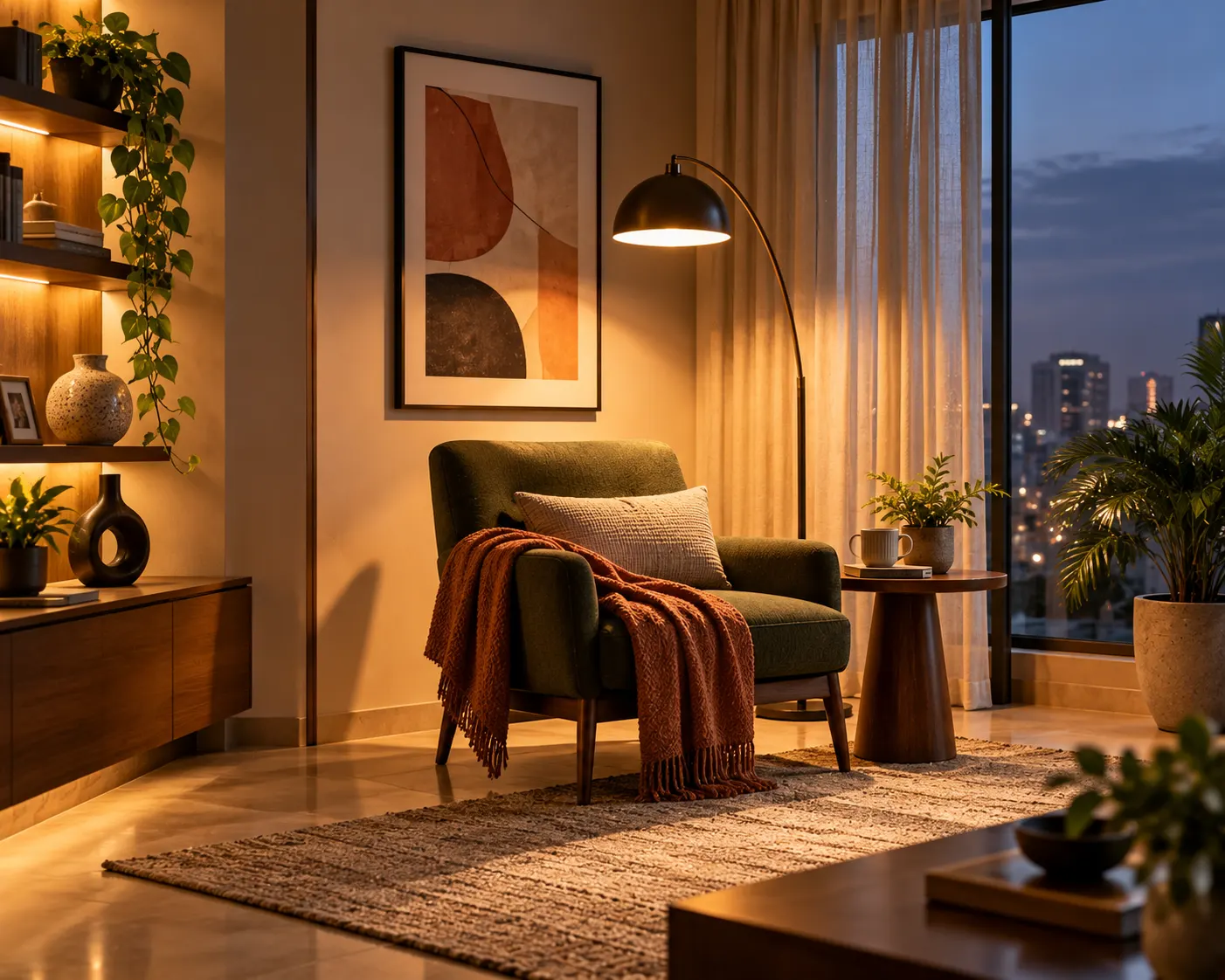
An armchair near a window, a floor lamp and a small side table can form a comfortable reading nook. A compact bench with a cushion can make an otherwise unused corner more inviting. A favourite artwork or a plant can add personality without requiring a collection of accessories.
Choose the corner according to how you want to use it. If it is a reading nook, prioritise comfortable seating and appropriate light. If it is intended for quiet reflection, consider a pleasant view, soft textiles and minimal distractions.
Personal details matter here. A book you enjoy, a handmade object or a piece of art with meaning can make the space feel more individual than a larger collection of generic decorative items.
7. Make Negative Space Part of the Design
Negative space is the area intentionally left unoccupied around furniture and decor. It is not wasted space; it helps the important elements become more noticeable.
A statement chair looks more distinctive when it is not surrounded by unnecessary furniture. Artwork can make a stronger impression when the wall around it remains relatively clear. A carefully styled console appears more refined when part of its surface is left empty.
This principle is particularly valuable in small homes, where every additional object can affect circulation and visual comfort.
Keep walkways clear, avoid overcrowding corners and ensure furniture can be used comfortably. Store everyday items where they are easy to access but not constantly on display.
If a room feels cluttered, removing a few items may achieve more than purchasing new storage containers or decorative accessories.
8. Edit the Room Before Adding Anything New
A final edit helps bring the entire space together. Look at the room from the doorway and notice what immediately attracts your attention. If several objects compete for that attention, consider simplifying the arrangement.
Remove accessories that repeat the same function, relocate pieces that feel out of place and keep frequently used surfaces practical. Check whether cushions, throws, artwork and decorative objects contribute to the atmosphere you originally wanted to create.
This does not mean a home must be completely minimal. Collections, souvenirs and sentimental objects can make a space feel personal. The aim is to display them selectively, so each item has enough room to be appreciated.
A useful habit is to reassess your decor seasonally or whenever your needs change. Rotate a few accessories rather than continually buying new ones.
A Simple Checklist for Mood-Setting Home Decor
- Decide how you want the room to feel before choosing accessories.
- Combine ambient, task and accent lighting where appropriate.
- Choose a coordinated colour palette with one or two accent shades.
- Use contrasting textures to introduce depth without adding clutter.
- Keep console tables, coffee tables and shelves selectively styled.
- Create a comfortable corner around a specific activity or purpose.
- Leave open space around furniture and decorative objects.
- Remove items that do not serve a purpose or contribute to the atmosphere.
Create a Home That Feels as Good as It Looks
Thoughtful home decor is about finding the right balance between beauty, comfort and everyday function. Start with the mood you want to create, work with the furniture you already have, and introduce only the elements that make the space feel more complete.
At Walls to Wonder, we believe that good interior design is not about filling every corner. It is about making every element count.
A Final Thought
Creating the right mood through home decor is less about how much you add and more about how thoughtfully you choose. Lighting establishes atmosphere, colour sets the tone, texture introduces depth, and personal details make a space feel lived in.
When these elements work together, even a simply furnished room can feel warm, distinctive and complete.
Before adding another decorative piece, pause and consider whether it improves the mood, serves a purpose or holds genuine meaning. If it does none of these, the room may be better without it.
Frequently Asked Questions
1. How can I make my home feel cosy without adding clutter?
Use layered lighting, tactile fabrics, a coordinated colour palette and a few meaningful accessories. Keep surfaces partly clear and prioritise comfortable, functional furniture.
2. Which colours work well for a calm interior?
Warm white, beige, muted grey, earthy brown and soft green can create a calm atmosphere. Choose shades according to the room's natural light and repeat accent colours sparingly.
3. How many decorative items should I place on a console table?
There is no fixed number. Start with two or three complementary items of different heights, then leave enough open surface for practical use and visual breathing room.
4. Does minimalist decor mean removing personal items?
No. Minimalist styling is about intentional choices rather than having nothing on display. Keep meaningful objects and arrange them so each one can be appreciated.
5. How can I make a small room feel less cluttered?
Keep walkways clear, choose furniture suited to the available space, reduce unnecessary accessories and use a consistent colour palette. Leaving open surfaces and visual breathing room can make a compact room feel more balanced.
Turn this idea into a plan for your home
Visualise your space, understand the likely budget, or find a professional who can bring the idea to life.