
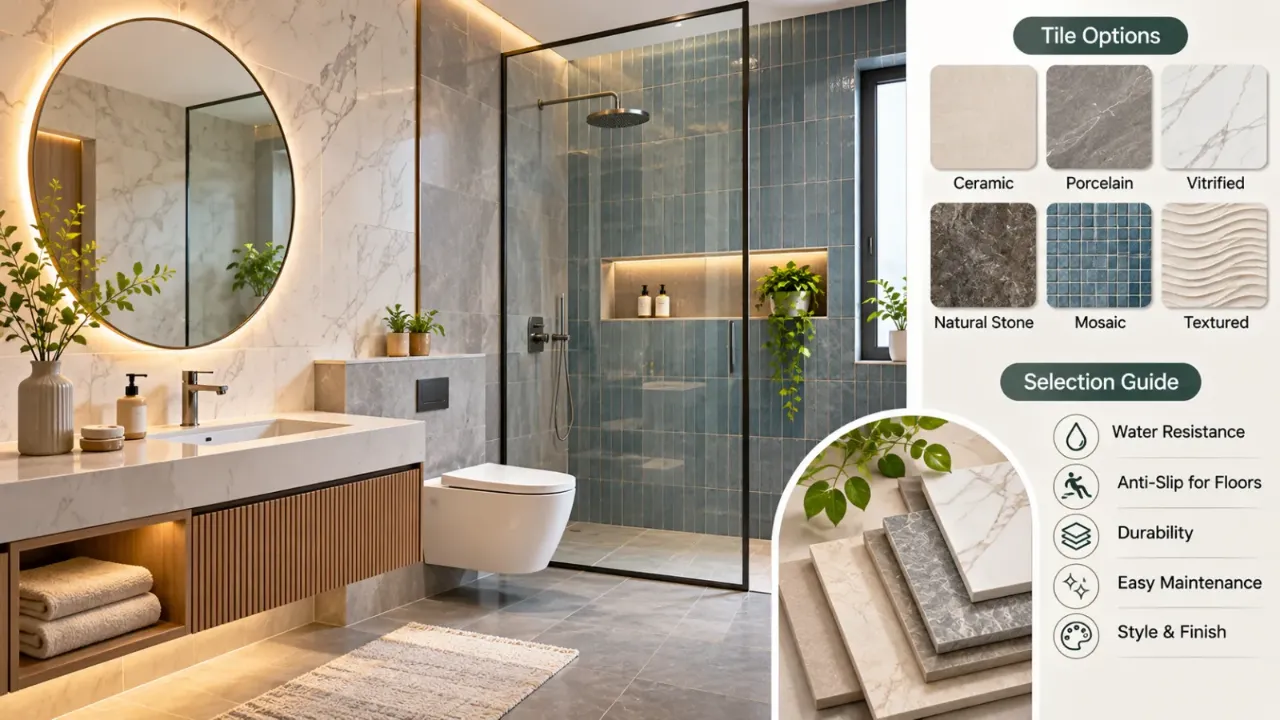
How to Choose the Right Tiles for Bathroom Floors and Walls
Bathroom tiles do more than establish the look of a space. They influence how safe the floor feels when wet, how easily the walls can be cleaned, how well the surfaces handle daily moisture and how much maintenance the bathroom will need over time.
One common mistake is choosing tiles only by their appearance or selecting the same tile for every surface. Bathroom floors and walls have different functional requirements. Floors need suitable grip, durability and a finish that works with drainage, while walls need surfaces that are easy to clean and appropriate for areas exposed to water and humidity.
Here is how to make the right choices before finalising your bathroom tiles.
1. Understand the Difference Between Floor and Wall Tiles
Bathroom floors are exposed to standing water, soap residue, foot traffic and cleaning products. They need a finish that provides suitable slip resistance under wet conditions, along with adequate durability for regular use.
Wall tiles are not exposed to the same foot traffic. Their selection can focus more on water suitability, cleaning, appearance, size and installation requirements. However, shower areas and other surfaces exposed to direct water still need appropriate products and properly executed waterproofing behind the tile.
Before purchasing, check whether the manufacturer specifically recommends the tile for floor or wall installation. Do not assume that a tile is suitable for flooring simply because it is marketed for bathrooms.
2. Choose Bathroom Floor Tiles with Safety in Mind
The bathroom floor is the surface where tile performance matters most for everyday safety.
Look for Suitable Slip Resistance
A glossy, polished tile may look attractive, but it can become slippery when wet. For bathroom flooring, compare products based on their wet slip-resistance information rather than relying only on appearance or the words "anti-skid" on the packaging.
Ask the supplier for the manufacturer's test information and the conditions under which the tile was assessed. A textured or matte surface may offer better grip, but texture alone does not guarantee safety.
If possible, inspect a sample and ask how it performs when wet and under barefoot use. Pay particular attention to the shower floor, where water and soap are frequently present.
Consider the Surface Finish
- Matte: Often a practical choice because it avoids a highly polished surface and can be easier to use in wet areas, depending on the product.
- Textured: Can provide additional surface grip, but deep texture may collect soap residue and make cleaning harder.
- Satin: Offers a softer sheen than polished tiles. Check its wet performance before using it on the floor.
- Polished: Creates a reflective appearance but may be unsuitable for wet bathroom floors if it does not provide adequate grip.
The best finish is the one that balances wet safety and easy cleaning.
Choose a Suitable Tile Size
Large-format tiles create fewer grout joints and can make a bathroom floor look more continuous. However, they may be difficult to use where the floor needs to form a slope towards a drain.
Smaller tiles, mosaics or appropriately sized pieces can make it easier to create the required floor gradient, particularly in shower areas. The final choice should account for the drain position, floor slope and installer's ability to execute the layout properly.
3. Select Wall Tiles for Moisture Exposure and Cleaning
Bathroom walls offer more flexibility in terms of colour, pattern, texture and format. Still, the tiles should be appropriate for the location in which they will be installed.
Choose Tiles That Are Suitable for Wet Areas
Ceramic and porcelain tiles are commonly used on bathroom walls. Porcelain generally has lower water absorption than ordinary ceramic, but the correct choice depends on the product specifications, installation system and intended application.
In shower areas, confirm that the tile, adhesive, grout and waterproofing system are suitable for the exposure conditions. Tiles and grout are not a substitute for a properly designed waterproofing layer.
Decide How Much of the Wall to Tile
- Full-height tiling: Useful in shower zones and bathrooms where easier wall cleaning is a priority.
- Partial-height tiling: Can work in less exposed areas when the remaining wall finish is suitable for bathroom humidity and ventilation conditions.
- Feature wall: A patterned, textured or contrasting tile can create a focal point without making every wall visually busy.
- Niche or accent detailing: A different tile inside a shower niche or behind a vanity can add interest while keeping the overall palette controlled.
The amount of wall tiling should be decided alongside the bathroom's ventilation, water exposure and maintenance requirements.
4. Understand Ceramic, Porcelain and Other Tile Options
The material affects the tile's weight, water absorption, durability, appearance and installation requirements.
| Tile type | Where it can work | What to check |
|---|---|---|
| Ceramic | Bathroom walls and suitable floor applications | Product rating, finish and intended use |
| Porcelain | Floors and walls, depending on specification | Wet slip resistance, thickness and installation requirements |
| Mosaic | Shower floors, niches and decorative sections | Grout maintenance, surface grip and installation quality |
| Natural stone | Selected wall and floor applications | Sealing, staining, surface treatment and ongoing care |
| Glass | Decorative wall sections and accents | Manufacturer's application guidance and fixing method |
Ceramic and porcelain are common practical choices for many Indian bathrooms. Natural stone can create a distinctive appearance, but it may need more careful sealing and maintenance. Mosaics can help with curved details and sloped shower floors, although their additional grout joints need regular cleaning.
5. Select Tile Sizes According to the Bathroom Layout
Tile size affects how spacious a bathroom appears, how many grout lines are visible and how easily the floor can be installed with the required slope.
Large-Format Tiles
Large tiles can create a clean, continuous appearance on bathroom walls and suitable floor areas. They can work particularly well in larger bathrooms or on uninterrupted wall surfaces.
However, large tiles require a sufficiently flat substrate and skilled installation. They may also be less convenient on small shower floors that need multiple changes in slope.
Medium-Format Tiles
Medium-sized tiles offer flexibility and are often easier to arrange around basins, toilets and other bathroom fixtures. They can create a balanced look without introducing too many grout joints.
Small Tiles and Mosaics
Smaller tiles are useful for shower floors, niches, borders and decorative sections. Their greater number of joints can help accommodate slopes, but they also mean more grout to maintain.
Do not select a tile size only because it is currently popular. Check the room dimensions, drain location, wall alignment and cutting requirements first.
6. Choose Colours and Patterns That Work Together
The floor and walls should feel connected, but they do not need to match exactly.
A simple approach is to use one main tile for the walls and a complementary, suitably slip-resistant tile for the floor. This creates visual consistency without compromising on function.
- Light stone-look walls with a slightly darker matte floor: A restrained, versatile combination.
- White or ivory walls with muted grey flooring: Creates a clean, understated bathroom.
- Beige wall tiles with a textured taupe floor: Works well for a softer, natural look.
- Plain wall tiles with a patterned floor: Adds character while keeping the walls visually calm.
- Large neutral tiles with a small mosaic accent: Introduces detail without overwhelming the room.
In a compact bathroom, lighter wall tiles and a controlled number of contrasting finishes can help the space feel more open. Avoid using too many patterns, colours and tile formats in a small area.
7. Do Not Overlook Grout Selection
Grout is a small detail that can significantly affect the final appearance and maintenance of a tiled bathroom.
A grout colour close to the tile colour creates a more continuous look. Contrasting grout makes the tile pattern and individual tile edges more visible.
For bathrooms, check the grout manufacturer's suitability for wet areas, expected exposure and joint width. Cement-based grout and epoxy grout have different installation and maintenance characteristics. Epoxy grout can offer better resistance to staining and water penetration in suitable applications, but it requires correct installation and may cost more.
- Keep grout joints consistent.
- Use the joint width recommended for the tile.
- Ensure the substrate and waterproofing are properly prepared.
- Use an appropriate flexible sealant at movement joints and changes of plane where specified, rather than filling every corner with ordinary grout.
- Clean grout residue correctly during installation.
Good grout selection cannot compensate for poor waterproofing or incorrect tile installation.
8. Plan Drainage and Tile Slope Before Installation
A bathroom floor must direct water towards the drain. The tile layout, drain position and floor slope need to be coordinated before installation begins.
Large tiles may require more complex cuts to follow the slope, while smaller tiles can offer greater flexibility in certain shower layouts. The installer should plan the tile arrangement so that water does not collect in low spots.
- Drain location and type.
- Floor gradient towards the drain.
- Level difference at the bathroom entrance.
- Door clearance after the final floor finish is installed.
- Waterproofing below the tiled surface.
- Alignment of tile joints around drains and shower enclosures.
A visually attractive floor is not successful if it leaves standing water behind.
9. Make Cleaning and Maintenance Part of the Decision
Some tiles look beautiful in a showroom but become difficult to maintain in a frequently used bathroom.
Highly textured surfaces may hold soap residue. Very dark glossy tiles can show water spots and mineral deposits. Very light grout may become visibly stained over time.
Before finalising a tile, consider:
- How easily soap marks and hard-water deposits can be removed.
- Whether the tile surface needs special cleaning products.
- Whether the grout requires sealing or specific maintenance.
- Whether replacement tiles will be available in the future.
- Whether the finish shows scratches, stains or water marks easily.
Ask for a sample and test it with the type of cleaning routine you expect to follow. This can help avoid choices that look good only when newly installed.
10. Common Bathroom Tile Selection Mistakes
- Choosing glossy tiles for every surface: A polished look does not automatically make a safe wet floor.
- Using one tile everywhere without checking suitability: Floor and wall requirements are different.
- Ignoring the shower floor: This area needs particular attention to wet grip and drainage.
- Selecting oversized tiles without considering slope: The layout may become difficult around drains and shower areas.
- Choosing grout only by colour: Its suitability for wet areas and joint requirements matter just as much.
- Ignoring waterproofing: Tiles and grout do not replace a proper waterproofing system.
- Buying without checking batch consistency: Shade and size variations can become visible across a completed surface.
- Not keeping spare tiles: A few extra tiles from the same batch can be useful for future repairs.
11. Bathroom Tile Selection Checklist
- Confirm that each tile is recommended for its intended floor or wall application.
- Check wet slip-resistance information for bathroom floor tiles.
- Assess the shower floor separately from the rest of the bathroom.
- Select finishes that balance safety and cleaning.
- Match tile size to the room layout and drainage requirements.
- Finalise wall and floor colour combinations.
- Confirm grout type, colour and joint width.
- Coordinate waterproofing, adhesive and installation specifications.
- Check the tile shade, size and batch before delivery.
- Purchase a reasonable quantity of spare tiles.
Final Thoughts
Choosing bathroom tiles is about matching each surface to the conditions it will face. The floor needs particular attention to wet slip resistance, drainage and cleaning, while wall tiles offer more flexibility in size, colour and design. Both need suitable product specifications and careful installation.
Rather than choosing every tile from appearance alone, compare samples, check the manufacturer's technical details and plan the layout before ordering. A well-selected combination can make the bathroom easier to use, maintain and enjoy for years.
Plan Your Home Interiors with Walls to Wonder
Make more informed interior design decisions with Walls to Wonder's AI-powered tools. Explore finishes, estimate costs and evaluate your design choices before starting your project.
- Whole Home Visualizer – Explore how different design choices can work across your home.
- Design My Room – Experiment with room layouts, styles and visual ideas.
- Interior Design Cost Estimate – Get an initial estimate for your interior design requirements.
- Interior Quotation Checker – Review and understand interior project quotations.
- Rate My Room Design – Get feedback on your room design.
- Interior Style Finder – Discover an interior style that suits your preferences.
Explore more at Walls to Wonder.
Frequently Asked Questions
1. Are floor tiles and wall tiles different?
Yes. Floor tiles are designed to handle foot traffic and require suitable slip resistance and durability. Wall tiles do not need to withstand the same loads, so always check the manufacturer's recommended application.
2. Which finish is better for bathroom floor tiles?
Matte or suitably textured finishes are often considered for bathroom floors, but the actual wet slip-resistance performance matters more than the finish name. Check product test information before buying.
3. Are glossy tiles suitable for bathroom walls?
Glossy tiles can work well on bathroom walls. They reflect light and are often straightforward to wipe clean, although water spots may be more noticeable on some finishes.
4. Are porcelain tiles better than ceramic tiles for bathrooms?
Porcelain generally has lower water absorption than standard ceramic, but both can be suitable in the right applications. Compare the product specifications, intended use, finish and installation requirements.
5. Are small tiles better for shower floors?
Smaller tiles can make it easier to form slopes towards a drain and may provide more grout joints. However, the tile surface and grout still need to be suitable for wet use and regular cleaning.
6. What grout colour is best for bathroom tiles?
A grout colour close to the tile creates a more uniform appearance, while contrasting grout highlights the pattern. Choose a grout product suitable for the bathroom's exposure and maintenance needs.
7. Can the same tiles be used on bathroom floors and walls?
Only if the manufacturer confirms that the product is suitable for both applications. A wall tile should not be used on the floor simply because its design matches the bathroom.
Turn this idea into a plan for your home
Visualise your space, understand the likely budget, or find a professional who can bring the idea to life.