

How to Choose an Interior Designer in Baner, Pune: A Homeowner’s Guide
Baner homeowners often compare several interior designers before committing to a modular kitchen, a complete apartment fit-out or a focused renovation. The right choice is not simply the designer with the most polished photographs. It is the team that understands your property, explains its scope clearly, uses suitable materials and can manage decisions from design to handover.
This guide explains how to choose an interior designer in Baner, Pune, with a practical process for comparing designers and companies serving the area. You can also browse the Baner interior design listing to create an initial shortlist.
Start by defining the project you actually need
A designer can only prepare a meaningful proposal when the brief is reasonably clear. Before requesting quotations, note your property type, approximate carpet area, possession or move-in timeline and the rooms that need work. Include any existing furniture or appliances that must stay.
Baner has a mix of newer apartment developments, resale homes and rented properties. A newly handed-over flat may need electrical planning, false ceiling work, wardrobes, kitchen and furnishings. A resale apartment may need demolition, plumbing changes, repainting or flooring repairs before interiors begin. A rental may call for removable storage, lighting and low-disruption improvements rather than a full turnkey package.
What services can an interior designer provide?
“Interior design” can mean different levels of involvement. Ask each professional to identify what is included rather than assuming a full-service package.
- Space planning: furniture layouts, circulation, zoning and storage planning.
- Design documentation: concept boards, 3D views, elevations, electrical layouts and ceiling plans.
- Modular work: kitchens, wardrobes, TV units, crockery units and other factory-made or site-assembled elements.
- Civil and finishing work: partitions, painting, flooring, tiling, plumbing changes, false ceilings and wall treatments, where applicable.
- Furniture and styling: loose furniture, curtains, lights, mirrors, rugs and accessories.
- Execution management: vendor coordination, site supervision, quality checks, scheduling and snag-list closure.
Some designers offer design-only consultancy; others manage selected rooms or a complete turnkey project. A lower initial fee may not include procurement, supervision or revisions. Compare the service boundary, not just the headline price.
A practical framework for comparing designers
Check relevant work, not only attractive images
Look for projects similar to yours in size, property type and finish level. A designer experienced with compact apartments may plan storage differently from one who mainly handles large independent homes. Ask which images show completed work and which are concepts or renders.
Understand the working model
Find out who will prepare drawings, who will visit the site, who approves material samples and who handles vendor coordination. If the person presenting the concept will not manage execution, ask to meet the project lead before signing.
Compare like-for-like scope
One quotation might include lights, hardware, paint and installation while another lists only carpentry. Request an itemised scope and mark every item as included, excluded or provisional.
Assess communication before the advance
Notice whether questions receive specific answers, drawings arrive when promised and changes are recorded. The early consultation often indicates how decisions will be handled during execution.
Speak about aftercare
Ask how defects, alignment issues, damaged panels and hardware adjustments are reported after installation. Get the process and any applicable service period in writing.
Comparison band: what to review side by side
| Area of comparison | What to ask | Why it matters |
|---|---|---|
| Portfolio | Are there comparable apartments, renovations or room types? | Relevant experience can reduce planning mistakes. |
| Scope | Which rooms, drawings, products and site tasks are included? | Prevents an apparently cheaper quote from omitting essentials. |
| Materials | What board, laminate, glass, paint, hardware and fittings are specified? | Material grade affects durability, appearance and maintenance. |
| Programme | What are the design, production, installation and handover stages? | Helps you coordinate possession, rent, movers and appliances. |
| Payments | What triggers each instalment, and how are variations approved? | Links payment to measurable progress rather than vague dates. |
| Responsibility | Who coordinates electricians, plumbers, carpenters and suppliers? | Clear ownership reduces delays and conflicting instructions. |
How pricing is shaped in Baner projects
There is no responsible single “interior cost” for every Baner home. The amount depends on carpet area, room count, design complexity, quantity of storage, civil changes, materials, hardware, appliances, site access, labour and the level of project management. A compact home with extensive custom storage can cost more than a larger home with a restrained scope.
Major cost drivers include kitchen layout and hardware, wardrobe internals, plywood or other board specifications, shutters and finishes, drawer systems, lighting, electrical modifications, false ceiling work, bathroom or plumbing changes, painting, loose furniture and installation. Taxes, delivery, dismantling and debris removal should also be clarified.
Ask whether the proposal is based on a fixed scope, measured quantities, a package rate or a provisional allowance. If you change the laminate, add a loft or move a socket after approval, the cost and timeline may change. A written variation process is essential.
Use AI tools before you compare quotations
Independent preparation can make designer meetings more productive. WallsToWonder’s tools can help you organise a first estimate and inspect a quotation, but they should support—not replace—measurements, material samples and professional site advice.
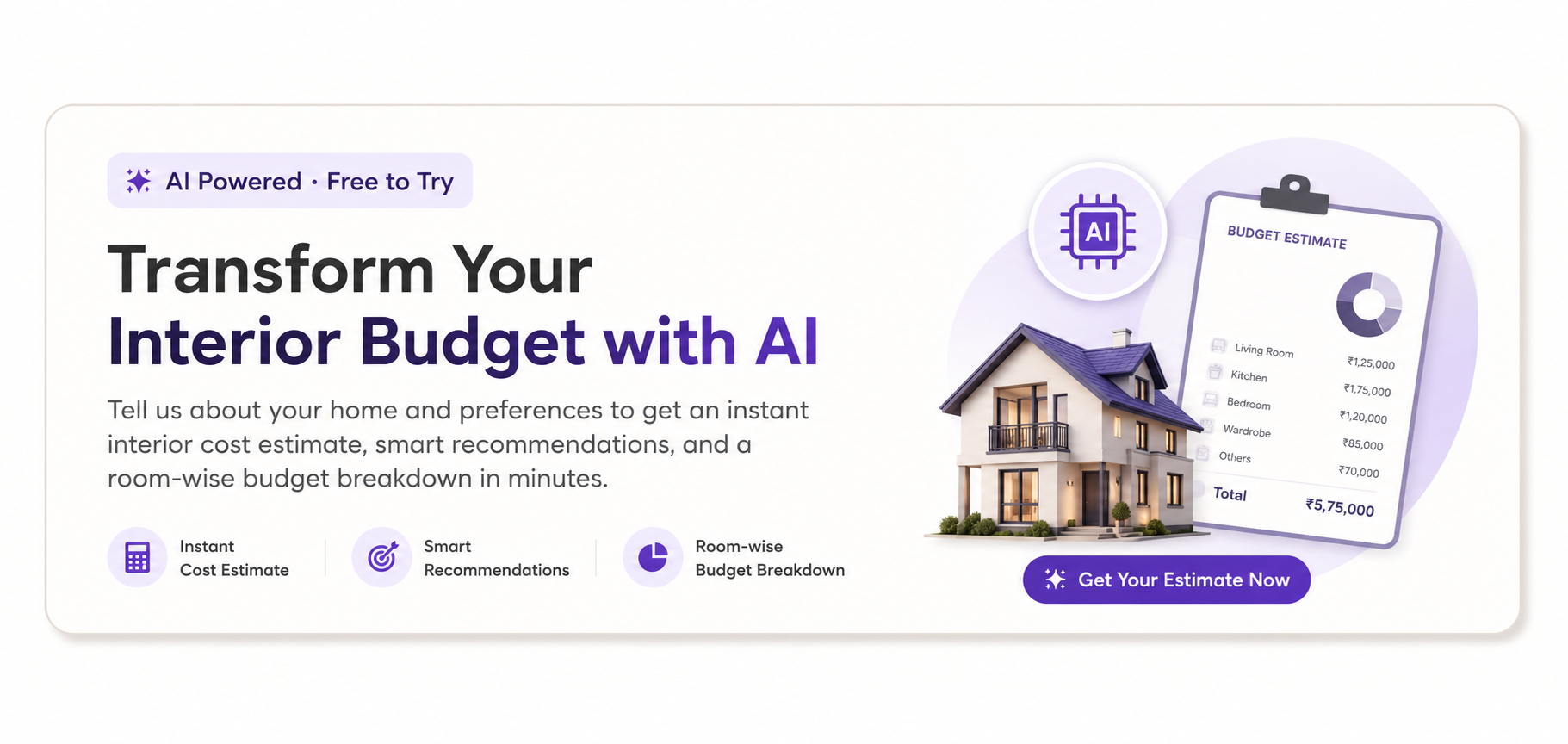
Interior cost estimator
Build an early budget view by considering home size, rooms, scope and finish preferences before your first detailed consultation.
Estimate interior cost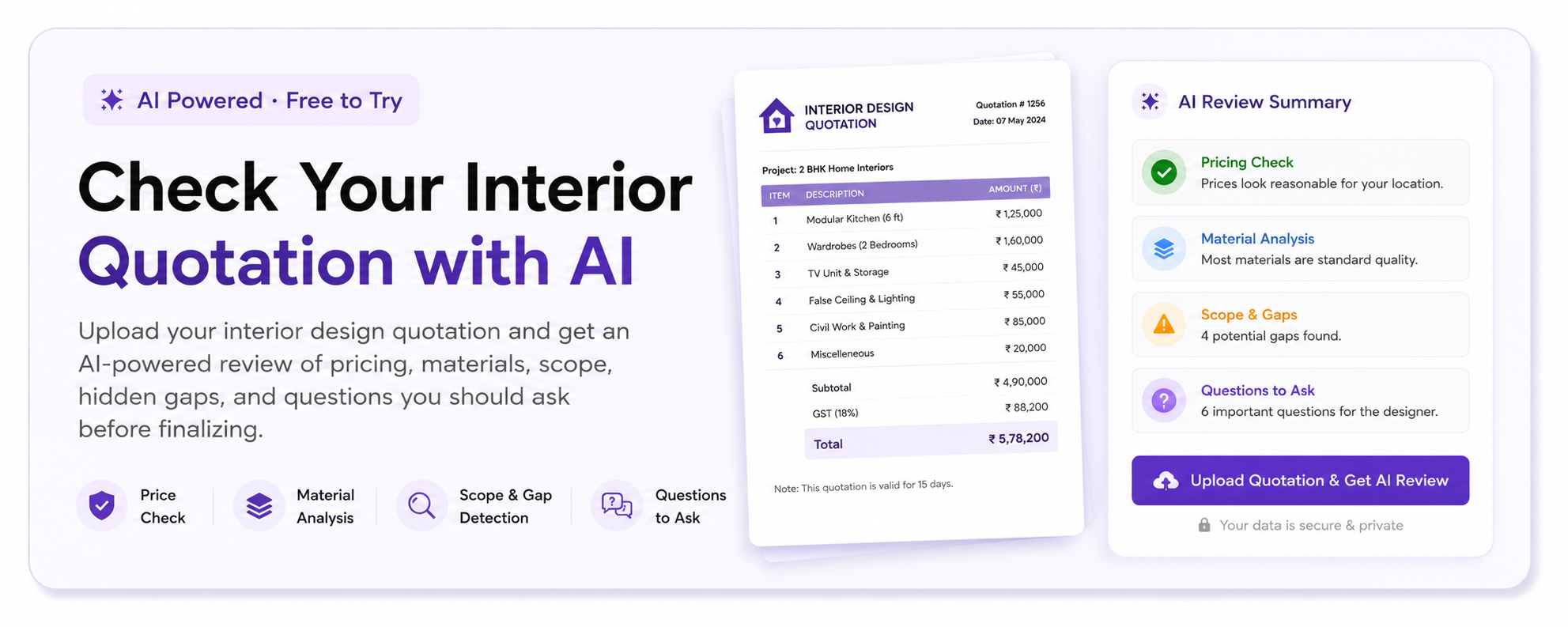
Quotation checker
Use it as a review aid to spot unclear line items, missing details or areas that deserve a question before approval.
Check a quotationMaterials and quotation details that deserve attention
“Good quality” is not a sufficient material specification. A useful quotation identifies the product category and relevant grade wherever possible. For boards, ask what material is proposed for carcasses and shutters, where it will be used and how exposed edges are treated. For laminates, note the finish and whether the quoted rate includes application. For hardware, check the brand or performance specification, load requirement and warranty terms if offered.
Kitchen and wardrobe quotations should show internal accessories separately. Tall units, tandem drawers, corner mechanisms, lift-ups and pull-outs can alter the budget significantly. Confirm whether handles, soft-close fittings, channels, hinges, skirting, fillers, loft shutters and end panels are included.
For site work, ask for quantities or a defined measurement basis. Electrical points, plumbing changes, tile removal, painting coats, ceiling profiles, light fixtures and installation charges should not be left as casual verbal promises. Keep the latest approved drawing and quotation version together.
Red flags before you hire
- A large advance is demanded before the scope, drawings, payment stages and cancellation terms are documented.
- The proposal uses broad labels such as “premium finish” without specifying materials, thicknesses, hardware or quantities.
- The designer avoids a site visit but offers a confident final figure for a home with unknown conditions.
- There is pressure to decide immediately because a discount supposedly expires the same day.
- Exclusions are missing, or the quote says “all inclusive” without explaining taxes, appliances, civil work, delivery and installation.
- Repeated design changes are discussed verbally and no revised drawing or cost impact is shared.
- The portfolio cannot be connected to a clear project brief, site or client reference when you request reasonable verification.
- No one can explain who is responsible for snags after handover.
A single warning sign does not automatically settle the decision. Several unresolved signs together should make you pause and seek clarification.
Questions to ask before paying an advance
- What exactly does the advance cover: design, procurement, production or another stage?
- What are the deliverables before the next payment—layouts, 3D views, samples, working drawings or site work?
- How many design revisions are included, and when does a revision become a chargeable change?
- Which materials and hardware are specified, and can approved samples be recorded?
- Who owns responsibility for measurements and site-condition checks?
- How will additional work be priced and approved?
- What is excluded from the quote, including appliances, curtains, loose furniture, taxes, dismantling and debris?
- How are delays handled if materials, building permissions or site access affect the schedule?
- What happens if I pause, reduce or cancel the project?
- How will defects be reported after handover?
Do not pay solely because a presentation looks impressive. First make sure the commercial document matches what was discussed.
Where WallsToWonder fits into your search
WallsToWonder helps homeowners move from broad browsing to a more organised comparison. Start with the designers and companies serving Baner, then widen your search through the Pune interior design listing if you want more options. The designer directory is useful when you want to explore profiles beyond one locality.
Before or during consultations, browse interior design ideas to collect references for storage, kitchens, bedrooms, lighting and finishes. Save only images that reflect practical needs as well as appearance; a reference should help explain your preferred layout, colour, material or mood.
FAQs
How many interior designers should I compare?
There is no fixed number. Compare enough proposals to see differences in scope, materials, process and communication. A smaller shortlist of genuinely relevant designers is usually more useful than collecting many generic quotes.
Should I choose a local Baner designer?
Proximity can make site visits and coordination easier, but the key question is whether the designer or company has the capacity to serve your property reliably. Consider relevant experience, supervision arrangements and response times rather than locality alone.
Is a turnkey package always better?
No. Turnkey management can simplify coordination, but it may not suit a homeowner who already has contractors or wants design-only advice. Compare what the package includes and who remains responsible for each task.
What should I do if two quotations have very different totals?
Reconcile the scope line by line. Check board specifications, hardware, internal accessories, civil work, electrical points, finishes, installation, taxes and exclusions. The lower total may reflect a narrower specification rather than better value.
When should I finalise materials?
Material choices should be approved before production or procurement begins, with samples or clearly identified specifications recorded. Late changes can affect both cost and schedule.
Your next step
Prepare your room list, measurements if available, reference images and a realistic budget range. Shortlist designers serving Baner, request comparable written scopes and use the quotation details—not presentation polish alone—to guide the decision.
Explore interior designers serving Baner, Pune and begin your comparison with clearer questions.