

How to Choose an Interior Designer in Bandra East, Mumbai
Choosing an interior designer in Bandra East is less about finding the most polished presentation and more about finding a team that can manage your home, budget and site conditions responsibly. Start with a clear brief, compare like-for-like proposals and check how the designer handles materials, changes and delays.
If you are still building your shortlist, browse the interior designers and companies serving Bandra East. The aim is not to select someone immediately, but to understand the options before you commit to a consultation or advance.
1. Understand what your project actually needs
First decide whether you need a complete design-and-execution service, design consultation only, modular furniture, loose furniture and styling, or help with a renovation. These are different scopes and should not be compared as though they are the same service.
For a new apartment, the brief may include kitchen storage, wardrobes, a TV unit, lighting, false ceiling, civil work and window treatments. A resale flat may need electrical changes, plumbing corrections, painting and repairs before furniture begins. In Bandra East, the building’s renovation rules, lift timings, parking arrangements and access for workers can affect planning even when the design itself looks straightforward.
- Note the apartment configuration, approximate carpet area and possession or handover date.
- List essential rooms and furniture, including appliances you already own.
- Mark non-negotiables such as storage capacity, a pooja space, work-from-home seating or child-safe finishes.
- Collect the floor plan, site photographs and any society guidelines available to you.
Useful starting points include WallsToWonder design ideas, project references and homeowner posts. They can help you describe what you like before a designer interprets it.
2. Shortlist on evidence, not just presentation
Review at least a few relevant portfolios. Look for homes with a similar scale, not only dramatic photographs of large luxury residences. A good portfolio should show consistency across kitchens, bedrooms, storage and smaller transition areas—not just one attractive living room.
- Ask which projects were designed, executed or photographed by the same team.
- Check whether the images show completed work or visualisations.
- Ask for references from recent clients, subject to the designer’s consent.
- Notice whether the designer asks detailed questions about your routines, budget and building restrictions.
Services to clarify
Design concepts, drawings, 3D views, material selection, modular manufacturing, on-site supervision, civil work, electrical work, painting, installation, styling and handover.
Local fit
Ask whether the team has handled apartment work in Mumbai and understands society permissions, delivery access, monsoon protection, dust control and coordination with occupied homes.
A designer does not need to be located inside Bandra East to serve the area. What matters is a realistic site-visit plan, an accountable project lead and clear communication about who will attend inspections.
3. Set a budget with room for decisions
Do not begin with a single number that hides the scope. Divide the budget into fixed or essential work, preferred upgrades and items you can postpone. The total may change with materials, hardware, customisation, site conditions, taxes, transport and the amount of civil or electrical work required.
Compare the proposed scope with your own list. A lower quotation may exclude lights, handles, internal accessories, dismantling, painting, appliances, delivery or installation. A higher one may include better hardware, more detailed supervision or a broader warranty. Neither is meaningful until the inclusions are visible.
Plan the budget first
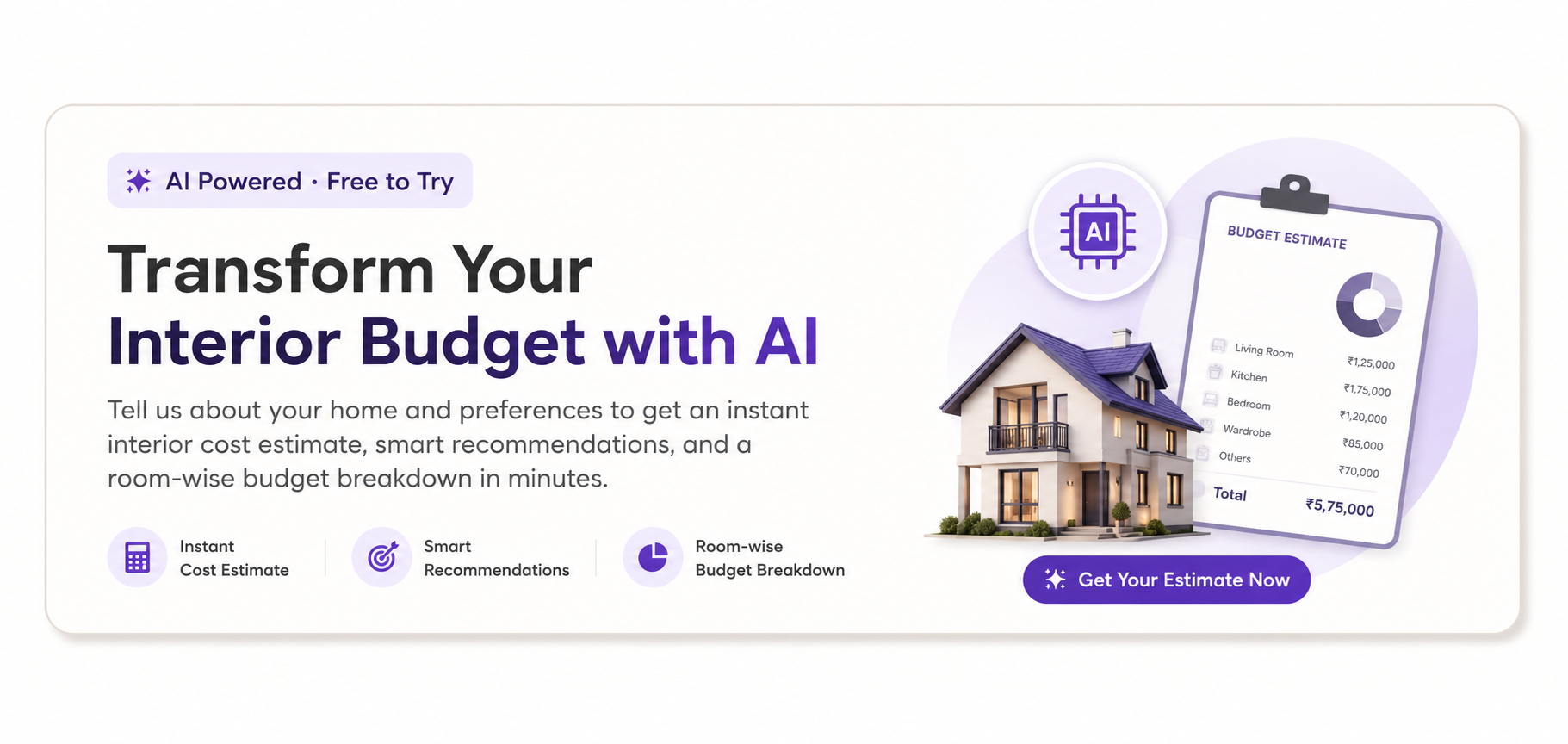
Use the interior design cost estimator to organise an early budget range. Treat the result as a planning aid, not a final quote.

Read the quote critically
Run a proposal through the quotation checker to spot missing line items and questions to raise with the designer.
4. Use the site visit to test practical thinking
A site visit should do more than produce measurements. It is your chance to see whether the designer notices the conditions that can affect cost and execution: uneven walls, beam locations, window sill heights, plumbing points, electrical load, leakage marks, ventilation and the route from the building entrance to your front door.
Ask what they will verify before finalising drawings. In a compact apartment, a few centimetres can change wardrobe shutters, kitchen passage width or the position of a washing machine. If the home is occupied, discuss dust barriers, storage of materials, working hours and protection for existing flooring.
5. Inspect materials and hardware before approval
“Premium finish” is not a material specification. Ask for the board type and thickness where relevant, laminate or veneer brand and finish, edge treatment, hardware range, glass specification, paint system, stone or tile selection and the conditions under which each is warranted.
Open and close sample shutters. Check hinge movement, drawer extension, edge banding and the inside finish of cabinets. For kitchens and wardrobes, internal storage and hardware often influence daily satisfaction more than the external colour. Ask how substitutions will be handled if a selected product is unavailable.
- What is the exact product, finish, size or grade being quoted?
- Where will the sample be used, and can an approved sample be attached to the contract?
- What is included in installation, transport and wastage?
- Who approves substitutions, and will any price difference be disclosed first?
6. Compare quotations line by line
Request a detailed quotation rather than a single package total. Each designer may group work differently, so rearrange the information into common headings before comparing. Keep a written list of exclusions; they are as important as inclusions.
| Quotation area | What to compare | Question to ask |
|---|---|---|
| Design and drawings | Plans, elevations, 3D views, revisions | How many revisions are included? |
| Furniture and finishes | Board, finish, hardware, dimensions and quantities | Are internal accessories and installation included? |
| Site work | Civil, electrical, plumbing, ceiling and painting | What is provisional and what is fixed? |
| Project management | Site supervision, coordination and reporting | Who is responsible for day-to-day decisions? |
| Commercial terms | Taxes, transport, warranty, exclusions and changes | How are variations priced and approved? |
Use a quotation comparison worksheet, not memory. If two proposals use different quantities or specifications, ask both designers to clarify rather than assuming the cheaper figure is better value.
7. Prepare for execution before paying an advance
A sensible contract should identify the parties, scope, drawings, specifications, deliverables, timeline, payment milestones, taxes, exclusions, approvals, change-order process, cancellation terms, damage responsibility and handover requirements. It should also state who coordinates with the building or society.
Payment milestones
Prefer payments linked to identifiable progress—such as design approval, material procurement, factory completion, installation stages and handover—rather than dates alone. The exact structure depends on the project, but avoid paying for undefined work. Ask for invoices or receipts and confirm the legal entity or individual receiving payment.
Timeline and warranty
Ask for a programme showing design approval, production, delivery, installation and snag rectification. Clarify what happens if drawings, material approvals, site access or building permissions delay the work. Warranty terms should specify the covered product or workmanship, duration, exclusions and the process for raising a complaint.
- Which exact scope does this payment reserve?
- What happens if I postpone, cancel or change the design?
- When will detailed drawings and material schedules be issued?
- Who owns the drawings, samples and unused materials if the project stops?
8. Make the final decision using a simple scorecard
Score each shortlisted designer against the things that matter to your household: relevant portfolio, clarity of scope, material transparency, site supervision, communication, timeline realism, contract quality and comfort with your budget. A designer who listens carefully and documents decisions may be a stronger choice than one who offers the most elaborate concept.
Before signing, ask for one final consolidated proposal. Confirm that the drawings, approved samples, quotation, payment schedule, timeline and warranty terms refer to the same version. Keep records of every change by email or another written channel.
WallsToWonder can help you move through this process without relying on a single conversation. Explore the Bandra East directory, save ideas, compare project references and use tools to frame your questions. You can also try Design my room, Find my style or the AI interior assistant while preparing your brief.
Frequently asked questions
How many interior designers should I compare?
Compare enough proposals to see differences in scope and working style, while keeping the brief consistent. A smaller, well-researched shortlist is more useful than many casual enquiries.
Should I choose a designer based on the lowest quotation?
No. First compare specifications, quantities, exclusions, supervision, warranty and payment terms. A low total can omit important work or use a different material standard.
What should I take to the first consultation?
Bring the floor plan, site photos, possession date, room priorities, approximate budget, appliance list and examples of finishes or layouts you prefer.
Is a site visit necessary for a modular interior?
Yes. Measurements, access, plumbing, electrical points, walls and building rules can affect design, production and installation even when much of the furniture is modular.
When should I pay the advance?
Pay only after you understand the scope, cancellation terms, milestone schedule, exclusions, warranty and the identity of the contracting party. Keep the signed proposal and payment record.
Get a personalised estimate for your home
Choose your rooms, materials and preferences to understand a practical interior budget before you commit.