
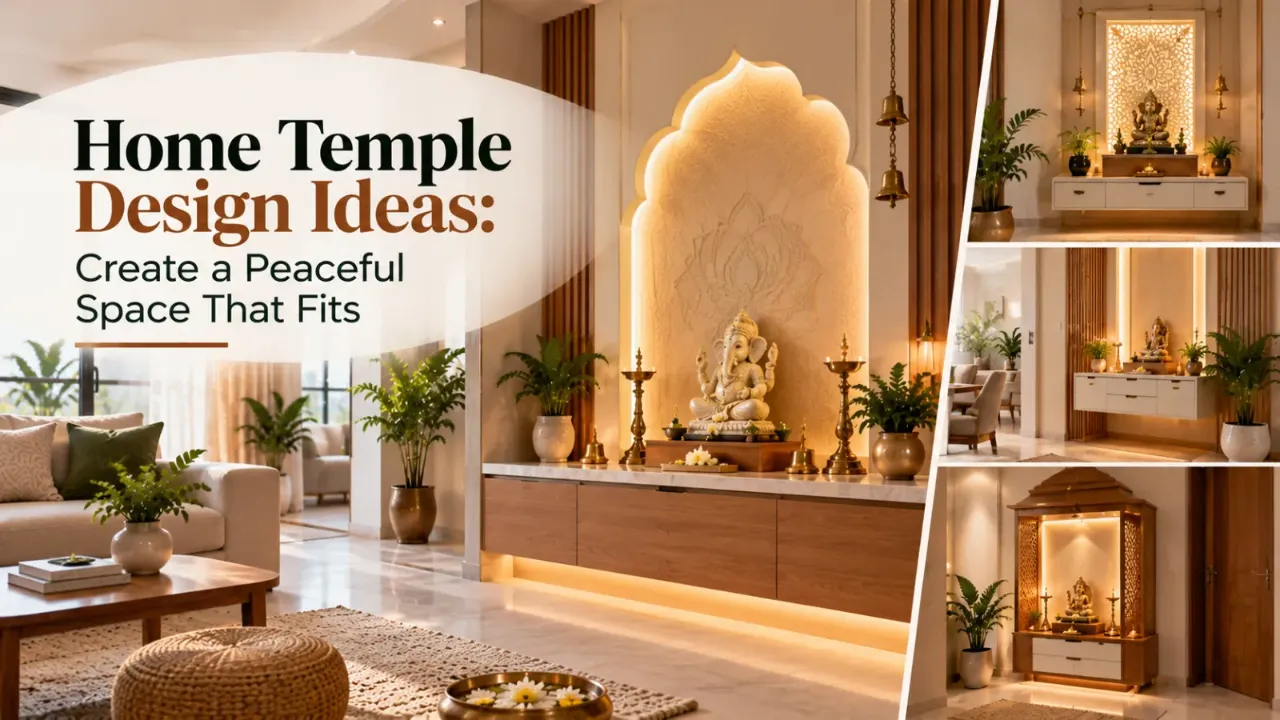
Home Temple Design Ideas: Create a Peaceful Space That Fits
A home mandir is more than a decorative feature. For many families, it is a place for prayer, reflection and daily rituals. Its design should feel peaceful and personal while fitting naturally into the home's layout.
Choosing the right mandir involves more than selecting a beautiful wooden structure or an ornate backdrop. The available space, household routines, preferred traditions, materials, lighting and storage all influence how well the design works over time.
Whether you live in a compact apartment or a spacious independent home, the aim is to create a sacred corner that feels intentional, comfortable to use and consistent with the rest of your interiors.
1. Start With the Space You Actually Have
Before choosing a mandir design, assess where it will be placed and how much room is available. A separate pooja room offers different possibilities from a small corner in a living room or a niche near a passage.
Measure the width, height and depth of the proposed area. Also consider movement around it, the opening of nearby doors and the distance from everyday activities.
For a compact home, a wall-mounted mandir, a shallow built-in niche or a compact freestanding unit may be suitable. A larger home may accommodate a dedicated pooja room, a built-in structure with storage or a more elaborate architectural backdrop.
The important point is to choose a design that suits the actual space rather than forcing a preferred style into an unsuitable location. If you are planning several rooms at once, the Walls to Wonder Whole Home Visualizer can help you explore a coordinated concept from your floor plan before finalising the interiors.
2. Choose a Style That Reflects Your Home and Traditions
Home mandir designs range from traditional carved wooden structures to clean-lined contemporary units. The right choice depends on your personal preferences, household practices and the interior style of the home.
- Traditional mandir: Carved wood, decorative arches, detailed pillars and traditional motifs can create a familiar, ceremonial appearance.
- Modern mandir: Clean lines, restrained detailing, simple panels and carefully integrated lighting can create a quieter look.
- Minimalist mandir: A simple shelf, understated backdrop and limited decorative elements can establish a dedicated prayer area without overwhelming a small room.
- Built-in mandir: A custom niche or integrated unit can make effective use of an alcove or unused wall and incorporate drawers, concealed storage and lighting.
- Freestanding mandir: A separate unit offers flexibility where permanent construction is not practical.
You do not have to match the mandir to every piece of furniture. A consistent material, complementary colour or shared design detail can connect it to the surrounding interiors while allowing it to remain distinct.
If you are unsure which overall interior style suits your home, the Walls to Wonder Interior Style Finder can help you explore a design direction based on your preferences, home type and budget.
3. Decide on the Location Before Finalising the Design
The mandir's location affects privacy, accessibility, lighting and the overall experience of using the space. Choose an area that supports your household's prayer routine and provides enough room for the activities you practise.
Some homeowners prefer a dedicated pooja room, while others use a quiet corner of the living room or a purpose-designed wall niche. In smaller homes, the placement may need to balance devotional use with limited floor space.
- Check whether the space is comfortable for your regular rituals.
- Ensure people can approach and use the mandir without obstructing a passage.
- Consider ventilation, lighting and the surrounding activity.
- Check whether nearby doors, furniture or appliances affect its use.
- If you follow specific traditions regarding direction or placement, confirm them before work begins.
Placement recommendations can vary across religious and family traditions, so avoid treating one layout rule as universal.
4. Select Materials That Suit the Design and Daily Use
Materials influence the mandir's appearance, durability and maintenance. The best choice is not necessarily the most expensive one; it is the material that suits your preferred style and the way the space will be used.
- Wood: Creates a warm, traditional appearance and is available in simple or intricately carved designs. Choose a suitable finish and plan for regular care.
- Marble or stone: Can create a substantial, refined appearance. Consider weight, installation requirements and cleaning.
- Tiles: Offer decorative options and can provide a practical, easy-to-clean backdrop.
- Laminates and engineered panels: Provide a range of colours and finishes for contemporary designs. Check their suitability around heat and open flames.
- Metal accents: Brass and other metal details can introduce traditional character without making every surface ornate.
Ask your designer or installer how the chosen materials will handle cleaning, heat exposure, moisture and everyday wear.
5. Plan Lighting for a Calm and Usable Space
Lighting can help the mandir feel distinct from the surrounding room. A combination of general illumination and carefully positioned accent lighting may be more useful than relying on a single bright fixture.
Concealed LED lighting can highlight a backdrop or niche, while a small, appropriately placed fixture can illuminate the idols and ritual area. Warm or neutral light may suit the design, depending on the materials and the atmosphere you prefer.
Plan the lighting before the structure is installed. This makes it easier to conceal wiring, position switches and avoid visible cables.
If you use oil lamps or candles, keep them at a safe distance from curtains, decorative fabrics, wooden panels and other combustible materials. Keep electrical fittings safely away from flames and excessive heat.
6. Make Storage Part of the Design
Prayer essentials need a convenient place, but leaving every item on the mandir surface can make it feel crowded. Storage should support your routine while keeping the main area clear.
Depending on the space available, consider a shallow drawer for smaller items, a cabinet for supplies, a discreet shelf for frequently used essentials or a separate compartment for textiles and accessories.
- Keep items used daily within easy reach.
- Store occasional-use belongings elsewhere.
- Plan cabinet dimensions around the items you actually keep.
- Make sure storage doors and drawers can open comfortably.
A cabinet that looks neat but cannot accommodate your regular supplies may become inconvenient soon after installation.
7. Keep the Design Balanced, Not Overdecorated
A mandir can be visually detailed without feeling cluttered. The key is to decide which feature should attract attention and let the remaining elements support it.
A carved wooden frame may need little additional decoration. A minimalist niche may benefit from one textured backdrop or a carefully chosen material contrast.
- Choose a clear focal point.
- Coordinate the backdrop with the mandir's material and finish.
- Avoid overcrowding the area with unrelated decorative objects.
- Leave sufficient room for idols and your regular rituals.
- Keep the floor and surrounding surfaces easy to clean.
Decorative arches, jaali panels, bells, motifs and patterned surfaces can all be appropriate, but they should serve the overall design rather than compete for attention.
8. Make Safety and Maintenance Part of the Plan
A well-designed mandir should be straightforward to clean and safe to use. This is especially important when the household regularly uses oil lamps, incense, flowers, water or other ritual items.
Make sure the structure is securely fixed and suitable for the weight it will carry. Wall-mounted units require appropriate support and installation hardware. Heavy stone or marble components may need a properly assessed base or supporting structure.
Keep flames away from combustible materials and make sure hot surfaces cannot be easily knocked over. Electrical wiring and lighting should be installed appropriately, with fittings selected for their location.
Choose finishes that can be maintained without specialist care unless you are prepared for the additional upkeep. Easy access to shelves, corners and storage areas makes routine cleaning more manageable.
9. Coordinate the Mandir With the Rest of the Home
A mandir should feel special, but it does not have to look disconnected from the rest of the interior. Repeating a wood finish, using a complementary wall colour or echoing a detail from nearby furniture can create continuity.
In a living room, a restrained partition or a built-in niche may define the prayer area without making it feel isolated. In a dedicated pooja room, the materials and lighting can be more distinctive while still relating to the home's overall palette.
If you want to preview possible colours, furniture and finishes in your existing room, try Design My Room on Walls to Wonder. It can help you explore a visual direction before making changes. Treat the generated design as inspiration, then confirm actual measurements, material suitability, ritual requirements and installation details.
10. Plan the Budget Before Installation
The final cost of a mandir depends on its size, materials, level of customisation, storage, lighting and installation requirements. A simple shelf or ready-made unit will usually involve different costs from a custom-built structure with stone, detailed carving or integrated electrical work.
List the features you need before requesting quotations. Separate essential requirements from optional decorative upgrades, and ask for a clear breakdown of materials, labour, fittings and installation.
For a broader home-interior budget, the Walls to Wonder Interior Design Cost Estimate can help you explore an indicative budget based on your property, rooms and selected work. A tool-generated estimate is a starting point, not a final mandir-specific quotation. Confirm actual costs with the designer or installer after measurements and material selections.
Plan Your Home's Interior With Confidence
Explore room concepts, discover your preferred style and plan your overall budget before finalising design decisions.
A Final Thought
The right home mandir design is not determined by size, ornamentation or cost alone. It is the one that respects your traditions, suits your available space and supports the way your family uses it.
Start with the location and practical requirements. Then choose the style, materials, lighting and storage that make the space feel personal and manageable. When these decisions are considered together, the mandir can become a meaningful part of the home without compromising everyday comfort.
Frequently Asked Questions
1. Which mandir design is best for a small home?
A wall-mounted mandir, compact niche or slim freestanding unit can work well in a small home. The best option depends on available wall space, storage needs and how much room is required for daily rituals.
2. Which materials are commonly used for home mandirs?
Wood, marble, stone, tiles, engineered panels and metal accents are all possible choices. Consider appearance, maintenance, weight, installation requirements and exposure to heat before selecting materials.
3. Can a mandir be designed in the living room?
Yes. A dedicated corner, built-in niche or thoughtfully designed partition can define a prayer area in the living room. Keep the location accessible and ensure it supports your household's practices.
4. How should lighting be planned for a home mandir?
Use lighting that makes the prayer area clear and comfortable without excessive glare. Concealed LEDs or a dedicated fixture can highlight the niche. Plan wiring early and keep electrical fittings safely away from open flames and heat.
5. How can I keep a mandir from looking cluttered?
Use storage for ritual supplies, limit decorative elements and keep the main surface organised. Choose a clear focal feature and leave enough space for the idols and items used during prayer.
6. Should I follow a particular direction when placing a mandir?
Placement preferences vary by religious tradition, family practice and design guidance. If direction is important to you, confirm the relevant requirements with a trusted source before finalising the layout.
7. What should I check before installing a built-in mandir?
Confirm measurements, structural support, material suitability, wiring, lighting, storage access, cleaning requirements and safe space for lamps or incense. Resolve these details before the carpentry or installation begins.
Turn this idea into a plan for your home
Visualise your space, understand the likely budget, or find a professional who can bring the idea to life.