
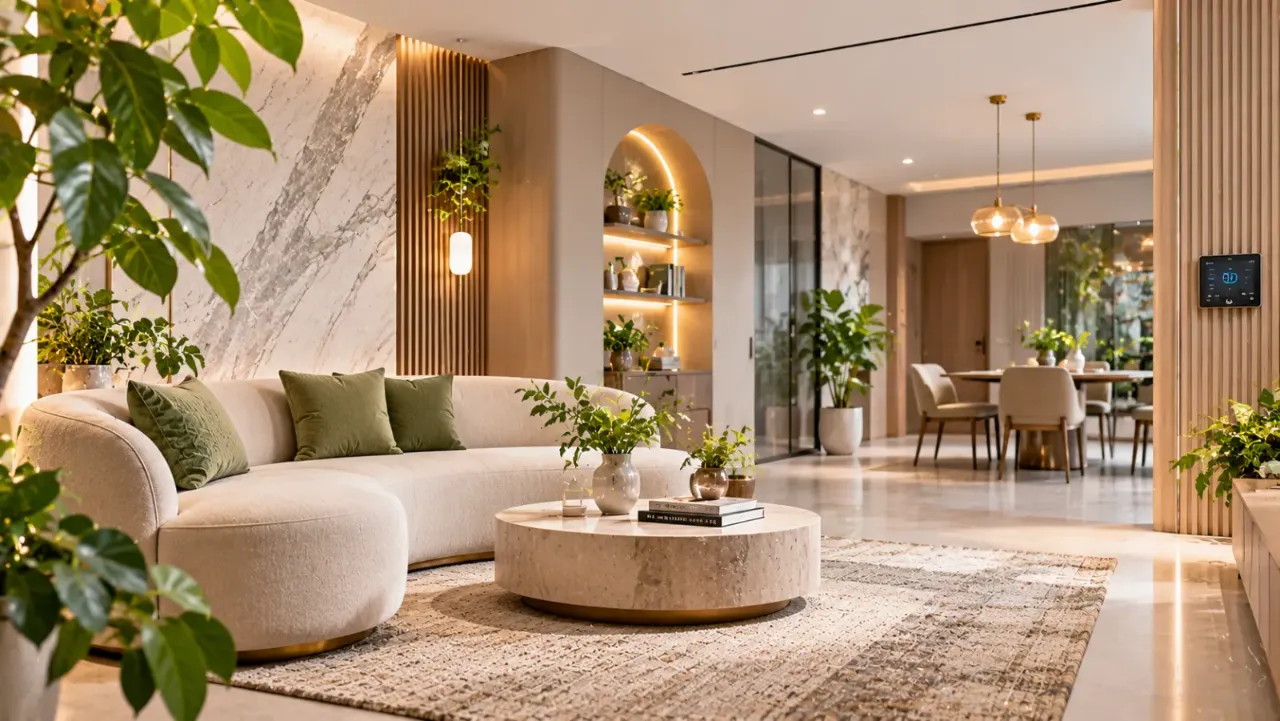
Home Interior Trends for 2027: What to Expect
Home interiors are changing. The focus is gradually moving away from perfectly coordinated rooms and heavily decorated spaces towards homes that feel personal, comfortable and connected to everyday life.
In 2027, this shift is expected to become more visible through richer colour palettes, expressive furniture shapes, natural materials, handcrafted details and rooms that adapt to different activities. Instead of following one fixed design style, homeowners are becoming more open to combining contemporary furniture with traditional objects, modern finishes with natural textures, and technology with understated design.
For Indian homes, these ideas need to work alongside practical considerations such as limited space, changing weather, dust, maintenance, family routines and budgets.
Here are the home interior trends worth understanding in 2027, along with ways to use them without making your home feel dated too quickly.
1. Earthy Colours Become Richer and More Expressive
Neutral colours are not disappearing, but they are becoming more layered. Instead of relying entirely on white, beige and cool grey, 2027 interiors are expected to use deeper, more expressive natural shades.
Colours to look out for include:
- Olive and muted greens
- Chocolate and walnut brown
- Terracotta and clay
- Mushroom and warm taupe
- Dusty blue and muted teal
- Deep burgundy as a restrained accent
These colours can make a room feel more grounded without requiring elaborate decoration.
2. Natural Materials Take Centre Stage
Materials are becoming an important part of the visual identity of a home. Rather than choosing finishes only because they look polished, homeowners are showing greater interest in visible grain, natural variation and tactile surfaces.
Expect to see more:
- Wood with visible grain
- Natural and engineered stone with distinctive patterns
- Linen, cotton and textured upholstery
- Cane and woven details
- Limewash and mineral-inspired wall finishes
- Handmade ceramics and locally crafted objects
The appeal lies in how these materials add depth without relying on excessive decoration.
3. Sculptural Furniture and Softer Shapes
Straight lines and box-shaped furniture will continue to have their place, but softer silhouettes are gaining attention.
Rounded sofas, curved armchairs, oval dining tables, sculptural coffee tables and furniture with softened edges can make a room feel less rigid.
This trend is not about filling every corner with curved furniture. One or two distinctive pieces can create enough visual interest.
4. Personalised Interiors Replace Perfectly Matched Sets
A home does not have to look as though every piece was purchased from the same collection. One of the stronger directions for 2027 is a more collected approach to interiors.
This means combining contemporary furniture with vintage finds, inherited objects, handmade decor, family photographs and artwork collected over time.
The result can feel more individual than a room where every finish and accessory matches.
5. Handcrafted Details and Indian Craft Get More Attention
Handcrafted objects are becoming more than occasional decorative additions. They can give a home a distinct identity while supporting local makers and traditional techniques.
Look for:
- Handcrafted wooden furniture
- Block-printed and woven fabrics
- Brass and metal accessories
- Handmade pottery
- Carved screens and decorative panels
- Regional artwork and traditional craft pieces
Indian homes already have access to a wide range of craft traditions. The opportunity is to incorporate them thoughtfully rather than treating them as a separate decorative theme.
6. Lighting Becomes More Layered and Decorative
Lighting is moving beyond a single ceiling fixture or a grid of downlights. More attention is being given to how different sources work together.
A well-planned room may combine:
- General ambient lighting
- Task lighting for reading, cooking and working
- Accent lighting for artwork and architectural details
- Decorative pendants and table lamps
- Concealed lighting in selected areas
Sculptural lamps and statement pendants can also act as design features.
7. Walls Gain Depth Through Texture and Colour
Plain painted walls will remain useful, but more homeowners are exploring surfaces that add depth and character.
Some directions gaining attention include:
- Limewash and mineral-style finishes
- Textured paint
- Coloured walls with matching trim
- Selective wall panelling
- Wallpaper with restrained patterns
- Decorative plaster and stone-inspired surfaces
Colour drenching, where walls and selected architectural elements use related shades, can also create a more continuous look.
8. Flexible Rooms Become More Important
Homes increasingly need to support more than one activity. A spare bedroom may also be a workspace, a dining corner may double as a study area, and a balcony may become a small relaxation zone.
Flexible interiors can include:
- Foldable desks
- Sofa beds
- Extendable dining tables
- Sliding partitions
- Movable storage
- Wall-mounted workstations
- Convertible guest-room furniture
The idea is to make the same floor area work harder without making the home feel permanently occupied by furniture.
9. Wellness Becomes Part of Everyday Home Design
Wellness in interiors is moving beyond a dedicated spa-like bathroom or a corner filled with plants. It is increasingly connected to how the whole home supports rest, movement, concentration and comfort.
This includes:
- Better daylight and glare control
- Comfortable seating and supportive mattresses
- Good ventilation
- Reduced visual clutter
- Acoustic comfort
- Natural materials and indoor greenery
- Dedicated spaces for reading, hobbies or relaxation
10. Smart Technology Becomes Less Visible
Technology is becoming more integrated into the home rather than being displayed as a collection of separate devices.
Examples include:
- Smart lighting controls
- Automated curtains
- Integrated charging points
- Concealed cable management
- Smart locks and security systems
- Sensors and scene-based lighting
The focus is on convenience without creating visual clutter.
11. Durable and Responsible Material Choices Matter More
Sustainability is increasingly being connected with how long a product lasts, how easily it can be repaired and where its materials come from.
Instead of choosing a product simply because it is marketed as eco-friendly, consider:
- Material durability
- Repair and replacement options
- Low-emission finishes
- Responsible sourcing
- Local availability
- Maintenance requirements
- Adaptability over time
A durable wardrobe with reliable hardware may be a better long-term choice than a cheaper unit that needs frequent repairs.
12. The Kitchen Becomes More Than a Cooking Space
The kitchen is increasingly being treated as a part of the home's social life. Depending on the layout, it may also include a breakfast counter, informal dining space or a small family interaction area.
Design priorities include:
- Better internal cabinet organisation
- Convenient appliance placement
- Easy-to-clean surfaces
- Comfortable task lighting
- Breakfast counters where space permits
- Storage that keeps frequently used items accessible
13. What Is Gradually Losing Its Appeal?
Not every earlier trend needs to be removed from an existing home. However, some approaches are becoming less interesting when used without a clear purpose.
| Earlier design habit | More considered approach |
|---|---|
| Entire rooms in cool grey | Warmer, layered neutrals |
| Matching furniture sets | Mix of complementary pieces |
| Decorative panels on every wall | Selective texture and detailing |
| Too many ceiling spotlights | Layered lighting |
| Trend-led finishes everywhere | Durable base with changeable accents |
| Display shelves filled with decor | Curated objects and useful storage |
| Technology visibly added everywhere | Integrated and discreet controls |
A trend becoming less prominent does not mean it is automatically unsuitable. The important question is whether it works for your home.
14. How to Bring 2027 Trends Into an Indian Home Without Overspending
You do not need to redesign your entire home to make it feel current. A few thoughtful changes can introduce new ideas without replacing everything.
- Start with the existing layout: Identify what is working and what causes daily inconvenience.
- Choose one colour direction: Introduce richer natural shades through paint, upholstery or accessories.
- Add texture selectively: Combine wood, fabric, stone and handcrafted details.
- Improve lighting: Add task and accent lighting where they are genuinely needed.
- Make one furniture change: Consider a sculptural chair, rounded table or flexible furniture piece.
- Keep permanent finishes practical: Prioritise durability, maintenance and repairability.
- Avoid copying an entire trend: Select elements that suit your space, climate and lifestyle.
The most successful interiors are not necessarily those that include the greatest number of trends. They are the ones where every choice has a purpose.
The Professional Judgement: Choose Trends That Will Still Work in 2030
A home should not need a complete redesign every time a new trend appears. Colours, accessories and lighting can evolve, but the underlying layout, storage, materials and furniture should support everyday living for years.
Use 2027 trends as inspiration rather than a shopping list. Invest in comfortable spaces, reliable materials and practical design decisions. Let personal objects, artwork and smaller decorative details bring in the character.
That balance makes a home feel current without making it dependent on what is fashionable for one year.
Use AI to Explore Your Home's Next Look
Before making changes, explore different design directions with Walls to Wonder's AI tools.
Frequently Asked Questions About Home Interior Trends for 2027
1. What are the biggest home interior trends for 2027?
Some of the emerging directions include richer earthy colours, natural materials, sculptural furniture, handcrafted details, layered lighting, flexible rooms, personalised interiors and discreet smart technology.
2. Which colours will be popular in 2027 interiors?
Muted greens, olive, chocolate brown, terracotta, clay, mushroom and warm taupe are prominent directions. Dusty blues and deeper accent colours can also add contrast.
3. Is minimalism still relevant in 2027?
Yes. Minimalism is becoming more personal and textured. Rather than relying on empty rooms and plain surfaces, the focus is on fewer but more meaningful objects, natural materials and comfortable spaces.
4. What furniture styles are gaining attention in 2027?
Rounded sofas, sculptural coffee tables, oval dining tables, curved chairs and flexible furniture are among the styles receiving attention.
5. Are natural materials suitable for Indian homes?
They can be, but the choice depends on the location and application. Consider humidity, heat, dust, maintenance and moisture exposure before choosing wood, stone, cane or natural fabrics.
6. How can I follow 2027 trends on a limited budget?
Start with paint, cushions, curtains, lighting and movable accessories. These can change the appearance of a room without requiring major construction or replacement of permanent finishes.
7. What interior trends should I avoid overusing?
Avoid applying a single trend everywhere. Excessive wall panelling, too many decorative lights, matching furniture sets and trend-led finishes on every surface can make a home feel repetitive.
8. How can I make my home look modern without renovating everything?
Improve lighting, reorganise furniture, introduce a considered colour palette, update textiles and display meaningful objects. Focus on the areas that have the greatest impact on daily use.
Make your home feel personal, comfortable and ready for the years ahead. Explore more ideas, planning resources and design tools on Walls to Wonder.
Turn this idea into a plan for your home
Visualise your space, understand the likely budget, or find a professional who can bring the idea to life.