
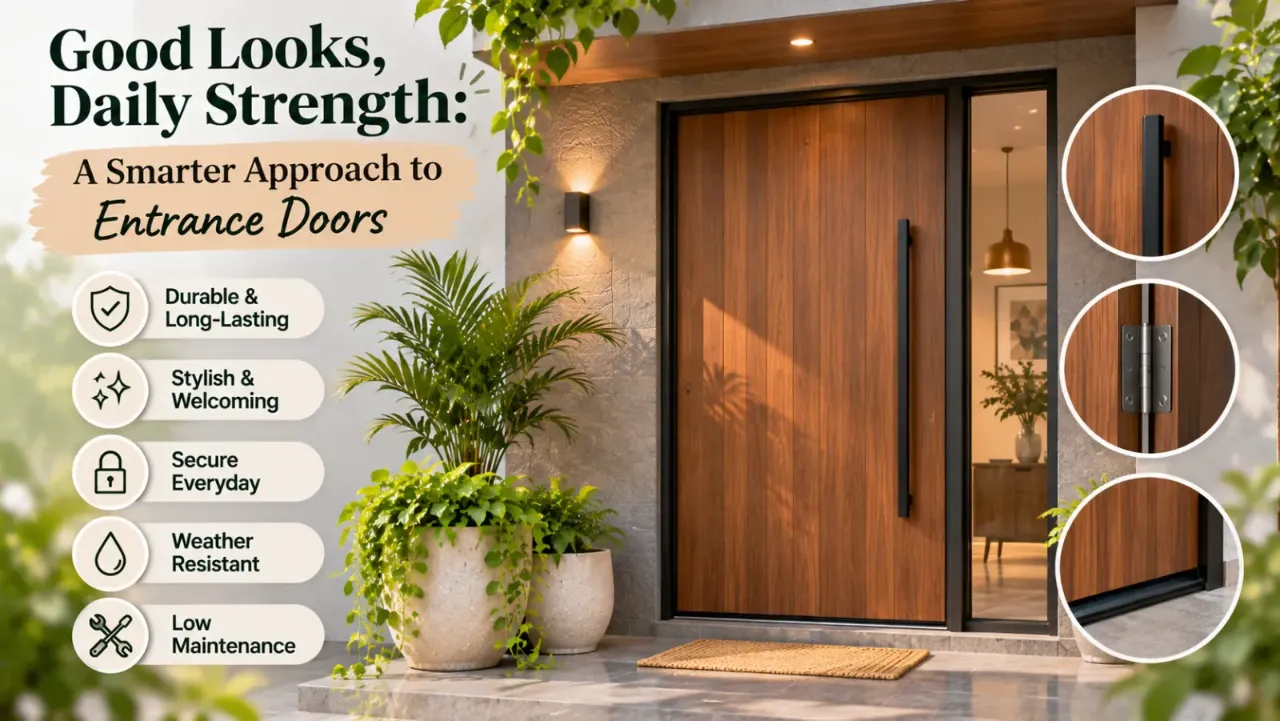
Good Looks, Daily Strength: A Smarter Approach to Entrance Doors
The entrance door is one of the first elements people notice when they approach a home. Its proportions, material, colour and detailing contribute to the character of the façade, while the view from inside helps establish the transition between private and public spaces.
But an entrance door has a job beyond looking attractive. It is opened and closed repeatedly, exposed to changing weather conditions, fitted with security hardware and expected to provide privacy without making everyday movement inconvenient. A design that looks impressive but is difficult to operate or maintain may become frustrating over time.
The right entrance door design brings these considerations together. Here is how to balance aesthetics, durability and daily use before finalising the main entrance.
1. Start With the Architecture of the Home
An entrance door should feel connected to the building rather than appearing like an unrelated decorative feature. Its design needs to work with the façade's proportions, materials, colours and architectural style.
For a contemporary home, a simple door with clean lines, restrained detailing and a suitable finish may create a cohesive appearance. A traditional home may work better with framed panels, crafted details or a more substantial timber look.
Before choosing a design, consider:
- The overall style of the exterior.
- The width and height of the entrance opening.
- The surrounding wall finish and materials.
- The location of windows, steps, columns and the porch.
- Whether the door is visible directly from the street or set within a covered entrance.
The aim is not to match every exterior element exactly. It is to create a door that belongs naturally to the home's overall design.
2. Choose a Material That Suits Its Exposure
The material affects the door's appearance, weight, maintenance requirements and long-term performance. The right choice depends on the local climate, the amount of protection offered by the entrance and how frequently the door will be used.
Solid wood and engineered wood: Wooden doors offer a natural appearance and can suit both traditional and contemporary homes. However, the specific wood or engineered product, protective coating, construction and exposure conditions matter. Moisture and direct sunlight can affect some finishes and door assemblies over time.
Metal doors: Steel and other metal options can offer a clean, contemporary appearance and may be suitable where strength is a priority. Their protective coating, corrosion resistance, detailing and installation quality need attention, particularly in exposed locations.
Glass and glazed doors: Glass can bring daylight into an entrance and make a compact foyer feel more open. The glass type, safety specification, framing, privacy and hardware must be appropriate for the application. Decorative appearance alone is not enough to establish suitability.
Composite and other manufactured doors: These can offer different combinations of appearance, weight and maintenance requirements. Check the manufacturer's specifications, suitability for exterior exposure, installation requirements and after-sales support before deciding.
Do not choose a material based only on a showroom sample. Ask how the complete door system will perform in the actual location.
3. Get the Proportions and Opening Right
A visually attractive door can still feel awkward if its size or opening arrangement does not suit the entrance.
Consider whether a single-leaf or double-leaf arrangement is more appropriate. A single door may work well for a compact entrance, while a wider opening may call for a different configuration. The decision should be based on the available space, circulation and intended use.
Check the following before finalising the design:
- The clear opening available for people and everyday movement.
- The direction in which the door will swing.
- Whether the open door will obstruct a passage, furniture or steps.
- The position of the handle and locking hardware.
- The clearance needed for the frame, threshold and surrounding finishes.
The exact dimensions and opening arrangement should be confirmed on site by the architect, designer or door installer. Avoid relying on a visual reference image as a substitute for measurements.
4. Balance Privacy With Natural Light
The entrance often needs to protect the home's privacy while still allowing the foyer to feel welcoming. A fully solid door provides a different experience from one with glazed sections, sidelights or decorative openings.
If daylight is important, consider carefully positioned glazing, translucent glass or a separate side panel. The choice should account for sightlines from the street, neighbouring properties and the internal layout.
Useful questions include:
- Can someone outside see directly into a private room?
- Does the entrance receive enough daylight?
- Would translucent or textured glazing provide a better balance?
- Is the glazing suitable for the door's location and safety requirements?
- Can privacy be maintained at night when interior lights are on?
A good entrance design lets light in where it is useful without exposing more of the home than intended.
5. Treat Security as Part of the Design
Locks, hinges, frames and installation details all contribute to the security of an entrance door. A visually heavy door is not automatically a secure one, and a premium lock cannot compensate for a poorly installed frame.
Discuss the complete door assembly with a qualified supplier or installer. Consider the quality and compatibility of the lock, hinges, frame, strike plate and fixing arrangement. Also check how the door closes and whether the locking mechanism can be operated comfortably by the household.
For doors with glazing, ask how the glass specification and its placement affect the security and safety of the complete assembly.
Security requirements vary by property and location. Choose hardware and installation details based on professional advice rather than relying on appearance or marketing descriptions alone.
6. Select Finishes for Appearance and Maintenance
The finish gives an entrance door much of its personality. Natural wood tones, painted surfaces, textured laminates, metal finishes and glass details can each create a different impression.
However, finishes should be selected with their maintenance needs in mind.
- Natural wood finishes: Can highlight grain and texture but may need periodic care or recoating depending on the product and exposure.
- Painted finishes: Offer flexibility in colour, but surface preparation and coating quality affect durability.
- Laminates and manufactured surfaces: Provide a range of patterns and colours; check whether the selected product is suitable for the intended exterior conditions.
- Metal finishes: Can look crisp and modern, but the coating and corrosion protection should suit the environment.
- Glass details: Need appropriate cleaning and care, especially where fingerprints and water marks are visible.
Ask the supplier for cleaning instructions, recommended products and expected maintenance requirements. A finish that looks beautiful in a sample may behave differently when exposed to sunlight, rain, dust and frequent handling.
7. Pay Attention to Hardware and Everyday Operation
The handle, hinges, lock and door closer may look like small details, but they influence how the entrance feels every day.
Choose a handle that is comfortable to grip and positioned conveniently. Make sure the locking system is easy for household members to operate. Hinges and other moving components should be suitable for the door's weight and frequency of use.
Before installation is complete, check:
- The door opens and closes without scraping.
- The latch engages correctly.
- The lock operates smoothly.
- The handle feels secure and comfortable.
- The door does not swing into an inconvenient circulation area.
- Any closer or stopper works as intended.
Do not ignore minor alignment problems during handover. A door that already catches, rattles or resists closing may need adjustment before regular use.
8. Plan for Weather, Dust and Moisture
An entrance door may face direct sun, rain, dust, humidity or a combination of these conditions. The amount of exposure depends on the direction of the entrance and whether it is protected by a porch, canopy or recessed façade.
For exposed entrances, pay attention to the door's weather protection, frame details, threshold and perimeter seals. These components should be designed as part of the complete installation rather than treated as finishing touches.
In areas with heavy rain or wind-driven moisture, ask how water will be directed away from the entrance and whether the threshold detail is suitable. In dusty environments, consider how easily the door surface and surrounding frame can be cleaned.
A covered entrance can reduce direct exposure, but it does not remove the need for suitable materials and detailing.
9. Make the Entrance Comfortable to Use
Daily convenience depends on more than the door itself. The space immediately around it should support arrival, departure and movement.
Think about:
- Whether there is enough clear space to open the door fully.
- Whether steps or a raised threshold create difficulty.
- Whether the entrance is adequately lit at night.
- Whether visitors can approach without obstructing the main circulation path.
- Whether there is a practical place for footwear, keys or parcels.
- Whether the door can be operated comfortably by all regular household users.
If the home has children, older residents or people with mobility requirements, discuss suitable access and hardware arrangements with the designer. The entrance should support the household's real routines, not just the appearance shown in a design rendering.
10. Check the Complete Installation Before Handover
Even a well-selected door can underperform if the frame, hardware or finishing work is not installed properly. Before accepting the completed entrance, inspect the whole assembly.
Use this checklist:
- Confirm that the door and frame match the approved specifications.
- Check that the frame is properly aligned and securely installed.
- Open and close the door several times.
- Test the lock, latch, handles and other hardware.
- Look for uneven gaps, rubbing or visible damage.
- Check the seals, threshold and surrounding finish.
- Ask for cleaning and maintenance instructions.
- Keep the product warranty and supplier details.
If anything feels loose, uneven or difficult to operate, have it assessed and corrected before handover is complete.
Explore Interior Planning Tools
Once the practical requirements are understood, visualisation and planning tools can help explore how the entrance and surrounding interior may work together. Walls to Wonder offers tools for different stages of interior planning:
- Design My Room – Explore room designs, finishes and furniture combinations around your entrance.
- Whole Home Visualizer – Explore coordinated design concepts across different areas of your home.
- Interior Design Cost Estimate – Get an indicative starting point for interior budget planning.
- Interior Quotation Checker – Review quotation scope, materials, charges and exclusions.
These tools support interior planning and visualisation. They do not verify door security ratings, structural adequacy, installation quality or compliance with applicable building requirements. Those decisions require qualified professional input.
Final Thought
A good entrance door makes a strong first impression, but its real value is revealed through everyday use. The material should suit the home's exposure, the design should complement the façade, and the hardware should make entry and exit comfortable.
Give equal attention to proportions, privacy, security, weather protection and maintenance. When these decisions are considered together, the entrance door becomes more than a decorative feature: it becomes a practical and lasting part of the home.
Frequently Asked Questions
1. Which material is best for an entrance door?
There is no single best material for every home. Wood, metal, glass and composite options each have different appearance, maintenance and performance characteristics. The right choice depends on exposure, security requirements, budget and maintenance expectations.
2. Is a glass entrance door suitable for a home?
It can be suitable when the glass, framing, hardware, privacy and safety specifications are appropriate for the location. The complete assembly should be selected and installed with professional guidance.
3. How can I make my main entrance more private?
Consider solid door panels, carefully positioned glazing, translucent glass, textured finishes or suitable sidelights. Check sightlines from outside, including at night when interior lights are on.
4. What should I check before installing an entrance door?
Confirm the opening dimensions, swing direction, frame, threshold, material specifications, hardware, security requirements and weather protection. Have the measurements and installation details checked on site.
5. How do I maintain a wooden entrance door?
Follow the manufacturer's cleaning and coating recommendations. Keep an eye on finish deterioration, moisture exposure and changes in how the door opens or closes. Recoating or repairs should use products suitable for the specific door.
6. Why is door hardware important?
Hinges, locks, handles and latches affect security, comfort and daily operation. They should be compatible with the door's weight and design, installed correctly and checked periodically.
Turn this idea into a plan for your home
Visualise your space, understand the likely budget, or find a professional who can bring the idea to life.