
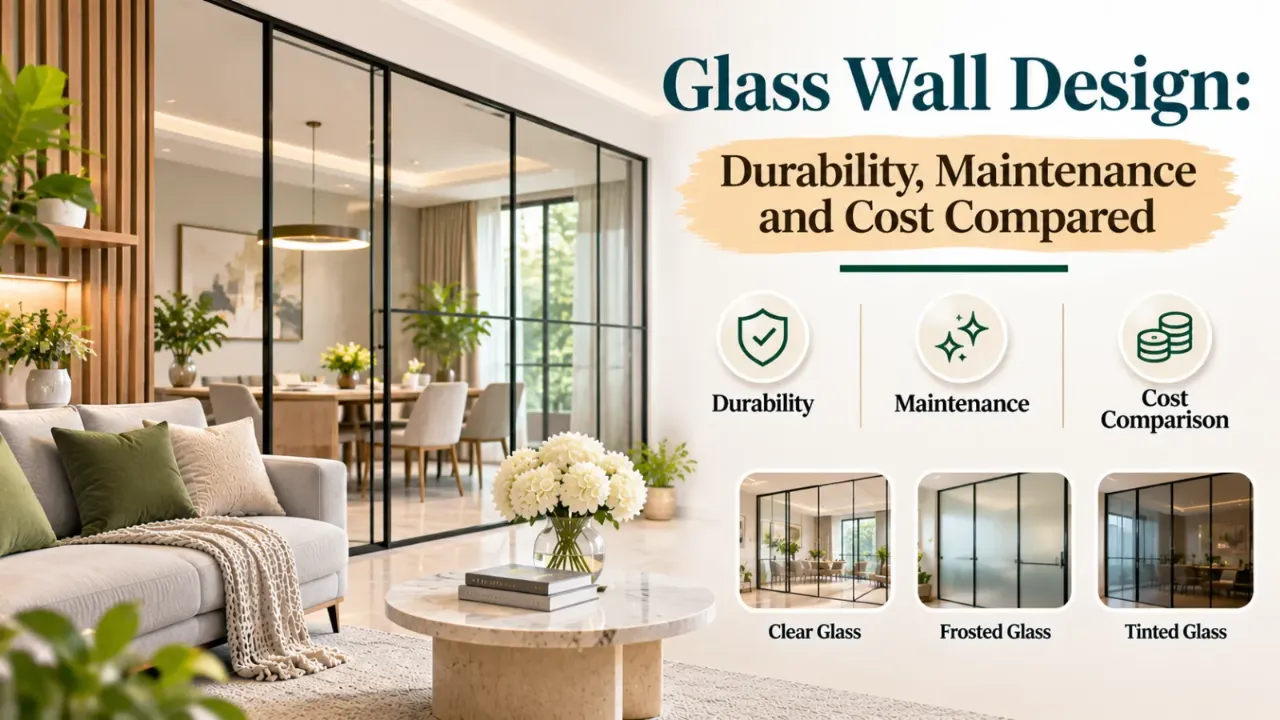
Glass Wall Design: Durability, Maintenance and Cost Compared
Glass walls can make a home feel brighter, more open and visually connected. They are often used to separate a living room from a dining area, enclose a study, divide a kitchen or create a subtle boundary without making a space feel boxed in.
But a glass wall is more than a design feature. Its performance depends on the type of glass, the framing system, the quality of installation and how well the fittings are maintained. Before finalising a glass wall design, it helps to compare its durability, maintenance needs and overall cost.
1. Start With the Purpose of the Glass Wall
The first decision should be about what the glass wall needs to achieve. If the priority is to keep a living and dining area visually connected, clear glass may be suitable. For a study or bedroom dressing area, frosted or fluted glass can offer some privacy while allowing light to pass through. A kitchen partition may need a surface that is easy to clean and a frame that can handle everyday use.
Think about these questions before choosing a style:
- Is the wall meant to divide spaces or simply define separate zones?
- How much privacy is needed?
- Will the partition include a sliding or hinged door?
- Is sound reduction important?
- Will children, pets or frequent movement make the area more demanding?
- Is the glass exposed to moisture, cooking residue or frequent handling?
The answers will help determine the glass type and support system, rather than letting appearance drive the entire decision.
2. Compare the Main Types of Glass
Different glass finishes create different levels of transparency, privacy and visual texture. The right option depends on the room and how the partition will be used.
Clear Glass
Clear glass maintains an uninterrupted view and allows maximum visual connection between spaces. It works well in living–dining partitions, study enclosures and areas where natural light is important. Its main drawback is that fingerprints, dust and smudges are easy to notice. It also offers very little visual privacy.
Frosted Glass
Frosted glass softens visibility while still allowing light through. It is useful where a room needs separation without becoming completely enclosed. The finish can be created through different treatments or films. Check whether the frosting is part of the glass itself or an applied film, because their long-term care and replacement needs can differ.
Fluted Glass
Fluted or reeded glass has a textured surface that distorts clear views. It adds visual interest and can work well in kitchen partitions, entry areas and study enclosures. The grooves can collect dust, so cleaning takes slightly more effort than cleaning a smooth pane.
Tinted Glass
Tinted glass introduces a subtle colour to the partition and can reduce the sense of visual exposure. Grey, bronze and other muted tones can complement different interior palettes. However, tint changes how colours and light appear through the glass. Review a sample in the actual room's lighting before approving it.
3. Toughened or Laminated: Safety Comes First
The glass specification is one of the most important decisions in a glass wall project.
Toughened glass is heat-treated to improve its strength compared with ordinary annealed glass. If it breaks, it generally fragments into smaller pieces rather than large sharp shards.
Laminated glass consists of two or more glass layers bonded with an interlayer. If the glass breaks, the fragments tend to remain attached to that layer.
These options are not interchangeable. The suitable specification depends on the panel dimensions, support arrangement, location and safety requirements. A designer or qualified glazing professional should confirm the appropriate glass type and thickness for the actual installation.
4. Framed or Frameless: Which System Works Better?
The frame affects the appearance, support, installation and maintenance of a glass wall.
Framed Glass Walls
Framed systems use aluminium, steel or another suitable framing material around the glass panels. They can create a defined grid-like appearance and provide a clear structure for the installation. They are worth considering when the design calls for multiple panels or a more visually prominent partition. The frame finish and joint detailing should be selected carefully, especially in areas exposed to moisture.
Frameless Glass Walls
Frameless systems minimise visible framing and create a cleaner, more continuous appearance. They usually rely on channels, clamps or other specified fittings to support the glass. The look is minimal, but the installation needs accurate measurements and suitable structural support. The quality of the channels, fittings, seals and workmanship matters as much as the glass itself.
Neither system is automatically better. Choose based on the opening, panel size, design intent, safety requirements and maintenance expectations.
5. What Makes a Glass Wall Durable?
Glass itself may be relatively easy to clean, but the complete partition is made up of several components. Weakness in any one of them can affect how well the system performs over time.
- Glass specification: The type, thickness and treatment must suit the panel dimensions and application.
- Edge finishing: Edges should be properly finished and free from visible damage before installation.
- Frames and channels: These should be suitable for the environment and securely fixed.
- Hardware: Hinges, handles, clamps, rollers and sliding tracks should be appropriate for the weight and frequency of use.
- Seals and joints: Poorly finished joints can allow dust, moisture or unwanted movement.
- Installation quality: Incorrect alignment or inadequate support can create operational and safety problems.
A glass wall should not be judged only by how it looks on installation day. The quality of the complete assembly determines how reliably it works.
6. Glass Wall Maintenance: What Does It Involve?
Glass walls do not usually need complicated cleaning routines, but regular care helps preserve their appearance and keeps moving parts working properly.
For Smooth Glass Surfaces
- Use a soft microfibre cloth and a suitable glass cleaner.
- Wipe spills and fingerprints before they build up.
- Avoid abrasive pads that can scratch surfaces or damage finishes.
- Follow the manufacturer's cleaning guidance for treated or coated glass.
For Fluted and Textured Glass
- Clean along the grooves using a soft cloth or suitable brush.
- Avoid leaving dust to accumulate in recessed areas.
- Check the finish manufacturer's instructions before using cleaning chemicals.
For Frames and Hardware
- Wipe frames with a cleaner suitable for their material and finish.
- Keep sliding tracks clear of dust and grit.
- Check handles, hinges, rollers and visible fixings periodically.
- Arrange professional attention if a panel begins to move, rattle or sit unevenly.
A little routine care can prevent small issues from becoming expensive repairs.
7. Understanding the Cost of a Glass Wall
The cost of a glass wall is influenced by much more than the glass area. The final quote can change depending on the glass specification, frame, finish, hardware and complexity of the installation.
The main cost factors include:
- Glass type: Clear, frosted, fluted, tinted and laminated options can have different prices.
- Thickness and panel size: Larger or heavier panels may require specialised handling and stronger support.
- Frame system: Standard channels, slim aluminium frames, steel frames and frameless fittings have different costs.
- Doors and hardware: Sliding systems, hinges, handles, locks and floor springs can add to the total.
- Customisation: Curved panels, special finishes, patterns and made-to-measure details can increase fabrication costs.
- Site conditions: Access, existing flooring, ceiling conditions and installation complexity can affect labour and preparation.
- Finishing work: Sealing, adjustments and making good around the partition should be accounted for.
Ask for an itemised quotation rather than comparing only a single per-square-foot rate. Confirm whether the price includes measurement, transport, installation, hardware, sealants, finishing and taxes.
8. Common Mistakes to Avoid
A glass wall can become inconvenient when important practical details are overlooked.
- Choosing clear glass in a location where privacy is essential.
- Selecting a glass thickness without checking panel size and support requirements.
- Comparing quotes that use different glass specifications.
- Ignoring the quality of hinges, rollers, channels and other fittings.
- Forgetting to account for door movement and clearance.
- Overlooking cleaning access, particularly for textured or large panels.
- Assuming a glass partition will provide complete sound privacy.
- Approving the design without reviewing a physical sample of the glass and frame finish.
The best way to avoid these issues is to finalise the purpose, specification and installation details before approving the quotation.
9. A Practical Checklist Before You Approve the Design
Before giving the go-ahead, make sure the following details are documented:
- Glass type and thickness.
- Toughened or laminated safety specification, as applicable.
- Panel dimensions and edge finish.
- Frame material and finish.
- Type and quality of hinges, handles, rollers and channels.
- Door configuration and opening direction.
- Seals, joints and installation method.
- Cleaning and maintenance instructions.
- Itemised material, hardware, labour and installation costs.
- Warranty terms and responsibility for future adjustments.
A clear specification makes it easier to compare suppliers and reduces the risk of unexpected additions later.
Final Thought
A glass wall can bring light, openness and a refined finish to a home, but its success depends on practical decisions behind the design. The right glass, suitable framing, reliable hardware and careful installation all contribute to long-term performance.
Instead of choosing only by appearance or the lowest quotation, compare the complete system. A well-planned glass wall should look good, suit the way the room is used and remain manageable to maintain.
Explore More with Walls to Wonder
Planning a glass partition or updating your interiors? Explore the Design My Room tool to experiment with room concepts, finishes and furniture choices.
For a more coordinated approach across multiple spaces, try the Whole Home Visualizer.
Planning the budget? Use the Interior Design Cost Estimate for preliminary budget planning, and the Interior Quotation Checker to review quotation scope, materials, charges and exclusions.
These tools can support interior planning and visualisation. Final glass specifications, structural support and installation should be confirmed with qualified professionals.
Frequently Asked Questions
1. Which glass is best for a home partition wall?
The right choice depends on the application. Toughened and laminated safety glass are common options to discuss with a glazing professional. Privacy can be adjusted through clear, frosted, fluted or tinted finishes.
2. Is a frameless glass wall durable?
It can be durable when the glass specification, support, channels and fittings are correctly selected and installed. Frameless systems require particular care with measurements and fixing details.
3. Are glass walls difficult to maintain?
Smooth glass is generally straightforward to clean with a soft cloth and suitable cleaner. Fluted glass needs extra attention because dust can collect in its grooves. Tracks and hardware in sliding systems also need periodic cleaning.
4. Do glass partitions provide soundproofing?
A standard single-glazed partition should not be assumed to provide complete soundproofing. The glass build-up, seals, gaps, door details and surrounding construction all influence sound performance.
5. What affects the cost of a glass wall?
Glass type, thickness, panel size, frame design, hardware, custom finishes, site access and installation requirements all influence the final cost. Ask for a detailed quotation that clearly states what is included.
6. Is frosted glass better than clear glass?
Frosted glass provides more visual privacy while still allowing light through. Clear glass creates a more open view but offers little privacy. The better choice depends on the room's function.
Get a personalised estimate for your home
Choose your rooms, materials and preferences to understand a practical interior budget before you commit.