
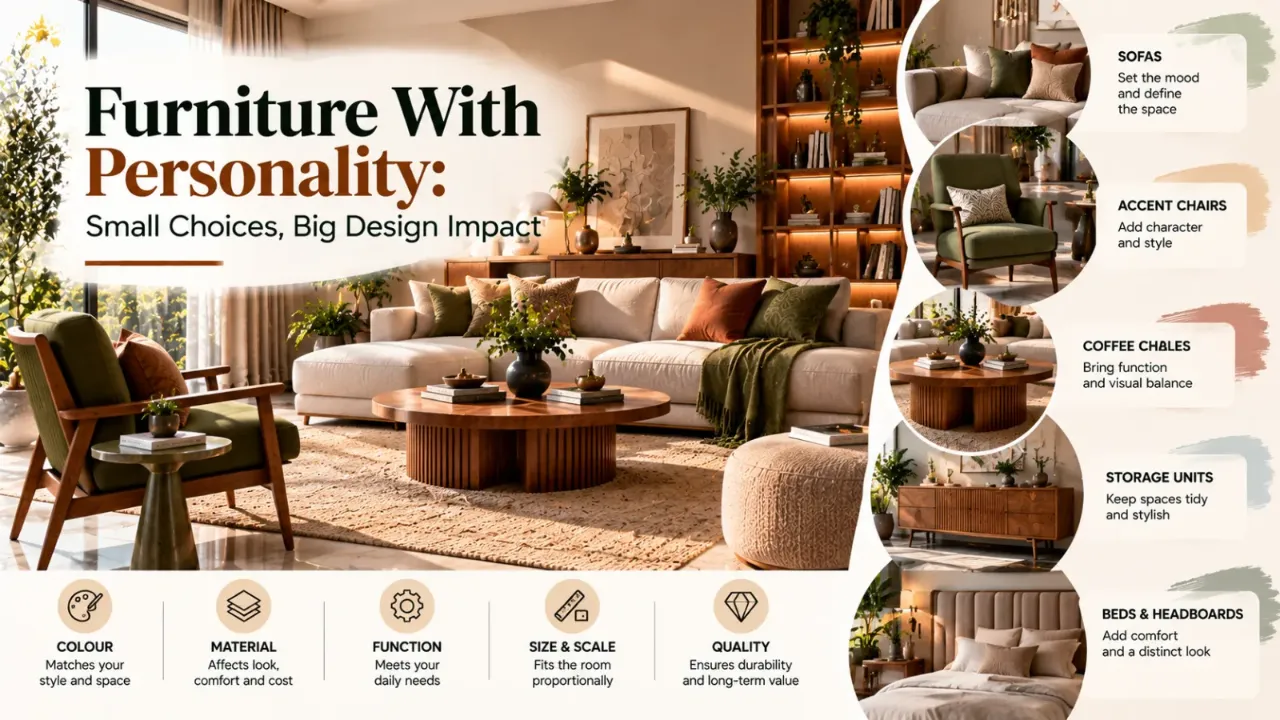
Furniture With Personality: Small Choices, Big Design Impact
Furniture does more than fill a room. It shapes how you move through the space, how comfortable it feels and how much your home reflects your personality. Personalising furniture does not necessarily mean ordering everything custom-made or replacing pieces you already own.
Sometimes, a different upholstery colour, a distinctive side table, a more useful storage arrangement or a carefully chosen accent chair can change the entire character of a room.
Quick takeaway: Personalise your furniture through thoughtful choices in style, colour, scale, layout and accessories while keeping comfort, function and budget in mind.
1. Begin With How You Use the Room
Before choosing furniture styles, consider what the room needs to do every day. A beautiful arrangement will not feel successful if it makes movement difficult or leaves essential items without a place.
- Living room: Balance comfortable seating, conversation, entertainment and circulation.
- Bedroom: Prioritise restful surroundings, accessible storage and furniture that fits around the bed.
- Dining room: Choose a table and chairs that suit everyday meals and the number of people you regularly host.
- Home office: Focus on suitable desk dimensions, supportive seating, lighting and organised storage.
- Compact multipurpose room: Consider furniture that provides storage, folds away or serves more than one purpose.
Write down the room's essential activities before buying anything. This helps distinguish furniture you genuinely need from pieces that simply look appealing.
2. Choose a Personal Style Without Following Every Trend
Personalised furniture works best when it reflects your preferences rather than reproducing a showroom display exactly.
- Choose an overall design direction to guide the main furniture pieces.
- Mix a few complementary styles rather than matching every item.
- Introduce personality through one distinctive chair, table, cabinet or headboard.
- Use materials and finishes that connect visually, even when furniture shapes differ.
- Keep everyday comfort and maintenance in mind alongside appearance.
A simple contemporary sofa can work with a vintage-style wooden side table. The pieces do not need to match exactly if their colours, proportions or materials create a considered relationship.
If you need help narrowing down your preferences, the Interior Style Finder can help you explore a design direction based on your preferred look, lifestyle and budget.
3. Personalise Furniture With Colour and Texture
Colour is one of the easiest ways to make furniture feel distinctive. Texture adds another layer of interest without requiring a completely different furniture layout.
- Upholstery: Choose sofa or chair fabric that complements your walls and existing furnishings.
- Wood finishes: Use natural, light, dark or painted finishes to change the character of cabinets, tables and bed frames.
- Metal details: Handles, legs and frames can introduce subtle contrast through different finishes.
- Soft furnishings: Cushions, throws and removable covers offer a relatively simple way to update the look.
- Material combinations: Pair timber with fabric, metal with wood or smooth surfaces with textured upholstery.
Let larger furniture pieces establish the foundation and use smaller elements for stronger colour or pattern. Review material samples in the room's actual lighting before making a final decision.
4. Get the Furniture Scale and Layout Right
Even well-designed furniture can feel out of place when its dimensions do not suit the room. Personalisation should improve the relationship between the furniture and the available space.
- Measure the room, including doors, windows, columns and other fixed features.
- Record the dimensions of the furniture you intend to keep.
- Map out the location of each major piece.
- Check door openings, drawer movement and access to wardrobes or cabinets.
- Leave comfortable routes for walking and using the room.
- Consider how the layout works when people are seated, standing or moving around.
Do not rely on product photographs to judge scale. Check listed dimensions and, where possible, use a floor plan or room visualisation to understand how a piece may fit.
The Design My Room tool can help you explore visual concepts before committing to furniture changes. Treat generated designs as inspiration and verify all dimensions before purchasing or installing furniture.
5. Combine Ready-Made and Custom Furniture
Personalised furniture does not have to be entirely custom-built. A combination of ready-made and customised pieces can provide character while keeping the project manageable.
When ready-made furniture makes sense
Ready-made furniture can be useful when you need a predictable size, quicker availability or a simpler purchasing process. It may also be easier to replace or relocate later.
When custom furniture is worth considering
Custom pieces can be useful when a room has unusual dimensions, storage needs to fit a specific wall or you want a distinctive design that is difficult to find off the shelf.
- A wardrobe designed around an awkward corner.
- A study desk that fits a narrow wall.
- A window seat with integrated storage.
- A bed with drawers for additional storage.
- A media unit planned around equipment and cable access.
Before approving custom furniture, confirm the drawings, dimensions, materials, hardware, finish, storage arrangement and installation requirements. Ask for a clear quotation and delivery schedule.
6. Personalise Small Rooms Without Adding Clutter
In a compact room, every furniture piece needs to justify its place. The goal is to express personality through fewer, better-considered choices.
- Choose furniture with integrated storage where it is genuinely useful.
- Use wall-mounted shelves or cabinets when appropriate for the wall and intended load.
- Select pieces with suitable proportions rather than oversized furniture.
- Keep frequently used surfaces clear enough for everyday activities.
- Consider nesting tables, storage ottomans or foldable furniture where they suit the room.
- Use one or two distinctive accents instead of filling every corner with decorative items.
A multipurpose piece should still be comfortable and practical for its main use. A storage bench, for example, should provide enough seating without obstructing the route through the room.
7. Use Accessories to Make Furniture Feel Personal
Small styling choices can give standard furniture a more individual look without requiring major purchases.
- Cushion covers in colours or patterns you enjoy.
- A throw that introduces texture.
- Distinctive cabinet or drawer handles that fit the furniture.
- A table lamp that complements the furniture's scale.
- Books, framed photographs or objects with personal meaning.
- A rug that helps define a seating or reading area.
Choose a few elements that relate through colour, material or theme, then allow the furniture and room to remain visible. Personal items work best when they tell a story or serve a purpose rather than simply filling empty surfaces.
8. Balance Personal Style With Comfort and Durability
Furniture should look good and continue to work well after daily use. The best design decisions account for comfort, cleaning, durability and repair as well as appearance.
- Check whether seat height, depth and back support suit the intended users.
- Choose upholstery appropriate for pets, children or frequent use.
- Check that the finish can be cleaned with suitable products.
- Confirm hinges, drawer runners and other hardware are suitable for regular operation.
- Ask whether replacement covers, parts or repair services are available.
- Check that furniture can be moved into the room and assembled safely.
A delicate fabric may suit a low-use accent chair but be less practical for a family sofa. Personalisation is most successful when it improves both appearance and the everyday experience of the room.
9. Plan Your Furniture Budget Before You Buy
It is easy to focus on the price of a sofa, bed or cabinet and overlook the cost of completing the room. Your budget may also need to cover delivery, assembly, customisation, hardware, upholstery changes, lighting, rugs and installation.
- List essential furniture separately from optional upgrades.
- Set a spending range for each major item.
- Compare products using similar dimensions, materials and specifications.
- Reserve some budget for delivery, assembly and unexpected requirements.
- Consider updating or reupholstering a suitable existing piece before replacing it.
- Prioritise comfort, construction and fit over decorative features that add little practical value.
The Interior Design Cost Estimator can help you plan the broader interior budget. For a complete home, the Whole Home Visualizer can help you explore a coordinated design direction across rooms. Use visual concepts as planning aids and confirm actual prices, dimensions and specifications separately.
A Final Thought
Personalising room furniture is about making thoughtful choices that reflect your tastes and support your everyday life. You do not need a room full of unusual pieces or a completely custom-made interior to achieve a distinctive look.
Start with how the room is used, choose furniture that fits the available space, introduce colour and texture with intention, and add a few meaningful details. When comfort, function and personal style work together, the result feels considered rather than simply decorated.
Frequently Asked Questions
1. How can I personalise furniture without replacing everything?
Update upholstery or cushion covers, change compatible handles, introduce a distinctive side table, rearrange the layout or add meaningful accessories. Start with pieces that can be improved rather than replacing furniture that still works well.
2. Is custom furniture always better than ready-made furniture?
No. Ready-made furniture may be more convenient and economical for standard requirements. Custom furniture is useful when dimensions, storage or design needs cannot be met effectively by available products.
3. How do I choose furniture for a small room?
Measure the room first, prioritise essential pieces, choose suitable proportions and preserve clear walking routes. Integrated storage and multipurpose furniture can help when they genuinely support daily use.
4. How can I mix different furniture styles?
Choose connecting elements such as related colours, materials, finishes or proportions. Let one style establish the main direction and use contrasting pieces selectively.
5. Which colours work best for personalised furniture?
There is no universal best colour. Consider the room's lighting, wall colour, flooring, existing furniture and your preferred atmosphere. Test fabric and finish samples in the actual space before committing.
6. What should I check before ordering custom furniture?
Confirm measurements, drawings, material specifications, hardware, finish, storage details, installation requirements, delivery timing, warranty and the full quotation in writing.
7. How can I personalise furniture on a limited budget?
Reuse suitable existing pieces, refresh removable textiles, update compatible hardware, rearrange the layout and invest in one or two impactful accents. Prioritise improvements that solve a practical problem as well as enhancing appearance.
Turn this idea into a plan for your home
Visualise your space, understand the likely budget, or find a professional who can bring the idea to life.