
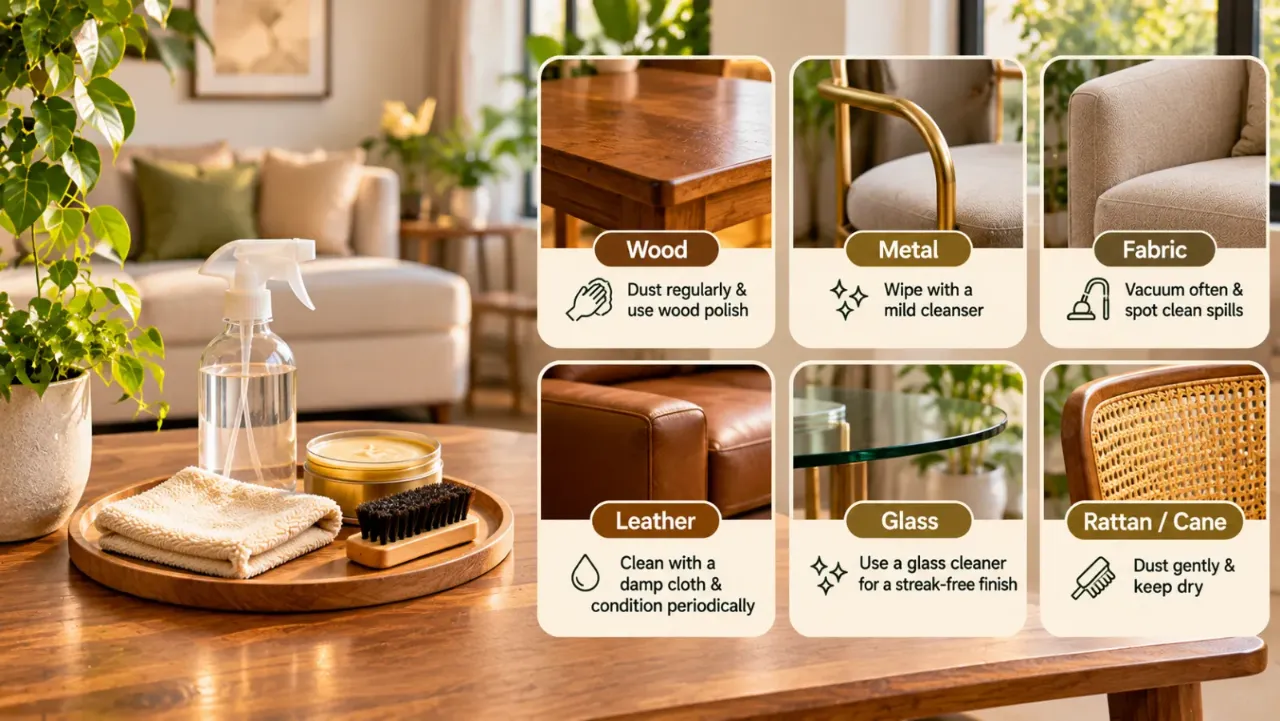
Furniture Polish and Maintenance: A Guide by Material
Furniture Polish and Maintenance: A Guide by Material
Furniture is one of the most frequently used parts of a home. Dining tables handle everyday spills, wardrobes collect dust, sofas experience constant contact and side tables often hold hot cups, decorative objects and electronic devices. Over time, these everyday activities can affect the appearance and condition of furniture.
Regular cleaning helps, but furniture maintenance is not simply about wiping every surface with the same cloth or applying polish whenever a finish begins to look dull.
Different materials have different requirements. Solid wood may need occasional finish-specific care, while laminate generally needs gentle cleaning rather than furniture polish. Acrylic can scratch easily, metal finishes may tarnish or corrode, and upholstery needs cleaning methods suited to its fabric or leather type.
Understanding the material is the first step towards maintaining furniture without damaging it.
1. Identify the Material Before Choosing a Cleaner
Furniture can look similar while having very different surface constructions.
A wooden-looking cabinet, for example, could be made from solid timber, veneer, laminate or a printed decorative surface. Each requires a different maintenance approach.
Before cleaning, check:
- Whether the surface is solid wood, veneer or an engineered board with a decorative finish.
- Whether it has a clear coat, paint, lacquer, oil or wax finish.
- Whether the surface is glossy, matte, textured or laminated.
- Whether the furniture manufacturer provides specific care instructions.
- Whether the material is exposed to moisture, sunlight, heat or frequent handling.
If you are unsure about the surface, avoid applying polish or a strong cleaner until the finish has been identified.
2. Solid Wood Furniture: Clean Gently and Protect the Finish
Solid wood furniture can develop a rich appearance over time, but its maintenance depends on the finish applied to the timber.
A sealed or lacquered wooden table does not need the same treatment as an oil-finished or wax-finished surface.
Everyday care:
- Remove dust using a soft, dry microfibre cloth.
- Wipe spills promptly rather than allowing liquid to sit on the surface.
- If necessary, use a slightly damp cloth and dry the surface immediately.
- Use coasters, placemats and protective pads to reduce marks from cups, dishes and decorative objects.
- Keep furniture away from prolonged direct sunlight and excessive heat where possible.
When is wood polish needed?
Polish is not automatically required every time wood looks dull. Some furniture finishes benefit from a compatible furniture polish, while others are better maintained through routine dusting and finish-specific care.
Oil-finished furniture may require an appropriate maintenance oil. Wax-finished surfaces may need compatible wax care. Lacquered and polyurethane-coated surfaces generally need gentle cleaning and products approved for that coating.
Avoid: Abrasive scrubbers, excessive water, unapproved oils and household cleaners that may affect the finish.
3. Veneer Furniture: Protect the Thin Surface Layer
Veneer furniture has a thin layer of natural wood applied over a supporting board. It offers the appearance of real wood while using less solid timber, but the surface needs careful handling.
Maintenance tips:
- Dust regularly with a soft cloth.
- Clean small marks with a lightly damp cloth if the manufacturer's instructions allow it.
- Dry the surface immediately.
- Protect edges and joints from standing water.
- Use coasters and mats to prevent scratches and heat marks.
- Keep the furniture away from prolonged moisture exposure.
A veneer surface may have a lacquered, oiled or other protective coating. Choose maintenance products according to that finish, not simply because the surface looks like wood.
Avoid: Aggressive sanding, deep scratches, soaking the surface and applying thick layers of generic polish. The veneer layer is thin and cannot be treated like solid timber.
4. Laminate Furniture: Cleaning Is Usually Enough
Laminate is commonly used on wardrobes, cabinets, desks, shelves and modular furniture. It is generally easy to maintain, making it a practical choice for frequently used surfaces.
Unlike some natural wood finishes, decorative laminate usually does not need furniture polish.
Maintenance tips:
- Wipe dust using a soft microfibre cloth.
- Use a mild, suitable cleaning solution for everyday marks if permitted by the manufacturer.
- Wipe away cleaning residue and dry the surface.
- Clean spills before they reach exposed edges or joints.
- Use protective pads beneath frequently moved decorative objects.
Avoid: Wax, oil-based wood polish, abrasive powders, rough scrubbers and strong solvents. These can leave residue, affect the finish or damage the surface.
Pay particular attention to edges and joints. The decorative face may resist everyday moisture better than an exposed or poorly sealed edge.
5. Acrylic Furniture: Prevent Scratches and Cloudiness
Acrylic finishes are used for glossy cabinets, modern wardrobes, decorative panels and contemporary furniture. Their reflective appearance can make surfaces look clean and polished, but scratches and cleaning marks may be noticeable.
Maintenance tips:
- Remove loose dust before wiping to avoid dragging particles across the surface.
- Use a clean, soft microfibre cloth.
- Use only a cleaner approved for the particular acrylic finish.
- Wipe gently without applying excessive pressure.
- Dry with a clean, soft cloth if the care instructions recommend it.
Avoid: Paper towels, rough cloths, abrasive pads, scouring powders and unapproved solvent-based cleaners. Do not assume that a general glass cleaner is safe for every acrylic surface.
For deeper scratches, follow the manufacturer's repair guidance. Some acrylic products allow specialist polishing, while others have coatings that can be damaged by polishing compounds.
6. Metal Furniture: Care Depends on the Metal and Coating
Metal furniture can use stainless steel, aluminium, brass, iron or powder-coated steel. These materials may look similar in a room but respond differently to moisture, chemicals and polishing.
Stainless Steel
- Wipe with a soft cloth.
- Follow the grain where visible.
- Use a cleaner approved for stainless steel if needed.
- Dry to reduce water spots.
Brass and Copper
- Identify whether the surface is solid metal, plated or lacquered.
- Use a compatible cleaner only when required.
- Avoid polishing lacquered surfaces with abrasive metal polish.
Powder-Coated Metal
- Use a soft cloth and mild cleaning solution if approved.
- Avoid scratching the coating.
- Dry after cleaning, especially around joints.
Painted or Plated Metal
- Clean gently with a non-abrasive cloth.
- Avoid aggressive polishing that could remove the coating.
Avoid: Steel wool, harsh acids, strong alkalis and generic metal polish on unidentified finishes.
7. Glass Furniture: Keep the Surface Clear Without Scratching It
Glass is commonly used for coffee tables, dining tables, side tables and display units. It does not usually need furniture polish, but fingerprints, dust and water marks can make it look untidy.
Maintenance tips:
- Remove loose dust before cleaning.
- Use a soft lint-free cloth.
- Use a suitable glass cleaner according to the manufacturer's instructions.
- Wipe spills and fingerprints promptly.
- Check the edges, joints and supporting hardware regularly.
- Use coasters and protective mats to reduce scratches.
Avoid: Abrasive scrubbers, rough cleaning pads and excessive pressure near edges or corners. Do not assume that every glass cleaner is suitable for tinted, coated or specially treated glass.
For glass tabletops, check that the supporting pads and fittings remain correctly positioned.
8. Upholstered Furniture: Clean According to the Fabric
Fabric sofas, dining chairs, headboards and upholstered benches need a different maintenance routine from hard furniture surfaces.
Dust, crumbs, body oils and accidental spills can build up in the fabric over time.
Maintenance tips:
- Vacuum upholstery regularly using a suitable attachment.
- Blot spills promptly with a clean absorbent cloth.
- Follow the fabric's cleaning code and manufacturer's instructions.
- Rotate removable cushions where the design permits.
- Keep upholstery away from prolonged direct sunlight.
- Arrange professional cleaning when the fabric requires it.
Different fabrics may have different cleaning requirements. Cotton, linen, polyester, velvet and blended upholstery should not automatically be treated with the same solution.
Avoid: Rubbing stains aggressively, soaking cushions, using untested stain removers and applying household detergents without checking compatibility.
9. Leather Furniture: Maintain Without Over-Wetting
Leather sofas and chairs can develop surface dryness, marks and changes in appearance with regular use. Their maintenance depends on whether the upholstery is aniline, semi-aniline, pigmented or a coated synthetic material.
Maintenance tips:
- Dust with a soft, dry cloth.
- Clean spills promptly by blotting rather than rubbing.
- Use a leather cleaner specifically suited to the upholstery type.
- Apply conditioner only when recommended for that leather.
- Keep the furniture away from direct heat and prolonged sunlight.
- Test any care product on an inconspicuous area first.
Avoid: Excess water, harsh household cleaners, alcohol-based products and unapproved oils or creams. A conditioner suitable for one type of leather may not be appropriate for another.
10. Cane, Bamboo and Rattan Furniture: Control Dust and Moisture
Cane, bamboo and rattan furniture bring a natural texture to interiors. Their woven construction can collect dust in small gaps, while excessive moisture may affect the material over time.
Maintenance tips:
- Dust regularly using a soft brush or suitable vacuum attachment.
- Clean gently with a slightly damp cloth only when appropriate for the finish.
- Dry thoroughly and allow good airflow.
- Avoid leaving woven furniture in persistently damp conditions.
- Keep it away from prolonged direct sunlight where possible.
- Check woven sections and joints periodically for loosening or damage.
Avoid: Soaking the furniture, using high-pressure water and leaving damp cushions or fabric against the woven surface.
11. Quick Comparison: Furniture Maintenance by Material
| Furniture material | Everyday maintenance | Is polish needed? | Main precaution |
|---|---|---|---|
| Solid wood | Dust and clean gently | Depends on finish | Avoid excess moisture |
| Wood veneer | Soft cloth and careful wiping | Finish-dependent | Protect thin veneer layer |
| Laminate | Mild surface cleaning | Usually no | Protect edges and joints |
| Acrylic | Soft microfibre cleaning | Usually no | Prevent scratches |
| Metal | Material-specific cleaning | Only for compatible finishes | Protect coatings |
| Glass | Suitable glass cleaner | No | Avoid abrasive cleaning |
| Fabric upholstery | Vacuum and spot-care | No | Follow fabric cleaning code |
| Leather | Gentle cleaning and approved care | Use suitable conditioner if recommended | Avoid harsh chemicals |
| Cane, bamboo and rattan | Dust and gentle cleaning | Finish-dependent | Avoid soaking |
12. Common Furniture Maintenance Mistakes
Even regular cleaning can damage furniture when the wrong products or methods are used.
Using the same polish on every surface: Wood polish, metal polish and plastic or acrylic cleaners are not interchangeable.
Applying products without checking the finish: A surface may be coated, laminated, waxed or lacquered. Its finish determines which products are suitable.
Using too much water: Excess moisture can affect wood, veneer, joints, edges and woven materials.
Cleaning before removing dust: Loose particles can scratch glossy or delicate surfaces when wiped across them.
Using rough cloths and scrubbers: Abrasive materials may create scratches or remove protective coatings.
Ignoring spills: Liquids left on furniture can leave stains, marks or damage, particularly around joints and edges.
Applying polish too frequently: More polish does not necessarily mean better protection. Product build-up can attract dust or create uneven surfaces.
13. A Simple Furniture Maintenance Routine
A consistent routine is usually more useful than occasional intensive polishing.
Daily or After Use
- Wipe food and liquid spills promptly.
- Use coasters, mats and protective pads.
- Keep surfaces free from standing moisture.
Weekly
- Dust furniture using suitable soft cloths.
- Vacuum upholstered furniture where appropriate.
- Clean frequently touched surfaces and handles.
Monthly
- Check furniture edges, joints, hardware and exposed corners.
- Look for scratches, loose fittings and early signs of wear.
- Clean less frequently used surfaces and difficult-to-reach areas.
Periodically
- Use finish-specific polish, wax, oil or conditioner only when required.
- Arrange specialist repair for damaged veneer, coatings, upholstery or structural parts.
- Review manufacturer care instructions before applying a new product.
Final Thoughts
Furniture maintenance is not about making every surface shiny. It is about preserving the material, protecting its finish and keeping each piece comfortable and useful over time.
Solid wood, veneer, laminate, acrylic, metal, glass and upholstery all have different care requirements. A suitable cleaning routine for one material may be unsuitable for another.
Identify the surface first, use compatible products, clean gently and avoid unnecessary polishing. With the right approach, furniture can retain its appearance and remain functional for years.
Frequently Asked Questions
1. How often should wooden furniture be polished?
There is no universal schedule. It depends on the wood finish, product used, frequency of use and manufacturer's recommendations. Regular dusting and gentle cleaning are usually more important than frequent polishing.
2. Can wood polish be used on laminate furniture?
Generally, no. Laminate usually needs gentle cleaning rather than wood polish. Wax and oil-based products may leave residue or affect the surface.
3. How do I maintain veneer furniture without damaging it?
Dust with a soft cloth, clean with minimal moisture when permitted and dry immediately. Avoid aggressive sanding, soaking and unsuitable polishing products.
4. What is the safest way to clean acrylic furniture?
Remove loose dust first, then use a clean, soft microfibre cloth and a cleaner approved for the particular acrylic surface. Avoid abrasive materials and unapproved solvents.
5. Does metal furniture need regular polishing?
Not always. Stainless steel, brass, powder-coated and plated surfaces have different requirements. Use metal polish only when it is compatible with the specific material and finish.
6. How can I prevent scratches on furniture?
Use coasters, placemats, protective pads and soft cleaning cloths. Avoid dragging decorative objects or appliances across furniture surfaces.
7. How should upholstered furniture be cleaned?
Vacuum regularly, blot spills and follow the fabric's cleaning instructions. Professional cleaning may be necessary for delicate or heavily soiled upholstery.
8. Is furniture polish necessary for every type of furniture?
No. Many surfaces, including laminate, glass and most acrylic finishes, generally need suitable cleaning rather than traditional furniture polish. Other materials may need finish-specific products.
Take Better Care of Your Home With Walls to Wonder
Planning new furniture or refreshing your interiors? Explore Walls to Wonder's AI tools to visualise spaces, explore design styles and make more informed interior decisions.
- Whole Home Visualizer – Explore how different design ideas can work across your home.
- Design My Room – Experiment with room design ideas and visual styles.
- Interior Design Cost Estimate – Get an initial estimate for your interior project.
- Interior Quotation Checker – Review and understand interior design quotations.
- Rate My Room Design – Get feedback on your room design.
- Interior Style Finder – Discover interior styles that match your preferences.
Explore more at Walls to Wonder.
Turn this idea into a plan for your home
Visualise your space, understand the likely budget, or find a professional who can bring the idea to life.