
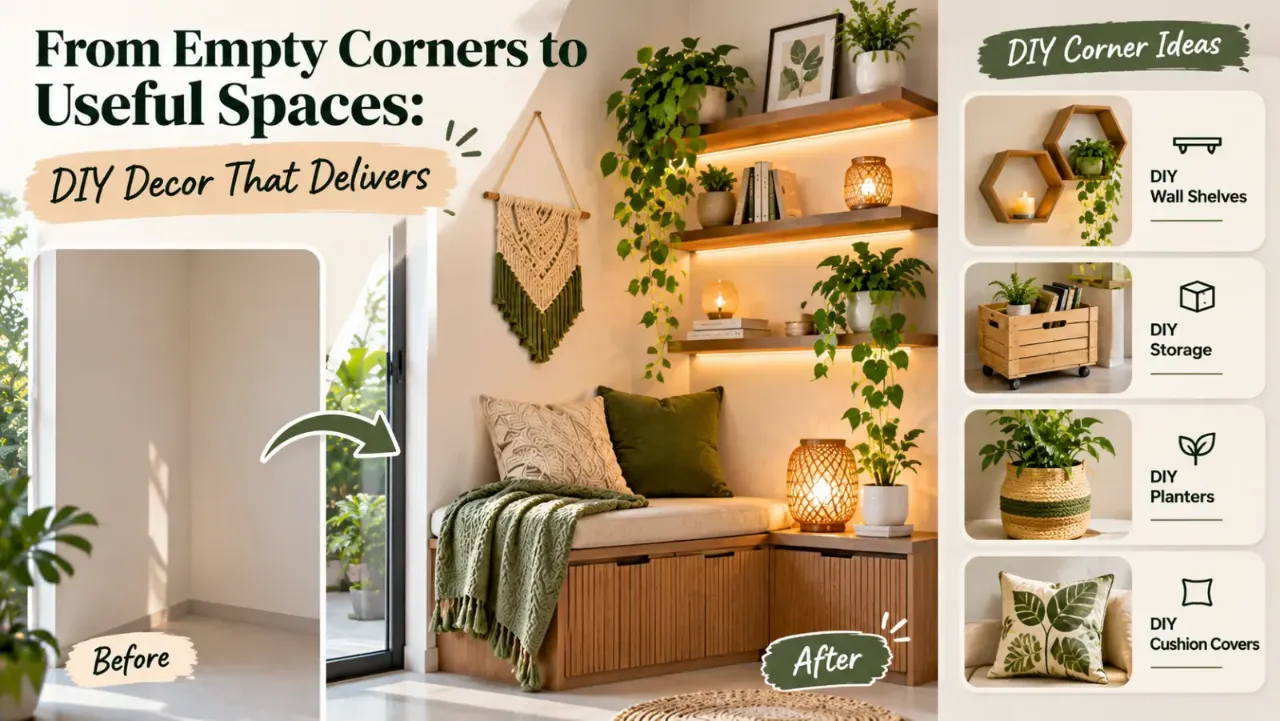
From Empty Corners to Useful Spaces: DIY Decor That Delivers
Decorating your home does not always require new furniture, expensive accessories or a complete interior makeover. Sometimes, a few thoughtful DIY projects can make a room feel more personal while solving everyday problems.
A handmade wall organiser can reduce clutter near the entrance. An old side table can become useful storage. A simple shelf can turn an unused corner into a practical display area.
The best home decor DIY ideas do more than look attractive. They should fit the room, serve a purpose and be easy to maintain.
Whether you live in a compact apartment or a larger home, here are practical ways to combine creativity with everyday function.
1. Turn Empty Walls Into Useful Spaces
An empty wall is an opportunity to add both character and functionality.
Instead of filling it entirely with artwork, consider a combination of wall-mounted shelves, hooks, small ledges or organised display units.
For example:
- Install a narrow shelf for books, plants or frequently used objects.
- Add hooks near the entrance for keys, bags or everyday accessories.
- Create a small wall organiser for mail, notes and household reminders.
- Use a pegboard in a study or utility area to organise lightweight supplies.
Keep the arrangement proportionate to the wall. Heavy objects should not be placed on shelves or fixings that are not designed to support their weight.
2. Give Old Furniture a Practical Makeover
Before discarding an old piece of furniture, consider whether it can serve a different purpose.
A wooden stool can become a bedside table. An old cabinet can be refreshed with new handles and a suitable finish. A sturdy side table can be repainted and used as a plant stand or an additional surface.
Some simple updates include:
- Sanding and repainting a worn wooden surface.
- Replacing outdated cabinet handles.
- Adding suitable storage baskets to open compartments.
- Refreshing a side table with a new finish.
- Reusing a sturdy cabinet in another room.
Check the condition of the furniture before starting. Loose joints, damaged surfaces or unstable legs should be repaired rather than hidden under paint.
3. Create Decorative Storage That Reduces Clutter
Storage can become part of the decoration when it is planned thoughtfully.
Woven baskets, labelled boxes, wall-mounted organisers and decorative trays can keep everyday objects accessible without leaving everything scattered across surfaces.
Try these ideas:
- Use baskets for cushions, throws or children's toys.
- Arrange frequently used items in a tray on a console.
- Add labelled containers to open shelves.
- Use a compact organiser for remote controls and chargers.
- Create a designated drop zone for keys and wallets.
Choose storage according to what needs to be organised. Buying decorative boxes without deciding what they will hold can simply create another place for unused items.
4. Make a Functional Display Shelf
A display shelf can bring personality into a room while providing space for objects that deserve to be visible.
Combine books, framed photographs, small plants and a few decorative pieces. Leave some open space between groups so the shelf does not look overcrowded.
A practical arrangement might include:
- Books arranged vertically or in small horizontal stacks.
- A small container for frequently used items.
- One or two decorative objects.
- A plant suited to the available light.
- A framed photograph or artwork.
Use shelves with appropriate supports and fixings for the wall type and intended load. Avoid placing heavy objects above frequently occupied seating or walking areas unless the installation is properly secured.
5. Refresh Old Frames and Create Personal Wall Art
Wall art does not always need to be purchased as a complete set.
Old frames can be reused with new prints, photographs, fabric pieces or artwork created at home. A group of frames can also turn personal photographs into a more organised wall display.
To keep the arrangement cohesive:
- Select a limited number of frame finishes.
- Use a consistent spacing between frames.
- Mix different sizes while maintaining a clear overall layout.
- Choose artwork that relates to the room's colour palette.
- Avoid overcrowding a small wall.
If you are using handmade artwork, consider how its colours and scale will look from the usual viewing distance.
6. Improve Lighting With Simple Decorative Changes
Lighting can change the atmosphere of a room without requiring a major renovation.
A simple lampshade update, a table lamp or a carefully positioned floor lamp can introduce a different layer of illumination.
Practical ideas include:
- Refreshing an existing lampshade with a suitable fabric or finish.
- Adding a table lamp to a reading corner.
- Using a floor lamp to illuminate a darker part of the room.
- Adding approved plug-in lighting to a shelf or display area.
- Using a mirror to help reflect existing daylight.
Always use materials suitable for the heat produced by the light source. Do not cover bulbs, ventilation openings or electrical components with fabric or paper. Electrical rewiring and permanent fixture changes should be handled by a qualified professional.
7. Turn Unused Corners Into Useful Zones
An empty corner can become a small but valuable part of the room.
Rather than adding a decorative object simply to fill the space, think about what the household needs.
Possible ideas include:
- A reading corner with a comfortable chair and floor lamp.
- A compact plant stand near a suitable window.
- A narrow shelf for books or daily essentials.
- A small work surface where there is enough room and light.
- A storage basket for items used in that room.
Keep the scale appropriate. A large chair or cabinet can make a small corner harder to move around.
8. Use Fabric to Update Everyday Objects
Fabric is one of the simplest ways to introduce colour and texture into a room.
Leftover fabric can be used for cushion covers, table runners, small storage organisers or decorative panels, provided the material is suitable for its intended use.
Consider:
- Making removable cushion covers.
- Creating a simple table runner.
- Refreshing a plain storage basket with a fabric lining.
- Using fabric-covered boards as a display or pinning surface.
- Coordinating small fabric details with existing curtains or upholstery.
Choose washable or easy-care materials for objects that are handled frequently. For upholstery or items exposed to regular use, make sure the fabric and construction are durable enough.
9. Make Everyday Items Part of the Decoration
Some of the most practical decorative ideas begin with objects already used in the home.
A tray can organise frequently used items on a coffee table. A ceramic container can hold stationery. A neat arrangement of books can create a useful side-table display.
Other examples include:
- Using a tray to group items on a console.
- Keeping frequently used kitchen utensils in an attractive holder.
- Arranging folded throws in an accessible basket.
- Displaying regularly used tableware on a suitable open shelf.
- Using a decorative bowl for keys near the entrance.
The important distinction is that these objects should remain easy to access. If a display makes everyday items difficult to reach, it is not serving its purpose.
10. Choose DIY Materials With Maintenance in Mind
A project may look attractive when completed but become inconvenient if it is difficult to clean or repair.
Before choosing paint, fabric, adhesive, wood or decorative finishes, consider where the project will be used.
For example:
- Use finishes appropriate for the surface and expected wear.
- Choose washable fabrics for frequently handled items.
- Avoid adhesives in areas exposed to moisture unless they are suitable for that environment.
- Check whether painted surfaces need preparation or sealing.
- Use moisture-appropriate materials in kitchens and bathrooms.
- Keep sharp edges and unstable structures away from everyday movement areas.
A good DIY project should remain useful after the initial excitement of completing it has passed.
11. Avoid Projects That Create More Work Than They Solve
Not every DIY idea is suitable for every home.
A complicated wall display may require frequent dusting. Open storage may look attractive but expose everything to dust. A decorative table may take up valuable circulation space.
Before starting, ask yourself:
- What problem will this project solve?
- Where will it be placed?
- Will it interfere with movement?
- How often will it need cleaning?
- Is it safe and stable?
- Can it be maintained without special effort?
If the project creates more inconvenience than value, consider a simpler alternative.
12. Plan Your DIY Project Before You Begin
A little preparation can prevent wasted materials and unfinished projects.
Start by identifying the space and deciding what you want to improve. Measure the available area, check the surface condition and make a list of materials.
A practical planning sequence is:
- Identify one specific problem or opportunity.
- Measure the area and check the available space.
- Choose a project that suits the room's use.
- List the materials and tools required.
- Estimate the time and cost.
- Check installation and safety requirements.
- Complete the project and review how it works in daily use.
Begin with a manageable project rather than attempting several changes at once.
DIY tip: Before buying materials, decide what everyday problem your project should solve. Measure the space, check the surface and make a simple materials list. This helps avoid unnecessary purchases and projects that look good but are difficult to use.
Visualise Your Ideas Before Making Changes
Planning the overall look can help you decide whether a DIY project will fit the room. Use Design My Room to explore colours, furniture and finishes, or try the Whole Home Visualizer to consider how different spaces can feel connected across your home.
If your DIY ideas are part of a larger interior update, the Interior Design Cost Estimate can help you explore an indicative budget. You can also use the Interior Quotation Checker to review quotation details, materials, charges and exclusions.
Final Thought
The most useful home decor DIY ideas combine creativity with purpose. A refreshed piece of furniture, a well-planned shelf or a simple storage solution can make a room feel more personal while improving the way it functions.
You do not need to transform the entire home in one go. Start with one small improvement, choose materials carefully and make sure the finished project supports everyday living.
With Walls to Wonder, you can explore room design possibilities and visualise how colours, furniture and finishes may work together before making changes.
Frequently Asked Questions
1. What are some useful home decor DIY ideas?
Useful ideas include creating wall organisers, refreshing old furniture, making decorative storage, updating picture frames, styling shelves and turning unused corners into practical zones.
2. How can DIY home decor improve everyday functionality?
DIY projects can introduce storage, organise frequently used objects, improve lighting and make unused areas more useful while adding a personal decorative touch.
3. Can I decorate my home using old furniture?
Yes. Sturdy furniture can often be repainted, refinished, fitted with new handles or repurposed for another room. Check its stability and repair damage before making cosmetic changes.
4. How do I avoid clutter when trying DIY decoration?
Choose projects that solve a specific need, avoid filling every empty surface and use storage that keeps everyday objects organised and accessible.
5. What materials are suitable for DIY home decor?
Wood, fabric, metal, baskets, suitable paints and decorative accessories can be used depending on the project. Consider the surface, expected wear, moisture exposure and maintenance requirements.
6. How should I plan a DIY home decoration project?
Identify the purpose, measure the space, choose suitable materials, estimate the cost and check safety requirements before starting. Begin with a manageable project and review its usefulness after completion.
Get a personalised estimate for your home
Choose your rooms, materials and preferences to understand a practical interior budget before you commit.