
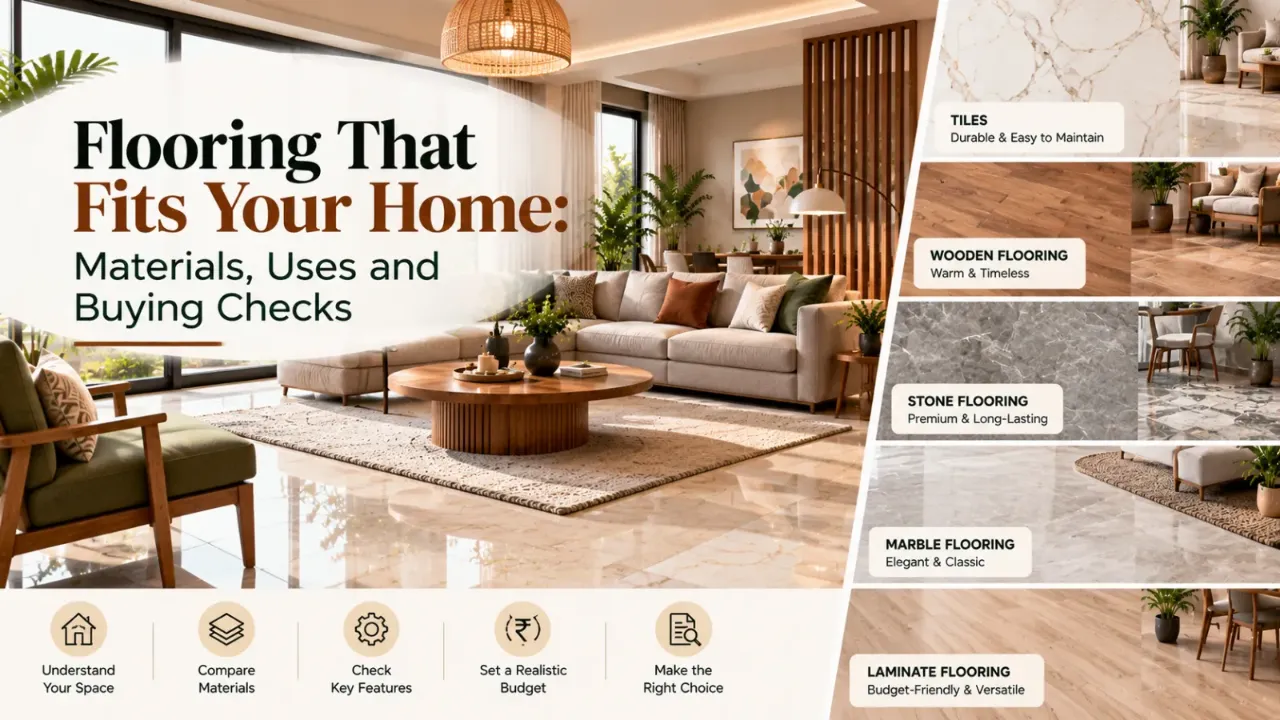
Flooring That Fits Your Home: Materials, Uses and Buying Checks
Flooring does more than cover the surface beneath your feet. It influences how spacious a room feels, how easily it can be cleaned, how comfortable it is to walk on and how well the rest of the interiors come together.
A polished floor may look impressive in a showroom but feel slippery in daily use. A wood-look finish may bring warmth to a bedroom, while a textured tile could be more practical for an area exposed to water. The right choice depends on more than colour or pattern.
Quick takeaway: Choose flooring according to the room's purpose, moisture exposure, foot traffic, maintenance needs and installation requirements—not just its appearance.
1. Start With the Room, Not the Pattern
Every room has different demands. Identify what the floor needs to handle before narrowing down its appearance.
- Living room: Choose a finish that complements the furniture, handles frequent movement and is straightforward to maintain.
- Bedroom: Prioritise comfort, visual warmth and a calm appearance.
- Kitchen: Look for easy cleaning, resistance to everyday spills and suitability for regular foot traffic.
- Bathroom: Choose products rated for wet areas and check slip resistance and drainage requirements.
- Balcony or utility area: Confirm suitability for outdoor exposure, water, temperature changes and cleaning products.
- Entryway and passage: Prioritise durability, easy cleaning and resistance to visible dirt.
A material that works in one room may not suit another. Always check the manufacturer's recommendations for the intended application.
2. Understand the Main Flooring Options
The material affects appearance, cost, installation and upkeep. Compare the main options before deciding.
Ceramic and porcelain tiles
Tiles offer a wide range of colours, patterns, sizes and finishes. They are popular in living areas, kitchens and spaces where easy cleaning matters. Porcelain tiles generally absorb less water than ordinary ceramic tiles, but performance depends on the specific product and installation.
Before buying: Check slip-resistance suitability, thickness, batch consistency, edge finish, grout requirements and whether the tile is rated for the intended location.
Natural stone
Marble, granite and other natural stones bring individual patterns and a distinctive appearance. They can work well in living rooms, entrance areas and selected feature spaces. Different stones have different levels of porosity, stain resistance and sensitivity to cleaning products.
Before buying: Check sealing needs, surface finish, stain resistance, maintenance, weight and suitability for the supporting floor.
Wood and wood-look flooring
Wood creates visual warmth. Engineered wood, laminate and wood-look tiles offer different ways to achieve a similar appearance, but their moisture resistance, repair options and installation requirements are not interchangeable.
Before buying: Confirm the exact product type, moisture limitations, underlay requirements and recommended cleaning method.
Vinyl and other resilient flooring
Vinyl flooring is available in plank, sheet and tile formats. Depending on the product, it can feel comfortable underfoot and offer many design options. Surface water resistance does not automatically mean the entire floor system or subfloor is waterproof.
Before buying: Check wear-layer specifications, surface texture, room suitability, subfloor preparation and moisture requirements.
Concrete and seamless finishes
Concrete-look and seamless finishes can suit contemporary or industrial-inspired interiors. Their final appearance depends on the preparation, coating or finishing system used.
Before buying: Ask about surface preparation, curing or drying, sealing, crack management, repairability and maintenance.
3. Match the Finish to Everyday Use
Colour and pattern attract attention, but surface finish has a practical role too.
- Glossy finishes: Reflect light and create a polished appearance, but may show smudges, scratches or water marks more clearly. Do not assume they are suitable for wet floors.
- Matte finishes: Create a softer look, although cleaning performance depends on the material and texture.
- Textured finishes: Can help where additional grip is needed, but pronounced texture may collect dirt.
- Wood-look patterns: Bring visual warmth without using natural timber.
- Large-format tiles: Create a more continuous visual effect but require a suitable base and careful installation.
Request a sample when possible. View it in daylight and artificial light, then compare it with your wall colours, furniture and fixed finishes.
4. Check Measurements and Installation Requirements
The price per square foot is only one part of a flooring budget. Installation can become difficult or expensive if the existing floor is uneven, damp or damaged.
- Floor condition: Identify loose tiles, cracks, uneven areas and signs of dampness.
- Finished floor height: Consider doors, thresholds, skirting, adjacent rooms and changes in level.
- Quantity required: Calculate the area and include an allowance for cutting, layout and future repairs. The allowance depends on the room shape and laying pattern.
- Subfloor preparation: Confirm whether levelling, moisture treatment, removal of old flooring or other preparation is required.
- Installation method: Check the recommended adhesive, underlay, joints, grout and expansion gaps, where applicable.
- Drying and curing: Understand when the floor can be walked on and when furniture can be moved back.
- Skilled installation: Confirm responsibility for laying, cutting, finishing and protecting the completed floor.
Have measurements checked on site before placing the final order. An approximate room measurement is not enough to confirm the final quantity.
5. Compare the Complete Cost, Not Just the Material Rate
A lower-priced product may not produce the lowest overall project cost. The total depends on the material, wastage, preparation, installation and finishing details.
Ask for an itemised estimate covering:
- Flooring material and quantity
- Cutting and wastage allowance
- Removal and disposal of existing flooring
- Subfloor repair or levelling
- Adhesive, grout, underlay and required accessories
- Labour and edge finishing
- Skirting, transition strips and thresholds
- Sealing or protective treatment, where required
- Taxes, delivery and other applicable charges
Compare quotations using the same product specification and scope of work. Check whether preparation, labour, accessories and finishing are included in both rates.
For broader project planning, use the Interior Design Cost Estimator to develop an initial budget. Treat the result as a planning aid rather than a final flooring quotation.
6. Coordinate Flooring With the Rest of the Interior
Flooring should support the overall design instead of competing with every other surface. Consider how floor colour, wall finish, furniture, lighting and room size work together.
A light, relatively uniform floor can help a compact room feel more open, while darker flooring can create contrast and visual weight. Neither is automatically better: lighting, furniture and room proportions affect the result.
If you are unsure how a material might look, explore your preferred direction with the Interior Style Finder. You can also use Design My Room to explore visual concepts before committing to a finish. Generated designs are illustrative; confirm actual product colours, dimensions and technical suitability separately.
For a coordinated look across several rooms, the Whole Home Visualizer can help you explore a consistent design direction across the property.
7. Plan for Cleaning, Repairs and Long-Term Care
Flooring is a long-term decision, so consider the work required to keep it looking good.
- Follow the manufacturer's recommended cleaning products and methods.
- Avoid harsh chemicals or abrasive tools unless the product guidance permits them.
- Use protective pads under furniture where appropriate.
- Clean spills promptly, especially on materials that may stain or absorb moisture.
- Inspect grout, sealant, joints and edges periodically.
- Keep spare tiles or a record of the product, shade and batch information when possible.
- Ask how scratches, chips or damaged sections can be repaired before purchasing.
A floor that is easy to maintain for your household is often a better choice than one selected only for its showroom appearance.
8. A Practical Checklist Before You Buy
Before paying an advance or confirming the final order, make sure you can answer these questions:
If a specification or installation requirement is unclear, ask the supplier or installer to explain it before placing your order.
A Final Thought
Good flooring decoration balances appearance with the realities of everyday living. The right material should suit the room, work with your interior style, fit the overall budget and remain manageable to maintain.
Compare product specifications rather than relying on photographs alone, inspect samples in your own lighting and confirm installation requirements before buying. A little planning at the selection stage can help prevent avoidable costs and disappointment later.
Frequently Asked Questions
1. Which flooring is best for a home?
There is no single best option for every home. The right choice depends on the room, moisture exposure, traffic, comfort, budget, installation conditions and maintenance preferences.
2. Which flooring is suitable for a kitchen?
Choose flooring designed for kitchen use that is practical to clean and appropriate for expected spills and foot traffic. Check slip resistance, grout or joint maintenance and the manufacturer's installation guidance.
3. Can the same flooring be used throughout the house?
Yes, when the chosen product is suitable for every intended room. Wet areas, balconies and other demanding spaces may require different specifications or materials.
4. Is glossy flooring a good choice?
Glossy flooring can create a bright, polished look, but it may show marks more easily and may be unsuitable for some wet areas. Check the product's slip-resistance information before selecting it.
5. What should be included in a flooring quotation?
The quotation should clearly state the material and quantity, wastage, preparation, installation labour, adhesives or underlay, grout, skirting, finishing, delivery, taxes and any other applicable charges.
6. How much extra flooring should I buy?
The extra quantity depends on room dimensions, cuts, layout, tile or plank size and the installation pattern. Ask the installer to calculate the allowance rather than using one percentage for every project.
7. How can I make flooring look good for longer?
Use the recommended cleaning method, protect high-contact areas, deal with spills promptly and maintain grout, sealant or joints as required by the product.
Turn this idea into a plan for your home
Visualise your space, understand the likely budget, or find a professional who can bring the idea to life.