
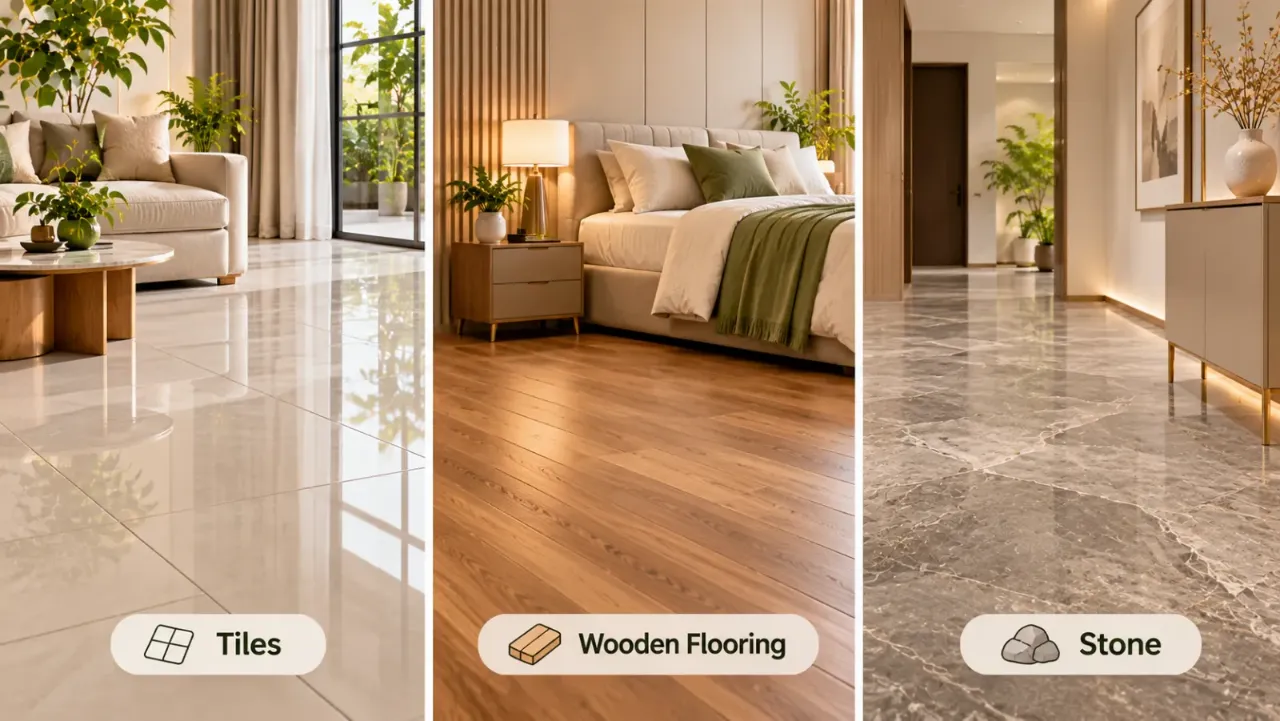
Flooring Materials Compared: Tiles, Wooden Flooring and Stone
Flooring is one of the most important decisions in a home interior project. It covers a large surface area, influences the appearance of every room and affects how comfortable the home feels during everyday use. It also needs to withstand furniture movement, foot traffic, spills, cleaning and changing weather conditions.
Tiles, wooden flooring and natural stone are three popular choices, but they do not perform in the same way. Tiles offer a wide range of finishes and practical options. Wooden flooring introduces warmth and a softer visual character. Natural stone provides individual patterns and a substantial, timeless appearance.
The right choice depends on more than appearance. Moisture exposure, room usage, maintenance, installation quality and the overall budget all matter. Here is how to compare these flooring materials before making a decision.
1. Understand the Main Flooring Options
Before comparing their performance, it helps to understand what each flooring category includes.
Tiles
Tiles are manufactured in different materials, sizes, colours and finishes. Common choices for homes include:
- Ceramic tiles: Made from fired clay and available in many designs. Their suitability depends on the tile's body, finish and intended application.
- Porcelain tiles: Generally denser and less water-absorbent than ordinary ceramic tiles. They are available in stone, concrete, wood and other decorative looks.
- Vitrified tiles: A broad category of tiles made through a process that creates a dense, low-porosity body. They are widely used in Indian homes.
- Wood-look tiles: Ceramic or porcelain tiles designed to resemble timber planks.
Tiles can be used in living rooms, bedrooms, kitchens, bathrooms and utility areas, provided the selected product is suitable for the location.
Wooden Flooring
Wooden flooring brings natural grain, variation and warmth to an interior. It is available in different forms:
- Solid hardwood: Made from solid timber and can often be refinished, depending on its thickness and condition.
- Engineered wood: Has a real-wood top layer over a layered core. Its stability and refinishing options depend on the construction and wear-layer thickness.
- Wood-look laminate: Uses a decorative printed layer over a composite core. It gives a timber-like appearance but is not the same as real wood.
- Wood-look vinyl or SPC flooring: Offers a wood-like visual effect using synthetic materials. It has different performance and installation requirements from timber flooring.
The term wooden flooring is often used loosely. Before comparing prices or specifications, identify whether the product is solid wood, engineered wood, laminate or a synthetic alternative.
Natural Stone Flooring
Natural stone flooring is cut from quarried stone. Every slab or tile can have variations in colour, grain and pattern.
- Marble: Known for its veining and varied natural patterns.
- Granite: A dense stone available in different colours and grain patterns.
- Kota stone: A natural limestone commonly used in Indian homes and other buildings.
- Slate: Offers a more textured, layered appearance.
- Travertine: Has a distinctive porous structure and needs suitable filling and maintenance.
Natural stone can create a distinctive floor, but its performance depends on the stone type, finish, porosity, sealing and installation.
2. Tiles vs Wooden Flooring vs Stone: Quick Comparison
| Factor | Tiles | Wooden Flooring | Natural Stone |
|---|---|---|---|
| Appearance | Wide range of colours and patterns | Warm, natural grain | Unique natural patterns |
| Water exposure | Depends on tile and joints | Sensitive to standing water; varies by product | Depends on stone porosity and sealing |
| Scratch resistance | Varies by tile type and surface | Varies by species and protective finish | Varies by stone and finish |
| Comfort underfoot | Often hard and cool | Usually feels warmer | Usually hard and cool |
| Maintenance | Generally straightforward | Needs product-specific care | May require sealing and specialised care |
| Repair | Individual tiles can sometimes be replaced | Boards may be repairable or replaceable | Repairs and matching can be difficult |
| Installation | Requires a suitable base and accurate laying | Depends on the flooring system | Requires careful handling and installation |
| Cost | Wide range | Wide range | Wide range, often higher for premium stones |
There is no universal winner. A dense porcelain tile may be a practical choice for one household, while engineered wood may be more appealing in a bedroom. Natural stone may be worth considering when its appearance and maintenance requirements suit the project.
3. What Makes Tile Flooring a Practical Choice?
Tiles are popular because they are available in a broad range of designs and can suit many parts of the home.
Advantages:
- Many sizes, patterns, colours and finishes are available.
- Suitable products can handle regular cleaning and everyday household use.
- Porcelain and vitrified options generally have low water absorption.
- Wood-look and stone-look designs provide alternatives to natural materials.
- Individual damaged tiles may be replaceable if matching stock is available.
Limitations:
- Some polished surfaces can become slippery when wet.
- Grout joints can collect dirt and may need periodic cleaning.
- Hard flooring can feel uncomfortable during long periods of standing.
- Incorrect installation can result in uneven surfaces, hollow spots or cracked tiles.
- Some designs may be difficult to match if replacement tiles are needed later.
Where Tiles Work Best
Tiles are suitable for many living rooms, kitchens, bathrooms, balconies and utility spaces. For wet areas, choose a tile with appropriate slip-resistance performance rather than relying only on whether its surface looks matte or textured.
4. What Makes Wooden Flooring Different?
Wooden flooring is often selected for its natural appearance and the warmer feel it can bring to a room.
Advantages:
- Natural grain adds visual variation.
- It can create a comfortable, inviting atmosphere.
- Engineered wood is available in different finishes and plank sizes.
- Some solid and engineered wood products can be refinished.
- It pairs well with contemporary, classic and minimalist interiors.
Limitations:
- Moisture and standing water can cause damage.
- Timber may expand or contract with changes in temperature and humidity.
- Scratches and dents may occur depending on the wood species and finish.
- Certain products need careful cleaning and periodic maintenance.
- Quality underlay, subfloor preparation and installation affect performance.
Where Wooden Flooring Works Best
Wooden flooring is commonly used in bedrooms, living areas, studies and other relatively dry spaces. Engineered wood may be suitable in more varied conditions than some solid-wood systems, but product specifications and installation instructions still need to be followed.
It is generally not the first choice for shower areas or locations exposed to regular water.
5. What Makes Natural Stone Flooring Special?
Natural stone has a character that manufactured patterns cannot reproduce exactly. Its natural variation can become an important part of the interior design.
Advantages:
- Every stone surface has its own pattern and variation.
- Some stones are highly durable when selected and installed correctly.
- Marble, granite and other stones offer different visual styles.
- Stone can complement both traditional and contemporary interiors.
- Certain stone floors can be refinished or repolished by specialists.
Limitations:
- Porous stones may absorb liquids and require sealing.
- Acidic substances can etch some stones, particularly marble and limestone.
- Some polished surfaces can be slippery when wet.
- Natural variation makes exact replacement matching difficult.
- Slab selection, transport, cutting and installation can increase project complexity.
Where Natural Stone Flooring Works Best
Natural stone can be used in living rooms, entrance areas, corridors and selected bedrooms. The specific stone and finish should be selected according to foot traffic, moisture, cleaning habits and the desired appearance.
For kitchens and bathrooms, check the stone's porosity, chemical sensitivity, finish and sealing requirements before installation.
6. Which Flooring Material Is Best for Each Room?
The same flooring does not need to be used throughout the home. Different rooms have different requirements.
| Room | Suitable Options | Important Considerations |
|---|---|---|
| Living room | Porcelain tiles, marble, granite, engineered wood | Appearance, foot traffic and cleaning |
| Bedroom | Engineered wood, suitable laminate, tiles, stone | Comfort, temperature and maintenance |
| Kitchen | Porcelain or suitable ceramic tiles, selected stone | Grease, spills, cleaning and slip resistance |
| Bathroom | Suitable anti-slip tiles, approved stone systems | Water exposure, drainage and surface grip |
| Dining area | Tiles, stone, engineered wood | Spills, chair movement and cleaning |
| Study or home office | Engineered wood, tiles, laminate | Furniture movement, comfort and chair protection |
| Entrance | Durable tiles, granite or suitable stone | Dust, abrasion and frequent foot traffic |
| Balcony | Exterior-rated tiles or suitable stone | Sun, rain, drainage and slip resistance |
For balconies and other exposed areas, do not use indoor flooring products simply because they match the home's interior. Check outdoor suitability, weather exposure, drainage and slip resistance.
7. Understand the Maintenance Requirements
Flooring maintenance is not just about how often a floor needs cleaning. It also depends on which cleaning products are safe, how easily damage can be repaired and whether the surface needs periodic treatment.
Tile Maintenance
- Sweep or vacuum loose dirt regularly.
- Use a suitable floor cleaner.
- Clean grout joints when dirt begins to accumulate.
- Avoid harsh chemicals that may damage the tile surface or grout.
- Check for cracked tiles or deteriorating joints.
Wooden Flooring Maintenance
- Use a soft broom or suitable vacuum attachment.
- Clean spills promptly.
- Avoid excessive water or wet mopping unless the manufacturer allows it.
- Use recommended wood-floor cleaning products.
- Add suitable protection under furniture legs.
- Follow product guidance for refinishing or surface treatment.
Natural Stone Maintenance
- Use cleaners suitable for the particular stone.
- Wipe spills promptly, especially acidic liquids on sensitive stones.
- Avoid acidic or abrasive cleaners unless approved for the material.
- Check whether the stone needs sealing and how often.
- Use specialist help for polishing, repairs and significant staining.
Important maintenance note
Always follow the manufacturer's or stone supplier's care instructions. A cleaner suitable for ceramic tiles may not be appropriate for marble or timber.
8. What Affects the Total Flooring Cost?
The material rate is only one part of the flooring budget. Installation and preparation can significantly affect the final amount.
Include the following when comparing quotations:
- Material cost and wastage.
- Subfloor preparation and levelling.
- Adhesive, mortar, grout or underlay.
- Cutting, polishing and edge finishing.
- Installation labour.
- Skirting and transition profiles.
- Sealing or protective treatments where required.
- Removal and disposal of existing flooring.
- Transport and handling.
- Repairs and future maintenance.
A lower material price does not necessarily mean a lower project cost. For example, natural stone may require additional cutting, polishing and sealing, while wooden flooring may need a specific underlay and moisture-controlled installation.
Ask contractors to quote for the same area and scope of work so that comparisons are meaningful.
9. How to Choose the Right Flooring for Your Home
Before finalising a material, consider these practical questions:
- How will the room be used? A high-traffic entrance needs a different performance profile from a bedroom used mainly for rest.
- How much moisture can the floor experience? Kitchens, bathrooms, balconies and utility areas need appropriate material selection.
- What level of maintenance is realistic? Natural stone and real wood may require more specific care than some tile options.
- How important is comfort? Consider how the floor feels underfoot, the use of rugs and whether occupants spend long periods standing.
- What is the complete budget? Include installation, accessories, preparation and long-term upkeep.
- Can the floor be repaired later? Check replacement availability, repair methods and the possibility of matching the existing finish.
10. Common Flooring Mistakes to Avoid
| Mistake | Why It Matters |
|---|---|
| Choosing only by appearance | The material may not suit the room's conditions. |
| Ignoring slip resistance | A polished floor can become hazardous when wet. |
| Using ordinary wood flooring in wet zones | Moisture can damage the flooring system. |
| Skipping subfloor checks | Uneven or damp bases can affect performance. |
| Ignoring grout and joints | Poor joint detailing can create maintenance problems. |
| Not ordering enough material | Later batches may differ in shade or pattern. |
| Overlooking transitions | Different flooring heights can create awkward edges or trip hazards. |
| Comparing only material prices | Installation and preparation can change the final cost. |
11. A Practical Checklist Before Buying Flooring
- Identify the intended use of each room.
- Check moisture exposure and ventilation.
- Compare material specifications, not just appearance.
- Check slip resistance for wet and outdoor areas.
- Inspect samples in the actual room lighting.
- Confirm thickness, size and installation requirements.
- Check subfloor condition and moisture where relevant.
- Include adhesive, grout, underlay, skirting and labour in the quotation.
- Confirm material availability for future repairs.
- Ask for cleaning, sealing and maintenance instructions.
Final Thought
Tiles, wooden flooring and natural stone each have a place in home interiors. Tiles offer flexibility and practical options, wood brings warmth and natural character, while stone provides distinctive patterns and a lasting architectural feel.
The best flooring choice is not necessarily the most expensive or the most fashionable. It is the material that suits the room, the household's daily routine, the local conditions and the maintenance that homeowners are prepared to manage.
Plan the flooring room by room, compare complete installation costs and check product specifications before making the final decision.
Frequently Asked Questions
1. Which flooring is best for Indian homes?
There is no single best option. Porcelain or vitrified tiles are practical for many rooms, engineered wood can suit dry living spaces and natural stone may be suitable where its appearance and maintenance requirements are acceptable.
2. Are tiles better than wooden flooring?
Tiles are often easier to use in areas exposed to water and frequent cleaning. Wooden flooring offers a warmer appearance and feel but needs more careful moisture management. The better choice depends on the room and household requirements.
3. Is wooden flooring suitable for Indian weather?
It can be, provided the product is suitable for the local temperature and humidity conditions and is installed according to the manufacturer's instructions. Moisture control and suitable acclimatisation are important.
4. Which natural stone is suitable for home flooring?
Marble, granite, Kota stone, slate and travertine are among the options. Their suitability depends on porosity, finish, foot traffic, maintenance and the room's conditions.
5. Is marble flooring difficult to maintain?
Marble needs suitable cleaning products and protection from acidic substances that can etch the surface. Depending on the marble and finish, periodic sealing and specialist maintenance may also be needed.
6. Which flooring is suitable for bathrooms?
Tiles with appropriate wet-area slip resistance are a common choice. Natural stone can also be used when the selected stone, finish, sealing and installation system are suitable for bathroom conditions.
7. Can tiles and wooden flooring be used together?
Yes. They can be combined to distinguish areas such as living and dining spaces. Plan the transition carefully so that floor heights, edges and materials meet neatly.
8. Which flooring is easiest to maintain?
Suitable ceramic and porcelain tiles are generally straightforward to clean. However, grout, surface finish, product quality and installation all influence maintenance. No flooring should be treated as completely maintenance-free.
Explore More Interior Design Tools with Walls to Wonder
Compare ideas, plan your rooms and explore your home's design possibilities with Walls to Wonder AI tools.
- Whole Home Visualizer – Explore coordinated design ideas for your home.
- Design My Room – Visualise different room styles and finishes.
- Interior Design Cost Estimate – Get an initial estimate for your interior project.
- Interior Quotation Checker – Review and understand an interior quotation.
- Rate My Room Design – Get feedback on your room design.
- Interior Style Finder – Discover an interior style that suits your preferences.
Visit Walls to Wonder for more home interior inspiration and design tools.
Turn this idea into a plan for your home
Visualise your space, understand the likely budget, or find a professional who can bring the idea to life.