
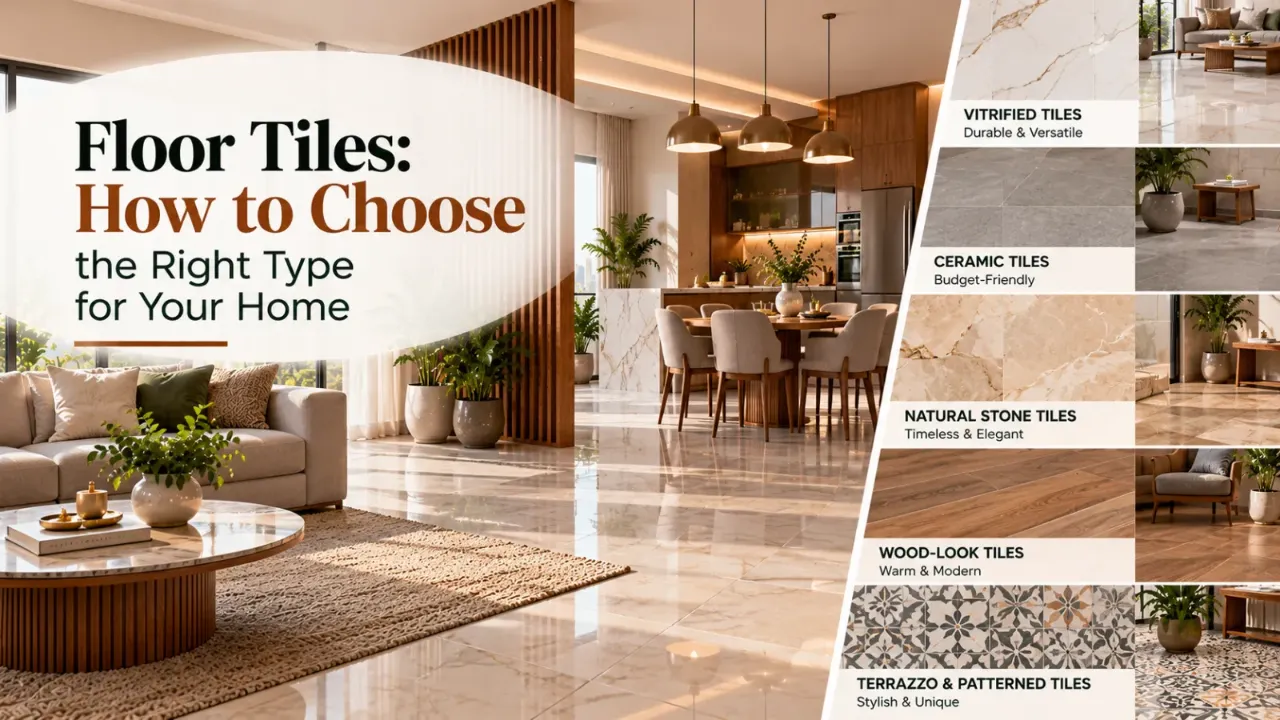
Floor Tiles: How to Choose the Right Type for Your Home
Flooring influences how a home looks, feels and functions every day. The right tiles can make a room feel brighter, complement your furniture and withstand regular use. The wrong choice, however, can lead to slippery surfaces, difficult cleaning, visible stains or costly repairs.
In Indian homes, floor tiles need to suit more than the interior style. Dust, cooking spills, monsoon moisture, foot traffic and household cleaning habits can all influence which tile is practical for a particular room.
The best approach is to compare materials, surface finishes, sizes and maintenance requirements before making a purchase.
Quick answer: Choose floor tiles according to the room's use, moisture exposure, foot traffic and cleaning needs. Vitrified tiles are a popular option for many living spaces, while ceramic tiles may suit selected applications. For bathrooms, balconies and other wet areas, prioritise a suitable slip-resistant surface rather than appearance alone.
1. Understand the Main Types of Floor Tiles
Different tile materials offer different combinations of appearance, durability, water absorption and maintenance.
Vitrified tiles: These are widely used in Indian homes because they are available in many colours, sizes and finishes. They can work well in living rooms, bedrooms and other frequently used areas when the product is appropriate for the application.
Ceramic tiles: Ceramic options come in many designs and can suit selected residential floors. Check the specific product's strength, water absorption and intended use before choosing it for a high-traffic area.
Porcelain tiles: Porcelain is a type of ceramic tile generally made with low water absorption. It can be suitable for many demanding applications, but the product's rating and surface finish still matter.
Natural stone: Marble, granite and other natural stones offer distinctive patterns and character. They may need sealing or specialised care, depending on the stone and finish. Consider the maintenance commitment before selecting them.
Do not choose by the material name alone. Compare the manufacturer's technical specifications, intended application and maintenance instructions for the exact tile.
2. Select Tiles According to the Room
A tile that works well in a bedroom may not be the best option for a bathroom or balcony.
- Living room: Consider durable, easy-to-clean tiles that complement the furniture and create a cohesive look across connected spaces.
- Bedroom: A comfortable visual finish, suitable surface texture and simple maintenance may be more important than a highly polished appearance.
- Kitchen: Look for a floor surface that is practical to clean and appropriate for regular spills and foot traffic. Grout selection also affects upkeep.
- Bathroom: Prioritise slip resistance under the conditions in which the floor will be used. A glossy finish should not be selected purely for its appearance.
- Balcony and utility area: Check whether the product is suitable for outdoor exposure, temperature changes, water and the conditions at your location.
For a coordinated design direction, the Walls to Wonder Interior Style Finder can help you explore colours, materials and styles that suit your home.
3. Choose the Right Surface Finish
The finish affects appearance, cleaning and how the floor behaves underfoot.
Glossy tiles reflect light and can create a bright, polished appearance. However, they may show smudges and water marks, and some can become slippery when wet.
Matte tiles offer a softer appearance and can be practical in many contemporary interiors. Their slip resistance still depends on the specific product and surface characteristics.
Textured or structured tiles may provide additional grip for certain applications. Deep textures can also trap dirt, so consider the balance between traction and cleaning.
Stone-look and wood-look tiles create the appearance of natural materials while offering the characteristics of the tile product. Review the pattern variation, surface texture and finish in person where possible.
Always ask for product-specific slip-resistance information, especially for wet areas. No finish should be assumed to be slip-proof in every condition.
4. Get the Tile Size and Layout Right
Tile size affects the overall appearance of a room and the number and placement of grout joints.
Large-format tiles can create a more continuous visual effect because they generally require fewer grout joints. They can work well in spacious rooms, but the floor must be properly prepared and the installation carried out with the right tools and techniques.
Medium-sized tiles offer flexibility for many residential layouts. Smaller tiles may be useful in compact areas, around slopes or where the design needs more detailed placement, depending on the product.
Before deciding, consider the room dimensions, doorways, corners, floor drains and the location of fixed furniture. Ask for a layout plan that shows cut tiles and grout lines. A tile that looks attractive on its own may not look balanced when narrow cuts appear along several walls.
5. Match Tile Colour With Light and Interior Design
Floor tiles form a large part of the room's visual background, so their colour can affect the overall mood.
Light beige, ivory and pale grey can help a space feel bright, particularly when paired with suitable lighting and a restrained palette. Mid-tone colours can offer a balance between visual warmth and everyday practicality. Darker tiles can create contrast but may make dust, water marks or light-coloured debris more noticeable.
The right choice depends on the room's daylight, wall colours, furniture and the amount of maintenance you are comfortable with.
If you are uncertain how a tile finish will look with your existing interiors, upload a room photo to Walls to Wonder's Design My Room tool to explore different finishes and colour directions. Treat the result as a visual concept, not a substitute for checking actual tile samples.
6. Check Quality Before Buying
Two tiles with similar appearances may differ in technical performance. Before placing an order, review the product information and inspect samples.
- The recommended application and relevant technical ratings.
- Dimensions, thickness, shade and batch consistency.
- Surface finish and suitability for the room's moisture conditions.
- Edge quality, visible defects and pattern variation.
- Cleaning and maintenance instructions.
- Manufacturer guidance for installation materials and grout.
Buy enough tiles from a consistent batch for the planned work, with a reasonable allowance for cutting, breakage and future repairs. The required extra quantity depends on the room layout, tile size and installation pattern, so confirm it with the installer.
Keep spare tiles labelled and stored safely. Matching the exact shade and design later may be difficult if the product or batch changes.
7. Avoid Common Installation Mistakes
Even a good tile can produce a poor result when installation is rushed or inadequately planned.
The floor base should be suitably prepared, stable and level within the requirements of the chosen tile and installation system. Wet areas need appropriate waterproofing and drainage design before tiles are installed.
Use the adhesive, grout, joint width and installation method recommended for the tile and substrate. Large-format tiles may need particular attention to coverage and flatness. Do not rely on grout to correct an uneven floor.
Before the work begins, confirm the tile layout, starting lines, edge cuts, door clearances and transitions between different flooring materials. Check that the floor falls correctly toward drains where required.
Finally, allow the installation materials to cure according to their instructions before heavy use or cleaning. A professional installer should verify the details that depend on the site and product.
8. Keep Floor Tiles Clean and Well Maintained
Regular, appropriate cleaning helps preserve the appearance of tiled floors.
- Sweep or vacuum loose dust and grit to reduce surface scratching.
- Use a compatible floor cleaner and follow the tile manufacturer's instructions.
- Wipe spills promptly, especially in kitchens and other food-preparation areas.
- Avoid harsh chemicals or abrasive tools unless the manufacturer confirms they are suitable.
- Clean grout joints regularly and investigate discolouration or deterioration rather than simply covering it.
- Use suitable mats at entrances to reduce the amount of dirt brought indoors.
Natural stone may require different products and periodic sealing, while some textured surfaces need more attention to remove trapped dirt. Follow care instructions for the specific material rather than applying one cleaning method to every floor.
9. Plan the Full Flooring Budget
The total cost includes more than the price per tile. Include adhesive, grout, skirting, waterproofing where required, floor preparation, labour, cutting, transport and waste.
Larger or specialised tiles may require different handling and installation methods. Natural stone can have additional finishing and maintenance costs. Ask the installer to specify what is included in the quotation and whether removal of existing flooring or disposal of debris is extra.
For a broader home renovation budget, the Walls to Wonder Interior Design Cost Estimate can help you explore an indicative range. Get a separate, itemised flooring quote based on the actual area, selected tile and site conditions before approving the work.
A Final Thought
The best floor tiles are those that suit the way you live, not just the look you want to achieve. Consider the room, moisture exposure, surface texture, maintenance needs and installation requirements before choosing a design.
Compare actual samples, confirm technical specifications and plan the layout before ordering. With the right selection and proper care, tiled floors can remain practical and attractive for years.
Planning Your Flooring?
Explore tile colours and finishes in the context of your own room before making a final decision. A little planning can help you balance appearance, safety, maintenance and budget.
Frequently Asked Questions
1. Which tiles are best for floors in Indian homes?
Vitrified tiles are a popular choice for many living spaces, while ceramic, porcelain and natural stone can suit specific applications. The best option depends on the room, product specifications, finish and maintenance requirements.
2. Are glossy floor tiles a good choice?
Glossy tiles can reflect light and create a polished appearance. However, they may show smudges and water marks and can be slippery when wet. Assess the exact product before using it in areas exposed to moisture.
3. Are matte tiles better for bathrooms?
A suitable slip-resistant matte or textured tile can be a practical choice for bathrooms. The finish alone does not guarantee grip, so check product-specific slip-resistance information and installation recommendations.
4. Which tile size is best for a small room?
There is no single ideal size for every small room. Larger tiles can reduce grout joints, but room proportions, cuts, layout and installation quality determine the final appearance.
5. How many extra floor tiles should I buy?
The allowance depends on the room's shape, tile size, installation pattern and cutting requirements. Ask your installer to calculate the quantity and retain spare tiles for future repairs.
6. How should I clean tiled floors?
Sweep or vacuum regularly, use a compatible cleaner and wipe spills promptly. Follow the product's care instructions, particularly for textured tiles, grout and natural stone.
7. Why do floor tiles sometimes crack or come loose?
Possible causes include movement or weakness in the substrate, inadequate adhesive coverage, incorrect installation, missing movement joints or moisture-related issues. A qualified professional should inspect the floor to identify the actual cause before repairs are made.
Turn this idea into a plan for your home
Visualise your space, understand the likely budget, or find a professional who can bring the idea to life.