
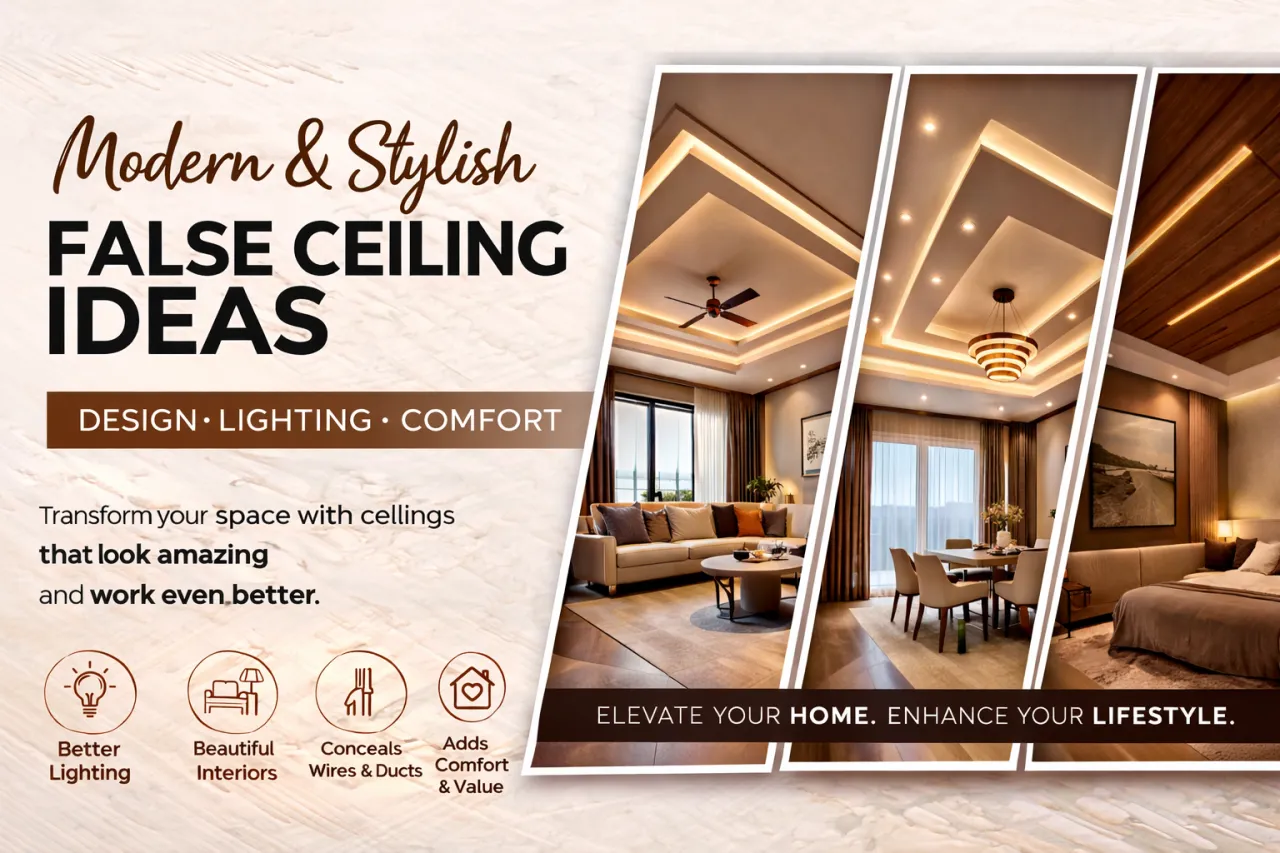
False Ceilings: A Stylish and Practical Upgrade for Modern Homes
A room is rarely defined only by its walls and furniture. Sometimes, the surface that changes the atmosphere the most is the one above us. A well-designed false ceiling can quietly transform an ordinary space into one that feels more elegant, better lit, and far more complete.
That is why false ceilings have become such an important part of interior design today. They are not only about decoration. A good false ceiling can improve lighting, hide wires and services, add depth to the room, and even make the home feel more comfortable. Whether it is a living room, bedroom, dining space, or home office, the right ceiling design can completely change the character of the room.
In modern homes, false ceilings are no longer seen as an extra luxury. They are now a practical design feature that combines style with function. From minimal gypsum ceilings to warm wooden designs and elegant cove lighting, there are many options available depending on the size, style, and needs of the home.
This guide explores what false ceilings are, why they are used, their benefits, popular materials, common design types, and how to choose the right false ceiling for your home.
What Is a False Ceiling?
A false ceiling, also known as a dropped ceiling or secondary ceiling, is a layer installed below the main structural ceiling. It creates a gap between the original ceiling and the new surface, which can be used for both design and functional purposes.
This space is often used to hide electrical wiring, AC ducts, pipes, beams, and other services that may otherwise remain visible. At the same time, it allows better lighting arrangements and gives the room a more finished and stylish appearance.
False ceilings can be very simple and subtle, or they can be more layered and decorative depending on the design approach.
Why False Ceilings Are So Popular Today
False ceilings have become popular because they do much more than improve appearance. They help create cleaner interiors, support better lighting, and make rooms feel more thoughtfully designed.
A well-planned false ceiling can:
- Make a room look more polished
- Improve the way lighting works
- Hide unwanted structural or electrical elements
- Add depth and definition to the ceiling plane
- Improve thermal comfort in some cases
- Enhance sound control in certain rooms
In short, it turns an often ignored part of the room into a valuable design feature.
Benefits of False Ceilings
1. They Improve the Overall Look of a Room
One of the biggest reasons people choose false ceilings is the visual impact. A false ceiling can make the room feel more complete, elegant, and modern. Even a simple design can add depth and make the ceiling look intentional rather than plain.
2. They Allow Better Lighting Design
False ceilings work beautifully with recessed lights, cove lighting, LED strips, spotlights, and indirect lighting. This helps create different moods in the same room and gives much better control over ambience.
3. They Hide Wires, Pipes, and Ducts
Electrical wiring, AC ducts, and structural elements can disturb the neat look of interiors. A false ceiling helps conceal these services and keeps the overall design cleaner.
4. They Help Balance Room Proportions
In larger rooms, a false ceiling can make the space feel warmer and more intimate. In some cases, it also helps define zones within open layouts.
5. They Can Improve Thermal Comfort
Some false ceiling materials help reduce heat transfer from the roof, which can make interiors feel cooler and more comfortable.
6. They Offer Acoustic Benefits
In certain spaces, false ceilings can also improve sound absorption and reduce echo, especially in apartments, media rooms, or home offices.
Common Materials Used for False Ceilings
Gypsum
Gypsum is one of the most commonly used false ceiling materials in homes. It gives a smooth finish and works very well in modern interiors.
Best for: Living rooms, bedrooms, offices
Advantages: Smooth finish, lightweight, clean appearance, easy to paint
POP (Plaster of Paris)
POP is often used when people want more decorative or customized ceiling work. It can be shaped into curves, patterns, and detailed forms.
Best for: Decorative ceiling designs
Advantages: Flexible design possibilities, elegant finish, suitable for custom detailing
Wooden Ceiling Panels
Wooden false ceilings add warmth and richness to interiors. They create a cozy and premium look, especially in homes that want a more natural or luxurious feel.
Best for: Bedrooms, lounges, feature ceilings
Advantages: Warm texture, premium look, timeless appeal
Metal Ceilings
Metal ceilings are strong and durable, though they are more common in commercial or industrial-style spaces.
Best for: Offices, utility spaces, modern industrial interiors
Advantages: Durable, sleek, low maintenance
PVC Ceiling Panels
PVC is lightweight and moisture-resistant, which makes it useful in spaces that deal with humidity.
Best for: Bathrooms, balconies, utility areas
Advantages: Water-resistant, easy to maintain, affordable
Popular Types of False Ceiling Designs
1. Single-Layer False Ceiling
This is a simple false ceiling with one dropped level. It suits homes that prefer a minimal and clean interior look.
Best for: Small apartments, modern homes, minimal interiors
2. Multi-Layer False Ceiling
This design includes more than one ceiling level and creates a more dramatic and luxurious effect. It is often used in large living spaces.
Best for: Spacious homes, premium interiors, statement areas
3. Cove Ceiling
A cove ceiling includes recessed edges that hold indirect lighting. This creates a soft and elegant glow that feels warm and sophisticated.
Best for: Living rooms, bedrooms, lounges
4. Tray Ceiling
A tray ceiling has a raised center section that adds dimension and architectural interest to the room.
Best for: Master bedrooms, dining rooms, formal living rooms
5. Wooden Feature Ceiling
This type uses wood panels or slats to add texture and warmth. It can make the ceiling itself a major design feature.
Best for: Premium homes, bedrooms, modern natural interiors
6. Grid Ceiling
Grid ceilings are more commonly seen in offices and commercial spaces, but they can also suit some industrial-inspired home interiors.
Best for: Workspaces, studios, industrial themes
False Ceiling Ideas for Different Rooms
Living Room
The living room is one of the best spaces for a false ceiling because it is often the main visual area of the home. Cove lighting, recessed lights, and layered designs work especially well here.
Bedroom
Bedroom false ceilings should feel soft and calming. Simple gypsum designs, indirect lighting, or warm wooden elements can help create a restful atmosphere.
Dining Area
A false ceiling over the dining table can define the area beautifully and make the space feel more intentional. It can also help integrate pendant lights more effectively.
Kitchen
Kitchen ceilings should stay practical and easy to maintain. Moisture resistance and a clean lighting layout are more important here than heavy decoration.
Bathroom
Bathrooms need materials that can handle humidity. PVC or other moisture-resistant ceiling options are often more suitable.
Home Office
A false ceiling in a home office can improve lighting, conceal wiring, and make the space feel more professional and organized.
How to Choose the Right False Ceiling
Consider the Room Height
If the ceiling is already low, a heavily layered design can make the room feel smaller. In such cases, simpler false ceilings are usually the better choice.
Think About the Room’s Function
A living room may need mood lighting and a decorative finish, while a kitchen or utility space may need something simpler and more functional.
Match It to the Interior Style
Modern homes often suit gypsum and cove ceilings, while premium or warmer interiors may benefit from wooden ceiling features or layered forms.
Keep Your Budget in Mind
Simple gypsum ceilings are usually more budget-friendly, while highly customized decorative work can cost more.
Choose Easy Maintenance Where Needed
In areas exposed to moisture, grease, or dust, choose durable materials that are easier to maintain over time.
False Ceiling Lighting Ideas
Lighting is one of the main reasons false ceilings are so widely used. A well-lit ceiling can change the mood of the room completely.
Popular options include:
- Recessed spotlights
- LED strip lights
- Cove lighting
- Pendant lights through a ceiling cutout
- Warm indirect lighting in bedrooms
- Bright focused lighting for study or work areas
It is always better to plan the lighting layout together with the ceiling design rather than treating it as a later step.
Things to Keep in Mind Before Installation
Before installing a false ceiling, a few practical points are important:
- Check the room height first
- Finalize electrical and lighting points in advance
- Choose moisture-resistant materials where necessary
- Avoid heavy designs in small rooms
- Work with experienced professionals
- Plan access points if maintenance may be needed later
A false ceiling should not only look good on day one. It should also remain practical over time.
Are False Ceilings Right for Every Home?
False ceilings can work beautifully in most homes, but the design should suit the actual space. In homes with low ceiling heights, very deep layered ceilings may not work well. In such cases, a subtle and minimal approach is often better.
The best false ceiling is not always the most elaborate one. It is the one that fits the room naturally, improves lighting, and enhances the design without making the space feel crowded.
Final Thoughts
False ceilings have become one of the most effective ways to improve both the look and function of a home. They add elegance, support better lighting, hide services, and make interiors feel more complete. Whether you choose a simple gypsum ceiling, a soft cove design, or a rich wooden feature, the right false ceiling can transform a room in a very noticeable way.
More than just a decorative layer, a false ceiling is a practical design element that helps shape the mood, comfort, and character of a home. When planned well, it brings together aesthetics and utility in a way that feels modern, thoughtful, and lasting.
Turn this idea into a plan for your home
Visualise your space, understand the likely budget, or find a professional who can bring the idea to life.