
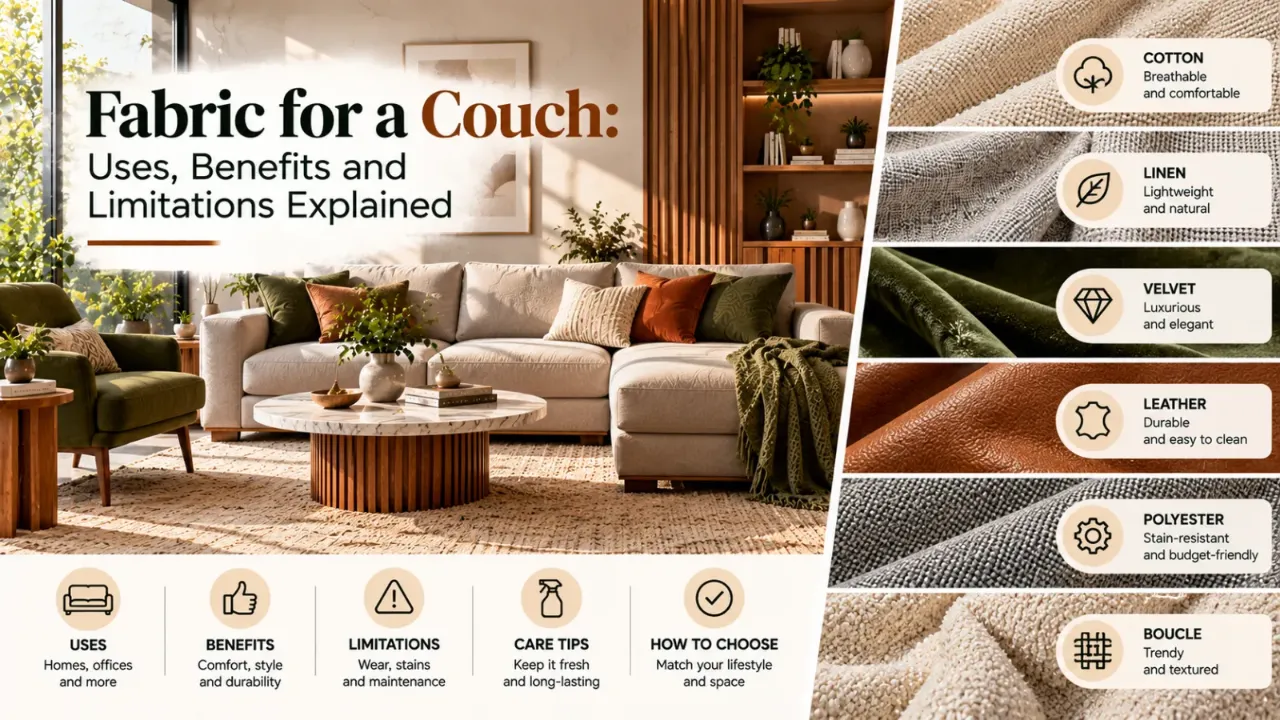
Fabric for a Couch: Uses, Benefits and Limitations Explained
A couch is often one of the most frequently used pieces of furniture in a home. It is where people relax, entertain guests, watch television and spend time with family. While the frame and cushioning affect its structure and comfort, the upholstery fabric plays a major role in how the couch looks, feels and holds up to everyday use.
Some fabrics offer a soft, relaxed appearance, while others bring rich texture or a more structured finish. However, a fabric that looks beautiful in a showroom may not be the easiest to maintain in a busy household.
Quick takeaway: Choose couch fabric by comparing comfort, construction, durability, cleaning requirements and suitability for your household—not just colour or texture.
1. Start With How Your Couch Will Be Used
Before comparing colours and textures, think about the role your couch plays in everyday life.
- Family living room: Prioritise durability, comfortable seating and manageable cleaning.
- Formal sitting area: Consider refined textures and finishes if the furniture receives lighter use.
- Homes with children: Look for practical upholstery that can tolerate regular use and has clear cleaning instructions.
- Homes with pets: Consider how the fabric handles hair, snagging, claws and spills.
- Compact apartments: Choose a fabric colour and texture that complement the room without making the couch visually overpowering.
- Frequently used lounge areas: Pay attention to abrasion resistance, seam quality and how well the fabric retains its appearance.
A fabric's suitability depends on its construction, not just its material name. A tightly woven fabric and a loose weave made from the same fibre may behave quite differently.
2. Understand the Main Types of Couch Fabric
Different upholstery fabrics offer different combinations of appearance, comfort and maintenance. Compare the common options before deciding.
Cotton
Cotton can feel soft and breathable, with a natural, relaxed appearance. It is available in many colours, patterns and weave styles.
Benefits: Comfortable, versatile and available in a broad range of designs.
Limitations: Depending on the weave and treatment, it may wrinkle, absorb spills, fade in strong sunlight or stain more easily than some alternatives.
Best suited to: Living spaces where comfort and a natural look matter, provided the cleaning requirements fit the household.
Linen
Linen has a distinctive natural texture and an understated, airy appearance. It can work well in contemporary and relaxed interiors.
Benefits: Breathable, tactile and visually elegant.
Limitations: It can crease easily, and some linen upholstery is more vulnerable to staining or wear. Blended fabrics may behave differently from pure linen.
Best suited to: Rooms where a natural texture is desirable and the upholstery can receive appropriate care.
Polyester
Polyester is widely used in upholstery, both on its own and in blends. Its performance depends on the yarn, weave, finish and overall fabric construction.
Benefits: Often practical for everyday furniture, with a wide selection of colours and textures.
Limitations: Some polyester fabrics can develop pilling, retain oily marks or feel less breathable than certain natural fibres.
Best suited to: Households seeking varied design options and practical upholstery, provided the specific fabric meets their requirements.
Velvet
Velvet is valued for its plush surface and rich appearance. It can make a couch feel more decorative and create visual depth through changes in light and pile direction.
Benefits: Soft texture, visual richness and a distinctive finish.
Limitations: The pile may show pressure marks, shading, dust or crushed areas. Cleaning requirements vary considerably between velvet types.
Best suited to: Feature sofas and living rooms where the desired appearance justifies the fabric's care needs.
Chenille
Chenille has a soft, textured surface that can feel cosy and substantial. It is commonly used for comfortable, relaxed seating.
Benefits: Tactile texture, visual depth and a welcoming appearance.
Limitations: Some chenille fabrics may snag, flatten or show wear in high-use areas. Loose construction can be less suitable for homes with pets that scratch furniture.
Best suited to: Comfortable living spaces where the chosen weave and construction suit the expected level of use.
Microfibre
Microfibre upholstery is made using very fine fibres and often has a smooth, suede-like appearance. It describes a fibre structure rather than one universal performance level.
Benefits: Many versions are practical for daily use and can be relatively easy to maintain.
Limitations: Cleaning requirements vary by construction and finish. Some versions can attract lint or show pressure marks.
Best suited to: Frequently used seating where the specific product has suitable durability and cleaning specifications.
3. Look Beyond the Fabric Name
Knowing that a couch is upholstered in cotton, polyester or velvet does not tell you everything about its performance. Several other factors matter.
- Weave density: Tighter constructions may resist snagging better than some loose weaves, although this does not guarantee overall durability.
- Abrasion resistance: Indicates how well a fabric withstands rubbing during use. Ask for the manufacturer's test results where available.
- Pilling resistance: Helps indicate whether small fibre balls are likely to form on the surface.
- Colourfastness: Describes how well colour resists fading or transfer under specified conditions.
- Seam strength: The upholstery and stitching need to withstand repeated sitting and movement.
- Surface finish: Treatments may affect stain resistance, texture and cleaning requirements.
Ask the supplier for the fabric's technical specifications and recommended application. Avoid choosing upholstery based solely on a swatch or a claim that it is durable.
4. Compare Comfort, Appearance and Practicality
A couch fabric should feel right as well as look right. Touch samples before purchasing and consider how the surface will feel in different seasons.
- Does the fabric feel comfortable against the skin?
- Does it become uncomfortable in your home's typical temperature?
- Does the texture suit the intended style of the room?
- Will the colour work with your flooring, walls and other furniture?
- Does the fabric show dust, pet hair, lint or pressure marks easily?
- Will it still suit the room if you change cushions, rugs or wall colours later?
For a long-term purchase, consider a colour and texture that work with the room's fixed elements. You can introduce stronger patterns or seasonal colours through cushions and throws.
If you are still deciding on a room's overall look, the Interior Style Finder can help you explore a design direction. You can also use Design My Room to visualise upholstery colours and furniture concepts. Treat generated images as inspiration, and check actual fabric samples before ordering.
5. Understand Cleaning and Maintenance Limitations
One of the most important checks before buying upholstery is understanding how it can be cleaned.
- Check the manufacturer's cleaning code and care instructions.
- Ask how common spills should be handled.
- Confirm whether cushion covers can be removed and whether they are washable.
- Test approved cleaning products on an inconspicuous area, following the instructions.
- Avoid soaking the fabric or using unapproved chemicals.
- Ask whether professional upholstery cleaning is recommended and how often.
Blot spills gently instead of rubbing them deeper into the fibres. Use only the cleaning method approved for the upholstery, because heat, excess moisture or unsuitable solvents can damage some fabrics.
6. Choose Fabric With Pets and Children in Mind
A busy household does not automatically rule out attractive upholstery, but it changes which features deserve attention.
For homes with children, consider fabrics with clear cleaning guidance, practical colours and a construction suitable for frequent use. For pets, look closely at weave tightness, snag resistance, hair removal and the likelihood of visible claw marks.
- Look at a large fabric sample rather than a tiny swatch.
- Assess the texture and potential for snagging.
- Ask whether the fabric is tested for abrasion and pilling.
- Confirm how spills and everyday marks should be cleaned.
- Consider washable throws or removable covers where appropriate.
- Remember that no upholstery fabric is completely immune to stains, scratches or pet damage.
Performance labels can be useful, but interpret them alongside the manufacturer's test method and care instructions.
7. Consider Colour, Pattern and Room Proportions
Fabric influences the visual weight of a couch. Darker or strongly patterned upholstery can become a focal point, while lighter or more uniform fabrics may create a quieter effect.
- Light neutrals: Can create a calm, airy look but may show certain stains more readily.
- Mid-tone colours: Can offer a balance between visual softness and everyday practicality.
- Dark shades: Can add contrast but may reveal lint, dust or pet hair depending on the fabric.
- Patterns: May help disguise some small marks, but the effect depends on the pattern and type of stain.
- Textured fabrics: Add depth, although highly textured surfaces can require more attention during cleaning.
Request samples and view them beside your actual wall colour, flooring and curtains. Check them in daylight and artificial lighting before finalising the upholstery.
For a coordinated look across multiple rooms, the Whole Home Visualizer can help you explore a consistent interior direction.
8. Compare the Total Cost, Not Just the Fabric Price
The total cost of a couch depends on more than the upholstery material. Frame construction, cushioning, stitching, fabric consumption, labour and customisation can all affect the final amount.
- Fabric type, grade and quantity
- Frame and cushioning specifications
- Upholstery labour and stitching
- Pattern matching or additional fabric requirements
- Custom dimensions or design changes
- Delivery and installation
- Warranty and care conditions
- Future reupholstery or repair options
A more expensive fabric is not automatically the better choice. Compare the specifications and expected use, then decide whether the extra cost delivers a benefit you actually need.
For broader furnishing plans, the Interior Design Cost Estimator can help you consider the couch as part of the overall interior budget.
9. A Practical Checklist Before Choosing Couch Fabric
Before confirming your upholstery, make sure you can answer these questions:
- Is the exact fabric composition identified?
- Is its construction suitable for the expected daily use?
- Are abrasion, pilling and colourfastness specifications available?
- Does the fabric feel comfortable in person?
- Are cleaning instructions clear?
- Is it suitable for your household's pets, children and activity level?
- Have you checked the colour in your room's lighting?
- Does the quotation include upholstery, stitching, delivery and customisation?
- Are warranty conditions and repair options documented?
If a supplier cannot explain a fabric's care requirements or performance claims, ask for the product documentation before making a decision.
A Final Thought
The right fabric for a couch is not necessarily the most expensive, softest or most fashionable option. It is the one that balances comfort, appearance, durability and maintenance for the way your household actually uses the furniture.
Compare the construction as well as the fibre, inspect samples in your own lighting and understand the cleaning requirements before buying. A thoughtful choice can help your couch remain comfortable and attractive without creating unnecessary maintenance work.
Frequently Asked Questions
1. Which fabric is best for a couch?
There is no single best fabric for every household. Cotton, linen, polyester, velvet, chenille and microfibre all have different characteristics. Choose according to comfort, daily use, cleaning needs and the manufacturer's performance specifications.
2. Is polyester a good fabric for a couch?
Polyester can be a practical upholstery option, but performance varies by construction, weave and finish. Check durability, pilling resistance, comfort and cleaning instructions for the specific fabric.
3. Is velvet difficult to maintain?
Some velvet fabrics need more careful maintenance because their pile can show pressure marks, shading or crushed areas. Cleaning requirements depend on the fibre and construction, so check the manufacturer's guidance.
4. Which couch fabric is suitable for homes with pets?
Look for suitable snag resistance, manageable hair removal and clear cleaning instructions. A tightly constructed fabric may be worth considering, but no material is completely resistant to claws or damage.
5. Does a higher fabric price mean better quality?
Not necessarily. Price can reflect fibre, design, finish, brand and availability. Compare technical specifications, comfort, cleaning requirements and suitability for your intended use.
6. Can couch upholstery be washed at home?
Only when the care instructions permit it. Removable covers are not always machine-washable, and some fabrics require specific spot cleaning or professional treatment.
7. How can I make couch fabric last longer?
Vacuum or brush it as recommended, address spills promptly, avoid unapproved cleaning products, protect it from excessive sunlight where possible and follow the manufacturer's maintenance instructions.
Turn this idea into a plan for your home
Visualise your space, understand the likely budget, or find a professional who can bring the idea to life.