
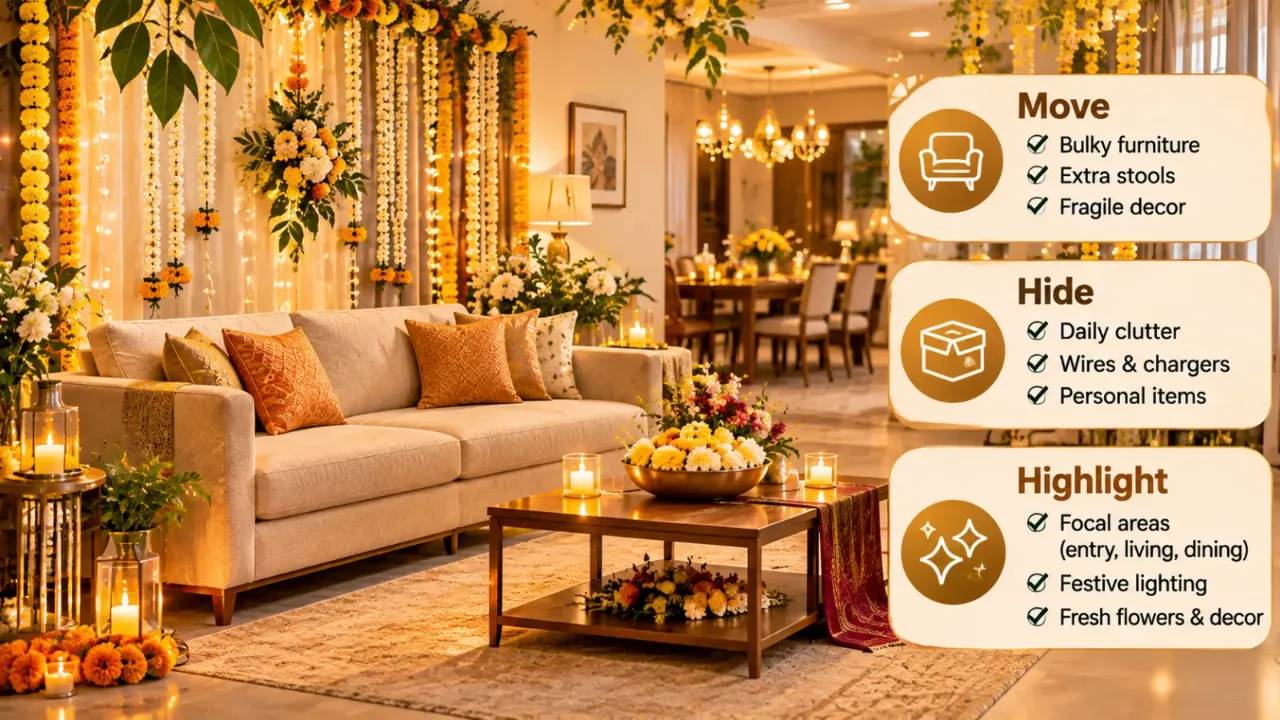
Dressing a Home for a Wedding: What to Move, Hide and Highlight
Dressing a Home for a Wedding: What to Move, Hide and Highlight
A wedding at home changes the way you look at familiar spaces. The living room may become a gathering area, the dining space may need to accommodate more people, and bedrooms or spare rooms may temporarily serve as guest spaces. Even a home that feels comfortable every day can start to feel crowded when relatives, friends, vendors and family members move through it.
The solution is not to decorate every corner or buy new furniture just for the occasion. A wedding-ready home is usually the result of thoughtful editing: moving what gets in the way, putting away what does not need to be seen and highlighting the spaces that make guests feel welcome.
Here is how to prepare your home in a practical, room-by-room way.
1. Start by Understanding How the Home Will Be Used
Before moving furniture or buying decorations, identify which parts of the home will be used during the celebrations.
Think about:
- Where guests will enter and remove their footwear.
- Which room will be used for sitting and conversation.
- Where food and refreshments will be served.
- Whether any room will be used for dressing, makeup or changing.
- Where older guests or children can sit comfortably.
- Which bedrooms will be occupied by visiting family members.
- Where gifts, luggage, bags and other personal belongings will be kept.
You do not need to prepare every room equally. Focus first on the spaces guests will actually use. Keep private family areas private, and decide which doors should remain closed during the event.
2. What to Move Before the Wedding
Furniture that works perfectly well on an ordinary day may make a room difficult to navigate when more people are present.
Move furniture that interrupts movement. Consider shifting an occasional chair, side table, floor lamp or decorative stool if it narrows the main walking route. Keep the route between the entrance, seating area, dining space and washroom as clear as possible.
Rearrange seating rather than adding too much. A few well-positioned chairs can be more useful than filling the room with extra sofas. Leave enough space for people to sit down and stand up without disturbing others.
Relocate fragile or valuable objects. Move delicate showpieces, unstable floor décor, glass accessories and treasured family items away from busy routes. Store them safely rather than placing them on another exposed surface.
Make room for practical needs. If guests will be served refreshments, identify where trays, water, crockery and serving supplies will be placed. Keep this arrangement convenient without allowing it to block the main seating area.
The aim is not to make the room empty. It is to make the existing layout work for a larger gathering.
3. What to Hide or Put Away
Every home has everyday items that are useful but not particularly attractive in a celebration setting. Putting them away can make a bigger difference than adding more decoration.
| Everyday item | A practical place to keep it |
|---|---|
| Shoes and slippers | Closed shoe cabinet or a designated footwear area |
| Charging cables and adapters | Drawer or cable organiser |
| Laundry and ironing supplies | Utility room or closed storage |
| Cleaning products and buckets | Utility cabinet |
| Medicines and personal documents | Secure private storage |
| Children's toys and games | Lidded baskets or a bedroom cupboard |
| Daily-use bags and keys | A designated drawer or organiser |
| Extra toiletries | Bathroom cabinet or guest-room storage |
| Delivery packaging and spare cartons | Recycling or a closed storage area |
Do not simply push everything into an already full cupboard. Keep frequently needed items accessible to the family, and make sure medicines, sharp objects, important documents and valuables are stored securely.
4. Highlight the Entrance
The entrance creates the first impression, but it also needs to work efficiently when several people arrive together.
Keep the doorway and approach clear. Avoid placing large decorative arrangements where they restrict movement or make it difficult to open the door fully.
You can make the entrance feel special with:
- A neat, welcoming nameplate or a simple floral detail.
- A small rangoli or floor design in a position that will not become a tripping hazard.
- Warm, comfortable lighting.
- A tidy console with one or two carefully chosen decorative pieces.
- A clearly organised place for footwear, if guests are expected to remove their shoes.
If you are using flowers, choose arrangements that do not shed excessively or obstruct the entrance. Keep candles and electrical decorations away from fabrics, loose garlands and other combustible materials.
5. Give the Living Room a Clear Focal Point
The living room is often the main gathering space, so it deserves attention before less frequently used rooms.
Start with the seating arrangement. Position sofas and chairs so people can converse comfortably, and preserve a clear route through the room. If the space is small, avoid trying to accommodate every possible seat at once.
Then choose one area to highlight. It could be:
- The wall behind the main sofa.
- A console or existing display niche.
- A window with attractive curtains.
- A corner with a floor lamp and a plant.
- A small floral arrangement on a stable table.
Use a limited combination of flowers, cushions, lighting and decorative objects. Repeating a few colours or materials can make the room feel coordinated without requiring every surface to be decorated.
Keep the television area, shelves and coffee table visually controlled. A carefully styled room often feels more festive than one filled with unrelated decorations.
6. Prepare the Dining Area for Real Use
A dining area may need to handle meals, refreshments, serving dishes and people moving between the kitchen and the rest of the home.
Before decorating, decide whether guests will sit at the table, use a buffet arrangement or be served in another room.
For a dining table:
- Remove everyday paperwork, chargers and unrelated objects.
- Keep enough usable surface for plates and serving dishes.
- Choose a low centrepiece that does not block conversation.
- Make sure chairs can be pulled out comfortably.
- Keep serving routes clear.
For a buffet or refreshment counter, group serving items together and leave space for guests to approach from more than one side where possible. Keep hot dishes, electrical appliances and cables safely positioned.
Avoid tall arrangements that make the table difficult to use. Decoration should support the gathering, not compete with it.
7. Make Guest Bedrooms Comfortable, Not Overcrowded
When relatives stay overnight, a guest bedroom needs to feel ready for use rather than simply decorated for photographs.
Prepare the basics:
- Fresh, clean bedding and pillow covers.
- A clear surface for a phone, water bottle and personal belongings.
- Accessible charging points, with cables arranged safely.
- A few empty hangers or some wardrobe space.
- A laundry basket or a designated place for used towels.
- Easy access to drinking water and essential toiletries.
Remove unnecessary items from the bed, bedside table and floor. If the room is also being used for dressing or makeup, create a separate organised area so personal belongings do not spread across the entire room.
Do not fill the room with extra furniture or decorative accessories if they reduce walking space.
8. Refresh Bathrooms and Utility Areas
Bathrooms are easy to overlook because they are not always part of the main decoration plan. However, guests may use them frequently throughout the celebration.
Before the event:
- Clean the basin, mirror, toilet and frequently touched fittings.
- Clear the counter of excess personal products.
- Provide handwash, clean hand towels and a covered bin.
- Check that the door lock, tap and flush work properly.
- Keep cleaning supplies and laundry out of sight.
- Make sure the floor is dry and not slippery.
If more people will be using the bathroom, check that basic supplies can be replenished easily. Avoid placing decorative objects near the basin if they reduce usable counter space.
9. Use Lighting to Make the Home Feel Welcoming
Lighting can change the mood of a familiar room without requiring major changes.
Use the lighting already available as a starting point. Make sure main circulation areas, staircases, entrances and bathrooms are sufficiently illuminated. In gathering spaces, a combination of general lighting and softer lamps can create a more comfortable atmosphere.
You can highlight selected areas with:
- Warm, diffused light near the entrance.
- A lamp beside the seating area.
- Subtle lighting around an existing display or architectural feature.
- Decorative string lights in suitable locations.
- A well-lit dining or serving area.
Avoid directing bright spotlights into people's eyes. Keep electrical connections away from water, secure loose cables and use lights suitable for the location. Have electrical changes handled by a qualified professional.
10. Add Decorations Without Making Every Surface Busy
Wedding decorations can be beautiful, but they need to work with the home rather than overwhelm it.
Choose a simple colour direction and repeat it in a few places. Flowers, fabric accents, cushions, candles or decorative trays can provide enough visual continuity.
A few useful principles:
- Decorate selected surfaces instead of every shelf and table.
- Keep important doorways and windows unobstructed.
- Use stable bases for floral arrangements and decorative objects.
- Avoid delicate décor in areas where children or large groups will move around.
- Choose materials that are easy to clean or remove after the event.
- Keep decorations away from cooking heat, open flames and electrical equipment.
If a room already has strong colours, patterned flooring or detailed furniture, use simpler decorations. Let the existing interior contribute to the celebration.
11. Protect the Home During the Celebration
Preparing the home also means reducing the chance of accidental damage.
Use suitable floor protection in high-traffic areas if necessary, particularly where food, drinks or outdoor footwear may be brought inside. Keep fragile accessories away from crowded routes. Protect upholstery from spills with removable covers where appropriate.
If vendors are bringing equipment, flowers, catering supplies or furniture, decide in advance where items can be unloaded and stored. Keep access to electrical panels, exits and essential household services unobstructed.
It can also help to assign one family member or helper to handle replenishment, waste collection and small clean-ups during the event. This prevents the main gathering areas from becoming cluttered again.
12. The Final Wedding-Ready Home Checklist
Use this checklist a day before the celebration.
Entrance and circulation
- Main entrance and doorways are clear.
- Footwear has a designated place.
- Main walking routes are unobstructed.
- Stairs and passageways are adequately lit.
Living and dining spaces
- Unnecessary furniture has been moved.
- Fragile objects have been stored safely.
- Seating is comfortable and practical.
- Dining or serving surfaces are ready.
- Decorations do not block movement.
Bedrooms and bathrooms
- Guest bedding and towels are clean.
- Guests have space for their belongings.
- Personal items and documents are secured.
- Bathrooms are clean and stocked.
- Floors are dry and safe.
Final details
- Cables and electrical decorations are secured.
- Waste bins are accessible but discreet.
- Flowers and décor are stable.
- A quick cleaning and replenishment plan is in place.
Final Thoughts
A wedding-ready home does not need to look like a completely different house. It should still feel familiar, comfortable and personal to the people who live there.
Move what interrupts movement. Hide what creates unnecessary visual clutter. Highlight the entrance, gathering areas and a few meaningful details. Most importantly, make sure the home remains practical for guests and family members throughout the celebration.
The best preparation is not about decorating more. It is about making the home feel welcoming, organised and ready to be shared.
Plan Your Home Styling with Walls to Wonder
Getting a home ready for a celebration is easier when you can visualise changes before making them. Explore the Whole Home Visualizer to explore a complete interior direction, or use Design My Room to experiment with individual spaces.
Planning a refresh? Estimate your project with the Interior Design Cost Estimate, review a proposal using the Interior Quotation Checker, assess a room with Rate My Room Design, or discover your preferred look through the Interior Style Finder.
Explore more ideas and design inspiration at Walls to Wonder.
Frequently Asked Questions
1. How early should I prepare my home for a wedding?
Start planning a week or two ahead if possible. Decide which rooms will be used, identify furniture that needs to move and arrange storage. Complete cleaning, guest-room preparation and final decorations closer to the event.
2. Which rooms should I prioritise before a wedding at home?
Prioritise the entrance, living room, dining or serving area, guest bedrooms and bathrooms. The exact list depends on how the celebration will use your home.
3. Should I buy new furniture for a wedding celebration?
Not necessarily. Rearranging existing furniture, adding a few extra chairs where space allows and clearing unnecessary pieces is often more practical than buying furniture for a short event.
4. How can I make a small home feel ready for wedding guests?
Keep the layout simple, remove furniture that blocks circulation, use vertical or closed storage for everyday items and decorate only a few focal areas. Avoid adding large arrangements that reduce usable space.
5. What should I remove from the living room before guests arrive?
Put away paperwork, loose cables, laundry, children's toys, excess showpieces and fragile objects. Keep the seating, essential tables and a few selected decorative details.
6. How can I decorate without making the home look cluttered?
Choose a limited colour palette, repeat a few decorative elements and leave some surfaces clear. Focus on the entrance, living room and dining area rather than decorating every corner.
7. How do I prepare a bedroom for wedding guests?
Provide clean bedding, towels, accessible charging, drinking water and some space for luggage and clothing. Remove unnecessary furniture and keep personal belongings out of sight.
8. What is the most important thing to check on the day of the wedding?
Check circulation, bathroom supplies, seating, lighting, electrical safety and the entrance. These practical details have a greater effect on guest comfort than adding last-minute decorations.
Turn this idea into a plan for your home
Visualise your space, understand the likely budget, or find a professional who can bring the idea to life.