
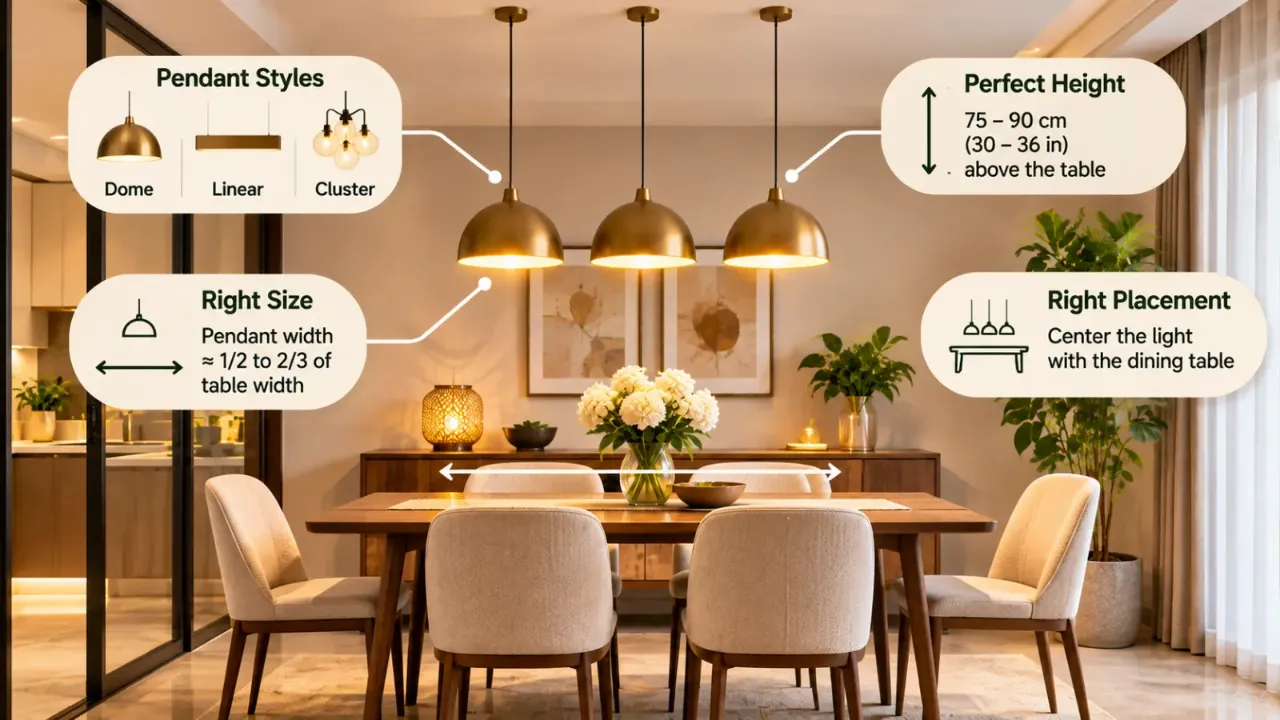
Dining Room Lighting: Choosing the Right Pendant and Placement
Dining Room Lighting: Choosing the Right Pendant and Placement
A dining table is often one of the most used surfaces in a home. It is where meals are shared, conversations happen, children work on projects and family members gather throughout the day. Yet dining-room lighting is sometimes treated as a finishing touch rather than an important part of the design.
A pendant light above the dining table can create a focal point, define the dining zone and make the space feel more complete. But choosing a beautiful fixture is only one part of the decision. Its size, shape, hanging height, position and brightness all affect how comfortable the dining area feels.
A pendant that is too large can dominate the table. One that hangs too high may lose its visual impact, while a fixture placed too low can obstruct views across the table or create glare.
The aim is to choose lighting that looks proportionate, illuminates the table comfortably and works with the rest of the room.
1. Start With the Dining Table, Not the Light
Before selecting a pendant, consider the dining table's dimensions and shape. The light should relate to the table rather than being chosen independently.
For a rectangular table, a linear pendant or a carefully arranged group of smaller lights can create an even spread of illumination. For a round table, a single central pendant or a compact cluster often looks more balanced.
A useful starting point is to choose a fixture that is noticeably narrower than the table. A pendant around half to two-thirds of the table's width can be a helpful proportion to explore, although the final choice depends on the fixture's shape and visual weight.
- A small round table may suit one compact pendant.
- A long rectangular table may work better with a linear fixture.
- A larger dining table may need a wider statement light or multiple pendants.
- An extendable table needs a lighting arrangement that still looks balanced when the table is opened.
Do not rely on dimensions alone. A visually heavy metal fixture may feel much larger than a lightweight glass pendant of the same size.
2. Choose a Pendant Shape That Suits the Table
The shape of the pendant can reinforce the dining area's overall design.
Round and Dome Pendants
Round pendants work particularly well over circular tables and compact dining areas. They create a simple focal point without introducing too many visual lines.
Linear Pendant Lights
Linear fixtures are suited to long rectangular tables. Their elongated shape follows the table and can distribute light more evenly along its length.
Multiple Pendant Lights
A row of two or three smaller pendants can add rhythm and visual interest. They should be spaced consistently and treated as one coordinated lighting arrangement.
Sculptural Statement Pendants
Sculptural fixtures can become the main decorative feature of a dining room. They work best when the surrounding ceiling, furniture and décor leave enough visual space for the fixture to stand out.
3. Get the Hanging Height Right
Pendant height has a direct effect on comfort and appearance. A fixture that is too high may feel disconnected from the table, while one that hangs too low can interrupt sightlines and make the dining area feel crowded.
A common starting point is to position the bottom of the pendant approximately 76–91 cm (30–36 inches) above the tabletop.
This is a guideline, not a fixed rule. Adjust the height based on:
- Ceiling height.
- Pendant dimensions and shape.
- Whether the light has exposed bulbs.
- The height of people seated at the table.
- How much of the room needs to remain visually open.
For a high ceiling, the fixture may need a different overall proportion, but it should still relate to the table rather than simply being hung higher to fill the ceiling space.
4. Position the Pendant Correctly
For a single pendant, the usual starting point is the centre of the dining table.
The fixture should align with the table's actual position, not necessarily the centre of the room. This is particularly important in open-plan homes, where the dining table may sit closer to a wall, partition or kitchen.
For multiple pendants:
- Align them along the length of a rectangular table.
- Keep spacing visually consistent.
- Check that the arrangement looks centred from the main viewpoints.
- Avoid placing a pendant directly in the usual line of sight between seated diners.
If the dining table is moved regularly, consider whether a fixed ceiling point will continue to work with the furniture arrangement.
5. Avoid Glare and Uneven Lighting
A pendant should illuminate the table without making the light source uncomfortable to look at.
Glare can occur when bulbs are exposed, the fixture has a poor diffuser or the light is too intense for the room. It can be particularly distracting when people are sitting opposite each other.
Consider these practical choices:
- Use shades or diffusers that soften direct light.
- Avoid exposed bulbs at uncomfortable viewing angles.
- Check how reflective surfaces such as glass tabletops respond to the light.
- Choose suitable brightness rather than simply selecting the highest-wattage bulb.
- Use dimming where the fixture, driver and switch are compatible.
Also check the distribution of light. A very narrow beam may create a bright patch in the middle of the table while leaving the ends poorly lit.
6. Select the Right Colour Temperature
The colour temperature influences the atmosphere of a dining space.
For many residential dining areas, warm or warm-neutral lighting works well because it makes the space feel comfortable without looking overly harsh.
- 2700K: A warm, cosy appearance.
- 3000K: A warm-neutral appearance that can feel slightly cleaner.
- 3500K and above: A more neutral or cool appearance, which may feel less relaxed in some dining settings.
The final choice should work with the room's finishes, natural light and adjacent spaces. In an open-plan home, avoid a noticeable colour-temperature mismatch between the dining area and connected living or kitchen areas.
A high colour-rendering index (CRI), such as 90 or above, can also help food, fabrics and finishes appear more natural under artificial light.
7. Do Not Depend on the Pendant Alone
A pendant creates focused lighting, but it may not illuminate the entire dining room. Relying on one ceiling fixture can leave corners, walls and sideboards looking dark.
A better approach is to combine different lighting layers.
Ambient Lighting
Recessed ceiling lights, cove lighting or other general fixtures provide overall illumination.
Task Lighting
The pendant provides focused light over the dining table for meals, reading or other activities.
Accent Lighting
Wall lights, illuminated display shelves or a sideboard lamp add depth and highlight selected features.
The layers should complement each other. They do not all need to be switched on at the same time.
8. Match the Fixture With the Interior Style
The pendant should feel connected to the room's materials and design language.
- Modern interiors: Simple geometric pendants, slim linear fixtures and clean silhouettes.
- Contemporary homes: Glass globes, sculptural forms and understated metallic details.
- Minimalist spaces: Compact fixtures with simple shapes and restrained finishes.
- Classic interiors: Chandeliers, fabric shades and traditional forms.
- Natural or Scandinavian-inspired rooms: Wood details, soft diffusers and understated forms.
The finish matters too. Brass, black metal, brushed steel, glass and ceramic can each create a different visual effect.
Try to coordinate the fixture with existing hardware, furniture legs, cabinet handles or other metal finishes without making every element identical.
9. Plan the Electrical Point Before the Ceiling Is Finished
Pendant placement should be decided before final ceiling work and electrical installation.
- The electrical outlet or ceiling point aligns with the dining table.
- The ceiling box and mounting arrangement can safely support the fixture's weight.
- The switch is easy to access.
- A dimmer is compatible with the bulb or LED driver.
- The cable length allows the intended hanging height.
- The fixture can be maintained and cleaned without difficulty.
Heavy pendants may require appropriate structural support rather than relying on the ceiling finish alone. Electrical connections and support arrangements should be handled by qualified professionals.
If the table position is likely to change, discuss the flexibility of the electrical point before installation.
10. Common Dining Room Lighting Mistakes
A few avoidable mistakes can make even an expensive pendant feel out of place.
- Choosing a fixture before measuring the table: This can result in a light that looks too small or too dominant.
- Hanging it too high: The fixture may lose its connection with the dining table.
- Hanging it too low: It can obstruct views and create glare.
- Using only one light source: The room may feel unevenly lit.
- Ignoring the ceiling height: A fixture may look disproportionate in a room with a low or unusually high ceiling.
- Choosing a decorative fixture with poor light output: Appearance should not come at the expense of usability.
- Forgetting dimming and maintenance: A beautiful fixture can become inconvenient if it is difficult to clean or control.
11. A Simple Checklist Before Buying a Pendant
- Dining table length, width and shape have been measured.
- Pendant dimensions are proportionate to the table.
- The fixture's hanging height has been planned.
- Seated sightlines remain comfortable.
- The light provides suitable coverage across the table.
- The shade or diffuser controls glare.
- Colour temperature suits the room.
- The fixture works with the ambient lighting.
- Ceiling support and electrical points have been checked.
- Bulb replacement and cleaning are practical.
Final Thoughts
A well-chosen dining pendant does more than decorate the ceiling. It gives the dining table a clear focal point, creates a comfortable atmosphere and helps connect the furniture with the rest of the interior.
The best result comes from balancing three things: the fixture's scale, its placement and the quality of light it produces.
Measure the table first, plan the hanging height carefully and consider how the pendant will work with the room's other lighting. These decisions will help create a dining space that looks considered and feels comfortable in everyday use.
Frequently Asked Questions
1. How high should a pendant light hang above a dining table?
A common starting point is 76–91 cm (30–36 inches) from the tabletop to the bottom of the pendant. The final height depends on ceiling height, fixture size, glare and seated sightlines.
2. What size pendant light is best for a dining table?
A fixture around half to two-thirds of the table's width can be a useful starting point. Its visual weight and shape should also be considered.
3. Should a pendant light be centred over the dining table?
Usually, yes. Centre it over the table rather than automatically using the centre of the room, particularly in open-plan layouts.
4. Are two or three pendant lights better than one?
It depends on the table's size and shape. A single pendant can suit a smaller table, while multiple pendants or a linear fixture may work better over a longer table.
5. Which colour temperature is suitable for dining-room lighting?
Warm lighting around 2700K–3000K is a common residential choice. The best option depends on the room's finishes, connected spaces and preferred atmosphere.
6. Is a chandelier suitable for a small dining area?
Yes, provided its size and visual weight are proportionate to the table and room. A compact chandelier can create a focal point without overwhelming the space.
7. Is a pendant light enough to illuminate the entire dining room?
Not always. A pendant mainly focuses light over the table, so ambient lighting and selected accent lights may be needed for balanced illumination.
8. Should dining pendant lights be dimmable?
Dimming is useful because dining spaces serve different purposes throughout the day. Check that the fixture, LED driver, bulb and dimmer are compatible.
Plan Your Home Interiors With Walls to Wonder
Planning a dining area or refreshing your home's lighting? Explore Walls to Wonder's AI tools to visualise spaces, explore design styles and make more informed interior decisions.
- Whole Home Visualizer – Explore how different design ideas can work across your home.
- Design My Room – Experiment with room design ideas and visual styles.
- Interior Design Cost Estimate – Get an initial estimate for your interior project.
- Interior Quotation Checker – Review and understand interior design quotations.
- Rate My Room Design – Get feedback on your room design.
- Interior Style Finder – Discover interior styles that match your preferences.
Explore more at Walls to Wonder.
Turn this idea into a plan for your home
Visualise your space, understand the likely budget, or find a professional who can bring the idea to life.