
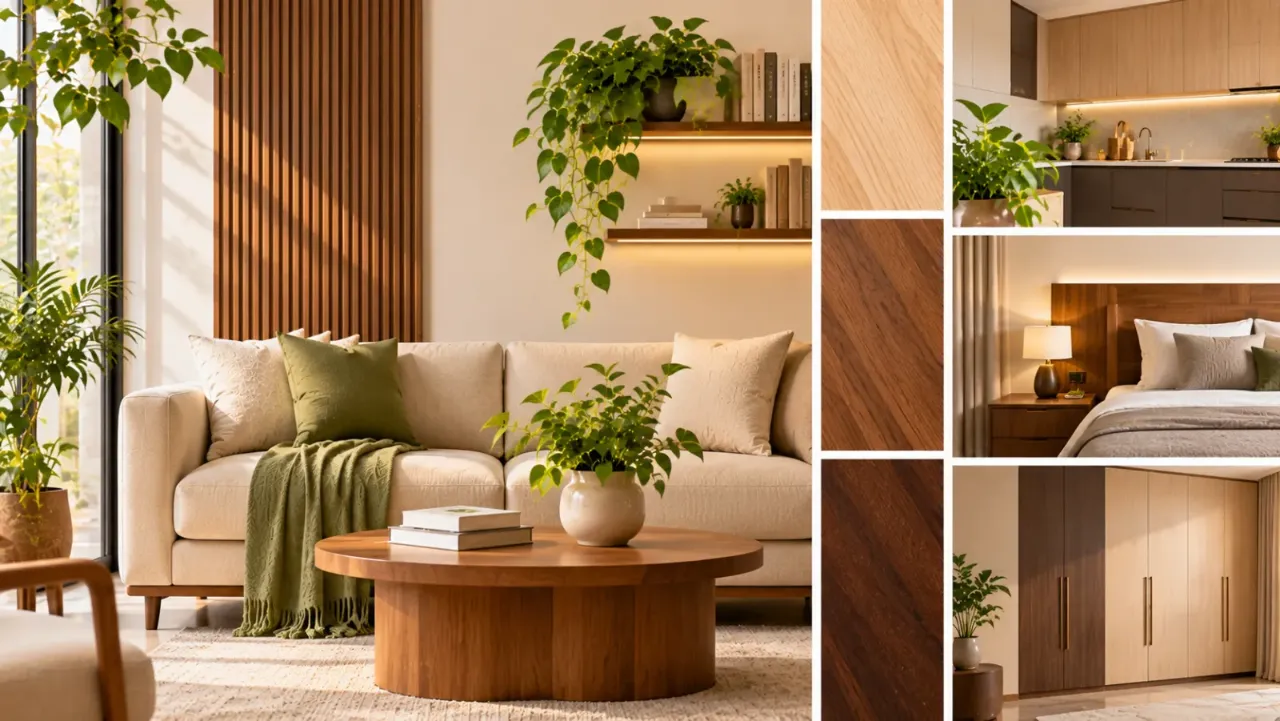
Choosing Wood Shades That Work Together in Home Interiors
Wood finishes bring warmth, texture and character to home interiors. From wooden flooring and main doors to wardrobes, cabinets, dining tables and furniture, wood appears in many forms throughout a home. When these finishes are coordinated thoughtfully, the interiors feel connected and balanced.
But matching wood finishes is not as simple as choosing the same brown shade for every surface. Different woods and laminates have different undertones, grain patterns, textures and levels of visual intensity. A flooring shade that looks attractive on its own may clash with a door finish, while a furniture piece in a contrasting tone may actually make the room feel more interesting.
The aim is not to make every wooden surface identical. It is to create a combination in which the finishes complement one another.
1. Understand Wood Undertones Before Matching Shades
The first step is to identify the undertone of each wood finish. Two finishes may both look brown but still appear mismatched because one has a reddish undertone while the other looks yellow, grey or neutral.
Common wood-tone families include:
- Warm undertones: Golden oak, honey, amber, reddish teak and warm walnut shades.
- Cool undertones: Ash wood, grey-washed oak and certain muted brown finishes.
- Neutral undertones: Balanced beige, natural oak and medium brown finishes without a strong yellow or red cast.
For example, a honey-oak floor may look noticeably different beside a grey-washed wardrobe. Both may be attractive finishes individually, but their undertones can compete.
Before selecting a combination, place samples next to one another in the actual room. Compare them in daylight as well as under the artificial lighting that will be used in the evenings.
2. Choose One Dominant Wood Finish
A useful starting point is to select one dominant wood finish for the room. This is often the flooring, a large wardrobe, a prominent wall unit or another permanent surface.
Once the dominant finish is selected, choose the remaining wood tones around it.
- If the flooring is light natural oak, medium walnut furniture can provide contrast.
- If the floor is dark walnut, lighter oak or beige-toned furniture can prevent the room from feeling too heavy.
- If the flooring has a grey-brown tone, muted neutral wood finishes may create a more consistent palette.
The dominant finish does not have to be the darkest or most expensive material. It should simply be the finish that occupies the most visual space or has the strongest influence on the room.
3. Should Flooring, Doors and Furniture Match Exactly?
No. Using the same finish everywhere can create a uniform appearance, but it may also make the room feel flat or overly coordinated.
A more balanced approach is to use related tones with some variation.
| Flooring | Door Finish | Furniture Finish | Overall Effect |
|---|---|---|---|
| Light natural oak | Medium oak | Walnut | Light with warm contrast |
| Beige wood-look tile | Natural teak | Light oak | Soft and understated |
| Dark walnut | Medium walnut | Cream or natural oak | Balanced and less heavy |
| Grey-washed oak | Neutral brown | Ash wood | Cool and contemporary |
| Honey oak | Teak | Muted walnut | Warm and layered |
The exact result will depend on the product's undertone, grain and sheen. Use physical samples wherever possible instead of relying only on digital shade names.
4. How to Coordinate Wood Flooring with Furniture
Flooring usually covers a large area, so it has a strong influence on how furniture looks in the room.
Light Wood Flooring
Light oak, ash and pale wood-look finishes can make a room feel open and relaxed.
They pair well with:
- Medium walnut furniture for contrast.
- Natural oak furniture for a calm, tonal look.
- Beige and ivory upholstery.
- Muted greens, soft greys and warm neutral fabrics.
Avoid choosing every piece in an almost identical pale shade if the grains and undertones do not match. Slight variation can make the combination look more natural.
Medium Wood Flooring
Medium oak, teak and natural brown floors offer flexibility. They can be paired with both lighter and darker furniture.
- Walnut furniture for a richer appearance.
- Light oak for contrast.
- Neutral upholstered seating.
- Stone, beige or muted green accents.
Dark Wood Flooring
Dark walnut and deeper brown floors create a strong foundation.
- Light oak or natural wood furniture.
- Ivory, beige and soft grey upholstery.
- Lighter walls and restrained accents.
- A limited number of darker wood elements.
Using dark flooring, dark furniture and dark wall panelling together can make a room feel visually dense, especially when natural light is limited.
5. How to Match Wooden Doors with Flooring
Doors are permanent visual elements and often connect one room to another. Their finish should therefore be considered in relation to both the flooring and the other woodwork.
You do not need to match the door exactly to the floor. Instead, decide whether the door should blend in or stand out slightly.
For a coordinated look:
- Choose a door in the same broad undertone family as the flooring.
- Allow a small difference in lightness or darkness.
- Keep the door frame and adjoining woodwork visually consistent where appropriate.
For a contrasting look:
- Use a darker door against light flooring.
- Use a lighter oak or neutral door against a medium or dark floor.
- Repeat the door's wood tone in a console, cabinet detail or another furniture element.
A strong contrast works best when it appears intentional rather than isolated.
6. Create a Consistent Wood Palette Across Rooms
In an open-plan home, the living room, dining area and kitchen often remain visually connected. Using too many unrelated wood finishes can interrupt that continuity.
A simple way to coordinate them is to establish a small whole-home wood palette.
Palette A: Light and Natural
- Flooring: Natural oak.
- Doors: Light teak or medium oak.
- Furniture: Oak with occasional walnut accents.
- Cabinetry: Beige or muted wood laminate.
Palette B: Warm and Rich
- Flooring: Medium brown wood.
- Doors: Teak or walnut.
- Furniture: Walnut with cream upholstery.
- Cabinetry: Warm neutral laminate.
Palette C: Cool and Contemporary
- Flooring: Grey-washed oak.
- Doors: Neutral brown.
- Furniture: Ash or muted walnut.
- Cabinetry: Soft grey, ivory or muted sage.
These are starting points, not fixed rules. The actual samples should be compared together under the lighting conditions of the home.
7. Pay Attention to Wood Grain and Pattern
Colour is only one part of the combination. Grain direction and pattern can make two similar shades look very different.
For example, a floor with strong, busy grain may compete with furniture that has equally prominent wood patterns. A calmer combination may work better if one surface has a more subtle grain.
- Strong grain: Use it on a limited number of prominent surfaces.
- Subtle grain: Works well as a background for more expressive furniture.
- Straight grain: Creates a clean, linear appearance.
- Irregular or highly varied grain: Adds natural character but may need simpler surrounding finishes.
Also consider plank direction, panel layout and how the grain runs across doors and furniture fronts. These details influence the overall visual rhythm of a room.
8. Do Not Ignore Sheen and Surface Texture
Two wood finishes can have similar colours but still look mismatched because one is glossy and the other is matte.
Common finish options include:
- Matte: Soft, low-reflection appearance.
- Satin: A subtle sheen that reflects some light.
- Glossy: More reflective and visually prominent.
- Textured: Adds tactile detail and can make a laminate or veneer look more natural.
You do not have to use the same sheen everywhere, but avoid combining several highly reflective finishes without considering how they will look together.
A matte wooden floor with satin-finish doors and a subtly textured furniture laminate can create a balanced mix. The key is to ensure the differences look intentional.
9. Common Wood-Finish Combinations That Can Look Mismatched
| Combination | Why It May Not Work | How to Improve It |
|---|---|---|
| Yellow-toned oak with red-toned mahogany | Competing warm undertones | Introduce a neutral wood or fabric finish between them |
| Grey-washed flooring with strong golden teak | Cool and warm tones may clash | Choose a more neutral brown or repeat a warm accent elsewhere |
| Dark walnut everywhere | The room may feel visually heavy | Add lighter wood, upholstery or wall finishes |
| Several prominent grain patterns | The surfaces compete for attention | Keep one grain pattern dominant |
| Glossy laminate with strongly textured wood | Different visual character | Balance the combination with simpler surfaces |
| Too many unrelated wood shades | The home may feel disconnected | Limit the palette and repeat selected finishes |
A combination does not automatically fail because it contains different undertones. The important question is whether the contrast is deliberate and supported by the rest of the room.
10. Test Wood Samples Before Finalising
Wood finishes can look different depending on the light, surrounding colours and size of the surface. A small laminate sample may appear different when used across an entire wardrobe or wall.
Before approving materials:
- Collect samples of the actual flooring, door finish and furniture laminate or veneer.
- Place them together in the same lighting.
- Check them near the wall colour, upholstery and other permanent finishes.
- View them in morning daylight and evening lighting.
- Compare the samples from a normal viewing distance, not only up close.
- Confirm the product name, finish and shade before ordering.
If possible, ask the supplier for larger samples. Keep the approved samples as a reference during execution so that substitutions do not change the intended palette.
11. A Practical Checklist for Matching Wood Finishes
- Identify the undertone of the flooring.
- Select one dominant wood finish for the room.
- Decide whether doors should blend in or contrast.
- Choose furniture finishes that complement the dominant tone.
- Compare grain patterns and directions.
- Check matte, satin and glossy finishes together.
- Avoid introducing too many unrelated wood shades.
- Repeat selected wood tones across connected rooms.
- Compare physical samples under actual room lighting.
- Keep approved samples and product details for execution.
Final Thought
Matching wood finishes is not about finding one shade and repeating it across every surface. It is about creating a relationship between different tones, grains and textures.
Choose a dominant finish, understand its undertone and introduce contrast thoughtfully. When flooring, doors and furniture share a considered palette, the home feels connected without looking repetitive.
A few carefully selected wood finishes can create a more balanced interior than using the same laminate or timber shade everywhere.
Frequently Asked Questions
1. Should wooden flooring and furniture be the same colour?
No. They can be different shades as long as their undertones and overall contrast work together. A medium or dark furniture finish can look attractive against light wood flooring.
2. Can I mix warm and cool wood tones?
Yes, but the combination needs to look intentional. Introduce a neutral finish or repeat one of the contrasting tones elsewhere to create a visual connection.
3. Should all doors in a home have the same wood finish?
Using a consistent door finish can help connect rooms, particularly in a corridor or open-plan layout. However, selected variations can work when they follow the home's wider wood palette.
4. Which wood shades go well with light oak flooring?
Medium walnut, neutral teak, natural oak and selected muted brown finishes can work well with light oak. The undertone of the actual product should be checked before finalising it.
5. How many different wood finishes should a room have?
There is no strict number, but a room usually feels easier to coordinate when it has one dominant wood finish and a small number of supporting tones. The amount of visual contrast matters more than the count alone.
6. Can wood-look tiles be matched with real wooden furniture?
Yes. Compare the tile's undertone, grain pattern and surface texture with the furniture. Wood-look tiles do not need to imitate the furniture exactly.
7. How do I match wood finishes in an open-plan home?
Choose a consistent palette for flooring, doors and major cabinetry. Then introduce smaller furniture variations while repeating selected tones across the connected spaces.
8. Should wood finishes match the wall colour?
They do not need to match, but they should complement it. Neutral walls provide flexibility, while stronger wall colours may require more careful wood-tone selection.
Explore Interior Design Ideas with Walls to Wonder
Explore finishes, plan room combinations and coordinate your home interiors with Walls to Wonder AI tools.
- Whole Home Visualizer – Explore coordinated design ideas for your home.
- Design My Room – Visualise different room styles and finishes.
- Interior Design Cost Estimate – Get an initial estimate for your interior project.
- Interior Quotation Checker – Review and understand an interior quotation.
- Rate My Room Design – Get feedback on your room design.
- Interior Style Finder – Discover an interior style that suits your preferences.
Visit Walls to Wonder for more interior design inspiration and tools.
Turn this idea into a plan for your home
Visualise your space, understand the likely budget, or find a professional who can bring the idea to life.