
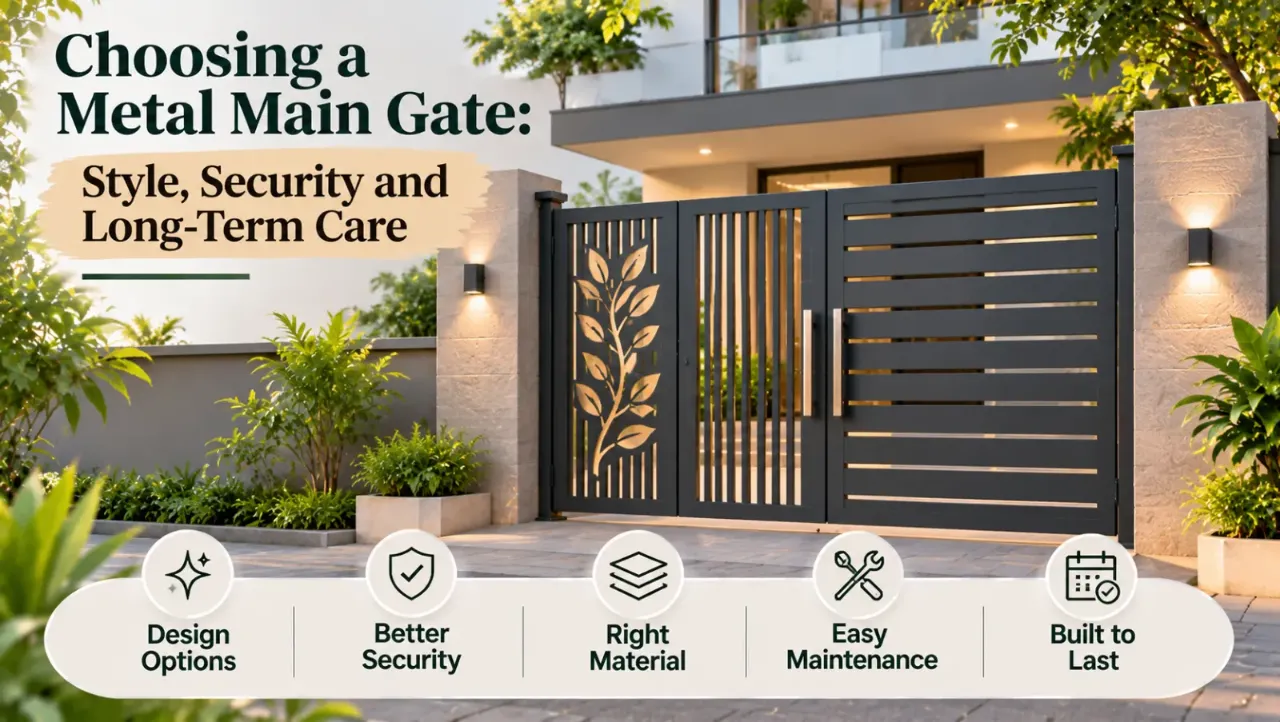
Choosing a Metal Main Gate: Style, Security and Long-Term Care
A main gate does more than mark the entrance to a home. It creates the first impression of the property, controls access and becomes part of the exterior that homeowners interact with every day. A well-chosen metal gate can provide a balance of appearance, security, durability and convenience, but the right choice depends on more than the pattern or colour.
Metal gates are available in many forms, from simple vertical-bar designs to solid panels, decorative laser-cut patterns and contemporary combinations of metal with other materials. Each option has different implications for visibility, privacy, ventilation, maintenance and cost.
Before finalising a metal main gate design, it is worth understanding the material, opening mechanism, fabrication details and protective finish. These decisions help ensure that the gate looks appropriate and continues to work smoothly after installation.
1. Start With the Requirements of Your Entrance
Before looking at designs, consider how the gate will be used. A pedestrian entrance, a driveway gate and a combined entrance may need different arrangements.
Think about the following:
- Available space: Check the width, height and clearance around the entrance.
- Vehicle movement: Confirm the turning space and the path vehicles need to enter and exit.
- Pedestrian access: Decide whether a separate pedestrian gate would make everyday use easier.
- Privacy: Consider how much of the property should be visible from outside.
- Security: Identify the locking arrangements and access-control features required.
- Frequency of use: A frequently operated gate needs reliable hardware and a suitable opening mechanism.
A gate should be designed around the actual entrance conditions. A design that looks attractive in a photograph may not work well if the driveway is narrow or the gate has insufficient clearance.
2. Compare Different Metal Main Gate Designs
The pattern influences the appearance of the entrance, but it also affects visibility, airflow, cleaning and privacy. Choose a style that complements the house and suits the way the entrance is used.
Simple vertical-bar gate
Vertical bars create a straightforward, timeless appearance. They allow airflow and partial visibility while maintaining a defined boundary. This style can suit traditional as well as contemporary homes.
Horizontal-line gate
Horizontal sections create a modern, geometric look. They work well with simple elevations and clean architectural lines. The spacing and arrangement should be considered carefully so the gate does not become an easy climbing aid.
Solid-panel metal gate
A solid or mostly covered gate provides greater visual privacy. It can be suitable where the entrance opens directly onto a busy road or where homeowners prefer to screen the front yard. The design should account for wind exposure and the additional loads that a broad solid surface can create.
Decorative laser-cut gate
Laser-cut patterns can introduce a distinctive feature to the entrance. Geometric shapes, abstract patterns and restrained motifs can create visual interest without requiring numerous separate decorative pieces. Consider how easily the design can be cleaned and whether the pattern suits the overall elevation.
Metal-and-wood combination
Metal frames combined with exterior-suitable timber or wood-finish panels can create a warmer appearance. The material compatibility, weather protection and replacement requirements should be considered before choosing this combination.
Sliding metal gate
A sliding gate moves along a track or a suitable cantilever arrangement rather than swinging into the driveway. It may work well where there is limited swing clearance, provided there is sufficient side space and the ground or support arrangement is suitable.
Double-leaf swing gate
A double-leaf gate opens in two sections. It can suit wider entrances and traditional house elevations. The swing path, hinge supports and space available inside or outside the property must be checked before finalising it.
3. Choose the Right Metal
The metal used for the gate affects its weight, fabrication possibilities, corrosion resistance and maintenance requirements.
Mild steel
Mild steel is commonly used for fabricated gates because it can be cut, welded and shaped into a wide range of designs. It is suitable for simple frames and decorative patterns, but it needs proper surface preparation and protective coating to control rust.
Galvanised steel
Galvanised steel has a zinc coating that helps protect the steel from corrosion. It can be a useful option for outdoor applications, but the fabrication process and any areas cut or welded after galvanising need appropriate treatment.
Stainless steel
Stainless steel can provide a clean, contemporary finish and good corrosion resistance when the correct grade is selected. Its suitability depends on the environment, exposure and quality of fabrication. It may also involve a higher initial cost than some other options.
Aluminium
Aluminium is relatively lightweight and naturally resistant to corrosion. It can be useful where reducing gate weight is important, but the frame, sections, hardware and connections must be designed for the intended size and use.
Do not compare materials only by their names. Ask about the actual grade or specification, section dimensions, fabrication quality, protective treatment and expected maintenance.
4. Select the Opening Mechanism Carefully
The opening style can affect the convenience and practicality of the entrance as much as the gate's appearance.
- Swing gates: These open inward or outward on hinges. They need sufficient clear space for the gate leaves to move without hitting vehicles, walls or landscaping.
- Sliding gates: These move sideways along a track or cantilever system. They need a clear space beside the entrance for the gate to travel.
- Manual gates: These use a straightforward operating arrangement and can be suitable where access is occasional or automation is not required.
- Automated gates: These use a motor and control system for convenient operation. Their design should include suitable power arrangements, safety features, manual release and maintenance access.
For automated gates, the motor should be selected according to the gate's weight, dimensions, movement frequency and opening arrangement. Do not assume that any motor will work with any gate.
5. Balance Privacy, Security and Ventilation
A metal gate should provide the level of privacy and access control the household needs without creating avoidable operational problems.
Open-bar designs allow visibility and airflow, but offer less visual privacy. Solid panels provide more screening but may increase wind loading. Partially screened designs can create a middle ground.
Security should not depend on decorative appearance alone. Review:
- The strength and quality of the frame.
- The design and fixing of hinges.
- The locking mechanism and latch arrangement.
- The quality of the supporting gateposts.
- The resistance of accessible components to tampering.
- The provision for secure pedestrian access, if needed.
The gate, its posts, hinges, locks and foundations should be considered as one assembly. A strong-looking gate can still be unreliable if its supporting structure or connections are inadequate.
6. Coordinate the Gate With the House Exterior
The main gate is a prominent part of the front elevation, so its design should relate to the architecture rather than compete with it.
For a contemporary house, clean lines, simple sections and restrained geometric patterns can work well. For a traditional home, decorative metalwork or a more detailed pattern may feel more appropriate.
Consider the following when choosing the appearance:
- The colour and texture of the boundary wall.
- The style of the entrance door and window grills.
- The exterior wall finish and cladding.
- The proportions of the gate compared with the entrance opening.
- The landscaping, lighting and pathway around the gate.
A charcoal or dark bronze finish can create a clear outline against light plaster or natural stone. A lighter neutral finish may work better where the exterior already has darker elements. The goal is visual coordination rather than matching every component exactly.
7. Check Fabrication Quality Before Installation
A good design needs accurate fabrication. Before approving the work, ask for a drawing that shows the overall dimensions, frame sections, panel arrangement, hinges, locks and installation details.
During fabrication, pay attention to:
- Frame alignment: The outer frame should be square and properly aligned.
- Section quality: Confirm that the specified material and section sizes are being used.
- Weld quality: Joints should be properly executed and finished.
- Edges and corners: Check for sharp edges, unfinished cuts and rough surfaces.
- Hardware: Hinges, rollers, tracks, latches and locks should suit the gate's weight and use.
- Finish preparation: Surfaces should be prepared correctly before primer, paint or other protective coatings are applied.
A decorative pattern should not weaken the frame or interfere with the gate's operation. Have the fabricator explain how the design is supported and how the moving parts will be accessed for maintenance.
8. Plan the Protective Finish
Outdoor metal gates face rain, dust, sunlight and changing temperatures. The protective finish should be suitable for the base metal and the exposure conditions.
For mild steel, the usual process involves cleaning, removing rust and scale, preparing the surface, applying a suitable primer and completing the coating with an appropriate exterior-grade finish.
Powder coating can provide a uniform finish when the preparation and application process are properly controlled. However, damaged areas, cut edges and later modifications still need attention.
For galvanised steel, use coating systems compatible with the zinc layer. For stainless steel, choose an appropriate grade and surface finish rather than relying on paint to compensate for an unsuitable specification.
Pay special attention to:
- Welds and joints.
- Cut ends and drilled holes.
- Bottom edges close to the ground.
- Hinge plates and fixing points.
- Areas where rainwater may collect.
The quality of preparation and protection often matters more to long-term performance than the colour selected.
9. Maintain the Gate for Smooth Everyday Use
Even a well-fabricated metal gate needs periodic inspection. Dust, moisture, corrosion and repeated movement can affect its finish and hardware over time.
A practical maintenance routine includes:
- Cleaning the gate periodically with a suitable, non-abrasive method.
- Checking for scratches, peeling paint and early signs of rust.
- Inspecting hinges, rollers, tracks and latches.
- Lubricating moving components where recommended by the hardware manufacturer.
- Keeping sliding tracks clear of leaves, stones and accumulated dirt.
- Checking that locks and access-control components operate properly.
- Repairing damaged protective coatings before corrosion spreads.
For automated gates, follow the manufacturer's servicing schedule and have the motor, sensors, safety devices and manual-release arrangement checked by a qualified technician.
Avoid forcing a gate that has become difficult to open. Resistance may indicate misalignment, a damaged roller, hinge wear or a problem with the supporting structure.
10. Avoid Common Mistakes Before Finalising Your Gate
Some problems can be prevented by checking the design and site conditions before fabrication begins.
- Selecting a design without measuring the entrance: This can create clearance and movement problems.
- Choosing a solid gate without considering wind exposure: A broad panel can experience greater wind forces.
- Ignoring the gatepost and foundation: The supports must be suitable for the gate's weight and operating forces.
- Using unsuitable hardware: Undersized hinges, rollers or locks can lead to premature failure.
- Skipping corrosion protection: Poor preparation can cause rust even on a newly painted gate.
- Overcomplicating the pattern: Excessive detailing may increase fabrication and cleaning effort.
- Automating without safety planning: Automated gates need appropriate safety features and a reliable manual-release method.
- Approving work without a drawing: A clear drawing helps ensure that the fabricated gate matches the agreed design.
11. Make the Final Selection With a Checklist
Before confirming the order, review the gate as a complete entrance system.
- The gate dimensions have been checked at the site.
- The opening mechanism suits the available space.
- The metal specification and section sizes are clearly stated.
- The frame, hinges, posts and foundations have been properly considered.
- Privacy and visibility requirements are understood.
- The lock and access arrangements suit daily use.
- The protective finish is appropriate for outdoor exposure.
- The fabrication drawing has been approved.
- Installation, operation and maintenance responsibilities are clear.
If you are planning the broader appearance of your home, Walls to Wonder's Whole Home Visualizer can help explore coordinated design concepts. Design My Room supports interior room visualisation, while the Interior Design Cost Estimate can assist with preliminary interior budgeting. The Interior Quotation Checker can help review interior quotation details. These tools support interior planning and do not replace gate fabrication drawings, structural checks or security assessments.
Final Thought
A good metal main gate should do more than look impressive from the road. It should suit the home's architecture, provide appropriate access control, operate smoothly and withstand outdoor conditions with manageable maintenance.
Take time to compare the material, opening mechanism, frame construction, hardware and protective finish before approving fabrication. A carefully specified gate is more likely to remain a dependable part of the entrance long after the initial appearance has been admired.
Frequently Asked Questions
1. Which metal is best for a main gate?
Mild steel, galvanised steel, stainless steel and aluminium can all be suitable, depending on the design, exposure conditions, weight and budget. Compare the actual material specification and protective treatment rather than choosing by material name alone.
2. Is a sliding gate better than a swing gate?
Neither is universally better. A sliding gate may suit an entrance with limited swing clearance but needs sufficient side space. A swing gate needs a clear opening path. The site layout should determine the choice.
3. How can I prevent a metal gate from rusting?
Use an appropriate metal specification, thorough surface preparation, a compatible primer and a suitable exterior-grade protective coating. Inspect scratches, joints and exposed edges regularly and repair damaged areas promptly.
4. Is a solid metal gate suitable for every house?
A solid gate can offer greater visual privacy, but its broad surface may experience higher wind loads. Its frame, hinges, posts and foundations should be designed for the actual conditions.
5. What should I check before installing an automated gate?
Confirm that the motor suits the gate's weight and operating frequency. Check the power supply, safety sensors, obstruction protection, manual release, control access and servicing requirements.
6. How often should a metal main gate be maintained?
Inspect it periodically and clean it as needed. The frequency of coating repairs, lubrication and professional servicing depends on the material, finish, weather exposure and how often the gate is operated.
Turn this idea into a plan for your home
Visualise your space, understand the likely budget, or find a professional who can bring the idea to life.